

What to expect in 2027
Milano Musica 2027 will present the 36th edition of the Festival Milano Musica, continuing the organisation’s long-running focus on contemporary music, new composition, experimental performance and innovative approaches to listening. The 2027 edition is titled “Culture acustiche” and is being organised in collaboration with Teatro alla Scala.
The festival describes the 2027 programme as having a strong focus on the experience of pure listening, considered from an intercultural perspective that connects musical perception with oral memory. The programme explores contemporary music as a meeting point between historical roots, different cultural traditions and new forms of musical expression.
The festival will include eight world premieres and fifteen Italian premieres, including three international commissions and co-commissions. This gives the 2027 edition a particularly strong emphasis on new works and first performances rather than simply presenting established repertoire.
Enjoy Your Event Stress-Free with Italy Travelo
Whether you're traveling for a world-famous festival, live concert, cultural celebration, or business event, Italy Travelo helps simplify every step of your journey. Our team provides personalized travel assistance, allowing you to focus on creating lasting memories.
Performances will take place across major Milanese cultural venues, ranging from Teatro alla Scala and Auditorium di Milano to Teatro Elfo Puccini and other spaces connected with contemporary art, music and performance.
The programme is designed to bring contemporary music to different audiences, with particular attention to younger generations and to ways of experiencing music beyond conventional concert formats. Educational activities, participatory projects and performances for different audiences form part of the wider Milano Musica approach.
Event dates
Milano Musica 2027 takes place from April 28, 2027 to June 8, 2027.
The festival archive identifies this as the 36th Festival di Milano Musica, titled “Culture acustiche.” The official programme is being released through individual event pages, with additional concerts expected to be detailed through the festival’s programme section.
The published schedule already includes performances at Teatro alla Scala, Auditorium di Milano and Teatro Elfo Puccini. Several concerts are presented as individual programmes with their own starting times, performers and repertoire.
Because Milano Musica is a citywide festival, visitors should check the specific concert listing before travelling. Different performances can take place at different venues and at different times.
Visiting this event? Don’t miss out on these amazing activities and local experiences while you’re here.
Venue & festival site
Milano Musica does not operate from one permanent festival ground. Instead, the festival uses Milan’s major theatres, concert halls, cultural centres and other specialist performance spaces.
The 2027 programme currently identifies several principal venues, including:
- Teatro alla Scala
- Auditorium di Milano
- Teatro Elfo Puccini
- Other Milanese cultural and performance venues included in the developing festival programme
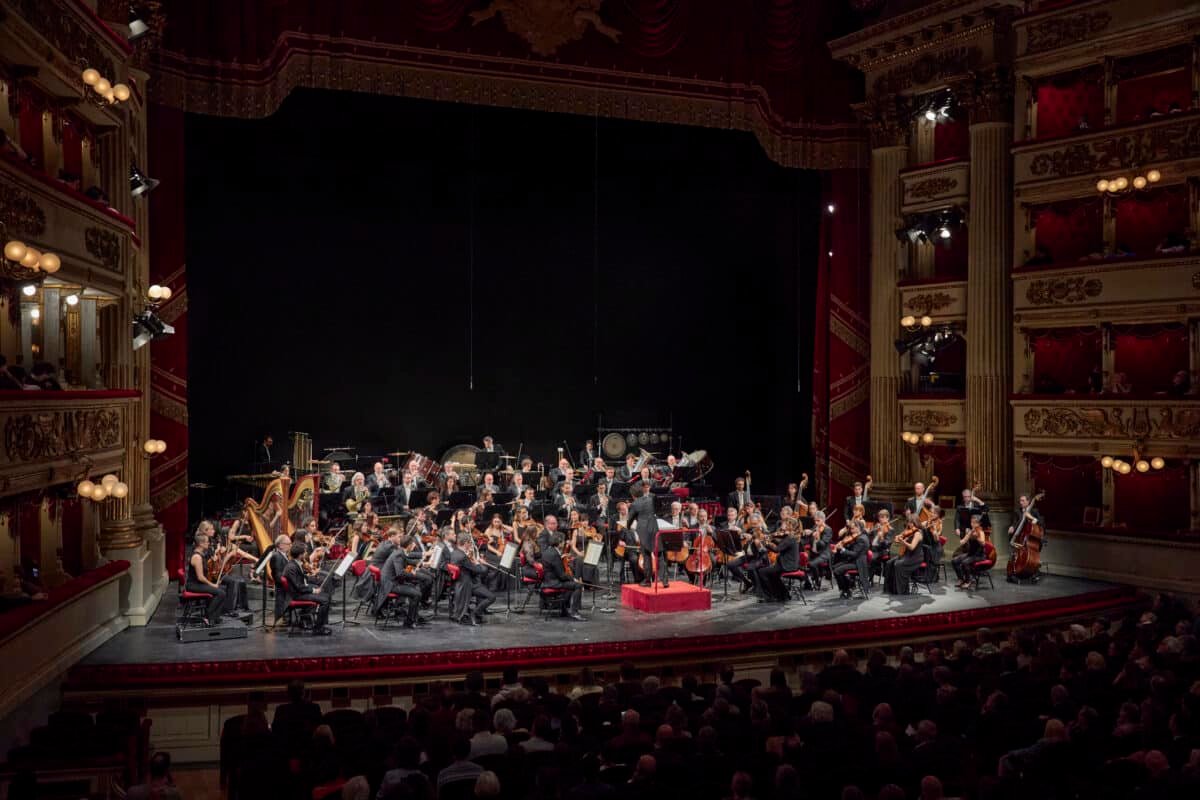
Teatro alla Scala is particularly important to the festival because Milano Musica collaborates directly with the theatre for major contemporary music productions. The opening programme at the theatre features Klangforum Wien, Léo Warynski, Katrien Baerts, Matteo Cesari and the Coro di Voci Bianche dell’Accademia Teatro alla Scala.
Auditorium di Milano will also host a major orchestral programme featuring Orchestra Sinfonica di Milano, conducted by Sylvain Cambreling, with Nicolas Altstaedt as cello soloist.
Teatro Elfo Puccini provides a different type of performance environment, including the presentation of Francesco Filidei’s L’Opera (forse) together with a creative workshop.
Full lineup
The 2027 lineup is centred on contemporary composers, specialist ensembles, orchestras, conductors, soloists and interdisciplinary performers rather than a conventional commercial festival lineup.
Confirmed artists and ensembles currently published by Milano Musica include:
- Klangforum Wien
- Léo Warynski
- Katrien Baerts
- Matteo Cesari
- Coro di Voci Bianche dell’Accademia Teatro alla Scala
- Orchestra Sinfonica di Milano
- Sylvain Cambreling
- Nicolas Altstaedt
- Orchestra Sinfonica Nazionale della RAI
- Pierre Bleuse
- Maria Husmann
- Francesco Dillon
- Opificio Sonoro
- Greta Oldoni
- Raffaella Palumbo
- Giacomo Piermatti
- Filippo Farinelli
- Laura Mancini
- Andrea Biagini
- Claudia Giottoli
The composer lineup includes Salvatore Sciarrino, Francesco Filidei, Gérard Grisey, Francesca Verunelli, Vito Žuraj and György Kurtág among the artists represented in the currently published programme.
The complete festival programme is expected to include further artists and projects as Milano Musica continues publishing the 2027 schedule.
Headliners & featured artists
Milano Musica does not use a traditional headline-act model. Its principal attractions are major contemporary compositions, internationally recognised ensembles, orchestras, conductors and soloists.
Klangforum Wien is one of the central featured ensembles in the opening Teatro alla Scala programme. The ensemble appears under the direction of Léo Warynski, with soprano Katrien Baerts and flautist Matteo Cesari, alongside the children’s choir of the Accademia Teatro alla Scala.
Orchestra Sinfonica di Milano and conductor Sylvain Cambreling are featured at Auditorium di Milano, with cellist Nicolas Altstaedt performing Francesca Verunelli’s Cello Concerto before Beethoven’s Symphony No. 6, “Pastoral.”
The Orchestra Sinfonica Nazionale della RAI also appears at Teatro alla Scala under Pierre Bleuse, with soprano Maria Husmann and cellist Francesco Dillon. The programme includes works by György Kurtág and Vito Žuraj.
Francesco Filidei is another important figure in the 2027 programme. His L’Opera (forse) is presented at Teatro Elfo Puccini by Opificio Sonoro, combining performance, spoken voice and a creative workshop.
Stages & performance areas
Milano Musica uses conventional concert halls as well as theatres and specialist cultural spaces rather than constructing temporary festival stages.
Teatro alla Scala provides the principal large-scale theatrical setting, particularly for orchestral and ensemble productions. Auditorium di Milano offers another major concert-hall environment, while Teatro Elfo Puccini allows the festival to incorporate theatrical and participatory projects.
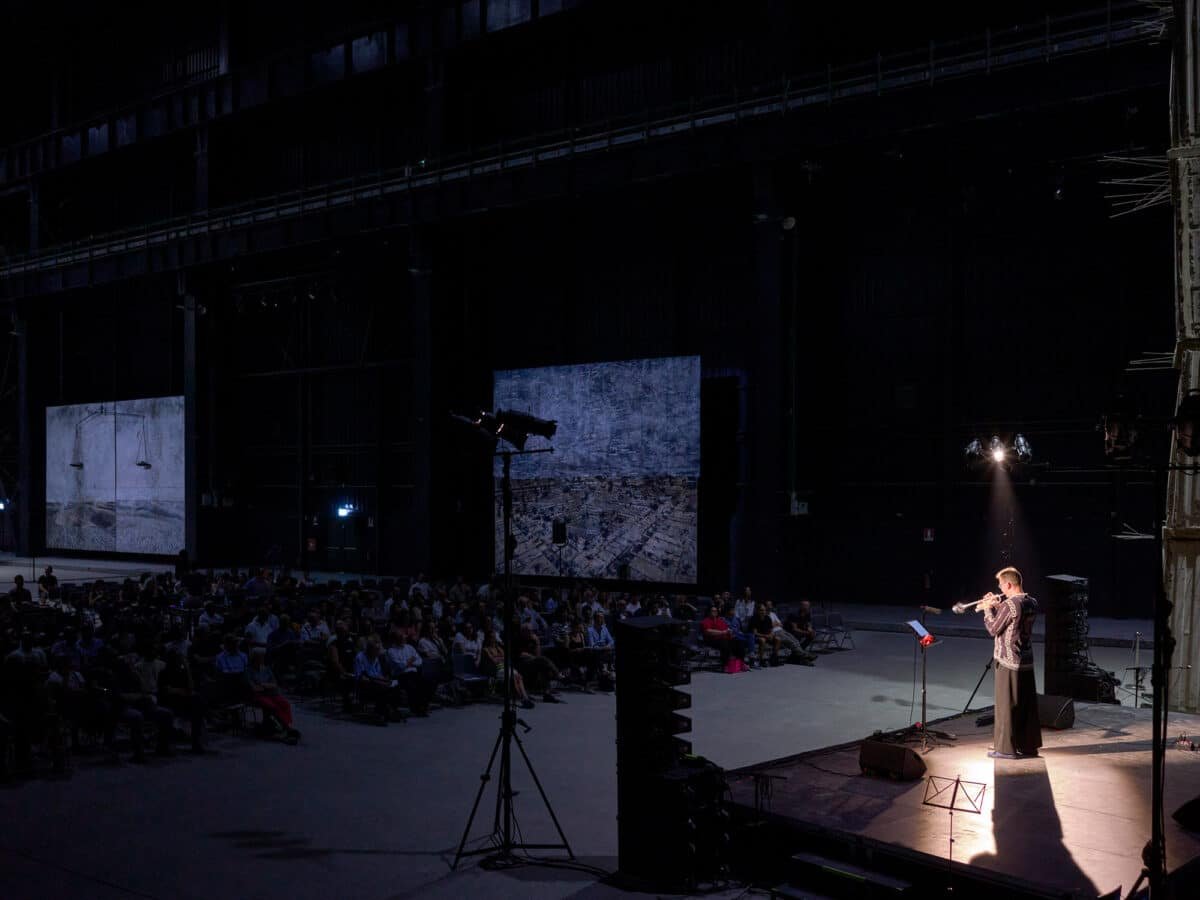
The festival’s broader format has historically included spaces such as contemporary art centres, industrial cultural venues and other specialist locations. Previous editions have used Pirelli HangarBicocca, Fabbrica del Vapore, MEET Digital Culture Center, Conservatorio G. Verdi and other Milanese locations.
This variety allows Milano Musica to present electronic music, chamber music, orchestral works, multimedia productions, performances and educational projects in settings suited to each artistic concept.
Stage-by-stage schedule
Because Milano Musica is a multi-venue festival, there is no single stage-by-stage timetable. Each venue operates as an individual performance location with its own programme.
The currently published 2027 schedule includes:
- Teatro alla Scala: Klangforum Wien, Léo Warynski, Katrien Baerts, Matteo Cesari and the Coro di Voci Bianche dell’Accademia Teatro alla Scala.
- Auditorium di Milano: Orchestra Sinfonica di Milano, Sylvain Cambreling and Nicolas Altstaedt.
- Teatro alla Scala: Orchestra Sinfonica Nazionale della RAI, Pierre Bleuse, Maria Husmann and Francesco Dillon.
- Teatro Elfo Puccini: Opificio Sonoro and performers presenting Francesco Filidei’s L’Opera (forse) with a creative workshop.
Additional venues and programmes may be added as the 2027 festival schedule develops.
Set times
The official 2027 programme already publishes several performance times.
The Teatro alla Scala opening concert begins at 8:30 PM. The Auditorium di Milano programme begins at 8:00 PM, while the later Teatro alla Scala orchestral concert also begins at 8:30 PM.
The Teatro Elfo Puccini programme uses a different format, with a performance and creative workshop scheduled in the afternoon. The currently published programme lists the performance at 4:00 PM.
Performance lengths vary according to the programme. The opening Teatro alla Scala concert is listed at approximately 70 minutes, while the Orchestra Sinfonica Nazionale della RAI programme is approximately 75 minutes.
Visitors should check each individual event page for final starting times, duration and any interval arrangements.
Ticket types
Milano Musica uses individual concert tickets as well as multi-concert subscriptions.
For 2027, the final ticket structure may vary by venue, but the latest published pricing provides a useful planning guide. Previous edition prices converted to USD are approximately:
- Teatro alla Scala: $47, $23 or $12 depending on seating category
- Standard admission at participating venues: approximately $12
- Selected special performances: approximately $6
- Selected special projects at Fabbrica del Vapore: approximately $6
- Student admission for eligible concerts: approximately $6
The festival’s previous subscription structure included a 10-concert subscription at approximately $152, with assigned seating for selected Teatro alla Scala performances and a programme booklet included.
Student subscriptions were approximately $59, while the Milano Musica member subscription was approximately $94. Partner-organisation subscriptions were approximately $117. These are previous-edition figures converted from euros and are not confirmed 2027 prices.
Online purchases can also include service fees.
VIP & premium options
Milano Musica does not operate a large commercial VIP hospitality system.
The main premium-style option is assigned seating at Teatro alla Scala. Previous ticket structures used different seating categories for major Scala concerts, with the highest published standard category equivalent to approximately $47.
The 10-concert subscription also provides a broader festival experience, with assigned seating at selected Teatro alla Scala performances and access to a programme booklet.
There is no indication of a festival-wide backstage pass, VIP lounge or hospitality package in the currently published 2027 information.
Any premium seating or special access should be confirmed through the official ticket office once the relevant concert goes on sale.
Event rules
Milano Musica concerts take place in established theatres, concert halls and cultural venues, so visitors must follow the rules of the individual venue as well as festival instructions.
Important visitor requirements include:
- Bring a valid ticket or booking confirmation.
- Arrive before the published performance time.
- Follow assigned seating instructions where applicable.
- Keep mobile phones silent during performances.
- Follow venue instructions regarding photography and recording.
- Respect performers and other audience members.
- Follow security and emergency procedures.
- Check individual event pages for special admission requirements.
The festival specifically states that entry is generally not permitted after a concert has begun except during an interval where one is scheduled. The ticketing information also states that a delay of more than five minutes after the published start time does not qualify for a ticket refund.
Because individual performances are hosted by different venues, visitors should also check the specific rules of the theatre or cultural space they are attending.
How to get there
Milan is one of Italy’s principal transport hubs and is well connected by high-speed rail, regional trains, airports, metro services, trams and buses.
Visitors arriving by train can use Milano Centrale, Milano Porta Garibaldi, Milano Cadorna and other railway stations depending on their route.
International visitors can fly into Milan Malpensa, Milan Linate or Milan Bergamo airports before continuing into the city.
Once in Milan, visitors should navigate directly to the specific concert venue rather than to a single festival entrance because Milano Musica is distributed across the city.
For Teatro alla Scala, the central location makes it particularly convenient to reach by metro and tram. Auditorium di Milano, Teatro Elfo Puccini and other participating venues can similarly be reached using Milan’s extensive public transport network.
Public transport & parking
Public transport is generally the most practical way to move between Milano Musica venues.
The Milan Metro provides connections between central Milan and many surrounding districts, while trams and buses cover areas beyond the metro network.
Visitors attending several concerts should check travel time between venues in advance because Milano Musica’s programme can place performances in different parts of the city.
Parking is available in various parts of Milan, but central parking can be limited and traffic restrictions may apply. Visitors driving to Teatro alla Scala or other central venues should allow additional time and check access restrictions before travelling.
Using a park-and-ride facility or parking farther from the city centre and continuing by metro can be a practical alternative for visitors arriving by car.
Accommodation areas
Because Milano Musica takes place across Milan, there is no single official festival accommodation area.
Central Milan is convenient for visitors attending multiple concerts and provides easy access to restaurants, museums, shopping areas and public transport.
Areas around Duomo, Brera, San Babila and Porta Venezia are useful for visitors who want to remain close to the central cultural district.
The area around Milano Centrale offers a large range of hotels and excellent connections for visitors arriving by train or travelling to different parts of the city.
Visitors attending concerts at venues outside the historic centre may prefer accommodation close to a metro station rather than selecting a hotel solely according to its distance from Teatro alla Scala.
For a multi-day festival visit, a centrally located hotel can make it easier to attend evening concerts and return to accommodation without long transfers.
Food & drink
Milano Musica is a contemporary music festival rather than a food-focused event, so food and drink are generally found around the individual venues rather than as part of the festival programme.
Milan provides a wide selection of cafés, Italian restaurants, bars, bakeries and casual dining options throughout the city.
Visitors attending Teatro alla Scala can combine their concert with dinner in central Milan, while those attending Auditorium di Milano or Teatro Elfo Puccini can choose restaurants and cafés in the surrounding neighbourhoods.
Concert venues may have their own restrictions on food and beverages inside auditoriums, so visitors should follow the rules of the individual location.
For concerts with afternoon start times, cafés and casual restaurants can be convenient before or after the performance. Evening concerts can easily be combined with dinner elsewhere in the city.
Accessibility
Accessibility arrangements vary between venues because Milano Musica uses multiple independent theatres, concert halls and cultural spaces.
Visitors with mobility requirements should check the accessibility facilities of the specific venue before purchasing tickets. Requirements can differ depending on entrances, seating arrangements, lifts and accessible toilets.
The festival has established concession arrangements for students and other eligible groups, while its ticketing office can provide information about individual performances and seating.
Visitors requiring an accessible seat or assistance should contact Milano Musica before attending so that the organisation and venue can provide the most appropriate information.
The festival’s published contact details are info@milanomusica.org and +39 02 67397850.
Best days to attend
The most suitable days depend on the type of contemporary music experience visitors want from Milano Musica.
The opening Teatro alla Scala programme is particularly significant because it combines Klangforum Wien, Léo Warynski, Katrien Baerts, Matteo Cesari and the children’s choir of the Accademia Teatro alla Scala. It also includes a new Milano Musica commission by Francesco Filidei receiving its world premiere.
The Auditorium di Milano programme offers a combination of contemporary and classical repertoire, pairing Francesca Verunelli’s cello concerto with Beethoven’s “Pastoral” Symphony and featuring Nicolas Altstaedt under Sylvain Cambreling.
The Teatro alla Scala programme featuring the Orchestra Sinfonica Nazionale della RAI focuses strongly on György Kurtág and includes an Italian premiere by Vito Žuraj.
Visitors interested in interdisciplinary work and younger audiences may find the Teatro Elfo Puccini programme particularly relevant because it combines Filidei’s theatrical work with a creative laboratory.
Previous year’s highlights
The 2026 edition, titled “Lontananze creative,” continued Milano Musica’s focus on contemporary composition and new forms of musical listening.
The programme featured eight world premieres and thirteen Italian premieres, including international commissions and co-commissions. Major composers represented in the programme included Georges Aperghis, Giovanni Bertelli, Silvia Borzelli, Carmine Emanuele Cella, Jérôme Combier, Milica Djordjević, Peter Eötvös, Beat Furrer, Stefano Gervasoni, Adriano Guarnieri, Justė Janulytė, Riccardo Nova, Enno Poppe, Alberto Posadas, Benjamin Scheuer, Lorenzo Troiani and Giovanni Verrando.
One major highlight was the Teatro alla Scala concert featuring Orchestra Sinfonica Nazionale della RAI under Michele Gamba. The programme included Carmine Emanuele Cella’s When the moon of mourning is set, Péter Eötvös’s Siren’s song and Georg Friedrich Haas’s I don’t know how to cry.
Pirelli HangarBicocca hosted performances combining acoustic instruments and electronic technology, including works by Yan Maresz, Georges Aperghis, Emmanuel Nunes, Riccardo Nova and Justė Janulytė.
The festival also presented programmes at Fabbrica del Vapore and Teatro Arsenale, including performances by Schallfeld Ensemble and Azione Improvvisa Ensemble.
The 2026 festival concluded with programmes at the Ridotto dei Palchi of Teatro alla Scala, Auditorium Angelicum and Conservatorio G. Verdi. The festival also reported several sold-out performances during the edition.
Official tickets
Official Milano Musica tickets are sold through the festival’s ticketing system and authorised online channels.
The festival’s ticket office provides individual concert tickets and subscriptions. Previous editions have used Vivaticket for online purchases, while tickets have also been available through the Teatro alla Scala ticket office and participating venues.
The latest published ticket structure provides these previous-edition planning figures:
- Teatro alla Scala tickets: approximately $47, $23 and $12
- Standard tickets at most participating venues: approximately $12
- Selected special performances: approximately $6
- 10-concert subscription: approximately $152
- Milano Musica member subscription: approximately $94
- Student subscription: approximately $59
- Partner-organisation subscription: approximately $117
These prices are converted from the latest published euro prices and should be treated as previous-edition reference prices until the 2027 ticket structure is officially confirmed.
The official festival website should be used for current availability, ticket categories, seating information and any booking fees.
Contact information
- Phone: +39 02 67397850
- Email: info@milanomusica.org
- Official website: https://www.milanomusica.org/
- Festival: 36th Festival Milano Musica – Culture acustiche
- City: Milan, Italy
Location
FAQ
What is the primary artistic focus of the festival?
The festival centers on contemporary classical music, showcasing pioneering twentieth-century masterpieces alongside world premieres. It bridges historical avant-garde movements with cutting-edge modern compositions through intensive curation.
Where do the festival concerts and events take place?
Events are hosted across iconic Milanese venues, including Teatro alla Scala, historic churches, and modern cultural spaces. This multi-site approach pairs each musical performance with an acoustically and architecturally suitable environment.
How can attendees access educational talks and academic symposia?
Academic panels, masterclasses, and musicological roundtables are open to the public, offering deep contextual insights. Many sessions allow audience participation and auditing to foster open intellectual exchange.
Are there resources available for audience members new to contemporary music?
Comprehensive program guides, introductory composer talks, and educational notes are provided for all major concerts. These resources help listeners decode complex modern idioms and understand the creative genesis of the works.
How are international collaborations integrated into the seasonal schedule?
The festival actively invites renowned global ensembles, soloists, and guest conductors to perform alongside Italian institutions. These cross-border partnerships foster rich artistic exchanges and showcase diverse international performance traditions.

답글 남기기