

À quoi s’attendre en 2027
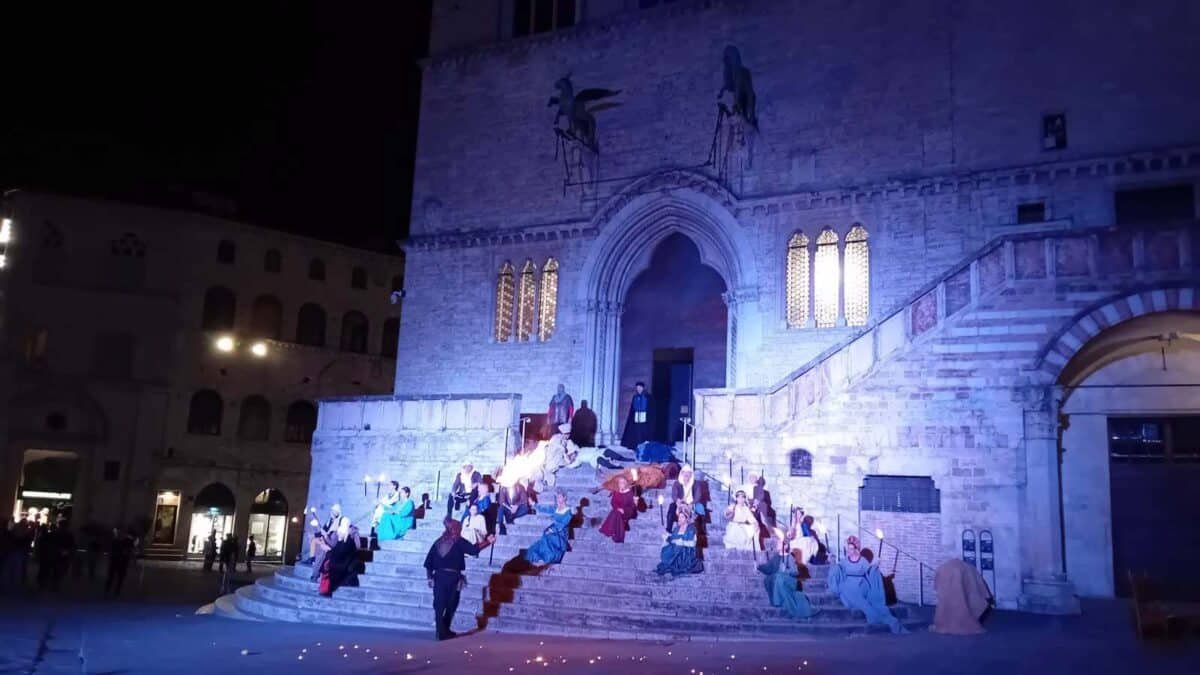
Perugia1416 Festival 2027 is expected to return to the historic centre of Perugia in June 2027, transforming the medieval heart of the Umbrian capital into a large-scale historical re-enactment celebrating the period between the Middle Ages and the Renaissance.
The festival recreates the arrival of the mercenary captain Braccio Fortebracci in Perugia and the celebrations surrounding his return to the city. Historical parades, medieval costumes, sporting competitions, theatrical performances, flag-waving displays, traditional crafts, exhibitions, taverns and living-history activities combine to create an immersive cultural programme.
The festival is organised around the city’s five historic Rioni, or districts:
Profitez de votre événement sans stress avec Italy Travelo
Que vous voyagez pour un festival mondialement connu, un concert en direct, une célébration culturelle ou un événement professionnel, Italy Travelo vous aide à simplifier chaque étape de votre voyage. Notre équipe propose une assistance personnalisée aux voyages, vous permettant de vous concentrer sur la création de souvenirs durables.
- Porta San Pietro
- Porta Eburnea
- Porta Santa Susanna
- Porta Sole
- Porta Sant’Angelo
These districts compete for the Palio through a series of sporting and artistic challenges while also participating in the grand historical procession. The programme is designed for visitors of different ages, with dedicated children’s activities, medieval games, demonstrations, cultural tours and traditional food experiences.
Dates des événements
Période du festival 2027 : Juin 2027 (Dates à déterminer)
The exact 2027 dates have not yet been announced. The festival traditionally takes place during June and centres on a concentrated programme in Perugia’s historic centre.
Visitors should check the official Perugia1416 website for the confirmed 2027 programme, individual event times and any additional activities announced before the festival.
Vous visitez cet événement ? Ne manquez pas ces activités et expériences locales étonnantes pendant votre séjour.
Lieux et lieux de festival
Perugia1416 is spread throughout the historic centre rather than taking place at a single enclosed festival ground. Piazza IV Novembre, Corso Vannucci, Piazza della Repubblica, Piazza Matteotti, Via Maestà delle Volte and other central locations form the main setting for the historical activities.
Important festival locations include:
- Piazza IV Novembre
- Corso Vannucci
- Piazza della Repubblica
- Piazza Matteotti
- Palazzo dei Priori
- Cathedral of San Lorenzo
- Logge di Braccio
- Giardini Carducci
- Centro Espositivo Galeazzo Alessi
- Via Maestà delle Volte
- Via G. Oberdan
- Historic taverns associated with the five Rioni
The central location makes it possible to move between many activities on foot. The main procession, competitions, flag displays and public performances use some of Perugia’s most recognisable historic spaces.
Programme culturel complet
The 2027 programme is expected to combine historical re-enactment, traditional performance, local heritage and public entertainment.
The established programme includes:
- Grand historical procession
- Entry of Braccio Fortebracci
- Palio competitions between the five Rioni
- Historical archery
- Mossa alla Torre
- Corsa del Drappo
- Medieval theatrical performances
- Flag-waving displays
- Medieval dance
- Choir and musical performances
- Ancient craft demonstrations
- Living-history presentations
- Historical exhibitions
- Medieval taverns
- Traditional Umbrian food
- Children’s Palio
- Medieval games and activities
- Guided cultural tours
- Historical exhibitions and installations
- Street performances
- Educational and heritage activities
The programme can also include special exhibitions and projects developed with cultural organisations, schools, artists and local associations. Recent editions have featured the Ludus Perusinus historical game, exhibitions of previous Palii and demonstrations connected with medieval life.
Traditions et performances mises en avant
One of the defining traditions is the competition between the five Rioni. Each district represents its own historical identity and participates in the Palio through athletic competitions, processions and performances.
Historical archery
Each district fields archers using historical-style bows and costumes. The competition emphasises precision and recreates the atmosphere of medieval archery.
Mossa alla Torre
This competition combines physical strength, tactics and teamwork. The participating district teams compete against each other using a specially constructed tower as part of the challenge.
Corsa del Drappo
The Drape Race is a relay-style endurance and speed competition that takes place through the central streets around Corso Vannucci and Piazza IV Novembre. Teams compete to complete the established course and record the strongest result.
Flag-waving and medieval dance
Flag performers, musicians and dancers add movement and spectacle to the public programme, particularly around the main squares and procession routes.
Historical theatre
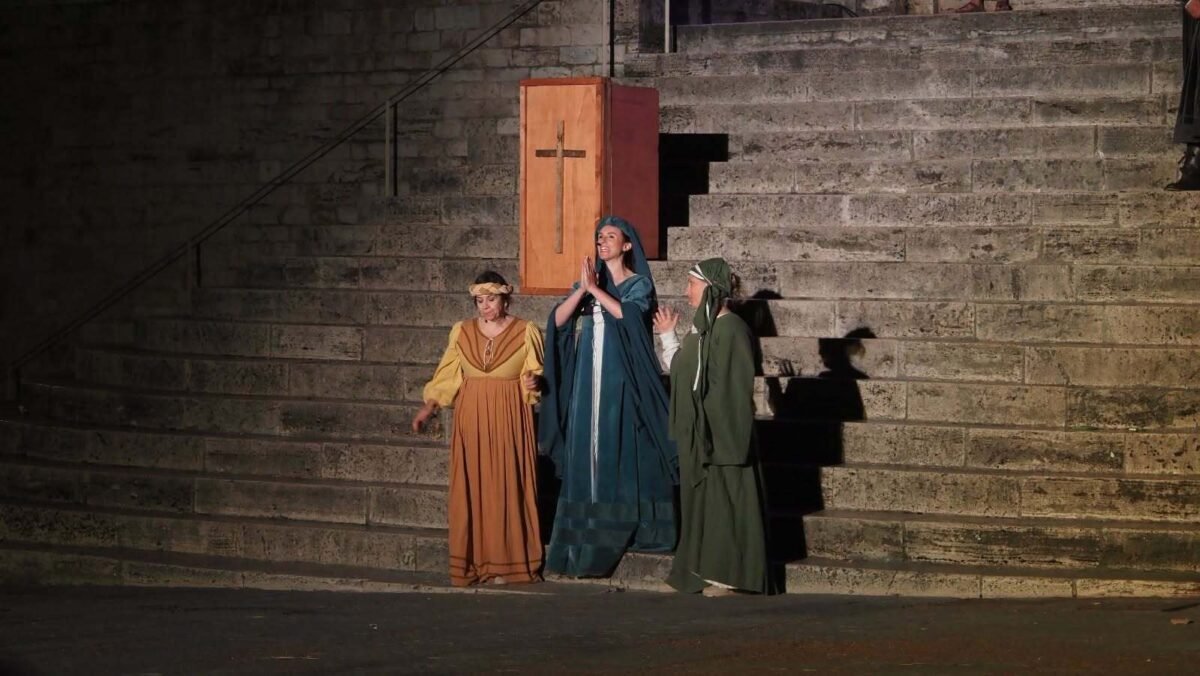
The Rioni can also present theatrical performances inspired by historical themes, combining costumes, storytelling and staged performances.
Points forts historiques et patrimoniaux
The central historical figure of Perugia1416 is Braccio Fortebracci, the mercenary captain whose return to Perugia is recreated during the festival.
The historical narrative connects the city with the transition between the Middle Ages and Renaissance and uses archival material as part of the basis for the re-enactment. The festival’s central story recalls Braccio’s return after exile and his emergence as the city’s new lord.
The event also highlights the historic identity of Perugia’s five Rioni. Their participation goes beyond the main competitions, with district costumes, banners, taverns, theatrical performances and community activities contributing to the wider historical atmosphere.
Visitors can also encounter demonstrations of medieval crafts, historical objects, traditional costumes and living-history presentations designed to explain how aspects of medieval Perugian life may have looked.
Programme des événements et activités
The detailed 2027 schedule has not yet been published, but the established format can include activities throughout the day.
Morning activities
Morning programming can include craft markets, exhibitions, cultural displays, guided tours and family activities in the historic centre.
Afternoon activities
Afternoons can feature flag-waving performances, historical demonstrations, children’s competitions, cultural tours and district activities.
Evening programme
Evening events traditionally include the main sporting competitions, theatrical performances, tavern activities, historical processions and major public celebrations.
Procession historique
The grand procession is one of the central attractions, bringing together the five Rioni, historical figures, musicians, dancers, performers and guest delegations.
Children’s programme
Children can participate in their own medieval-themed activities, including a children’s Palio with games such as tug-of-war and running competitions.
Types de billets et options d’entrée
Many public Perugia1416 activities have historically been free to attend, particularly outdoor performances, public competitions, processions, exhibitions and demonstrations.
Previous editions have also included selected paid cultural experiences.
A previous guided visit connected with the historical programme was offered at approximately $6.89 per person, while certain museum or exhibition visits have used special reduced admission arrangements. Some guided activities have been offered free of charge, subject to reservations or group capacity.
For 2027, visitors should expect a mixture of:
- Free public festival activities
- Free outdoor performances
- Free historical processions
- Free exhibitions and demonstrations
- Paid guided tours
- Reduced-price cultural visits
- Reservation-based experiences
Final 2027 ticket and reservation information should be confirmed through the official festival programme.
Visites guidées et expériences culturelles
Guided experiences provide a way to discover Perugia’s medieval history beyond the main performances.
Previous programmes have included tours of the Noble Colleges of the Cambio and Mercanzia, historic buildings, exhibition spaces and routes connected with Braccio Fortebracci.
Themed walking tours have also explored hidden streets, historic buildings and stories from Perugia’s past. Earlier editions included a tour dedicated to the places associated with Braccio, as well as theatrical urban trekking designed to combine storytelling with the city’s historic environment.
Some tours have been free with reservations, while others have carried a small admission charge. Group sizes can be limited, so advance booking is recommended when reservations open.
Cérémonies et célébrations spéciales
The festival’s ceremonies connect the historical narrative with the modern competition between the Rioni.
A central ceremony involves the blessing of the Palio and district banners at the Cathedral of San Lorenzo. The event formally introduces the symbols carried by the competing districts.
The historical procession recreating Braccio’s entry into Perugia is another major ceremonial moment. The procession moves through the historic centre and culminates around Piazza IV Novembre, where the symbolic keys of the city are presented.
The final celebrations include the announcement of the winning Rione and the presentation of the Palio and Victory Collar. These traditions give the competition a formal conclusion while maintaining the historical character of the festival.
Règles du festival
Perugia1416 operates according to regulations governing the district competitions, performances and sporting challenges.
Visitors should:
- Follow instructions from festival staff and venue personnel.
- Remain behind designated barriers during competitions and processions.
- Avoid entering restricted competition areas.
- Follow instructions concerning pedestrian crossings during processions and races.
- Respect performers, participants and historical displays.
- Follow venue rules for photography and recording.
- Keep children supervised around crowded areas and sporting activities.
- Follow any specific instructions issued for individual guided tours or exhibitions.
The official competition regulations determine how the Rioni participate and how points are awarded toward the Palio.
Comment y arriver
Perugia is the capital of Umbria and is connected with other major Italian destinations by rail and road.
Par avion
Perugia San Francesco d’Assisi Airport is the closest airport serving the city. Visitors can also consider airports serving Rome, Florence and other major Italian cities when planning an international journey.
Par train
Perugia can be reached by rail from several Italian cities, with connections through larger railway hubs. Perugia’s railway network connects the city with destinations elsewhere in Umbria and central Italy.
En voiture
Driving can be convenient for visitors combining Perugia1416 with a wider Umbrian itinerary. However, the historic centre has restricted traffic areas, so visitors should check local access regulations and use designated parking outside the central pedestrian areas.
On foot
Once inside the historic centre, many major Perugia1416 locations can be reached on foot. Piazza IV Novembre, Corso Vannucci, Piazza della Repubblica and surrounding streets are within the main pedestrian area.
Transports en commun et stationnement
Perugia’s public transport network provides connections between the railway station, surrounding neighbourhoods and the historic centre.
The Minimetrò is particularly useful for reaching the upper city from areas connected to the network. During the festival period, operating hours can be extended for selected evenings depending on the annual programme. The latest programme included an extended Saturday service.
Visitors arriving by car should use public parking areas outside the most restricted parts of the historic centre and continue by public transport or on foot.
Because the festival occupies central streets and squares, parking immediately beside individual performances may not be available.
Zones d’hébergement
Centre historique de Pérouse
The most convenient option for visitors who want to remain close to the main festival locations. Many activities can be reached on foot from accommodation around Corso Vannucci and Piazza IV Novembre.
Zone de la gare de Pérouse
Useful for visitors arriving by train and looking for straightforward transport connections into the historic centre.
Santa Lucia and surrounding areas
These areas provide alternatives outside the busiest historic centre while remaining connected to central Perugia.
Lake Trasimeno
Visitors extending their trip can stay around Lake Trasimeno and combine Perugia1416 with sightseeing in the surrounding Umbrian countryside.
Central Umbria
Agriturismi, country houses and small hotels around Perugia provide options for visitors travelling by car and planning a wider cultural itinerary.
Cuisine et spécialités traditionnelles
Food is an important part of the Perugia1416 experience, particularly through the festival taverns associated with the Rioni.
Previous programmes have featured taverns serving traditional Umbrian dishes alongside recipes inspired by medieval cuisine. The festival’s wider cultural project also encourages research into traditional culinary recipes and local food heritage.
Visitors can expect opportunities to sample regional specialities such as:
- Umbrian cured meats
- Fromages locaux
- Handmade pasta
- Legumes
- Légumes de saison
- Porchetta
- Truffle-based dishes
- Traditional breads
- Umbrian extra virgin olive oil
- Vins locaux
- Medieval-inspired recipes
Festival taverns also provide an informal setting where visitors can experience the social side of the Rioni and enjoy food in a medieval-themed environment.
Accessibilité
The festival takes place mainly in the historic centre of Perugia, where streets, squares and buildings can include steep sections, steps, cobblestones and uneven surfaces.
Visitors with reduced mobility should plan their route in advance, particularly for locations around historic buildings and elevated parts of the city.
Some festival activities take place outdoors in public squares and streets, while others are inside historic buildings. Accessibility can therefore vary significantly from one activity to another.
Visitors requiring specific assistance should contact Perugia1416 before attending to confirm access arrangements for individual venues and activities.
Meilleures expériences culturelles
Grand historical procession
The procession provides one of the clearest representations of the festival’s historical theme, combining the five Rioni, costumes, banners, performers and the story of Braccio’s return.
Rione competitions
The archery, tower challenge and Drape Race demonstrate the competitive side of Perugia1416 and explain why the Palio is central to the event.
Medieval Artisan District
Craft demonstrations offer visitors an opportunity to see traditional techniques and learn about historic trades.
Historical tours
Guided visits provide additional context about Perugia’s monuments, medieval institutions and the places associated with Braccio Fortebracci.
Medieval taverns
The Rione taverns combine Umbrian food, local social traditions and the atmosphere of the historical re-enactment.
Children’s Palio
Families can experience a dedicated programme of medieval-themed games and competitions designed for younger visitors.
Living history
Historical demonstrations and the recreation of medieval activities provide a more educational side of the festival, connecting entertainment with research into Perugia’s past.
Faits marquants de l’année précédente
The previous edition continued the festival’s established combination of historical competition, public performances and cultural activities.
Highlights included the Medieval Artisan District, exhibitions of the Palii, demonstrations of the Ludus Perusinus game, the blessing of the Palio and Rioni banners, historical archery, theatrical competition and the Mossa alla Torre.
The central historical procession recreated Braccio Fortebracci’s entry into Perugia, followed by the symbolic handover of the city keys. The evening programme also included the Corsa del Drappo and the proclamation of the winning Rione.
The programme also expanded the historical theme through the children’s Palio, living-history presentations and a recreation of the ancient Perugian stone-throwing game known as the Sassaiola or Ludus Perusinus.
Billets officiels
Most of the main public activities of Perugia1416 have historically been accessible without a general festival admission ticket, while selected guided tours, museum visits and special cultural experiences may require separate reservations or admission.
For 2027, visitors should check the official festival website for the final programme, reservation requirements and any paid activities once the new edition is announced.
Site officiel : https://www.perugia1416.com/en/home_en/
Courriel : perugia1416@gmail.com
Vidéo
Localisation
FAQ
What is the historical significance behind the naming of the Perugia1416 festival?
The festival commemorates the pivotal year 1416 when condottiero Braccio Fortebracci entered Perugia to establish his rule. This historic event marked the definitive end of bitter medieval conflicts and initiated the cultural rebirth of the Renaissance. The annual reenactment celebrates this turning point that unified the local districts under a single administration.
Where can visitors purchase official tickets for grandstand seating and major events?
Tickets can be bought securely online through the official festival web portal or at designated physical box office stations in Perugia. Advanced booking is strongly recommended for grandstand seating during the palio and main historical processions. Detailed ticketing guidelines and customer support contacts are readily accessible on the main portal.
Are there accessible viewing areas for visitors with reduced mobility during the parades?
Festival organizers provide designated accessible viewing zones along primary parade routes and near the main competition squares. Historic cobblestone streets can present navigation challenges, so early arrival is encouraged to secure optimal placement. Patrons are advised to contact the festival association via email prior to arrival for specific arrangement details.
What are the primary public transit options to reach the historic center of Perugia?
Visitors arriving by train can utilize the convenient minimetrò automated transit system directly from the main railway station into the city center. Local bus lines and regional coach services also connect surrounding towns directly to the perimeter parking structures. Comprehensive transit guidance and parking maps are published on the official festival visitor pages.
How can local residents or international visitors participate in the costumed processions?
Individuals interested in joining the historic corteo can apply directly through their preferred neighborhood rione association months in advance. Workshops are available to help participants create authentic fifteenth-century costumes that meet strict historical guidelines. This grassroots involvement is a core component of the festival's community-driven mission.

Laisser un commentaire