

-
Mai 7, 2027
Veranstaltungsdatum:
-
Mai 9, 2027
Veranstaltungsende:
What to expect
Bari’s Greatest Celebration: Festa di San Nicola is the biggest festival in Bari and one of the most important religious celebrations in Southern Italy and one of the most symbolic events in the city. It is dedicated to Nicholas of Myra, also known as Nicholas of Bari, an early Christian bishop of Greek descent who lived between the years two hundred seventy and three hundred forty three, beloved figure in both Western and Eastern Christian traditions, best known as protector of children, sailors, and the poor, and venerated in Eastern Orthodoxy as miracle worker. The event honors the city’s patron saint whose relics are housed in the Basilica di San Nicola, a striking church made from white limestone commissioned in ten eighty nine to store the relics.
Translation of Relics: The festival traces back to ten eighty seven, when Bari sailors retrieved Saint Nicholas’s relics from Myra in Lycia after the city had fallen into Muslim hands and there arose desire in Western world to bring them to safety. The first translation was carried out by sixty six sailors from Bari, including priests Lupo and Grimoldo, who left with three ships. The remains arrived in Bari and were placed under altar of crypt of new church promoted by Abbot Elia, later bishop of Bari, consecrated by Pope Urban II. This act boosted Bari’s religious status and economy, making the basilica one of Christendom’s great pilgrimage churches and a rare shrine venerated by Catholic and Orthodox faithful alike.
Three Days of Faith and Folklore: Expect a vibrant cultural festival that brings together locals and pilgrims from around the world, with religious processions, historical reenactments, music, fireworks, traditional cuisine, markets, and concerts. The atmosphere blends solemn devotion with exuberant community spirit, with traditional Pugliese music and folk dances including pizzica and tarantella performed by local bands in squares. The city becomes a vibrant center of communal faith, attracting approximately twenty thousand pilgrims paying homage.
Genießen Sie Ihre Veranstaltung stressfrei mit Italy Travelo
Egal, ob Sie zu einem weltberühmten Festival, einem Live-Konzert, einer kulturellen Feier oder einer Geschäftsveranstaltung reisen – Italy Travelo hilft Ihnen, jeden Schritt Ihrer Reise zu vereinfachen. Unser Team bietet personalisierte Reiseunterstützung, sodass Sie sich darauf konzentrieren können, bleibende Erinnerungen zu schaffen.
Veranstaltungstermine
Main Festival Period: May 7, 2027 – May 9, 2027. The feast is celebrated over three consecutive days each year to mark the arrival of relics. The program begins on the evening of the first day with historical reenactment, continues on the second day with solemn and sea processions, and culminates on the third day with feast day Mass, cultural events, and spectacular fireworks display over the sea.
Besuchst du diese Veranstaltung? Verpasse diese großartigen Aktivitäten und lokalen Erlebnisse nicht, solange du hier bist.
Veranstaltungsorte und Veranstaltungsorte
Basilica di San Nicola: The white limestone basilica in Bari Vecchia, located at Largo Abate Elia, is the spiritual heart. Built to store stolen relics, it houses the tomb and relic under altar of crypt. Solemn Masses, pilgrim gatherings, and departure of statue procession take place here. The basilica is also celebrated on December sixth for patron saint’s feast, but the larger city festival marks translation.
Old Port and Lungomare: The old port, Saint Nicola dock, and waterfront are central for sea procession. The statue is brought in a boat and arrives to dock, then placed on trawler to be taken to offing. Hundreds of boats accompany statue on water, symbolizing saint’s protection of sailors and fishermen and Bari’s deep maritime roots. The waterfront is also viewing area for evening fireworks.
Bari Vecchia: The narrow streets of Bari Vecchia, the old town with its medieval layout, Norman-Swabian Castle, and Piazza del Ferrarese, form route for historical parade and grand procession. The castle to basilica route recreates arrival of relics, with medieval sailors, nobles, and clergy in costume.
City Squares: Piazza del Ferrarese, Piazza Mercantile, and other squares host concerts, folk groups, flag-waving parades, food fairs, and art exhibitions. Local bands perform, creating festive ambiance inviting everyone to join celebrations.
Komplettes Urlaubsprogramm
First Day – Historical Reenactment: The festival kicks off with historical reenactment of arrival of Saint Nicholas’s relics. The event consists of spectacular procession starting at city’s port and continuing through streets of old town. More than four hundred participants in medieval costumes as sailors, nobles, clergy, and over five hundred walk-on roles recreate moment when relics were first brought to Bari. The procession is accompanied by music, drum beats, cheers, flag-waving parade, folkloristic groups, and torchlight procession. The caravel is followed, with image of Saint arriving to basilica.
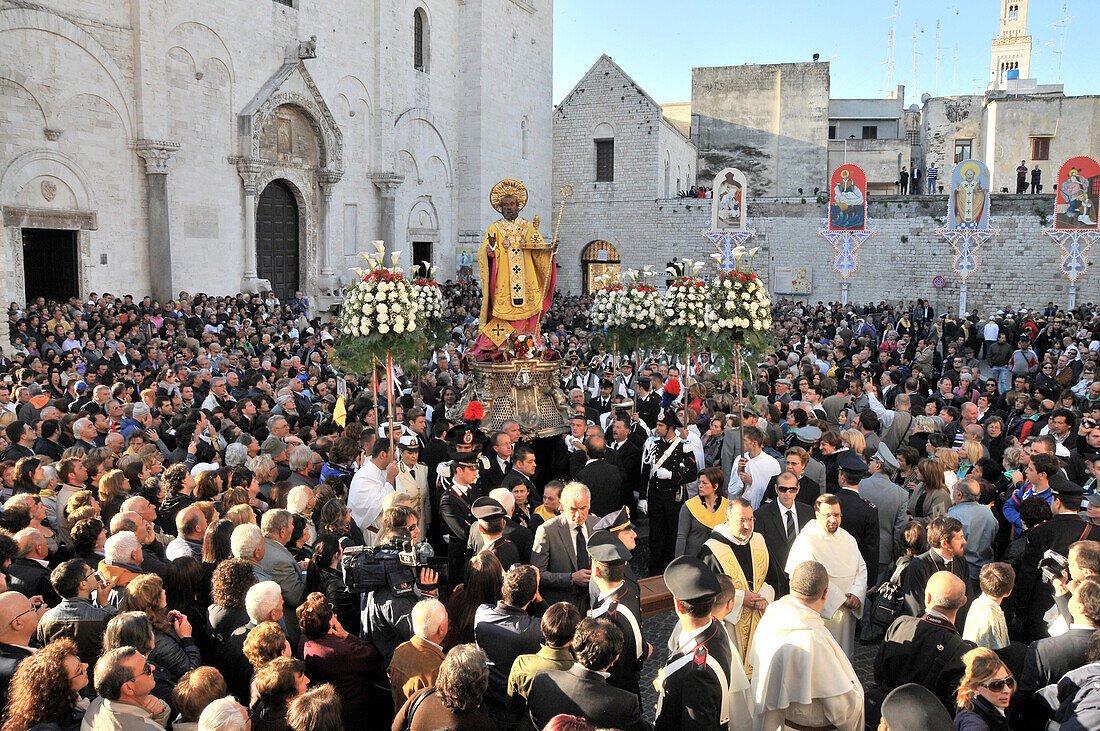
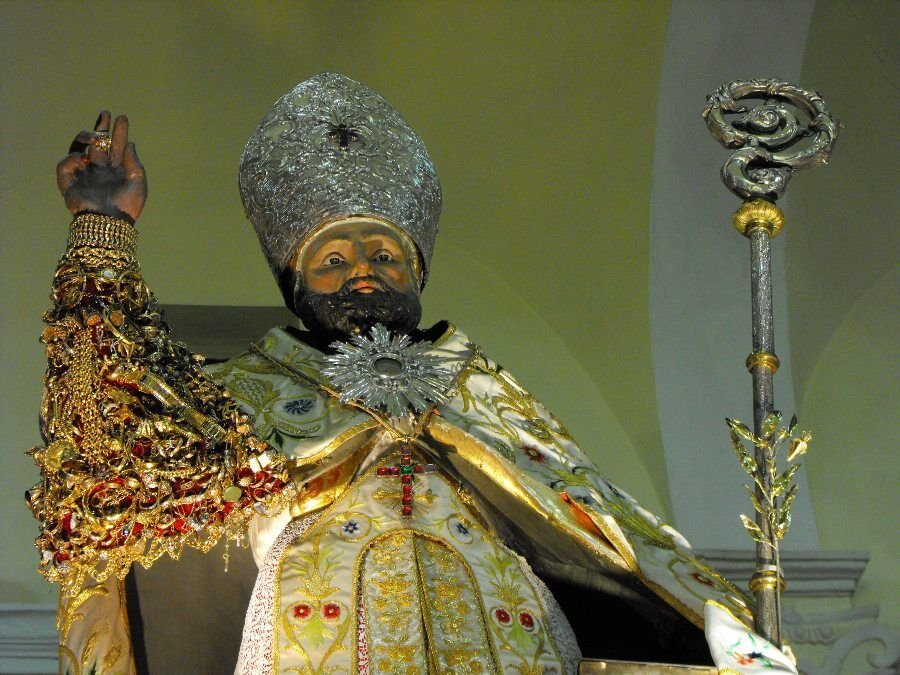
Second Day – Solemn and Sea Procession: The day begins with sunrise Mass followed by solemn Mass at Basilica attended by local authorities, clergy, and thousands of pilgrims. Following Mass, silver statue of Saint Nicholas is carried out of basilica and paraded through streets in grand procession by chosen portatori bearers. One of most evocative moments is procession at sea, where statue is placed on boat and taken out to sea among flotilla of boats, followed by prayers and blessings. The statue touches land in evening and continues through narrow streets of Bari Vecchia.
Third Day – Feast and Fireworks: The final day is dedicated to celebrating feast day. Day begins with solemn Mass and continues with cultural events including traditional music performances, street food fairs, art exhibitions, and ceremonial services offering unique opportunity to attend religious rites. In evening, festival culminates with spectacular fireworks display over sea, illuminating sky and marking end of celebrations. Fireworks show is highlight drawing crowds to waterfront.
Hauptattraktionen und Höhepunkte
Historical Corteo: The medieval historical corteo with over four hundred to five hundred participants in costume recreating translation of relics is highlight, with caravel, torchlight, and flag-waving, accompanied by drum beats and cheers, winding from Norman-Swabian Castle to Basilica.
Sea Procession: The iconic sea procession where silver statue is taken out to sea on fishing boat accompanied by many followers and hundreds of boats is most photographed moment. It symbolizes protection of sailors and Bari’s maritime identity, with statue carried to offing and back.
Statue Procession through Old Town: Grand procession through Bari Vecchia with statue carried by portatori, through narrow streets to Piazza del Ferrarese, with prayers, blessings, and participation of pilgrims from all over world.
Fireworks over Sea: Spectacular pyrotechnic display over Adriatic at night, with reflections on water, marking climax of three days of homage.
Religious Significance: Opportunity to worship at saint’s tomb, attend ceremonial services, venerate relic tooth associated with San Nicola tradition, and witness rare Catholic-Orthodox shared devotion, as Orthodox Christians hold Saint Nicholas in high regard.
Märkte, Dekorationen und Themenbereiche
Lungomare and Port Decorations: Port area decorated with maritime flags, lights, and floral arrangements. Boats in flotilla decorated for procession. Evening waterfront illuminated for fireworks.
Old Town Decorations: Bari Vecchia streets decorated with religious banners, lights, and images of Saint Nicholas. Basilica area with ceremonial drapery and floral offerings.
Food Markets: Street vendors line streets offering local delicacies. Food fairs feature panzerotti fried dough pockets filled with mozzarella and tomato, orecchiette con le cime di rapa traditional pasta with turnip greens, sgagliozze fried polenta squares popular street food, focaccia Barese soft fluffy focaccia topped with tomatoes olives oregano, and other Pugliese specialties.
Craft and Souvenir Stalls: Markets sell religious items, icons, ceramics, and souvenirs related to Saint Nicholas, patron of children and sailors, with connection to Father Christmas tradition.
Stage Areas: Squares equipped with stages for pizzica and tarantella folk dances, local bands, and cultural performances, creating festive ambiance.
Veranstaltungs- und Unterhaltungsprogramm
Religious Ceremonies: Solemn Masses, pilgrim Masses, sunrise Mass, closing Mass and veneration of relic throughout three days, attended by clergy, authorities, and thousands of faithful.
Historical Reenactment Parade: Procession starting at port in evening of first day, continuing through old town to basilica, with medieval costume participants, flag-waving, torchlight.
Sea Ritual: Morning departure of statue on boat at around ten in morning on second day, with flotilla, prayers at sea, return at around eight in evening, followed by land procession.
Music and Folk: Traditional Pugliese music, pizzica, tarantella, local bands and musicians perform in squares, with drum beats accompanying parades.
Cultural Program: Art exhibitions, street food fairs, torchlight procession, flag-waving parade, folkloristic groups, and evening fireworks display.
Eintritt und Ticketinformationen
Kostenloser Eintritt: Tickets: FREE Admission for all religious processions, historical reenactments, sea procession viewing, and fireworks. The festival is a public religious and cultural event open to all.
Tour Costs: Guided tours from local operators offering historical context, reserved viewing areas, and boat participation for sea procession may charge fees. Typical day tour from Bari center including guide and boat viewing ranges from $55 to $120 per person. Multi-day packages including accommodation and tours range from $250 to $500.
Boat Participation: Participation in flotilla may require arrangement with local fishermen or tour operators, with costs around $35 to $70 per person for boat ride accompanying statue.
Museum Entry: Basilica entry is free, but crypt and museum areas may request small donation around $3 to $6. Norman-Swabian Castle entry around $6 to $9.
Besondere Erlebnisse & Aktivitäten
Join the Flotilla: Experience sea procession from water by joining flotilla of boats accompanying statue. This offers unique perspective of ritual symbolizing saint’s protection and maritime roots, with prayers and blessings on water.
Costumed Participation: Join historical reenactment as walk-on role in medieval costume, with over five hundred roles available through Associazione, recreating sailors who transported relics.
Pilgrim Worship: Attend ceremonial services at tomb, ask for help, and witness Orthodox and Catholic joint veneration, as thousands of pilgrims come to worship at saint’s tomb.
Food Tour: Sample street foods such as panzerotti, sgagliozze, focaccia Barese, and orecchiette while walking through Bari Vecchia, guided by local food experts explaining culinary traditions tied to festival.
Photography at Sea: Capture iconic moments of statue on boat, hundreds of boats on Adriatic, and fireworks reflection, especially from Lungomare and old port walls.
Familien- und Kinderaktivitäten
Connection to Santa Claus: Saint Nicholas is inspiration for Father Christmas, making festival engaging for children learning about Santa’s origins. The patron of children is celebrated with gift-giving traditions.
Costume and Flag Shows: Children enjoy medieval costume parade, flag-waving performances, torchlight procession, and folk dances with colorful costumes.
Boat Watching: Sea procession fascinates children with decorated boats, sea ritual, and fireworks display in evening.
Food and Sweets: Child-friendly foods such as panzerotti, focaccia, and fried polenta are popular, along with sweets and gifts in remembrance of saint’s generosity.
Educational Experience: Learning about sailors retrieving relics, medieval history, and maritime traditions provides educational value beyond entertainment.
Veranstaltungsregeln
Respect for Religious Nature: Festival is religious celebration with solemn Masses and processions. Respectful dress in basilica, quiet during prayers, and not obstructing portatori carrying statue are required.
Crowd Management: Approximately twenty thousand pilgrims plus tourists crowd old town and waterfront. Follow instructions of civil protection, arrive early for good viewing of sea procession and fireworks, and keep belongings secure.
Boat Safety: For those joining flotilla, follow safety instructions from boat operators, wear life jackets, and maintain distance from central trawler carrying statue unless authorized.
Fotografie: Photography allowed during processions, but flash during Masses and close to relic should be avoided. Drones prohibited over crowded areas and basilica without permission.
Environmental Respect: Do not litter in port or sea areas. Use designated bins for food waste from street vendors. Respect historic buildings in Bari Vecchia.
Wie man dorthin kommt
By Air: Bari Karol Wojtyla Airport is about eight kilometers from city center, with bus and train connections to Bari Centrale. Direct flights from many European cities. From airport, taxi around $25 to $35, bus around $5.
By Train: Bari Centrale is major station on Adriatic railway, with high-speed connections from Rome, Milan, Bologna. Regional trains connect to surrounding Puglia towns. From station, old town is about fifteen minutes walk or short bus ride.
By Car: Bari is accessible via A14 motorway. Driving into Bari Vecchia during festival is restricted due to processions. Parking outside old town in designated areas and walking is recommended.
Wandern: Once in Bari Vecchia, entire festival route is walkable. Old town is compact with narrow streets. Comfortable shoes recommended for cobblestones.
Öffentlicher Nahverkehr und Parken
Public Transport: Urban buses operated by AMTAB connect airport, train station, and old town. During festival, extra services may operate but streets around procession routes are closed. Check local transport updates.
Parken: Parking near old port and Lungomare is extremely limited and closed during sea procession and fireworks. Use parking areas at periphery such as near Fiera del Levante or central station and walk or bus to venues.
Traffic Closures: Streets from Norman-Swabian Castle to Basilica and waterfront are closed during parades. Port area closed during boat departure and return. Follow signage and volunteer directions.
Erreichbarkeit: Old town streets are pedestrianized during festival, making walking easiest mode. Boats for sea procession depart from designated docks with controlled access.
Unterkunftsbereiche
Bari Vecchia: Staying in old town offers immersive experience with balcony views of processions and proximity to basilica. Boutique B&Bs and guesthouses in restored medieval buildings range from $90 to $180 per night. Early booking essential as festival attracts thousands.
Murat District: Modern grid district near old town with hotels such as Palace Hotel, four star reference since nineteen fifty six hosting personalities, with rooftop Terrazza Murat offering views over Bari Vecchia and Adriatic. Prices range from $130 to $300 per night.
Waterfront: Hotels along Lungomare offer views of sea procession and fireworks, ideal for evening spectacle, ranging from $110 to $250 per night.
Greater Bari: Areas near train station and Fiera del Levante offer more affordable options $70 to $120 per night with easy bus access to old town.
Coastal Towns: Nearby towns such as Polignano a Mare, Monopoli, and Trani offer alternative stays with beach access, about thirty to sixty minutes by train, suitable for extended Puglia tour.
Essen, Getränke und saisonale Spezialitäten
Panzerotti: Fried dough pockets filled with mozzarella and tomato, signature street food sold by vendors lining streets during festival, hot and crispy.
Orecchiette con Cime di Rapa: Traditional pasta dish made with orecchiette ear-shaped pasta and turnip greens, typical of Bari home cooking, served in trattorias.
Sgagliozze: Fried polenta squares, popular street food in Bari, crunchy outside soft inside, sold at food stalls.
Focaccia Barese: Soft and fluffy focaccia topped with tomatoes, olives, oregano, baked in wood ovens, eaten as snack during processions.
Meeresfrüchte: Fresh seafood from Adriatic, including raw sea urchins, mussels, octopus, reflecting saint’s protection of sailors and fishermen.
Wine: Primitivo and Negroamaro red wines, and local white wines, served with meals. Street vendors offer local beers and soft drinks.
Erreichbarkeit
Cobblestones and Crowds: Bari Vecchia has cobblestones, narrow streets, and dense crowds of pilgrims, which can be challenging for mobility. Main squares and waterfront are more accessible.
Viewing Areas: Waterfront offers more spacious viewing for sea procession and fireworks compared to narrow old town streets. Early arrival helps secure accessible spots.
Basilica Access: Basilica has steps at entrance but side accessible entrances available. Crypt where relics housed has steps and may be difficult for wheelchairs.
Transport: Buses have low-floor access, but during festival closures walking is required in old town. Taxis can drop near old town entrances.
Beste Tage und Zeiten zum Besuch
First Evening: Evening of first day offers spectacular historical reenactment with medieval costumes, torchlight, flag-waving, and arrival of caravel, with festive atmosphere as festival kicks off.
Second Day Morning and Evening: Second day offers both solemn Mass in morning and sea procession with flotilla during day, plus evening return of statue to land and procession through streets, providing two distinct experiences.
Final Evening: Final day evening features cultural events and spectacular fireworks display over sea, illuminating sky and marking end of celebrations, drawing crowds to waterfront for dazzling spectacle.
Early Arrival: Arriving early morning on any day ensures good view of processions, participation in Masses, and chance to explore Basilica before crowds.
Höhepunkte des Vorjahres
Historical Reenactment: Previous editions featured more than four hundred participants in medieval costumes recreating arrival of relics from port to basilica, with caravel, torchlight procession, and flag-waving parade, accompanied by music and cheers.
Sea Procession: Highlight was sea procession where silver statue placed on boat and taken out to sea among hundreds of accompanying boats, followed by prayers and blessings, symbolizing saint’s protection, with statue touching land in evening.
Feuerwerk: Evening fireworks display over sea illuminated sky, marking end of three days of great celebration, drawing crowds to waterfront and creating reflections on Adriatic.
Pilgrim Participation: Approximately twenty thousand pilgrims paid homage, with solemn procession carrying statue out to sea by flotilla, and vibrant blend of faith, history, community spirit, traditional music, and street food fairs.
Cultural Blend: Festival showcased blend of religious observance and cultural festival with pizzica and tarantella folk dances, local bands, and unique opportunity to attend ceremonial services and see numerous cultural events.
Offizielle Veranstaltungsinformationen
Official Name: Festa di San Nicola – Feast of Saint Nicholas
Lage: Basilica di San Nicola, Bari Vecchia, Bari, Puglia, Italy
Official Information Source: https://traditrip.com/pl/events/festa-di-san-nicola-bari
Additional Source: https://www.visit.puglia.it and https://www.italyscapes.com events
Organizer: Comune di Bari, Basilica di San Nicola, Arcidiocese of Bari-Bitonto
Patron Saint: Saint Nicholas of Myra, patron of children, sailors, poor, travelers
History: Relics transported from Myra in Lycia to Bari in ten eighty seven by sixty six sailors, church consecrated in ten eighty nine by Pope Urban II
Celebrations: December sixth feast day and May translation festival
Address: Largo Abate Elia, 13, Bari
Tickets: FREE Admission
Video
FAQ
What is the Festa di San Nicola and why is it celebrated over three days?
The festival commemorates the arrival of Saint Nicholas's relics in Bari in ten eighty seven after being retrieved from Myra by sailors, boosting the city's religious status. It is celebrated over three days to reenact the historical arrival, perform religious and maritime rituals, and conclude with feast day celebrations. Each day has distinct focus: historical reenactment, solemn and sea processions, and final feast with fireworks, blending faith, history, and community spirit.
What is the most iconic moment of the festival?
The most iconic moment is the sea procession where the silver statue of Saint Nicholas is placed on a boat and taken out to sea among a flotilla of hundreds of boats, symbolizing the saint's protection of sailors and fishermen and Bari's maritime roots. After prayers and blessings on water, the statue returns to land in evening and is carried through narrow streets of Bari Vecchia in grand parade to Piazza del Ferrarese, followed by evening fireworks.
Is the festival religious or can tourists enjoy it as cultural event?
The festival is both religious celebration and vibrant cultural festival that brings together locals and pilgrims from around world, featuring religious processions, historical reenactments, music, fireworks, and traditional cuisine. While solemn Masses and veneration of relic are central for faithful, tourists enjoy historical parade with medieval costumes, sea flotilla, folk dances like pizzica and tarantella, food markets with panzerotti and focaccia, and fireworks display, making it unique blend of faith and folklore.
Do I need tickets and how can I participate in the sea procession?
All main events including historical reenactment, processions through old town, sea procession viewing from waterfront, and fireworks are free admission with no tickets required. To participate more actively in sea flotilla, you need to arrange boat through local fishermen or tour operators offering guided boat participation, which may have small cost for boat ride. Early arrival is essential for good viewing as twenty thousand pilgrims plus tourists crowd old town and waterfront.
What foods should I try during the festival?
During festival, streets are lined with vendors offering Pugliese specialties including panzerotti fried pockets with mozzarella and tomato, orecchiette con cime di rapa pasta with turnip greens, sgagliozze fried polenta squares popular street food, and focaccia Barese topped with tomatoes olives oregano. Fresh Adriatic seafood, raw sea urchins, mussels, and local wines like Primitivo are also served, making event true culinary experience alongside religious and cultural celebrations.

Schreibe einen Kommentar