



What to expect
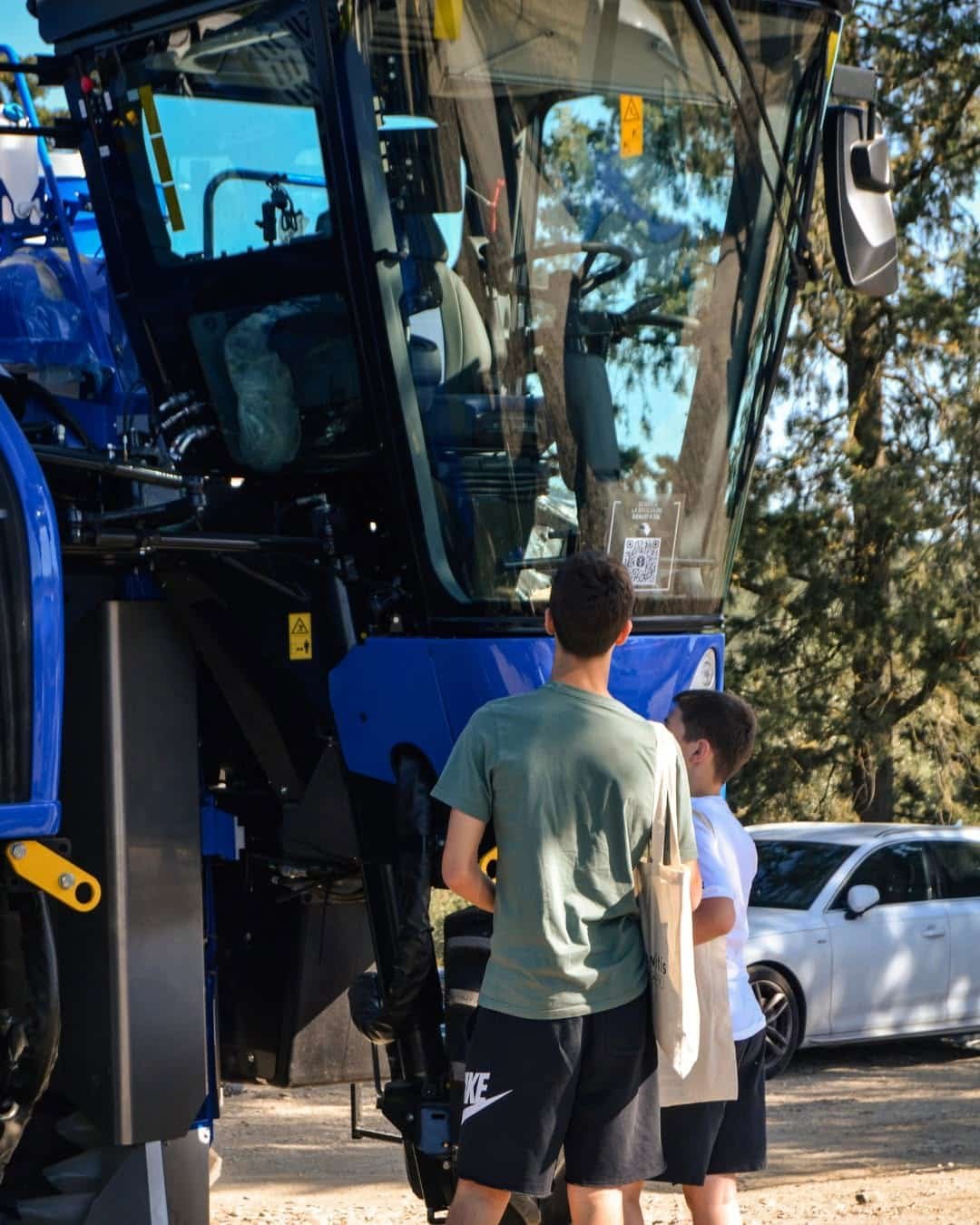
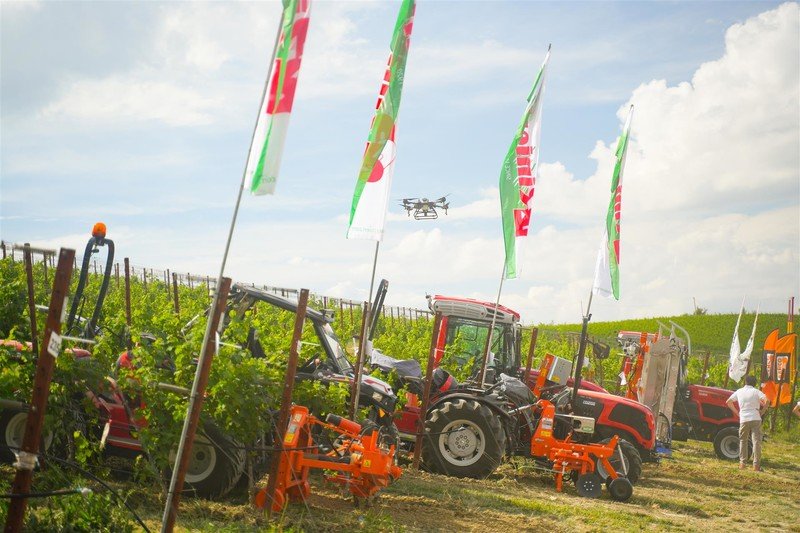
Enovitis in Campo 2027 – Veneto, Italy is the only dynamic fair in Italy entirely dedicated to viticulture technology, and it is recognized throughout Europe as the most authentic field test for vineyard innovation. Unlike conventional indoor exhibitions where machines stand still under artificial lights, this event is organized directly inside a working vineyard belonging to a prestigious host estate. Every tractor, sprayer, pruning implement, planting machine and digital system is put to work in real conditions, on real slopes, with real soil and real vines. That is the core promise that has defined the format since its creation by Unione Italiana Vini Servizi soc. coop. and that keeps attracting thousands of professional visitors from Italy and abroad.
When you arrive in Veneto you will experience a fully open-air circuit where technology is moving among the rows. The sound of specialized crawler tractors climbing terraces, the precision of recovery sprayers that recycle product, the speed of mechanical weeding tools that work millimeters from the vine trunk, and the quiet operation of electric prototypes are all visible in one place. This allows winemakers, agronomists, oenologists, contractors and machinery dealers to evaluate not just brochures but actual work quality, soil impact, operator comfort and adaptability to different training systems. The travelling nature of the event is another key element. By changing region every edition, from Emilia Romagna to Lombardy, Friuli Venezia Giulia, Piemonte, Toscana, Puglia, Sicilia and Veneto itself, the fair contextualizes technologies in different pedoclimatic environments, which is essential for a country where viticulture ranges from Alpine terraces to Mediterranean islands.
For visitors, the event offers a complete professional journey. You will have access to the demonstration vineyards, a static exhibition village for components and services, a conference area with high-level technical content, and dedicated spaces for networking and B2B meetings. The Innovation Challenge Lucio Mastroberardino, the historic competition that rewards the most meaningful innovations in terms of sustainability, safety and efficiency, is an integral part of the experience. Combined with initiatives such as Vota il Trattore, guided technical tours and workshops held directly next to the demonstration rows, the two days become an immersive update on everything that is transforming vineyard work today, from robotics and electrification to precision viticulture and organic management.
Goditi il tuo evento senza stress con Italy Travelo
Che tu stia viaggiando per un festival di fama mondiale, un concerto dal vivo, una celebrazione culturale o un evento d'affari, Italy Travelo ti aiuta a semplificare ogni fase del tuo viaggio. Il nostro team offre assistenza di viaggio personalizzata, permettendoti di concentrarti sulla creazione di ricordi duraturi.
Official reference: https://www.enovitisincampo.it/
Organizer contacts: +39 02 866575 – info@enovitis.it – espositori@enovitis.it – VAT 00868400151
Date degli eventi
- Event Period: giugno 2027 (Date da definire)
- Edition: 21st edition of Enovitis in campo
- Format: Two-day dynamic open-air exhibition
- Daily Schedule: Full day programme including official inauguration, continuous live demonstration slots and conference sessions across both days
- Host Region Confirmation: Veneto announced as host region for the 2027 edition following the successful closure of the previous Tuscan edition in Greve in Chianti
Visitare questo evento? Non perderti queste attività straordinarie ed esperienze locali mentre sei qui.
Luogo e sito espositivo
The venue for the 2027 edition will be a leading wine estate in Veneto, a region that represents one of the most symbolic and economically important areas of Italian viticulture, home to denominations such as Valpolicella, Soave, Conegliano Valdobbiadene and Bardolino. While the exact estate will be announced officially on the event website, the selection criteria remain consistent with the history of Enovitis in Campo. The organizer chooses estates that can provide extensive vineyard surfaces, both flat and sloped, good logistical access for heavy machinery transport, large service areas for exhibitors, and a strong commitment to sustainable and certified viticulture.
The exhibition site itself is conceived as a large vineyard circuit rather than a traditional fairground. The demonstration vineyards form the heart of the layout, with numbered rows assigned to different operations and exhibitors. Around this central circuit, the static exhibition village is set up for companies that present products and services that do not require dynamic demonstration, such as nursery material, posts and trellising, irrigation components, software platforms, sensors and consultancy services. The conference and workshop tents are positioned close to the static area to allow easy movement between live demos and technical sessions. Visitor services including the secretariat for kit collection, catering points, first aid and information desks are integrated within the estate, ensuring that the experience remains compact, walkable and focused on field work rather than long transfers.
Programma completo dell'evento
The programme of Enovitis in Campo is structured to offer continuous learning and direct comparison throughout the two days. It opens with an official inauguration ceremony attended by representatives of Unione Italiana Vini, the host winery, institutions and the press, followed immediately by the award ceremony for the Innovation Challenge. This moment highlights the most advanced solutions selected by a technical jury for their contribution to innovation, environmental sustainability and operator safety.
After the opening, the day unfolds with parallel activities. On one side, live machinery demonstrations run according to a detailed timetable. Each exhibitor has allocated rows and time slots to show planting operations, soil and inter-row management, canopy management including pre-pruning, defoliation and tying, plant protection with tunnel and recovery sprayers, nutrition with variable-rate spreaders and biostimulants, irrigation systems, biomass shredding and recovery, and finally grape harvesting with self-propelled and trailed harvesters. On the other side, a rich calendar of conferences and technical seminars brings together agronomists, researchers, manufacturers and wine producers to discuss themes that are shaping the future of the vineyard. Topics regularly include robotics and automation, electrification of fleets, precision viticulture and detection systems, integrated and organic defense strategies, customized nutrition to meet oenological objectives, frost and heat protection, and data-driven vineyard management.
The programme is completed by practical initiatives such as guided technical visits where experts explain trial results row by row, workshops focused on calibration and maintenance, and the popular Vote the Tractor activity that involves both a technical jury and the public. Networking is facilitated by dedicated B2B areas where exhibitors can meet clients, dealers and contractors in a quiet environment away from the demonstration noise.
Aziende e espositori in evidenza
Enovitis in Campo gathers the complete ecosystem of vineyard technology suppliers. Recent editions have hosted over 160 brands with more than 250 machines engaged in live demonstrations, and the Veneto edition is expected to maintain or exceed this scale. Exhibitors come from all over Italy and from abroad, with past participations from Germany, France, Spain, Portugal, Austria, Luxembourg, Switzerland and the USA, reflecting the international interest in Italian specialized mechanization.
The exhibitor base covers every segment of the supply chain. Specialized tractor manufacturers present narrow-track, isodiametric and crawler models designed for steep slopes and tight inter-rows. Implement manufacturers showcase solutions for tillage, mechanical weed control, mulching, shredding and green management. Companies focused on canopy operations bring pre-pruners, leaf removers, trimmers and automated tying machines. The plant protection and nutrition sector is strongly represented with advanced sprayers featuring recovery panels and low-drift nozzles, as well as fertilizers, biostimulants and plant protection products for both conventional and organic regimes. Nursery and planting specialists, irrigation and climate control providers, harvest and logistics companies, and an increasing number of firms dedicated to precision farming, sensors, GPS guidance, mapping software, drones and autonomous platforms complete the panorama. This diversity makes it possible for a visitor to plan investments for the entire vineyard cycle in a single location.
Settori agricolo e ambientale
While viticulture remains the core focus, the event naturally touches broader agriculture and environmental sectors linked to sustainable land management. The technologies shown address fundamental challenges such as soil health conservation, water saving, reduction of chemical inputs, energy efficiency and circular use of resources. The travelling formula widens the scope to olive growing technologies when the host area includes significant olive groves, which is often the case in central and southern editions and can also be relevant in parts of Veneto.
From an environmental perspective, the fair highlights practices such as minimum tillage, cover cropping, organic matter restoration, mechanical weed control as an alternative to herbicides, and precise application of plant protection products. Water management is addressed through smart irrigation controllers and sensor-based scheduling. Energy and circular economy themes are present through biomass collection and valorization, composting of pruning residues and the introduction of electric and hybrid tractors that reduce emissions and noise. Digital agriculture and precision viticulture are treated as transversal sectors, providing tools for mapping vigour, monitoring soil moisture, forecasting disease pressure and improving traceability from vineyard to cellar.
Prodotti, tecnologie e innovazioni
At Enovitis in Campo visitors can see at work the latest technology, materials and equipment for all agricultural operations related to the vineyard. The innovation landscape is particularly dynamic in this period, driven by the need to increase efficiency while meeting sustainability and safety requirements.
In the field of vineyard planting, automated planters guided by GPS, new rootstock and clone selections, biodegradable tying materials and advanced trellising systems are presented. For soil and inter-row management, the trend is towards precision mechanical tools that work close to the vine without damaging roots, including inter-vine cultivators, finger weeders and mulching machines. Canopy management is evolving with faster and gentler defoliators, shoot thinners and tying systems that reduce manual labour. Plant protection is undergoing a major transformation with tunnel sprayers that recover and recycle product, low-drift nozzles, variable-rate systems that adapt dosage to canopy density, and digital decision support systems that optimize timing. Nutrition is moving towards customized programmes based on soil and leaf analysis, use of biostimulants and foliar feeds designed to improve grape quality according to oenological objectives.
Tractor innovation focuses on safety cabs with enhanced visibility, low centre of gravity for hillside work, compatibility with precision farming electronics and electrified drivetrains. Harvesting technology emphasizes gentle handling, optical selection and reduction of must oxidation. Irrigation and climate control solutions include drip systems with smart controllers, weather stations, anti-frost fans and cooling systems for heat mitigation. Control and detection systems, such as drones for vigour mapping, ground sensors, yield estimation tools and vineyard management platforms, are increasingly integrated. Robotics is the most forward-looking area, with autonomous weeding robots, electric tracked carriers and collaborative platforms designed for repetitive tasks.
Dimostrazioni e workshop
Demonstrations are what make Enovitis in Campo unique in Italy and in Europe. Every machine works in real vineyard conditions, allowing visitors to assess work quality, speed, soil compaction, respect for the vine and ease of adjustment. The demonstration protocol is organized by the technical staff of the organizer in collaboration with exhibitors. Each exhibitor receives allocated rows and a timetable, and demonstrations are repeated throughout the day to give all visitors the chance to observe.
Workshops are held directly next to the demonstration rows, creating a direct link between theory and practice. Technicians explain how to set up, calibrate and maintain equipment, how to adapt settings to different soil types and training systems, and how to interpret results. Dedicated focus areas are often created for organic vineyard management, where mechanical weed control, organic plant protection and bio-nutrition strategies are shown in sequence. Safety and ergonomics are also covered with sessions on roll-over protection, operator comfort, correct use of personal protective equipment and safe operation on steep slopes. The Innovation Challenge area allows visitors to examine award-winning machines with detailed technical sheets and to speak directly with engineers who developed them.
Tipi di biglietti e registrazione
Enovitis in Campo has always adopted a free admission policy for professional visitors upon mandatory registration, and this policy is confirmed for the Veneto edition. Pre-registration online is strongly recommended to obtain early access to the event map and to speed up entry on site.
The main visitor admission is free, with a final price of USD 0 after conversion. It includes access to the demonstration vineyards, the static exhibition village, the full conference and workshop programme and the visitor kit containing the official catalogue and visitor guide, to be collected at the secretariat upon presentation of the registration receipt sent by email. Professional pre-registration follows the same free model and requires personal data and company data for statistical and organizational purposes. Group and delegation registrations for consortia, cooperatives, educational institutions and technical associations are also free, with the possibility of requesting guided tours. Student access for agricultural schools and universities is free as well, with dedicated educational workshops.
For exhibitors, registration fees are based on previous editions and are provided in USD after conversion from EUR. The main company registration fee is approximately USD 2,150, which includes entry in the official catalogue, presence on the event website, visitor guide, flyer and social channels, electrical connection with maximum power limits and admission for one creation to the Innovation Challenge. The fee for represented companies or dealers is approximately USD 750. A dedicated fee for robot and automation demonstration structures for one or two rows is approximately USD 2,150. Discounts are often available for companies participating in multiple editions or representing multiple brands. Final fees for 2027 will be published in the official application form on the event website.
Accesso per visitatori professionali e commerciali
Access to Enovitis in Campo is reserved for professional and trade visitors whose activity is linked to viticulture, olive growing, agronomy, agricultural mechanization and related services. The target audience includes wine producers and vineyard managers who need to update their machinery fleet, agronomists and oenologists who advise estates, agricultural contractors who perform operations for third parties, machinery dealers and distributors, researchers and technicians from universities and research centres, and specialized press.
Entry is granted after verification of the pre-registration receipt at the secretariat desks. Professional credentials may be requested, and the organizer reserves the right to verify the relevance of the visitor’s activity to the scope of the event. For trade visitors, the event offers specific benefits such as direct contact with manufacturers and technical managers, the possibility to book private demonstration slots for detailed comparisons, access to technical data sheets and after-sales information, and dedicated meeting points for B2B negotiations. International visitors are welcomed with English language support at information points and with multilingual documentation provided by many exhibitors. The presence of visitors from countries such as Germany, France, Slovenia, Brazil and others in recent editions underlines the international relevance of the fair.
Sale espositive e pianta
Enovitis in Campo does not use traditional indoor exhibition halls. The floor plan is an open-air vineyard-based circuit that reflects the dynamic nature of the event. The demonstration circuit is the central feature, with numbered rows assigned to exhibitors and divided by type of operation, such as soil management, canopy management, spray application and harvest. This allows visitors to follow a logical path and to compare multiple solutions for the same operation in succession.
Adjacent to the demonstration circuit, the static exhibition village is organized by product category, making it easy to locate suppliers of components, planting material, irrigation systems, software and services. The Innovation Area hosts the finalists and winners of the Innovation Challenge with detailed panels, prototypes and staff available for in-depth technical explanations. The conference zone consists of two or three large tented structures equipped with audio-visual systems and seating, located near the static area for easy access between demos and talks. Visitor services including entrance gates, registration desks, catalogue distribution, catering points, rest areas, first aid and shuttle pickup points are clearly signposted on the visitor map. The map itself is provided digitally to all pre-registered visitors before the event and in printed form in the visitor kit, showing exhibitor locations, demonstration timetables, conference times, emergency exits and service facilities.
Iniziative di sostenibilità e ambientali
Sustainability is both a theme of the products exhibited and a principle of the organization. The technologies showcased are selected for their ability to reduce environmental impact while maintaining or improving work quality. Mechanical weed control tools reduce the need for herbicides, recovery sprayers reduce drift and product dosage, electric and hybrid tractors cut emissions and noise, and precision irrigation systems save water. Soil conservation is promoted through minimum tillage implements, cover crop management tools and controlled traffic solutions that limit compaction.
Circular economy is addressed through biomass shredding, collection and valorization systems that transform pruning residues into energy, compost or organic matter. Digital tools contribute to sustainability by enabling variable-rate application and data-driven decision making. The host estates themselves are often chosen for their commitment to certified integrated or organic practices that are more stringent than required standards, reflecting a vision that integrates agricultural production with positive social and local impact. On the organizational side, the event promotes waste separation, reduction of single-use materials, use of recyclable supports for signage and digital documentation to reduce paper consumption. Pre-registration and digital maps further reduce on-site printing needs.
Regole dell'evento
The event is governed by a general regulation published by Unione Italiana Vini Servizi soc. coop., with headquarters in Milan. The regulation defines conditions for exhibitor admission, visitor access and demonstration safety. Only individuals and companies whose business relates to the scope of the event, namely technologies for viticulture and olive growing, are admitted as exhibitors after acceptance of their application. Visitors must complete registration and present their receipt at the entrance.
Demonstration safety is a priority. Only authorized and trained operators may operate machinery in the demonstration rows, safety distances must be respected by the public, and organizer staff may interrupt or suspend demonstrations for safety reasons. All machines must comply with CE safety norms and be insured, and movement outside assigned rows requires prior authorization. Commercial activity, including selling and distribution of promotional material, is allowed only within the assigned exhibition space. Electrical connections are provided upon request with defined maximum power limits and are included in the registration fee for the main exhibitor. The organizer reserves the right to photograph and film the event for institutional communication, while professional filming by exhibitors requires prior notification. Withdrawal, cancellation and refund rules for exhibitors are detailed in the general regulation and application form.
Come arrivarci
The exact winery estate in Veneto will be announced officially, but the region itself is extremely well connected by road, rail and air, making access easy from across northern Italy and from abroad. For those travelling by car, Veneto is served by the A4 Torino-Trieste and A22 Brennero-Modena motorways, complemented by a dense network of regional and provincial roads that lead to the main wine districts. Detailed GPS coordinates, road signs and recommended routes will be published on the official website closer to the event, with directional signs placed from motorway exits to the winery entrance.
For train travel, the main hubs are Verona Porta Nuova, Vicenza, Padova and Venezia Santa Lucia, all connected to the high-speed network and to regional lines that serve smaller towns near vineyard areas. From these hubs, regional transport and dedicated shuttle services typically operate during event days. For air travel, the nearest international airports are Verona Villafranca Valerio Catullo, Venezia Marco Polo and Treviso Antonio Canova, all within driving distance of major wine areas such as Valpolicella, Soave and Conegliano Valdobbiadene. International visitors can easily combine the event with a stay in Verona, Venice or on Lake Garda.
Trasporti pubblici e parcheggio
On-site logistics are designed to handle heavy machinery transport while ensuring smooth visitor flow. Dedicated visitor parking fields are prepared near the vineyard entrance, with separate areas for exhibitors, heavy vehicles, press and staff. Parking attendants direct vehicles and ensure safe pedestrian routes from parking to entrance. Reserved spaces for visitors with reduced mobility are located near the entrance with paved access.
A free shuttle service operates continuously between parking areas and the main entrance at regular intervals, and often also from the nearest train station when applicable. Local public transport includes regional bus lines that connect main towns to wine-producing municipalities, and special event connections are usually published on the official website. Car pooling is encouraged to reduce traffic impact on rural roads, and exhibitors are given specific time windows for setup and dismantling to avoid congestion during visitor hours.
Aree di alloggio
Veneto offers an exceptionally wide range of accommodation, from agriturismi located directly inside vineyards to city hotels, country resorts and boutique bed and breakfasts. Staying in an agriturismo or wine resort in Valpolicella, Soave, Bardolino or the Prosecco Hills provides an immersive experience close to the event site and allows visitors to experience local wine and cuisine in the evening. City hotels in Verona, Vicenza, Treviso, Padova and Venice offer four and five star properties, business hotels and design boutique hotels with easy day-trip access to the venue.
Small family-run country hotels and B&Bs in wine villages are ideal for those seeking a quiet stay and direct contact with local producers. For extended stays, Lake Garda’s southern shore, the Euganean Hills and the Dolomites foothills are within reasonable distance and offer additional leisure opportunities. Early booking is strongly recommended because Veneto is a high-tourism region throughout the year. The organizer may publish a list of partner accommodations with special rates for exhibitors and visitors, and local tourism consortia can assist with bookings.
Accessibilità
Because the event takes place in a real working vineyard, the terrain is natural and can be uneven, with soil, grass and slight slopes that may become slippery after rain. Sturdy, closed footwear is recommended for all visitors. The main static exhibition village, conference tents, catering areas, secretariat and information desks are located on more levelled ground and are accessible with assistance, with pathways prepared to facilitate movement.
Staff at the entrance can provide information on the most accessible routes and offer support for visitors with reduced mobility. Wheelchair users are advised to contact the secretariat in advance to discuss specific logistics and to arrange assistance if needed. Accessible toilets are available in the service area, and reserved parking spaces are located near the entrance. Service animals are allowed in accordance with safety regulations, except within active demonstration rows where machinery is operating and safety distances must be maintained.
Momenti salienti dell'anno precedente
The most recent edition held in Tuscany at Tenuta di Nozzole in Greve in Chianti, belonging to the Folonari family, closed with highly positive results that confirm the extraordinary vitality of the vineyard technology sector. The event welcomed 6,500 visitors, including winemakers, agronomists, oenologists and specialized operators from all over Italy and from countries such as Brazil, Germany and France. Over 160 brands were represented with 250 machines and pieces of equipment engaged in live demonstrations across two days, transforming the estate’s rows into a stage for innovation.
According to the survey carried out by the Uiv-Vinitaly Observatory, the vineyard segment in Italy, which includes plant protection products, fertilizers, vineyard plant systems and mechanization, generates about 2 billion euros in turnover per year with a workforce of around 10,250 employed in about 400 companies. This economic relevance was reflected in the exhibition, where strong acceleration in automation, robotics, electrification, safety and field efficiency was noted. The Innovation Challenge highlighted solutions ranging from smart networks and green defense to advanced safety systems and precision management, demonstrating how manufacturers, wineries and research centres are working together. The edition was praised for its ideal venue for discussion and experimentation and for its ability to showcase solutions from robotics to correct soil and foliage management, planting materials, irrigation and biostimulants in both conventional and organic regimes.
Biglietti ufficiali e registrazione
Admission to Enovitis in Campo is free upon registration, and pre-registration online is the recommended way to access the event. By completing the form on the official website, visitors receive a receipt by email that must be shown at the secretariat to collect the visitor kit including the official catalogue and visitor guide. Pre-registration also provides early access to the event map and helps the organizer manage visitor flow and services.
- Sito ufficiale: https://www.enovitisincampo.it/
- Pre-registration section: Visitors / Plan Your Visit / Pre-registration
- Visitor admission price: USD 0
- Exhibitor reference fees: Main company approximately USD 2,150, represented company approximately USD 750, robot and automation structure approximately USD 2,150, based on previous editions and converted from EUR
- Contacts: Phone +39 02 866575, Email info@enovitis.it for visitors and espositori@enovitis.it for exhibitors, VAT 00868400151
- Organizer: Unione Italiana Vini Servizi soc. coop., Via San Vittore al Teatro, Milan
Video
Posizione
Domande frequenti
What is Enovitis in Campo and why is it different from other agricultural fairs?
Enovitis in Campo is the only dynamic fair in Italy entirely dedicated to viticulture technology, and its difference lies in the fact that every machine works live in a real vineyard rather than being displayed statically in a hall. Visitors can see tractors, sprayers, pruning and harvesting equipment operating in actual soil and slope conditions, which allows a direct evaluation of work quality, safety and adaptability. The travelling formula, hosted each time by a prestigious winery in a different Italian region, contextualizes technologies in diverse terroirs and makes the event a reference point for manufacturers, wine producers and researchers.
Who should attend the Veneto edition and what professional benefits does it offer?
The event is designed for wine producers, vineyard managers, agronomists, oenologists, agricultural contractors, machinery dealers, distributors, researchers and specialized press whose activity is linked to vineyard and olive growing technologies. Professional benefits include direct comparison of multiple solutions for the same operation, access to technical data sheets, possibility to book private demo slots, participation in conferences and workshops, and B2B meeting opportunities with manufacturers and dealers. International visitors benefit from English support and multilingual documentation provided by many exhibitors.
How do demonstrations and workshops work on site?
Demonstrations are organized according to a detailed timetable with allocated vineyard rows for each exhibitor and repeated slots throughout the day to give all visitors the chance to observe. Technical staff supervise operations and ensure safety distances are respected. Workshops are held next to demonstration rows and focus on calibration, maintenance, setup and interpretation of results. Specific areas are often dedicated to organic management, safety and ergonomics, and the Innovation Challenge area allows in-depth examination of award-winning solutions with direct dialogue with engineers.
What services and logistics are available for visitors coming to Veneto?
The venue is equipped with visitor parking fields, free shuttle buses between parking and entrance, secretariat for registration check and kit collection, conference tents, catering points, first aid and information desks. Veneto is well connected by A4 and A22 motorways, high-speed train hubs in Verona, Vicenza, Padova and Venice, and international airports in Verona, Venice and Treviso. The organizer publishes GPS coordinates, road signage, shuttle timetables and recommended accommodation lists on the official website closer to the event, with reserved parking and accessible facilities for visitors with reduced mobility.
What are the sustainability and innovation themes highlighted at Enovitis in Campo?
Sustainability and innovation are central themes of both the products exhibited and the organization itself. The fair highlights low-impact solutions such as mechanical weed control, recovery sprayers, variable-rate application, precision irrigation, electric and hybrid tractors, biomass recovery and circular management of pruning residues. Digital agriculture is strongly represented through sensors, drones, GPS guidance, mapping software and vineyard management platforms that enable data-driven decisions. The Innovation Challenge Lucio Mastroberardino rewards technologies that contribute to environmental sustainability, operator safety and efficiency, reflecting the sector's response to new challenges.

Lascia un commento