
-
Ottobre 2, 2026
Data dell'evento:
-
Ottobre 4, 2026
Fine dell'evento:
What to expect in 2026
Internazionale a Ferrara 2026 is an international journalism and culture festival bringing journalists, writers, photographers, researchers, filmmakers, artists, podcasters and other cultural figures to the historic centre of Ferrara. The festival combines public conversations with film screenings, book presentations, photography, podcasts, readings, workshops and activities for younger audiences.
The programme covers international affairs, Europe, technology, artificial intelligence, journalism, migration, human rights, feminism, culture, literature, economics, society, photography, music and contemporary media. Many sessions are presented in Italian, while international speakers frequently participate in English, French, Spanish and other languages with consecutive or simultaneous interpretation.
The 2026 programme also has a strong book and publishing component. Authors present new books in dedicated sessions at locations including Palazzo Naselli Crispi, Circolo Arci Bolognesi, Biblioteca Ariostea and other festival venues.
Goditi il tuo evento senza stress con Italy Travelo
Che tu stia viaggiando per un festival di fama mondiale, un concerto dal vivo, una celebrazione culturale o un evento d'affari, Italy Travelo ti aiuta a semplificare ogni fase del tuo viaggio. Il nostro team offre assistenza di viaggio personalizzata, permettendoti di concentrarti sulla creazione di ricordi duraturi.
Film and documentary programming forms another major part of the festival through the Mondovisioni and Mondocinema sections. Selected screenings include Italian premieres and films presented with Italian subtitles.
Younger visitors are also included through Internazionale Kids and Fuoriclasse activities, with dedicated sessions for children and teenagers. Workshops provide a more intensive experience for participants interested in journalism, writing, technology, photography, podcasting, audio and related subjects.
Date degli eventi
October 2, 3 and 4, 2026
The festival takes place across three days in Ferrara, with a dense programme running from morning through evening. Sessions are distributed among theatres, cinemas, libraries, university facilities, courtyards, historic buildings and public spaces.
The programme begins with the festival inauguration and continues with simultaneous activities throughout the city. Because several sessions take place at the same time, visitors can create their own programme according to their interests.
The official schedule identifies each event by time, venue, subject area, language and access conditions. Some events require a free admission ticket or tagliando because seating capacity is limited.
Visitors planning to attend several sessions should check the official programme in advance and allow enough time to move between venues.
Visitare questo evento? Non perderti queste attività straordinarie ed esperienze locali mentre sei qui.
Luogo e sito espositivo
Internazionale a Ferrara does not use a single exhibition hall. Instead, the festival occupies a network of cultural venues throughout the historic centre.
Important 2026 locations include:
- Cinema Apollo: Major venue for journalism, international affairs, portraits, documentaries and special conversations.
- Ex Teatro Verdi: Used for journalism, rights, migration and other public discussions.
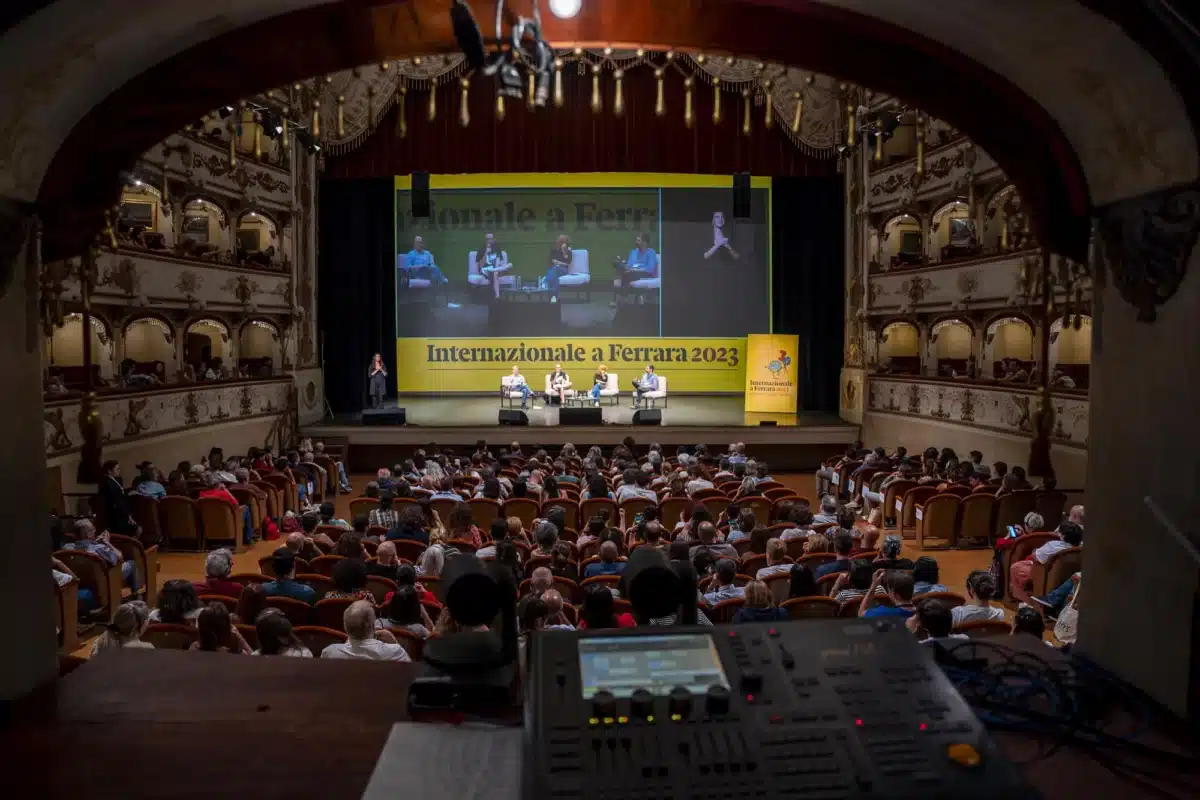
- Teatro Comunale: Hosts major talks, international discussions and selected evening programmes.
- Teatro Comunale Ridotto: Used for smaller talks, photography, culture and international affairs.
- Sala Estense: Main location for the Mondovisioni documentary programme.
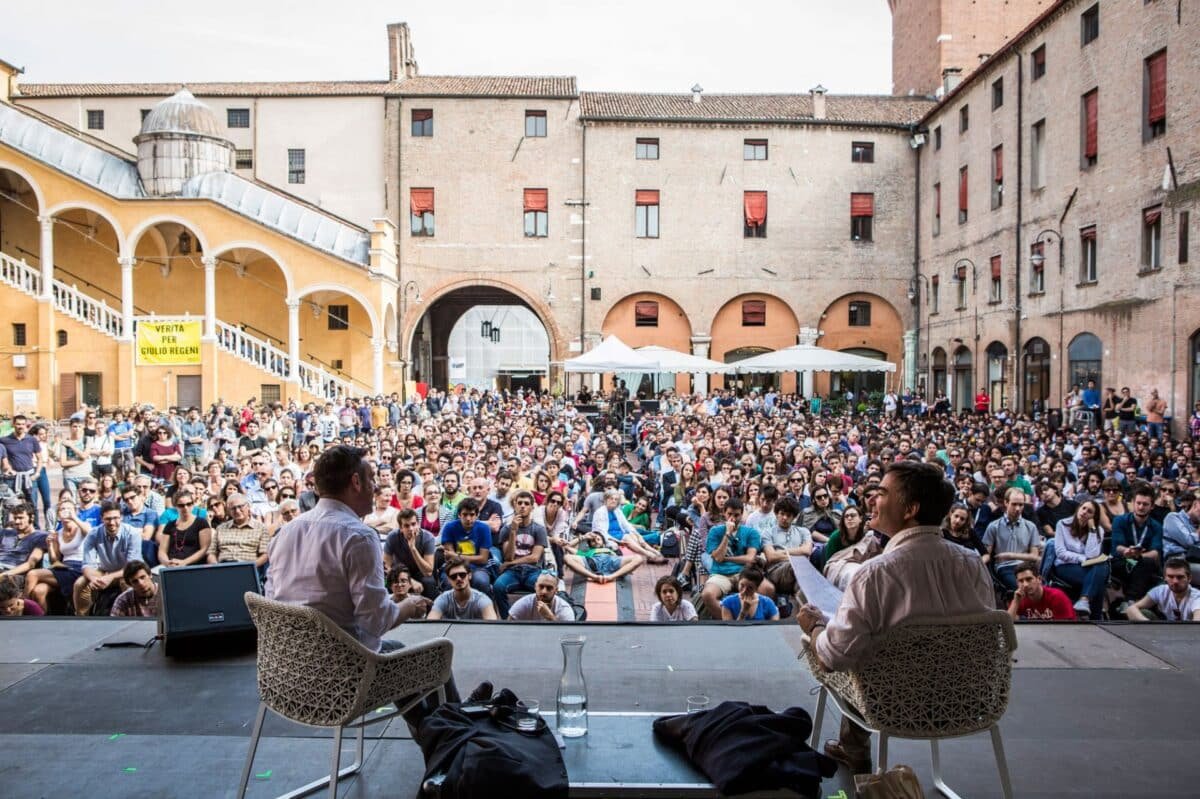
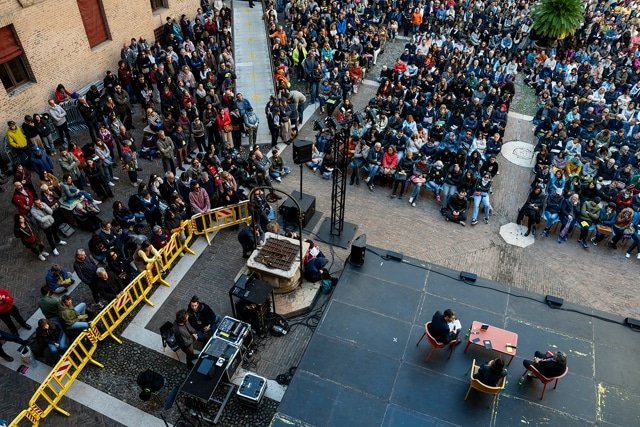
- Cortile del Castello: Outdoor historic setting for talks, podcasts, culture and social discussions.
- Palazzo Naselli Crispi: Hosts international press reviews and book presentations.
- Circolo Arci Bolognesi: Book presentations, cultural events and evening activities.
- Biblioteca Ariostea: Literature, journalism and podcast-related programming.
- Biblioteca Casa Niccolini: Internazionale Kids and youth activities.
- Piazza Trento e Trieste: Public installations and special rights-related activities.
- University of Ferrara: Location for the specialist festival workshops.
The distribution of venues means that the historic city itself becomes part of the festival experience.
Programma completo
The 2026 programme includes a broad selection of formats rather than one single festival discipline.
Major programme areas include:
- International affairs: Europe, the United States, Ukraine, the Middle East, Russia and other global regions.
- Journalism: Investigations, reporting, media criticism, international press reviews and journalism practices.
- Books: Presentations of new nonfiction, novels, essays, graphic works and journalism-related books.
- Technology: Artificial intelligence, digital platforms, technology policy and digital rights.
- Rights: Migration, social justice, humanitarian issues and civil liberties.
- Feminism: Gender, care, economic inequality, relationships and women’s movements.
- Culture: Literature, music, photography, design, comedy and contemporary cultural production.
- Podcasts: Live versions of Internazionale podcasts and audio documentaries.
- Mondovisioni: International documentary films and special screenings.
- Mondoascolti: Audio storytelling and podcast presentations.
- Internazionale Kids: Educational activities for younger visitors.
- Fuoriclasse: Sessions aimed at teenagers.
- Portfolio: Photography presentations and conversations with photographers.
- Workshop: Practical courses in journalism, writing, technology, photography, audio and other subjects.
The programme is designed so that visitors can move between formal discussions, cultural presentations, screenings and practical learning experiences.
Featured authors & speakers
The 2026 programme includes journalists, authors, academics, activists, photographers, filmmakers and cultural figures from Italy and abroad.
Among the listed participants are:
- Lea Ypi: Philosopher and writer, presenting her new literary work.
- Zerocalcare: Comic artist participating in discussions on culture and society.
- Jon Lee Anderson: Journalist participating in a presentation of a new edition of a classic work of narrative journalism.
- Pankaj Mishra: Writer participating in a discussion on the changing international landscape.
- Adam Shatz: Journalist and writer appearing in international affairs discussions.
- Eleanor McDowall: Podcast curator and creator of BBC Radio 4’s Shortcuts, presenting audio selections.
- Donatella Della Ratta: Author presenting work on artificial intelligence and political imagery.
- Simone Pieranni: Journalist and author presenting a book about China and its relationship with the United States.
- Annalisa Camilli: Journalist involved in book and podcast-related sessions.
- Christian Raimo: Writer and teacher participating in cultural and social discussions.
- Gian-Paolo Accardo: Journalist and Voxeurop contributor involved in international press and European discussions.
The final speaker list covers a much wider range of specialists, with many sessions pairing international guests with journalists from Internazionale.
Talks, panels & readings
The festival’s discussion programme is built around interviews, moderated panels, readings and conversations.
International affairs sessions examine major global developments, while European sessions focus on political, economic, technological and social questions affecting the continent.
Book-related talks provide a more literary format, while readings and performances bring journalism and literature together with theatre, music and audio.
The podcast programme is particularly distinctive. Live podcast sessions allow audiences to see how audio journalism and documentary storytelling are created and presented.
Photography is represented through Portfolio sessions and conversations with photographers, including presentations examining visual storytelling, memory and different ways of documenting the world.
The festival also includes special readings for younger audiences through Internazionale Kids and Fuoriclasse.
Tipi di biglietti e accesso dei visitatori
Most standard festival meetings are free. The official festival describes the meetings as free and explains that many spaces are accessible on foot or by bicycle.
Some free events have controlled entry and require a tagliando because seating is limited. Visitors should therefore check the individual programme listing rather than assuming that every free event guarantees immediate entry.
Selected Mondovisioni and documentary screenings require paid admission. The published 2026 programme lists these screenings at approximately $6 per ticket, converted from the official €5 admission.
The festival workshops are separate paid activities. Each workshop lasts nine hours and the published fee is approximately $181, converted from the official €155 price.
Workshop places are limited, and several 2026 workshops are already marked as sold out in the official programme.
The festival therefore has three main access models: free public meetings, free events requiring a collection ticket, and separately paid screenings or workshops.
Accesso professionale e industriale
Internazionale a Ferrara has strong relevance for journalists, writers, media professionals, students, researchers, photographers, podcasters and people working in publishing and communications.
The workshop programme provides the most structured professional-learning opportunity. Subjects include journalism, writing, technology, photography, audio, podcasting, screenwriting and other creative or media disciplines.
The 2026 workshops include courses such as:
- How to write a reportage
- Artificial intelligence tailored to you
- The podcast from A to Z
- Writing with your eyes
- Decentralising the gaze
- War journalism for freelancers
- Writing and reading queer
- Laughing is a political act
Workshops are held at the University of Ferrara and generally operate as intensive learning sessions rather than drop-in festival talks.
Professionals can also use the wider festival as a networking environment because journalists, authors, editors, researchers and international media figures gather across the same weekend.
Regole dell'evento
Visitors should check the access conditions attached to each individual event. Some sessions have open entry, while others use free admission tickets because of limited capacity.
For ticketed screenings, visitors need a valid ticket for the specific film and screening time.
For workshops, registration is required and places are limited. The official workshop information states that participants can normally register for only one workshop when multiple workshops run during the same period.
Visitors should arrive early for popular sessions because free admission does not necessarily guarantee a seat.
The festival uses a network of existing cultural buildings and public spaces, so visitors should follow venue-specific instructions concerning entrances, seating, photography, recording and accessibility.
Come arrivarci
Ferrara is located in Emilia-Romagna and has convenient connections with Bologna, Venice and other northern Italian cities.
The city is particularly suitable for visitors arriving by train because Ferrara railway station is relatively close to the historic centre.
By car, visitors can approach Ferrara using the regional road network and the A13 motorway. However, the festival takes place inside and around the historic centre, where traffic restrictions and pedestrian areas can make direct access difficult.
For visitors flying into Italy, Bologna is one of the most convenient major airports for reaching Ferrara. Venice and other northern Italian airports can also be used depending on the wider itinerary.
Once in Ferrara, walking or cycling is highly practical because many festival venues are concentrated within the historic centre.
Trasporti pubblici e parcheggio
Ferrara railway station provides connections with major cities in northern and central Italy. Visitors can continue from the station toward the historic centre by bus, bicycle or on foot.
Local public transport can be useful for venues farther from the central area, although many festival locations are close enough to reach by walking.
Ferrara is well known for cycling, and the official festival information specifically notes that the venues can be reached on foot or by bicycle.
Visitors arriving by car should use designated parking areas outside restricted historic-centre streets.
Parking close to the most popular venues can become difficult during the festival because of pedestrian traffic and simultaneous events. A park-and-walk approach is generally practical for visitors staying outside the central area.
Aree di alloggio
The historic centre is the most convenient area for visitors who want to attend multiple festival sessions during the same day.
Accommodation around central Ferrara includes hotels, guesthouses, apartments and bed-and-breakfast properties. Staying centrally makes it easier to move between venues without relying on transport.
The area around Ferrara railway station is another practical choice, particularly for visitors arriving by train.
Visitors travelling by car may prefer accommodation farther from the centre where parking is easier, while using walking, bicycles or public transport to reach the festival venues.
Because the programme is spread across numerous locations, staying within walking distance of several central venues can reduce travel time between consecutive sessions.
Cibo e ristori
Internazionale a Ferrara takes place throughout the city rather than inside a single exhibition complex, so visitors can use Ferrara’s normal restaurants, cafés, bars and food venues between sessions.
The historic centre offers a wide selection of Emilia-Romagna cuisine, including fresh pasta, traditional filled pasta, cured meats, cheeses and local desserts.
Ferrara is particularly associated with traditional dishes such as cappellacci di zucca, salama da sugo and coppia ferrarese bread.
Cafés and bars around the central festival area provide convenient options for coffee and quick refreshments between talks.
Because the programme can contain closely spaced sessions, visitors planning a full festival day should allow enough time for meals and consider booking restaurants in advance for evening dining.
Accessibilità
The official festival states that its spaces are free of architectural barriers and that the venues can be reached on foot or by bicycle.
Several 2026 sessions also provide specific language-access services. The programme identifies simultaneous or consecutive interpretation for international events, while selected events include LIS, Italian Sign Language interpretation.
Accessibility therefore covers both physical access and communication support, depending on the event.
Visitors with specific accessibility requirements should check the individual venue information before attending, particularly for events held in historic buildings.
Because the festival occupies many different venues, accessibility arrangements can vary from one location to another even though the organisers provide an overall accessible festival environment.
Best sessions & events to attend
The festival offers several different experiences, so visitors can choose sessions according to their interests.
For international journalism, the International Press Review provides a useful starting point, with journalists discussing major stories and developments covered by international media.
The Il mondo live podcast sessions provide a different format, allowing visitors to experience Internazionale’s audio journalism in front of an audience.
Book lovers can explore the numerous author presentations at Palazzo Naselli Crispi, Circolo Arci Bolognesi and other literary venues.
The Mondovisioni documentary screenings are particularly useful for visitors interested in international cinema and documentary journalism. Selected films are presented as Italian premieres.
Photography enthusiasts can attend Portfolio sessions featuring photographers and discussions about visual storytelling.
Families should look at the Internazionale Kids programme, while teenagers can explore Fuoriclasse sessions designed specifically for younger audiences.
Momenti salienti dell'anno precedente
The previous edition demonstrated the festival’s broad international scope with sessions covering global conflicts, technology, artificial intelligence, migration, media, culture, feminism, human rights, photography and literature.
The programme included international journalists and writers such as Atef Abu Saif, Leila Guerriero, John Foot, Irina Borogan, Sunil Amrith, Mathias Énard and other contributors.
Book presentations included works by Alice Facchini, Gaëlle Bélem, Nadia Terranova, Giada Messetti, Emanuele Giordana and other authors.
The Mondovisioni programme presented international documentaries, while Mondoascolti provided a dedicated space for audio documentaries and podcasts.
The previous edition also included Internazionale Kids activities for children aged eight to thirteen and Fuoriclasse sessions for teenagers.
Workshops covered areas including artificial intelligence, writing, journalism, photography, podcasting, publishing, social media and science journalism, demonstrating the festival’s educational side alongside its public programme.
Biglietti ufficiali e registrazione
The majority of festival meetings are free, but some sessions require a free admission ticket because of limited capacity. The official programme clearly identifies these events with an entry-ticket requirement.
Paid documentary screenings are sold separately. The 2026 programme lists selected Mondovisioni screenings at approximately $6 per ticket.
Workshops require advance registration. The published 2026 workshop fee is approximately $181 per workshop, with each workshop lasting nine hours. Several workshops can sell out, so registration should be completed through the official festival system when places are available.
The festival also provides an information point where visitors can obtain programme information and make reservations for selected limited-capacity activities.
The official festival website should be used for the latest programme, individual event access requirements, workshop registration, screening tickets and any changes to the schedule.
Official festival website: https://www.internazionale.it/festival.
Video
Posizione
Domande frequenti
What are the official dates and daily schedules for Internazionale a Ferrara 2026?
The festival takes place from October 2 to October 4, 2026, spanning three full days of continuous events. Daily sessions typically run from early morning until late evening, covering back-to-back panel debates, film screenings, and workshops. Detailed day-by-day timetables are published on the official festival website ahead of the opening weekend.
Do visitors need to purchase admission tickets or make advance reservations to attend festival events?
The vast majority of public lectures, keynote panels, and outdoor debates are completely free and do not require any advance booking. Securing a seat at popular indoor venue events or cinema screenings requires picking up free or low-cost physical tickets at the central festival info point. Arriving early at the venues is strongly advised because seating is generally allocated on a first-come, first-served basis.
Are there family-friendly activities, workshops, and accessible facilities for visitors with children or mobility needs?
The festival organizes specialized creative workshops, storytelling sessions, and interactive media labs tailored specifically for children and teenagers. Ferrara's flat historic center and bicycle-friendly layout make outdoor navigation relatively straightforward, though historic indoor venues may have varying accessibility features. Multilingual festival staff at the Piazza Trento Trieste infopoint are readily available to assist visitors with accessibility maps and logistical guidance.
What transportation and parking options are recommended for travelers arriving from outside Ferrara?
Travelers can easily arrive via frequent regional and high-speed trains stopping at Ferrara railway station, which is located a short walk from the historic center. Since vehicle traffic and parking are heavily restricted within the ancient city walls during the festival weekend, arriving visitors should utilize peripheral parking lots. Renting a bicycle upon arrival is highly recommended, as cycling is the primary and most efficient mode of local transport in Ferrara.
How should attendees prepare for the local autumn weather and crowd conditions during the festival weekend?
Early October weather in Ferrara features pleasant daytime temperatures that can turn cool by late evening, making layered clothing and light jackets essential. Exploring the bustling festival venues involves walking across historic stone paving and navigating dense crowds in popular piazze, so comfortable footwear is vital. Carrying a reusable water bottle, checking the daily app for venue updates, and moving early between sessions ensures a smooth and enjoyable weekend.

Lascia un commento