
À quoi s’attendre en 2027
Palio dell’Oca Festival 2027 will bring Renaissance history, traditional games, costumed performances and neighbourhood celebrations to the historic centre of Cagli in Italy’s Marche region. The event has been held since 1987 and is organised by the Associazione Giochi Storici di Cagli, with the historic Palio forming the central competition of a much larger cultural festival.
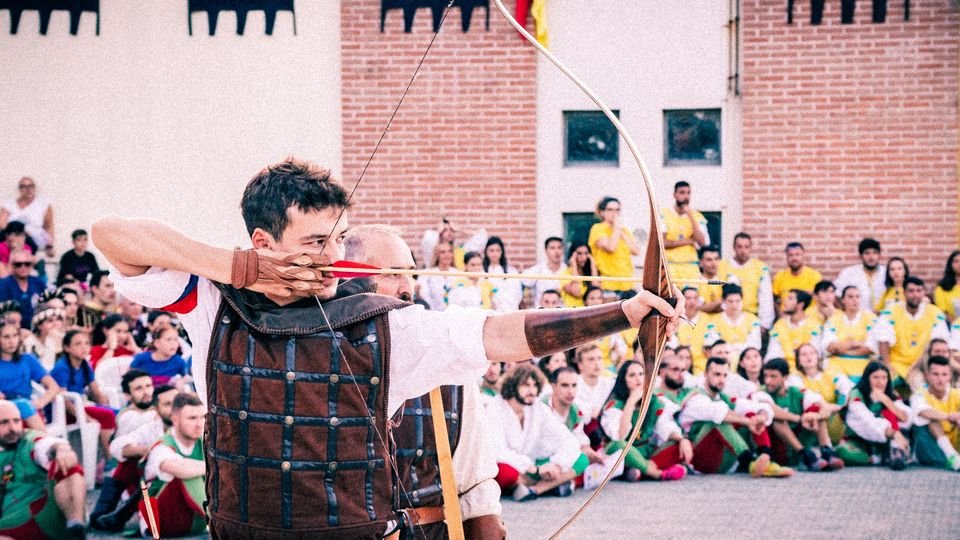
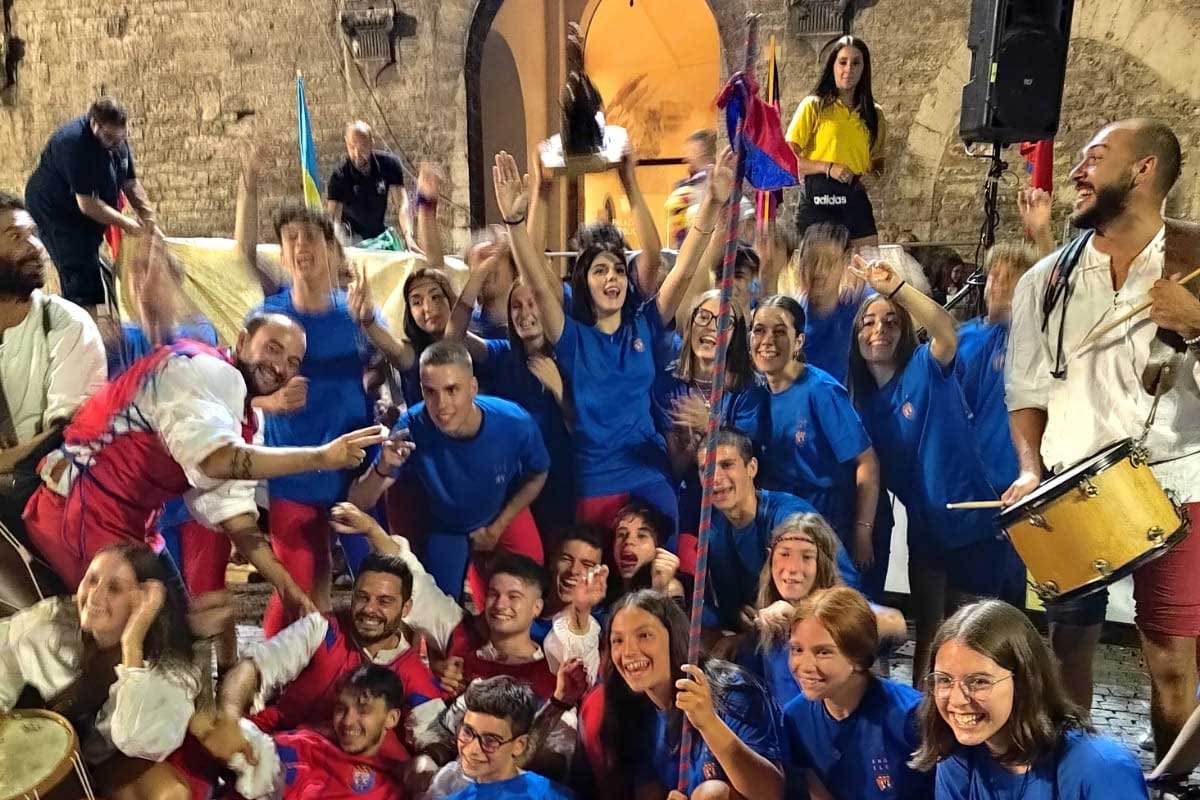
The festival normally transforms Cagli into an open-air Renaissance setting, with decorated streets, historical costumes, processions, traditional taverns, musicians, flag-wavers and demonstrations by archers and crossbowmen. Recent editions have also included children’s activities, youth competitions, Renaissance dining and entertainment in the town’s squares.
The main competition takes place at the Arena di Sant’Emidio, where the four historic districts compete in the Renaissance version of the Game of the Goose. The competition uses a 54-square game board featuring challenges, penalties and special spaces, with costumed pages representing the competing districts.
Profitez de votre événement sans stress avec Italy Travelo
Que vous voyagez pour un festival mondialement connu, un concert en direct, une célébration culturelle ou un événement professionnel, Italy Travelo vous aide à simplifier chaque étape de votre voyage. Notre équipe propose une assistance personnalisée aux voyages, vous permettant de vous concentrer sur la création de souvenirs durables.
The 2027 programme is expected to continue the established combination of historical recreation, sporting challenges, religious ceremonies, traditional food, music and community celebrations.
Dates des événements
Période de l’événement : Août 2027 (dates à déterminer)
The Palio dell’Oca traditionally takes place during August and extends beyond the main competition, with activities spread across the historic centre of Cagli. The organisers describe the event as more than a single competition, with the town hosting Renaissance-themed activities, taverns, performances and district celebrations around the Palio.
The exact 2027 calendar and daily programme have not yet been published. Visitors should check the official Palio dell’Oca website for the confirmed programme before travelling.
Vous visitez cet événement ? Ne manquez pas ces activités et expériences locales étonnantes pendant votre séjour.
Lieux et lieux de festival
Arena di Sant’Emidio: The principal venue for the Historical Palio dell’Oca. The arena provides the setting for the four districts to compete in the Renaissance Game of the Goose.
Piazza Giacomo Matteotti: One of the main public spaces used for Renaissance games, demonstrations, performances, ceremonial activities and district events.
Piazza Papa Niccolò IV: The location used for the unified tavern and traditional food celebrations in recent editions.
Cagli historic centre: The historic streets become part of the festival itself, with Renaissance decorations, historical settings, processions, children’s games, taverns and itinerant performers.
Basilica Cattedrale / Duomo: Used for important religious ceremonies including the blessing of the district banners and other traditional rites connected with the Palio.
Programme culturel complet
The detailed 2027 programme will be announced by the organisers, but the established programme includes several recurring elements.
Cagli in Rinascimento: Renaissance-themed activities introduce visitors to the atmosphere of the festival through historical settings, games, food and entertainment.
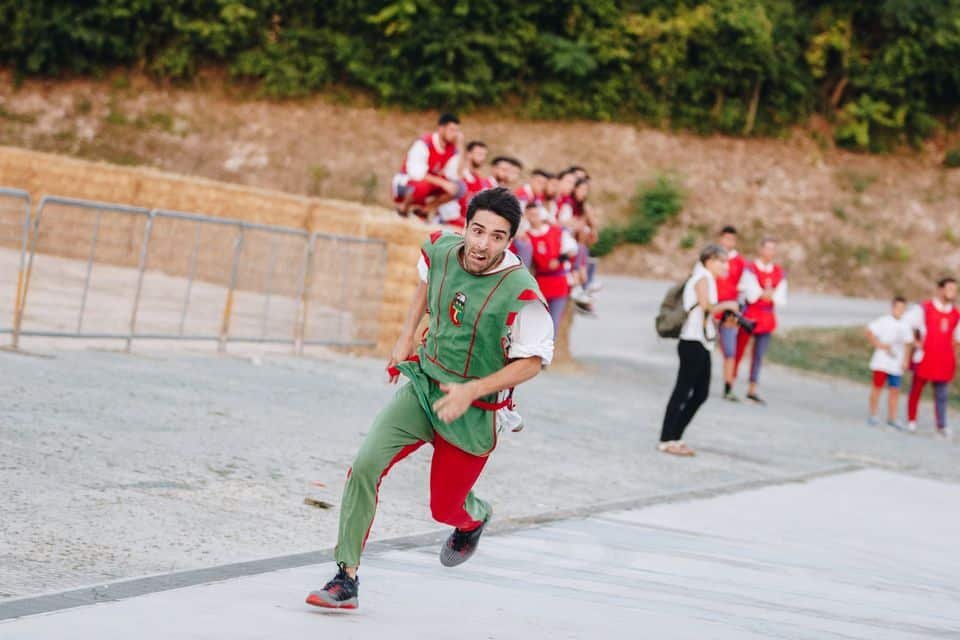
Palio dei Mezzani: A youth version of the Game of the Goose for participants aged approximately 14 to 19. Recent editions have included games and challenges between the four districts.
Palio dei Bambini / Paliotto: A children’s version of the competition for younger participants, accompanied by traditional wooden games and family activities.
Historical Palio: The main competition at the Arena di Sant’Emidio, involving the four districts and their costumed pages.
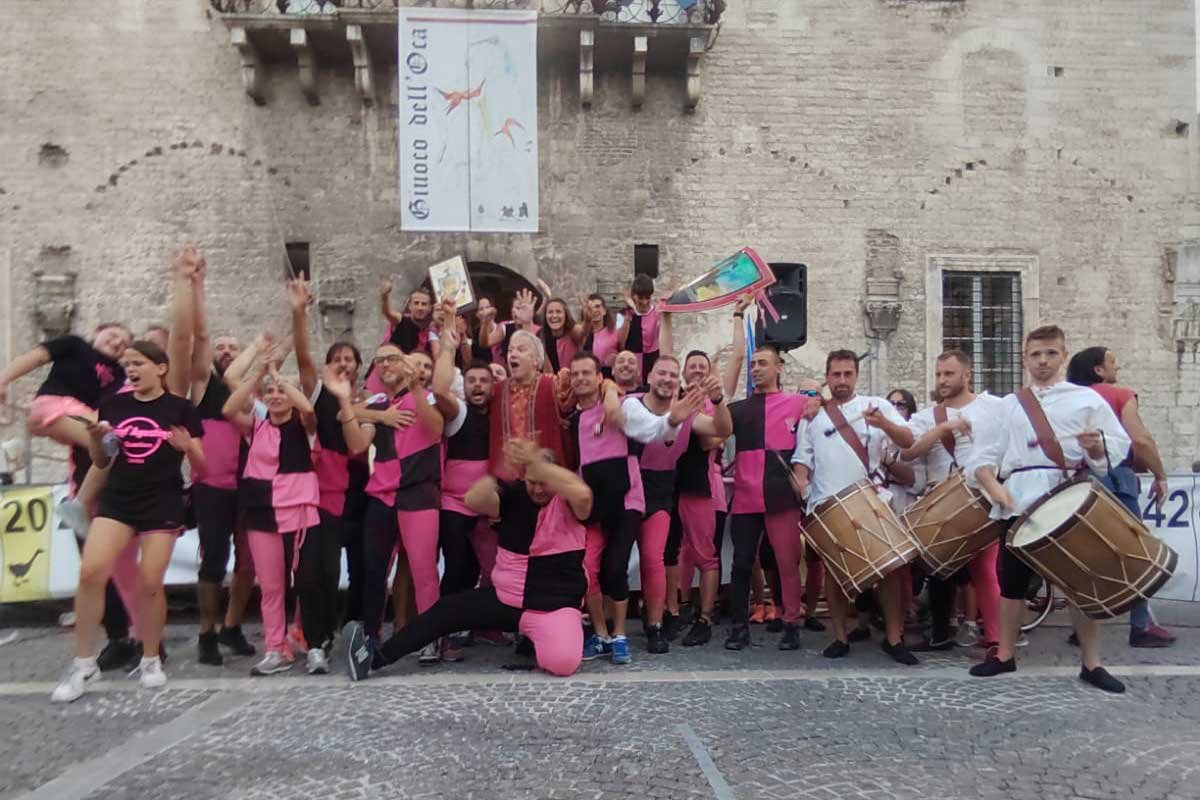
Historical companies: The festival features the Compagnia Arcieri dell’Oca, Compagnia Balestrieri dell’Oca and Compagnia Tamburini dell’Oca, alongside flag-wavers and other performers.
Renaissance taverns: District taverns serve traditional dishes while providing music and evening entertainment.
Traditions et performances mises en avant
The festival’s distinctive performances come from the historical companies associated with the four districts. Archers demonstrate traditional Renaissance-style archery, while the crossbow company recreates the use of historical weapons and the drummers provide musical accompaniment for processions and ceremonies.
Flag-waving performances: Flag-wavers provide visual performances in the central squares, with recent programmes also featuring the Sbandieratori of Gubbio.
Drumming: The Tamburini dell’Oca and district drummers accompany processions and create the ceremonial soundscape of the festival.
Archery demonstrations: The Compagnia Arcieri dell’Oca presents historical archery performances and competitions.
Crossbow demonstrations: The Compagnia Balestrieri dell’Oca recreates the use of traditional crossbows in Renaissance-style performances.
Costumed performances: Participants wear detailed Renaissance clothing inspired by historical Italian imagery, helping turn the streets and arena into a living historical setting.
Points forts historiques et patrimoniaux
The Palio dell’Oca is a historical-reenactment tradition that dates to 1987. The organisers use Renaissance-inspired games, costumes, music and ceremonies to connect the modern town with its historical identity.
The central game is based on the traditional Game of the Goose but has been transformed into a Renaissance competition. Its board contains 54 spaces, each representing characters, occupations, arts, challenges or special situations associated with the historical game.
The final objective is to reach the 54th square, representing San Geronzio, the patron saint of Cagli. Competitors advance through dice throws and must overcome challenges and special penalties along the way.
The festival also preserves traditional ceremonial roles including the Podestà, district captains and Gonfaloniere, reinforcing the historical atmosphere of the event.
Programme des événements et activités
The exact 2027 schedule has not yet been released, but the established festival structure normally includes:
- Renaissance-themed opening activities in the historic centre
- Youth competition for the Mezzani age group
- Children’s Paliotto
- Traditional wooden games for children
- Flag-waving performances
- Drumming performances
- Historical archery and crossbow demonstrations
- Religious blessing of the district banners
- Renaissance dinner
- Opening of the district taverns
- Historical decorations and battlefield settings
- Ceremonial preparations before the main Palio
- Torchlit historical procession
- Evening entertainment in the central squares
- Renaissance costume procession toward the arena
- Main Palio dell’Oca competition
- Traditional food and entertainment following the competition
Recent official programmes have spread these activities across more than one week, although the exact 2027 schedule remains to be confirmed.
Types de billets et options d’entrée
Centre historique : Free entry. The organisers state that visitors can enter the historic centre and attend the surrounding festival events without a ticket.
Arena Palio ticket: A ticket is required to watch the main Palio competition inside the Arena di Sant’Emidio. This is the principal paid admission at the festival.
Previous published ticket reference: The main arena ticket was previously advertised at approximately $17.55. This is a previous-edition reference price, not confirmed 2027 pricing.
Other festival activities: Recent official information indicates that the historic centre, performances and other public festival activities are free, while the arena competition requires admission.
Visites guidées et expériences culturelles
No dedicated 2027 guided-tour programme has been announced yet. Visitors can nevertheless experience the historical setting through the decorated streets, Renaissance costumes, public ceremonies, historical demonstrations and district taverns.
The Renaissance dinner is one of the more immersive experiences associated with the festival. Recent programmes have also included historical installations, traditional children’s games and performances by itinerant artists throughout the historic centre.
Visitors interested in Cagli’s wider heritage can combine the Palio with a visit to the town’s historic architecture, churches, palaces and medieval and Renaissance landmarks. Cagli’s municipality describes the town as a historic centre with significant artistic and architectural heritage.
Cérémonies et célébrations spéciales
The ceremonial programme is an important part of the Palio rather than simply an introduction to the main competition.
Banner blessing: The district banners are traditionally blessed during a religious ceremony at the Basilica Cattedrale.
Ceremonial eve: Recent programmes have included the return of the Palio by the previous winning district, appointment of the Podestà, investiture of the district captains, appointment of the Gonfaloniere and drawing of the starting order.
Votive ceremony: A religious ceremony has included the offering and blessing of oil, lighting of the votive lamp and the reading of the official proclamation.
Torchlit procession: The historic centre hosts a night procession illuminated by torches and accompanied by drums and ceremonial music.
Bell ceremony: The ringing of the bells traditionally announces the main day of the Palio.
Règles du festival
The main Palio follows a detailed set of rules based around a 54-square Renaissance Game of the Goose. The four districts move across the board according to dice throws and face challenges connected with individual squares.
Winning condition: A district must reach the final square with the exact required dice result. If the throw exceeds the final square, the district moves backwards by the excess.
Challenge squares: Many spaces contain skill-based challenges that can affect the progress of the competing district.
Goose squares: Landing on an Oca space allows the relevant dice result to be doubled according to the official rules.
Spervengolo: This special penalty requires a district to miss a turn.
Morte: Landing on the Morte space reduces subsequent dice results for a defined number of throws.
District bonus: Each district has one bonus that can be used once before the designated stage of the game, subject to the official competition rules.
The organisers’ published rules should be consulted for the complete competition regulations and any changes applicable to the 2027 edition.
Comment y arriver
Cagli is a historic town in the province of Pesaro and Urbino in the Marche region, located at the foot of Monte Catria.
En voiture : Driving is one of the most practical options for visitors arriving from other parts of Marche and central Italy. Once in Cagli, visitors should follow local signs for the historic centre and festival parking rather than attempting to drive directly into pedestrian areas.
By public transport: Cagli is served by regional bus connections. The municipality identifies local public transport and dedicated parking as part of the town’s access network.
From the wider region: Visitors can also travel toward Cagli through larger transport hubs such as Pesaro and Urbino before continuing by regional bus or car.
Transports en commun et stationnement
Cagli has public bus services connecting the town with surrounding areas, while the municipality identifies dedicated parking facilities and accessible parking permits for visitors with disabilities.
The festival’s historic centre becomes heavily pedestrian-focused during major events, so visitors arriving by car should use designated parking areas and continue on foot.
For event-specific access, the organisers have previously identified Parcheggio Piazzale Casavecchia as a meeting/starting point for festival-related movement toward the historic centre.
Parking arrangements can change during the festival, particularly when processions or public performances occupy central streets, so visitors should check local signs and the official event information before arrival.
Zones d’hébergement
Cagli historic centre: The most convenient option for visitors who want to experience the evening atmosphere, taverns, processions and performances on foot.
Cagli town and surrounding countryside: Local accommodation around the town provides a quieter alternative while keeping visitors close to the festival venues.
Urbino: A useful regional base for visitors combining the Palio with a wider Marche cultural trip.
Pesaro: Suitable for visitors who prefer a larger city with broader accommodation and transport options, while travelling to Cagli for the festival.
Booking early is advisable because the Palio takes place during the summer travel season and accommodation close to the historic centre can be limited.
Cuisine et spécialités traditionnelles
Food is an important part of the Palio experience, with district taverns serving traditional dishes throughout the festival. Recent official menus demonstrate a strong emphasis on pasta, goose, truffle, polenta, grilled meats, crescia and regional-style dishes.
Goose dishes: Tagliatelle with goose and other goose-based preparations are among the signature dishes served at the taverns.
Polenta: Recent menus have included polenta with different sauces and regional preparations.
Truffle: Black truffle dishes have appeared alongside other forest-inspired specialities.
Crescia: The traditional flatbread is served with fillings such as sausage, ham, cheese, wild herbs, stracchino and rocket.
Traditional desserts: Festival taverns also offer regional sweets and simpler festival desserts.
The district taverns combine food with live music and evening entertainment, making them an important part of the social side of the festival.
Accessibilité
Cagli’s municipality states that the town provides dedicated parking, permits for visitors with disabilities and facilitated access to several historical points of interest.
Because the festival takes place across historic streets and public squares, some areas may involve uneven historic surfaces or pedestrian routes. Visitors with mobility requirements should contact the organisers before attending to confirm access arrangements for the Arena di Sant’Emidio and specific festival venues.
The official festival contact is the Associazione Giochi Storici di Cagli, which can provide event-specific information for the 2027 edition.
Meilleures expériences culturelles
Watch the Historical Palio: The main competition at the Arena di Sant’Emidio is the central experience, combining the Renaissance game, costumed pages, district rivalry and traditional challenges.
Explore the historic centre: Walk through the decorated streets before the main competition to see Renaissance settings, historical costumes and entertainment.
Visit the district taverns: The taverns provide an opportunity to experience traditional food while taking part in the social atmosphere of the festival.
See the historical companies: Performances by archers, crossbowmen, drummers and flag-wavers showcase skills connected with Renaissance traditions.
Attend the ceremonial events: The banner blessing, ceremonial appointments, torchlit procession and religious traditions reveal the cultural side of the Palio beyond the competition itself.
Experience the Renaissance dinner: When offered in the programme, the Renaissance dinner provides a more structured historical dining experience.
Faits marquants de l’année précédente
The 2026 edition marked the 40th Palio dell’Oca, a significant milestone for an event that has continued since 1987. The programme included Cagli in Rinascimento, the Palione, Palio dei Mezzani, Palio dei Bambini, historical demonstrations, religious ceremonies, Renaissance dining, district taverns and the main competition at the Arena di Sant’Emidio.
The 2025 edition featured the Palio dei Mezzani, the children’s Paliotto, flag-waving performances, crossbow and archery demonstrations, historical decorations, district taverns, the ceremonial eve and the main Palio.
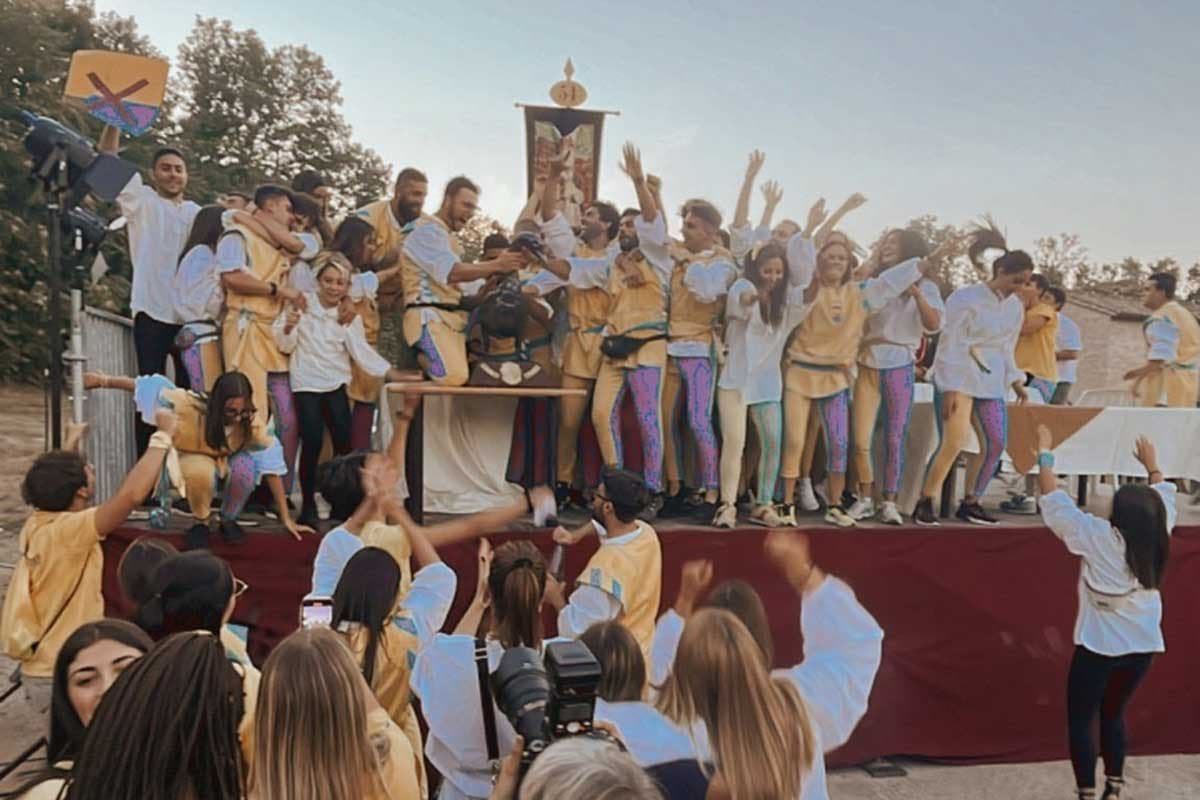
The 2025 main Palio was won by the Sant’Agostino district, while Sant’Agostino also won the children’s competition. Sant’Andrea won the Palio dei Mezzani, continuing its success in that youth competition.
The recent editions demonstrate that the festival is structured as a complete cultural celebration rather than only a single sporting contest, combining historical recreation, food, music, religious ceremonies and community participation.
Billets officiels
The official organiser is the Associazione Giochi Storici di Cagli. The official website provides the programme, ticket information and updates for the Palio dell’Oca.
For 2027, the arena ticket price and ticket-sale arrangements should be checked when the new edition is officially published. The established system requires admission for the Palio competition at the Arena di Sant’Emidio, while entry to the historic centre and the surrounding public festival programme is free.
Site officiel : https://www.paliodelloca.it/
Contact : +39 350 590 1810
Courriel : info@giochistoricicagli.it
Vidéo
Localisation
FAQ
What is the main historical event commemorated during the Palio dell'Oca festival?
The festival centers around a giant, life-sized recreation of the classic board game played across Piazza Matteotti. Representatives from four historic quartieri roll oversized dice to advance living pieces across 54 painted squares. The winning district is awarded the hand-painted palio banner amidst grand community celebrations.
How are the local neighborhoods structured and involved in the celebrations?
The town of Cagli is divided into four competing historic districts named Sant'Agostino, Sant'Andrea, Sant'Angelo, and San Francesco. Each quartiere manages its own costume workshops, social taverns, and athletic training squads throughout the year. These districts drive the passionate community rivalry, pageantry, and athletic competition that define the festival.
What can visitors experience during the historic Sfilata Storica procession?
Visitors witness hundreds of local residents marching in meticulously researched, hand-stitched Renaissance garments and armor. The parade features noble lords, ladies, musicians playing period instruments, and civic authorities in strict social order. It recreates the aesthetic elegance and political hierarchy of the town's golden age in stunning detail.
What is the significance of blessing the banners in the local cathedral?
Prior to the competitions, each quartiere brings its team insignia into historic churches for special clerical benedictions. This sacred ritual blends deep religious devotion with the competitive spirit of the festival. District participants also receive personalized prayers for safety and success from local priests in front of their cheering neighbors.
How do visitors experience traditional culinary heritage at the event?
Guests can dine in pop-up Renaissance taverns and historic halls serving authentic regional Montefeltro dishes. Menus feature wild game, roasted meats, ancient grain breads, and local wines served in communal settings. Special multi-course banquets also combine historic dining with live minstrel music and poetry.

Laisser un commentaire