



À quoi s’attendre en 2027
Palio delle Barche Festival 2027 is expected to bring Passignano sul Trasimeno to life with a week of historical reenactments, district competitions, traditional performances, lakeside celebrations and food events. The annual festival recreates a dramatic episode associated with the 1495 conflict between the Baglioni and Oddi families and culminates in a distinctive boat race combining the waters of Lake Trasimeno with the narrow streets of the historic centre. The event has been held annually since 1984 and is officially documented as an annual historical reenactment.
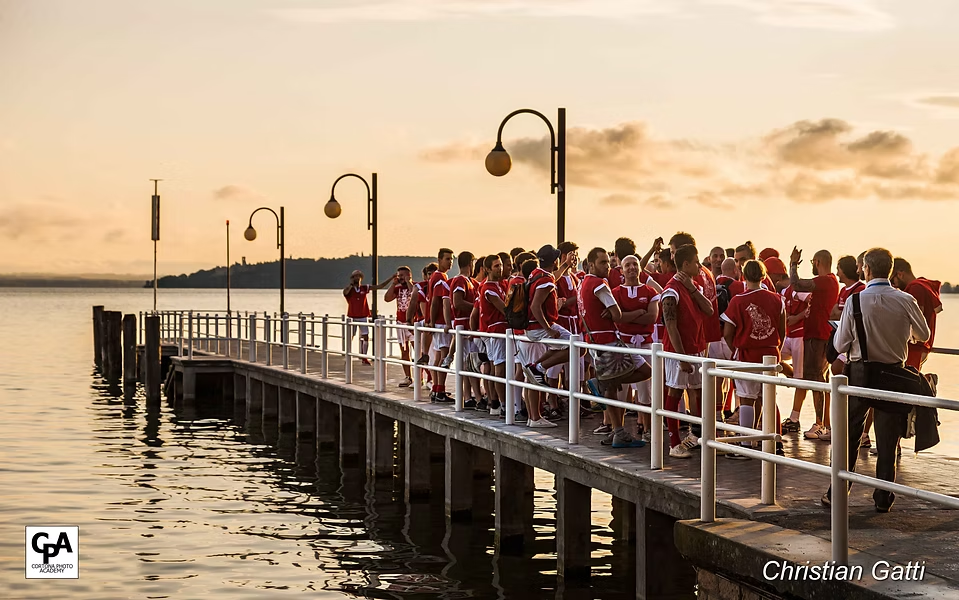
Visitors can expect to see the four historic rioni of Passignano — Centro Storico, Centro Due, Oliveto and San Donato — competing for the Palio while representing their neighbourhoods through colours, crews, processions and community traditions. Alongside the main competition, the festival normally features historic costumes, flag performances, music, entertainment, district taverns and evening activities.
The 2027 programme has not yet been published in full. Activities described below reflect the established festival format and recent official programmes rather than a confirmed 2027 timetable.
Profitez de votre événement sans stress avec Italy Travelo
Que vous voyagez pour un festival mondialement connu, un concert en direct, une célébration culturelle ou un événement professionnel, Italy Travelo vous aide à simplifier chaque étape de votre voyage. Notre équipe propose une assistance personnalisée aux voyages, vous permettant de vous concentrer sur la création de souvenirs durables.
Dates des événements
Période des festivals : July 2027
2027 dates: Exact dates TBD
Durée: Traditionally structured as a week-long festival in late July, with the principal Palio traditionally taking place on the final Sunday of the festival period. The Italian Ministry of Culture’s historical-reenactment record identifies the event as an annual celebration associated with the last week of July.
Annual status: Annual
First edition: 1984
Vous visitez cet événement ? Ne manquez pas ces activités et expériences locales étonnantes pendant votre séjour.
Lieux et lieux de festival
The festival takes place throughout Passignano sul Trasimeno, combining the lakeshore, historic centre and public squares.
- Lake Trasimeno: Main setting for the water sections of the Palio.
- Centre historique : Location of the dramatic running section in which competitors carry the boats through narrow streets and steep passages.
- Lungolago: Used for processions and major public activities.
- Piazza Trento e Trieste : Central location for presentations, ceremonies and entertainment.
- Giardini del Pidocchietto: Main area for the rione gastronomic taverns and evening entertainment.
- Viale Roma: Traditional location for the Corsa delle Brocche.
- Chiesa Parrocchiale: Used for the historic-costume religious ceremony and boat blessing.
Programme culturel complet
The 2027 cultural programme is expected to follow the established format of the Palio delle Barche, with activities spread across the festival week.
- Historical processions and costume presentations
- Individual training sessions for the four rioni
- General rehearsal of the Palio
- Corsa delle Brocche
- Children’s Palio activities
- Lancio della Sfida between the four districts
- Main Palio delle Barche competition
- Prize-giving ceremony
- Traditional religious celebrations
- Historic music and flag performances
- Street entertainment and medieval-themed shows
- District gastronomic taverns
- Lakeside evening entertainment
- Fireworks and the traditional Incendio del Castello
Recent official programming confirms that the festival combines sporting competition, historical reenactment, entertainment, gastronomy and community activities rather than functioning solely as a boat race.
Traditions et performances mises en avant
Palio delle Barche: The central tradition is the competition between the four rioni. The race combines two different environments: the lake and the historic streets of Passignano.
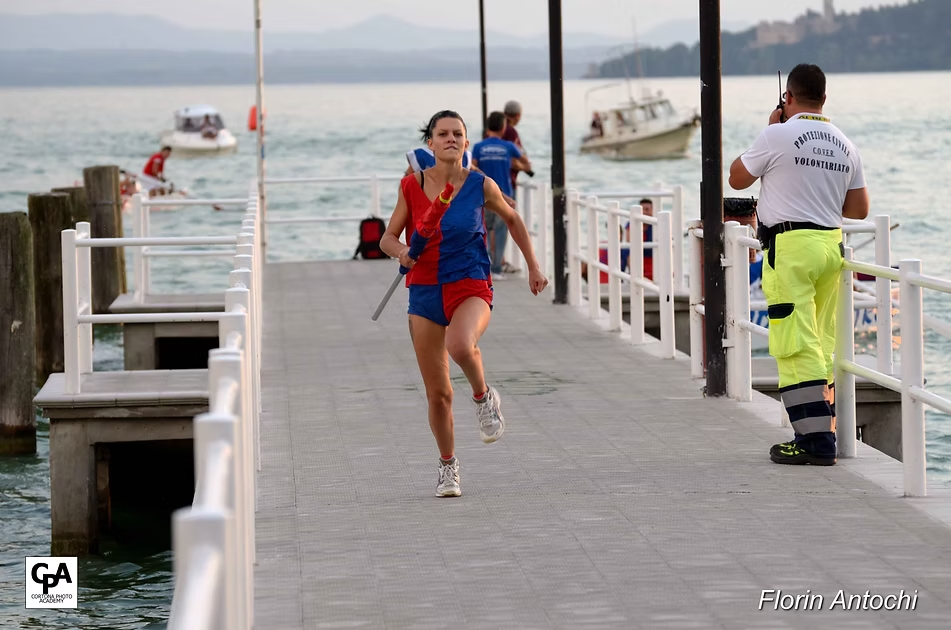
Boat carrying: One of the festival’s most distinctive elements occurs when competitors leave the water and carry their boats by hand while running through the historic centre.
Historic procession: Participants dressed in period costume recreate the atmosphere surrounding the historical story behind the Palio.
Flag-waving and drums: Historic groups, musicians, drummers and flag performers regularly contribute to the evening programme.
Corsa delle Brocche: A traditional competition in which female representatives of the four districts carry water-filled pitchers on their heads.
Lancio della Sfida: The four rioni traditionally challenge one another through a ceremonial presentation involving heralds and rhyming exchanges.
Incendio del Castello: A spectacular fireworks presentation associated with the closing celebrations.
Points forts historiques et patrimoniaux
The Palio delle Barche is based on the memory of a conflict involving the Perugian families of the Baglioni and Oddi. The historical narrative centres on the events surrounding Passignano in 1495, when members of the Oddi faction attempted to escape from the castle while being pursued by opposing forces. According to the historical-reenactment record, the story is connected with people carrying boats from the castle area toward the lake during the escape.
The reenactment draws on the historical account Della Historia di Perugia by Pompeo Pellini, published in the seventeenth century. The traditional boat used in the Palio also reflects the importance of fishing and boat transport to the communities around Lake Trasimeno.
The four participating districts are:
- Centro Storico
- Centro Due
- Oliveto
- San Donato
Each rione has its own identity, symbolic colours and organisation, helping turn the historical event into a continuing community tradition.
Programme des événements et activités
The detailed 2027 timetable has not yet been released, but the established sequence normally includes:
- Festival opening: Presentation of the Palio, transfer of the city keys and a historic procession.
- Rione training: Individual practice sessions for the participating districts.
- Cultural entertainment: Medieval performances, musicians, flag-wavers, drummers and street artists.
- General rehearsal: A full practice of the Palio course.
- Corsa delle Brocche: Traditional district competition.
- Palio dei Ragazzi: Children’s competition and youth activities, included in the recent programme.
- Lancio della Sfida: Ceremonial challenge between the four rioni.
- Main Palio: Water race, boat-carrying section through the historic centre and return to the lake.
- Prize ceremony: Presentation of the Palio and recognition of the winning rione.
- Closing entertainment: Evening activities and traditional fireworks.
These activities are based on the recent official programme and established historical format; individual performers, times and supplementary events for 2027 should be checked when the organisers publish the new programme.
Types de billets et options d’entrée
The Palio delle Barche is primarily a public outdoor community festival.
General festival entry: $0 / Free
Recent event information lists the main festival activities and historic performances as free admission. Food, drinks and individual commercial activities at the district taverns are separate expenses.
Main Palio viewing: Free public access, subject to crowd-management arrangements and any temporary restrictions established by local authorities.
Procession historique : Free public viewing.
Performances culturelles : Generally free to watch in public areas.
Gastronomic taverns: Entry to the festival area is free, while food and beverages are purchased separately.
No paid 2027 ticket structure has been announced by the official organiser.
Visites guidées et expériences culturelles
The festival itself is not primarily organised as a conventional guided-tour event. Its strongest cultural experience comes from exploring Passignano while the rioni, historic procession, performances and boat competitions are taking place.
Visitors can combine the festival with independent exploration of the historic centre and the medieval Rocca. The municipal authority identifies the Rocca Medievale as one of Passignano’s important historical and artistic landmarks and provides public access information for the site.
Useful cultural experiences include:
- Walking through the historic centre before the main race
- Watching the rioni prepare their boats
- Visiting the lakeside areas used by the festival
- Observing the historic procession
- Exploring the medieval Rocca
- Sampling traditional food at the district taverns
- Learning about Lake Trasimeno’s fishing and boating heritage
Cérémonies et célébrations spéciales
Ceremony of the City Keys: The festival traditionally opens with the symbolic delivery of the city keys to the Palio organisation, establishing the ceremonial atmosphere of the event.
Présentation du Palio : A locally produced Palio artwork is traditionally presented as part of the opening celebrations. Recent editions have featured artwork created by local artists.
Boat blessing: Religious traditions include a Mass in historic costume and the blessing of the boats before the main competition.
Lancio della Sfida: The four districts formally challenge one another before the main race.
Prize ceremony: After the competition, the winning rione is officially recognised.
Incendio del Castello: The traditional fireworks spectacle provides another major celebratory moment during the festival programme.
Règles du festival
The Palio is governed by an official set of regulations published by the Ente Palio delle Barche. The organiser’s website provides a dedicated regulations section, including the Palio regulations, an appendix and separate regulations for the Corsa delle Brocche.
For visitors, the principal practical rules are:
- Follow instructions from event staff and local authorities.
- Remain behind designated spectator or safety areas.
- Do not enter the competition course during races or processions.
- Keep clear of competitors carrying boats through the historic centre.
- Follow temporary road and pedestrian restrictions.
- Observe any crowd-control measures around the lake and historic centre.
- Follow safety instructions during fireworks and other performances.
- Check the official organiser’s regulations before participating in any competition or organised activity.
The detailed competition rules should be consulted directly through the official organiser because they govern participants rather than ordinary spectators.
Comment y arriver
Par train : Passignano sul Trasimeno has its own railway station, with regional services connecting the town with destinations including Perugia, Foligno and Terontola-Cortona. Current RFI information confirms services at Passignano sul Trasimeno station.
En voiture : Passignano is located on the northern shore of Lake Trasimeno and can be reached by road from the wider Umbria and Tuscany regions. During the festival, visitors should expect heavier traffic and possible temporary restrictions around the lakeside and historic centre.
By lake: Passignano is also a departure point for Lake Trasimeno boat services. Trenitalia notes that the railway station is approximately 700 metres from Passignano Molo, around a ten-minute walk, providing a convenient connection between rail travel and the lakeside area.
Transports en commun et stationnement
Rail : The Passignano sul Trasimeno railway station is the principal public-transport option for visitors arriving by train. RFI publishes current arrival and departure information for the station.
Marche : Once in Passignano, many festival locations are concentrated around the historic centre and lakeside, making walking practical for visitors staying locally.
Stationnement : Parking availability can be affected by festival traffic management and temporary pedestrian areas. The municipality operates paid parking areas, and local parking arrangements can change according to restrictions and event requirements.
Accessibility at the station: RFI currently identifies Passignano sul Trasimeno station as a station without passenger assistance for people with reduced mobility, so visitors requiring assistance should plan ahead and verify the current arrangements before travelling.
Zones d’hébergement
Passignano sul Trasimeno: Staying in the town provides the easiest access to the festival venues, historic centre and lakeside events.
Lakeside area: Hotels, apartments and holiday accommodation around the lake provide convenient access to the waterfront and evening activities.
Tuoro sul Trasimeno: A nearby option for visitors who want to stay around the northern part of Lake Trasimeno.
Magione: Suitable for travellers seeking accommodation with road and rail connections toward the wider Perugia area.
Pérouse : A larger urban base with a wider range of accommodation, useful for visitors combining the festival with sightseeing elsewhere in Umbria.
Accommodation should be booked early because the festival attracts visitors to a relatively small lakeside town and surrounding area.
Cuisine et spécialités traditionnelles
Food is an important part of the Palio experience. The four rioni traditionally operate gastronomic taverns during the festival, creating informal places where visitors can eat local dishes while experiencing the neighbourhood atmosphere. Recent official programmes place these taverns at the Giardini del Pidocchietto.
Visitors can look for traditional dishes and ingredients associated with Lake Trasimeno and Umbrian cuisine, including:
- Freshwater fish from Lake Trasimeno
- Local lake fish preparations
- Umbrian pasta dishes
- Viandes salées locales
- Fromages régionaux
- Légumes de saison
- Traditional breads
- Umbrian desserts
- Vins locaux et autres boissons régionales
The exact menus vary by rione and edition, so the 2027 food programme should be checked once the individual tavern menus are announced.
Accessibilité
The festival takes place across several different environments, including the lakeside, public squares, historic streets and areas with uneven or sloping surfaces. Visitors with mobility limitations should consider that the boat-carrying race takes place through narrow historic streets and may involve steep sections.
The municipality confirms that the medieval Rocca itself has accessible entry for people with disabilities.
However, RFI currently identifies Passignano sul Trasimeno railway station as having no passenger assistance service for people with reduced mobility. Visitors who require accessible transport or assistance should verify arrangements before travelling.
For the festival itself, accessible viewing locations and temporary pedestrian arrangements may vary according to the annual safety plan. Contacting the organiser or local tourist office before visiting is recommended.
Meilleures expériences culturelles
Watch the boat-carrying race: The combination of boats, runners and historic streets is the defining experience of the Palio.
Explore the four rioni: Learn about Centro Storico, Centro Due, Oliveto and San Donato and see how each district participates in the festival.
See the historic procession: The costumed procession provides context for the historical story behind the event.
Visit the district taverns: The rione taverns combine local food with community traditions and evening entertainment.
Watch the Corsa delle Brocche: This traditional competition offers another way to experience the local festival culture.
Explore the medieval Rocca: The fortress provides historical context for Passignano and the landscape in which the Palio’s story is set.
Spend time beside Lake Trasimeno: The lake is not simply a backdrop; it forms an essential part of the competition and the town’s historical identity.
Faits marquants de l’année précédente
The most recent published official programme featured a broad mixture of historical, cultural and entertainment activities. Highlights included the presentation of the Palio, a nighttime historic procession, individual rione trials, fire performance, the Incendio del Castello, medieval entertainment, drums and flag-wavers, street artists, the Corsa delle Brocche, the Palio dei Ragazzi and the Lancio della Sfida.
The main competition was preceded by the traditional religious ceremony and boat blessing, followed by the historic rione procession and the Palio itself. The programme then concluded with the prize ceremony and evening entertainment.
The Italian Ministry of Culture’s historical-reenactment record confirms the continuing structure of the event: four rioni, two types of boats, a water section, a running section through the historic centre and a final return to the lake. It also records the festival’s annual status and origins in 1984.
Billets officiels
The Palio delle Barche is generally a free public festival rather than a conventional ticketed event. Recent listings identify the festival and its public performances as free admission, while food and drinks at the rione taverns are purchased separately.
2027 general admission: $0 / Free
Organisateur officiel : Ente Palio delle Barche
Site officiel : https://www.paliodellebarche.com/
Contact : info@paliodellebarche.com
Adresse : Via Gobetti 1, 06065 Passignano sul Trasimeno (PG), Italy
No separate 2027 ticket booking system has been announced. Visitors should use the official website for the latest programme, regulations, access information and any changes to the festival arrangements.
Vidéo
Localisation
FAQ
What is the main athletic event of the Palio delle Barche festival?
The festival features a dramatic amphibious race where rowing crews cross Lake Trasimeno in wooden boats. Upon reaching the shore, teams hoist the vessels onto their shoulders and sprint up steep medieval streets. This intense competition tests both aquatic endurance and raw physical strength across a historic course.
How are the local neighborhoods involved in the festival structure?
The town is divided into four competing contrade named Centro, San Donato, Oliveto, and Centro Storico. Each neighborhood manages its own costume workshops, social taverns, and athletic training regimens throughout the year. These districts drive the passionate community rivalry and cultural pageantry that define the celebration.
What can visitors experience during the grand historical costume procession?
Visitors witness hundreds of local residents marching in meticulously researched, hand-stitched Renaissance garments and armor. The parade features noble lords, ladies, musicians playing period instruments, and acrobatic flag-throwers. It recreates the aesthetic elegance and social hierarchy of fifteenth-century courtly life in stunning detail.
What role does Lake Trasimeno play in the festival's activities?
Lake Trasimeno serves as the vital natural arena for the opening water-based leg of the famous boat race. Its shoreline also hosts festive illuminations, evening firework displays over the water, and open-air dining. The lake enhances the scenic beauty and historical context of the multi-week cultural gathering.
How do the teams prepare for the demanding boat-carrying phase?
Athletes undergo specialized physical training regimens for months to build the endurance required for uphill sprints. Teams carefully practice lifting and balancing the heavy wooden watercraft to navigate tight medieval corners safely. This rigorous preparation ensures maximum competitiveness and safety during the high-stakes festival climax.

Laisser un commentaire