

What to expect
Salina Doc Fest is the International Festival of Narrative Documentary conceived and directed by Giovanna Taviani, a cultural project that was born on the island of Salina in 2007 with the support of Sicilia Film Commission and the Italian Ministry of Culture and has grown into one of the most respected platforms in Europe dedicated entirely to creative documentary cinema. The festival was created during the elaboration of the Fughe e Approdi project and immediately focused on a central idea that still drives its identity today, which is that documentary is not a marginal genre but a powerful narrative form capable of reading the world, reaching a wide audience, and standing alongside fiction in terms of artistic ambition. This vision has been confirmed by the trajectory of films that have passed through Salina and by the evolution of the genre itself in recent years.
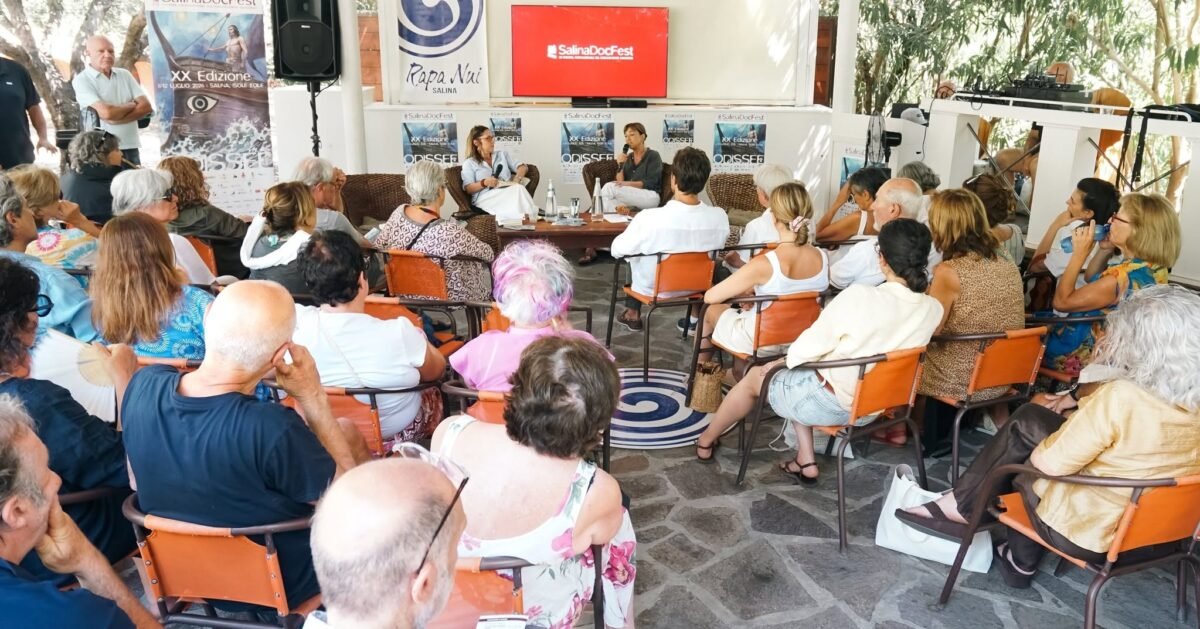
What you will experience on the island is very different from a conventional urban festival. Salina, the greenest and most fertile of the Aeolian Islands, becomes a diffused cinema where every screening is linked to the landscape, the sea, and the community. Mornings are dedicated to discovery, encounters, and training, afternoons to in-depth conversations and thematic focuses, and evenings to large open-air screenings in the main piazza, with the volcanoes and the sea as a backdrop. The atmosphere is intimate, informal, and deeply participatory. Directors present their own films, stay for long Q&A sessions, and continue conversations with the audience after the lights go up, often in the nearby bars and terraces that become natural extensions of the festival.
Over its history, the festival has received more than 1,500 submissions, screened over 400 films, hosted more than 1,000 directors and productions from twelve countries, accredited around 200 journalists, and welcomed more than 700 special guests. The scientific committee and the honorary committee have included major figures of Italian culture and cinema, and the list of guests ranges from Martin Scorsese and Roberto Saviano, who was present at the very first edition with Gomorrah, to Nanni Moretti, Werner Herzog, Oliver Stone, and Jeremy Irons. This continuity of high-level presence is combined with a strong commitment to emerging authors from the Mediterranean basin, to human rights through the patronage of UNHCR and Associazione Carta di Roma, and to environmental sustainability through collaborations with Green Salina Energy Days and local associations such as Salina Isola Verde.
Enjoy Your Event Stress-Free with Italy Travelo
Whether you're traveling for a world-famous festival, live concert, cultural celebration, or business event, Italy Travelo helps simplify every step of your journey. Our team provides personalized travel assistance, allowing you to focus on creating lasting memories.
Festival dates
Main Festival Window: July 2027 (Dates TBD)
Location: Island of Salina, Aeolian Islands, Sicily, Italy
Artistic Direction: Giovanna Taviani
Organizing Municipalities: Santa Marina Salina and Malfa
Official Information and Programming Contact: programmazione@salinadocfest.it
Official Website: https://www.salinadocfest.it/
The full calendar with daily programmes, exact opening and closing events, and previews in Rome and Messina will be published on the official website as soon as it is finalized. All ticket sales, accreditation openings, and hospitality packages follow the same official channels.
Visiting this event? Don’t miss out on these amazing activities and local experiences while you’re here.
Venues & festival locations
The festival is spread across the two main municipalities of the island, which allows you to experience different landscapes and communities while staying within a very short distance. The heart of the festival is Piazza Santa Marina Salina, which is transformed into a large open-air cinema with professional projection and sound, a stage for introductions, and seating for a wide audience. This is where the main competition screenings, special events, tribute evenings, and award ceremonies take place. The location directly faces the sea and creates a unique viewing experience that is central to the identity of the festival.
The second main pole is the Malfa Convention Center, which hosts the daytime programme in an indoor setting. Here you will find the Focus sections, retrospectives, morning replays, student screenings, masterclasses, book presentations, and press meetings. The center offers stable technical conditions and is the main hub for accredited professionals and journalists who need a quieter environment for work and networking.
In addition to these two main venues, the festival uses several other spaces that enrich the experience. The Rapanui seaside facility in Santa Marina Salina is the base for the educational campus that brings together high school students from Palermo and Lipari and students from the University of Messina. Partner wineries linked to Tasca d’Almerita, which awards the main prize each year, host thematic aperitifs, conversations about territory, and sunset events. Smaller hamlets such as Leni, Pollara, and Rinella are used for site-specific screenings, environmental focuses, and cultural walks, while Papagayo and the Conference Hall in Malfa have historically hosted exhibitions such as the Through Waters project.
All venues are connected by the island bus network and by a dedicated festival shuttle during screening hours, which makes it easy to move between Santa Marina and Malfa even late in the evening.
Full programme
The programme is structured around several complementary strands that together offer a complete overview of contemporary narrative documentary. The International Competition is the core of the festival and presents a curated selection of new feature-length creative documentaries that compete for the main jury awards. These films are selected for their strong authorial vision, their ability to tell real stories with cinematic language, and their relevance to the annual theme. Each film is presented by its director and followed by an in-depth Q&A.
Alongside the competition, Focus Mediterraneo.doc is dedicated to the most interesting documentaries produced in the Mediterranean region and awards the Il Gelso Vacanze and Lady Wilmar prize. This section reflects the festival’s original mission to give space to stories of peoples and cultures of the Mediterranean, including migration, invisible communities, and intercultural dialogue. Every year a specific country or region is also explored in depth, with past focuses dedicated to Greece and other Mediterranean territories, offering a concentrated look at emerging cinemas.
The programme also includes special events and tributes that connect the festival to the history of cinema in the Aeolian Islands, from Roberto Rossellini’s Stromboli Terra di Dio to Michelangelo Antonioni’s L’avventura shot in Panarea, from William Dieterle’s Vulcano with Anna Magnani to Massimo Troisi’s Il Postino and Nanni Moretti’s Caro Diario. These tributes are accompanied by restored screenings, encounters with scholars, and presentations of photographic books such as Living with Volcanoes. The sustainability strand, organized with Green Salina Energy Days under the title Vulcani Energia Islands, brings together filmmakers, scientists, and activists to discuss energy, islands, and climate.
Finally, the educational and industry strands complete the picture. SalinaDocFest Educational brings high school and university students to a summer campus where they participate in writing labs, viewing sessions, and jury activities in collaboration with Palumbo Editore and CIDI-Palermo. The industry programme offers morning panels on production, distribution, and co-production, case studies, and networking sessions for accredited professionals.
Featured films & premieres
The selection privileges author-driven documentaries that combine strong reality with narrative construction, a definition that Giovanna Taviani has always placed at the center of the festival. For this edition, you can expect a lineup that includes world premieres, international premieres, and Italian premieres that have been launched at major European festivals and are seeking their Italian audience in Salina.
In the International Competition, the featured films typically include six to ten feature documentaries that explore contemporary issues such as migration, identity between islands, freedom, borders, and environmental transformation. These films often come from co-productions involving multiple Mediterranean countries and are presented in original version with Italian and English subtitles. The Mediterraneo.doc selection highlights works from Tunisia, Morocco, Spain, Greece, Slovenia, Brazil, and the United States, with a particular attention to young directors exploring the documentary field for the first time.
Italian narrative documentaries hold a special place, with a strong presence of works supported by Sicilia Film Commission and by independent Italian producers. These films often explore Sicilian and Southern Italian realities with a universal resonance. The focus programmes add further layers, with archive films linked to the legacy of Panaria Film, the historic company founded in Salina at the end of the nineteen forties that experimented with underwater shooting techniques, and with landmark titles such as Vittorio De Seta’s Isole di Fuoco shot in Stromboli and Werner Herzog’s La Soufriere.
All featured films are introduced by a member of the artistic direction and are followed by conversations with the filmmakers, critics, and thematic experts.
Directors, actors & guests
One of the defining characteristics of Salina Doc Fest is the direct and prolonged access to guests. Unlike larger festivals where encounters are brief, here directors, actors, writers, and cultural figures spend several days on the island, participate in multiple events, and are available for informal exchanges with the audience and with students.
The guest list each year includes the directors of the films in competition, producers, editors, and cinematographers, as well as protagonists of the Italian and international documentary scene. The honorary and scientific committees have included figures such as Romano Luperini, Bruno Torri, Giorgio and Mario Palumbo, and Paolo and Vittorio Taviani, guaranteeing curatorial continuity and artistic credibility. In recent editions, the festival has welcomed Jeremy Irons, who described his time in Salina as the most glorious week he could remember, Oliver Stone, Giuseppe Fiorello who received the City of Messina Award, Martin Scorsese, and Roberto Saviano, whose early participation helped define the spirit of the event.
Actors and cultural personalities are invited for special awards and tribute evenings, while scholars, journalists from Carta di Roma, and representatives from UNHCR participate in thematic panels on human rights and freedom. The student jury and the educational campus bring a younger generation of viewers and future filmmakers into direct contact with established authors, creating a dialogue that is one of the most appreciated aspects of the festival.
Screening schedule
The daily schedule is designed to allow you to follow the entire programme without overlaps between main events, while also leaving time to enjoy the island. The morning slot at Malfa Convention Center is dedicated to focused viewing and learning. It includes the Focus Mediterraneo.doc screenings, country focuses, retrospectives, press replays, and screenings for the student campus. These sessions start mid-morning and continue until early afternoon, often followed by Q&A sessions with directors who are present on the island.
The afternoon slot moves between Malfa and Santa Marina Salina and is dedicated to special events, book presentations, masterclasses, and panels. This is where you will find presentations such as the photographic book Living with Volcanoes, discussions on territory and sustainability, meetings with the mayors of Salina and the Salina Isola Verde Association, and encounters with the management committee of the festival.
The evening slot in Piazza Santa Marina Salina is the main event of the day. Two feature documentaries are screened back-to-back, starting after sunset, with official introductions, guest presentations, and extended Q&A sessions. The opening night, the award nights, and the closing ceremony all take place in this slot. When capacity allows, late-night replays and informal screenings are organized at partner venues such as Papagayo and selected wineries.
The complete schedule with exact times, film durations, language information, and presence of guests is published in the official catalogue and on the official website.
Ticket types & accreditation
The festival has always maintained an accessible approach to ticketing, with a large part of the programme offered free of charge in the open-air piazza. When ticketing applies, the pricing is based on previous editions and converted to USD for international visitors.
Single Screening Ticket: USD 6. Valid for one screening in any venue, including Piazza Santa Marina Salina and Malfa Convention Center. This is the ideal option if you want to attend a specific premiere or tribute evening.
Day Pass: USD 16. Gives access to all screenings and events across all venues for one full day. It includes competition screenings, focus sections, and special events.
Full Festival Pass: USD 33. Full access to the entire island programme for the whole duration of the festival. This pass guarantees priority entry to the piazza screenings and access to all daytime events.
Reduced Pass: USD 11. Reserved for students, viewers under twenty six, viewers over sixty five, and residents of the Aeolian Islands. Valid ID is required at the box office and at entry.
Donor Pass: USD 55. Includes the full festival pass plus priority seating, a printed catalogue, and invitation to the donor aperitif organized with partner wineries.
Free Admission: Evening screenings in Piazza Santa Marina Salina have historically been offered with free admission until full capacity is reached, reflecting the festival’s commitment to making documentary cinema accessible to the local community and visitors.
Tickets can be purchased online through the official website and at the official box offices in Santa Marina Salina and Malfa during the festival. All prices include local taxes.
Industry & professional access
Salina Doc Fest has established itself as a meeting point for the Mediterranean documentary community, with partnerships with documentary festivals from the United States, Brazil, Germany, Great Britain, Slovenia, Spain, Morocco, and Tunisia. For this reason, a specific system of professional access is provided.
Industry Accreditation: USD 22. Dedicated to directors, producers, distributors, film commission representatives, sales agents, and professionals working in documentary production and distribution. It provides access to all screenings subject to seat availability, industry panels, networking aperitifs, and the festival video library when available. It also includes the official catalogue and access to the press area.
Press Accreditation: Free upon approval. Reserved for journalists, critics, photographers, and media operators. The festival historically accredits around two hundred journalists. Applicants must provide a press card and a letter of assignment. Approved press receive priority access, access to press conferences, press kits, and dedicated work spaces.
Student and University Accreditation: USD 11. Reserved for students of partner universities and film schools, including the University of Messina and schools involved through CIDI-Palermo. It includes access to the Rapanui campus activities and to all public screenings.
Film Professional Package: USD 44. Includes industry accreditation plus up to two nights of accommodation in affiliated structures, subject to availability. This formula is inspired by the festival’s tradition of offering travel allowance, free accreditation, and accommodation for directors whose films are selected in competition, a practice that supports the presence of authors on the island.
Applications for all accreditations must be sent to programmazione@salinadocfest.it and are managed by the organization offices in Rome and Salina.
Red carpet & special events
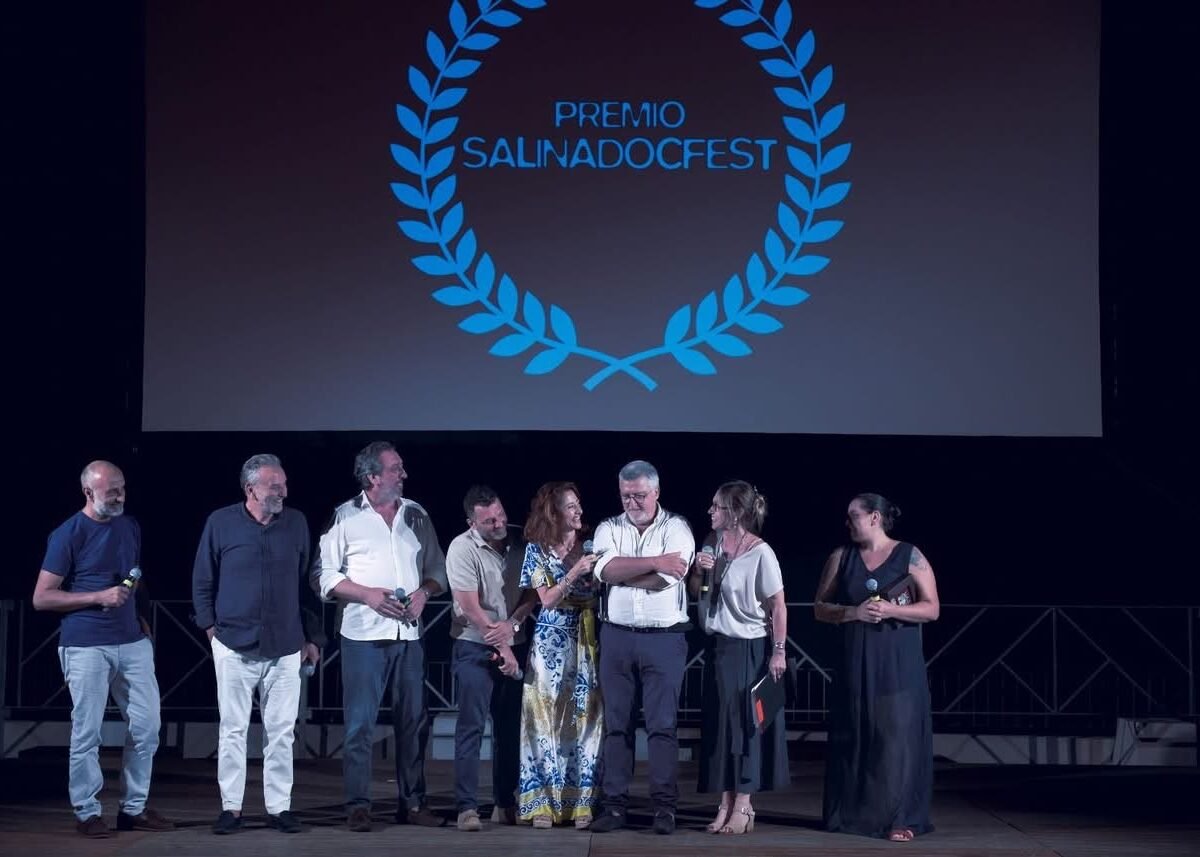
Although the festival maintains an informal island style, red carpet moments and special events punctuate the programme and create occasions for celebration and visibility. The opening ceremony in Piazza Santa Marina Salina includes institutional greetings from the mayors of Santa Marina Salina and Malfa, representatives of Salina Isola Verde Association, and the artistic direction, followed by the first competition screening.
The closing ceremony and Tasca d’Almerita Award night is the most formal event, with the jury announcing the winners of the International Competition, the Focus Mediterraneo prize, and other special awards. The City of Messina Award, which in recent editions has honored figures such as Giuseppe Fiorello, is presented during a dedicated evening with a red carpet walk and press coverage.
Other special events include thematic evenings dedicated to the annual theme, such as freedom, woman beyond borders, fears dreams visions, and sustainability. These evenings combine film screenings with book presentations, photographic exhibitions, and live conversations. The Living with Volcanoes Italian preview and the screening of Werner Herzog’s La Soufriere are examples of how the festival links cinema, territory, and environmental awareness.
Sunset aperitifs in partner wineries, collaborations with MareFestival Premio Troisi, and previews at Casa del Cinema in Rome and at the John D. Calandra Italian American Institute in New York extend the festival beyond the island and create a bridge between Salina and other cultural capitals. During these events, smart casual dress is recommended, but formal dress is not required.
Festival rules
To ensure a smooth experience for all participants, the festival applies a set of simple rules that reflect its values and the fragility of the island environment. Access to all screenings is subject to venue capacity, and pass holders and accredited guests have priority. For free admission screenings in the piazza, access is on a first come first served basis, and early arrival is recommended.
Recording of any kind, including photo, video, and audio recording during screenings, is not allowed without prior authorization from the organization. Photography is allowed during red carpet arrivals and during the first few minutes of screenings for accredited photographers only. Accreditation badges are personal, non-transferable, and must be worn visibly in all venues.
The festival promotes respect for rights and for the environment, in line with the patronage of UNHCR and Carta di Roma and the collaboration with Green Salina Energy Days. Any form of harassment, discrimination, or behavior that damages the natural environment will not be tolerated. The organization asks all participants to respect waste sorting rules, avoid single-use plastic, and leave venues clean.
Programme, venues, and guests may be subject to changes for reasons beyond the organization’s control, such as weather conditions affecting sea transport or technical requirements. Always check the official website and official social media channels for the latest updates.
How to get there
Reaching Salina requires a combination of air and sea transport, which is part of the charm of attending a festival on an island. The most convenient airports are Catania Fontanarossa and Palermo, both of which are connected to Milazzo port by direct buses, trains, and private shuttle services. Milazzo is the main departure point for the Aeolian Islands and offers the most frequent connections.
From Milazzo, hydrofoils operated by Liberty Lines and ferries operated by Siremar connect to Salina in two ports, Santa Marina Salina on the eastern side and Rinella on the southern side. Hydrofoils are faster and take under two hours, while ferries are slower but can carry vehicles and offer more space for luggage. During the high season, services are frequent from early morning until evening.
Seasonal connections from Naples to the Aeolian Islands are also available with hydrofoils and ferries, which can be convenient for those traveling from central and southern Italy. Once you are in the Aeolian archipelago, inter-island connections allow you to easily reach Salina from Lipari, Panarea, Stromboli, and Vulcano.
Because transport demand is very high during the festival period, it is strongly recommended to book flights and sea transfers well in advance and to allow extra time for connections.
Public transport & parking
On Salina, public transport is limited but well organized during the festival. The island bus service connects Santa Marina Salina, Malfa, Leni, Pollara, and Rinella with regular routes that are extended during festival evenings to allow return after the last screening. The festival usually arranges a dedicated shuttle between Santa Marina Salina and Malfa during screening hours, which is free or available at a very low cost for pass holders and accredited guests.
For more flexible movement, you can rent scooters, e-bikes, and small cars in Santa Marina Salina and Rinella. These should be reserved well in advance because availability is limited. Local taxis and minivans are also available and can be booked for private transfers between venues or for airport to port connections.
Parking near the main venues is limited. There are small public parking areas near Santa Marina Salina and near Malfa Convention Center, but during evening events the centers of the villages are partially closed to traffic to allow the piazza screenings to take place safely. Walking is often the most convenient option, as Santa Marina Salina is compact and most hotels, restaurants, and the main piazza are within a short walking distance. If you arrive with a vehicle, it is advisable to leave it in a designated parking area and move on foot or by bus during festival hours.
Accommodation areas
Salina offers a range of accommodation options, but capacity is limited, so early booking is essential. Santa Marina Salina is the most convenient area if you want to be close to the main open-air screenings, the Rapanui campus, restaurants, and the port where hydrofoils arrive. Here you will find hotels, bed and breakfasts, and holiday houses, many of which are within a five to fifteen minute walk from the piazza.
Malfa is the second festival pole and is ideal if you plan to attend many daytime screenings at the Convention Center. The area around Malfa and Pollara offers agriturismi, boutique hotels, and traditional Aeolian houses surrounded by vineyards and caper fields, with spectacular views of the sea and the sunset that made Pollara famous as a location for Il Postino.
Leni and Rinella in the southern part of the island offer more affordable guesthouses and apartments and are well connected by bus to Santa Marina. They are a good choice for longer stays and for those who arrive by ferry to Rinella port. Pollara itself has a small number of exclusive rentals and villas for those seeking maximum privacy and scenery.
The festival collaborates with Salina Isola Verde association and with local hotels to offer special packages that combine accommodation and festival passes. In past editions, a discount was offered to festival visitors staying in affiliated structures. All packages are published on the official website.
Food & dining
Food is an integral part of the Salina experience and the festival often integrates gastronomy into its events. The island is famous for its capers, which are celebrated with a dedicated festival in early June, for its Malvasia wine, and for products such as wild fennel, tomatoes, and herbs that grow on volcanic soil. Typical dishes include pane cunzatu, pasta with Aeolian capers, fresh seafood, and granita with local fruits.
During the festival, food stalls and thematic aperitifs are organized near the venues, especially in collaboration with Tasca d’Almerita and other wineries. These moments combine tasting with conversations about agriculture, sustainability, and island economies. In Santa Marina Salina, you will find numerous trattorias, seafood restaurants, and wine bars that stay open late during festival nights, while in Malfa and Pollara agriturismi and family-run restaurants offer traditional Aeolian cuisine with vineyard views.
For budget options, bakeries, panini shops, take-away pizza, and small supermarkets are available in both main villages, which is convenient if you are staying in a self-catering apartment. Dinner reservations are strongly recommended during the festival period because restaurants are very busy, and many offer fixed festival menus. Vegetarian, vegan, and gluten-free options are increasingly available, but it is advisable to inform the restaurant in advance.
Accessibility
The festival is committed to improving accessibility in collaboration with the municipalities of Santa Marina Salina and Malfa. The main open-air venue in Piazza Santa Marina Salina has flat access and reserved spaces for wheelchair users, while Malfa Convention Center is accessible with ground floor entry and accessible restrooms. Both venues have staff available to assist upon request.
Mobility on the island can be challenging because some streets have cobblestones and slopes. The organization recommends contacting programmazione@salinadocfest.it in advance to arrange support, reserve accessible seating, or organize transport with specific requirements. Local buses have limited low-floor access, so taxis that can accommodate wheelchairs or mobility aids should be booked in advance with your needs specified.
Films are screened in original version with Italian and English subtitles, which supports accessibility for hearing and linguistic diversity. Some panels offer sound amplification. While audio description is not currently provided, staff can provide detailed synopses and assistance. Guide dogs are allowed in all venues.
Several affiliated hotels have accessible rooms, but features vary. When booking accommodation, check accessibility details directly with the property and inform the festival office of any specific needs so that appropriate arrangements can be made.
Best screenings to attend
If you are attending for the first time, there are certain screenings that best represent the spirit of the festival and should not be missed. The opening night in Piazza Santa Marina Salina is essential because it introduces the theme of the edition, features institutional greetings and the artistic direction, and presents a highly anticipated premiere with the director present. The atmosphere of the first night, with the whole community gathered in the piazza, perfectly captures the sense of an island festival.
The finalist evenings before the Tasca d’Almerita Award ceremony are also highly recommended. These screenings feature the films that have most impressed the jury and are followed by extended Q&A sessions and emotional debates. The Focus Mediterraneo.doc evening is ideal for discovering new voices from across the Mediterranean and understanding the festival’s commitment to stories from the other side of the sea.
Tribute evenings and special events dedicated to the annual theme, such as those exploring freedom, women beyond borders, or the relationship between volcanoes, energy, and islands, combine cinema with book presentations, live music, and conversations with scholars and artists. Finally, the morning screenings at Rapanui with the student jury offer a lively and fresh perspective, with passionate debates that show how documentary cinema speaks to younger generations.
Previous year’s highlights
The most recent edition celebrated a major milestone in the history of the festival, marking two decades of continuous activity and confirming its role as a reference point for narrative documentary in the Mediterranean and beyond. The edition was characterized by an expanded global dimension, with partnerships involving documentary festivals from several continents and the participation of major international figures from contemporary cinema and culture.
Among the most memorable moments were the presence of Academy Award winning actor Jeremy Irons, who publicly expressed his admiration for the festival, and the participation of Oliver Stone as a special guest, continuing a tradition of bringing major authors to the island. The City of Messina Award was assigned to a prominent figure of Italian cinema, following the example of previous editions. The programme included Italian previews of photographic books and environmental projects, a bridge between the Roman and Aeolian sections with screenings of landmark films such as Werner Herzog’s La Soufriere, and a dedicated focus on territory and sustainability organized with Green Salina Energy Days.
The educational campus at Rapanui once again brought together students from high schools in Palermo and Lipari and from the University of Messina, working alongside teachers and filmmakers in collaboration with Palumbo Editore. The festival reaffirmed its commitment to supporting the local economy, promoting sustainable tourism, and offering a platform for invisible stories, in line with the patronage of UNHCR and Carta di Roma.
Official tickets & accreditation
Official tickets, passes, and accreditations for Salina Doc Fest 2027 are available exclusively through the official channels. This is the only way to ensure valid entry and to support the festival directly.
Official Website: https://www.salinadocfest.it/
Programming and Accreditation Email: programmazione@salinadocfest.it
Box Offices: Official box offices in Santa Marina Salina and Malfa operate during the festival period with extended hours covering morning and evening screenings.
Pricing in USD converted from previous editions:
Single Screening Ticket: USD 6
Day Pass: USD 16
Full Festival Pass: USD 33
Reduced Pass for Students and Residents: USD 11
Industry Accreditation: USD 22
Film Professional Package with Accommodation: USD 44
Donor Pass: USD 55
Press Accreditation: Free upon approval
Many evening screenings in Piazza Santa Marina Salina remain free admission until full capacity is reached, reflecting the festival’s mission of accessibility. Final pricing for the upcoming edition will be confirmed on the official website. Avoid unofficial resellers and third-party platforms that claim to sell festival tickets.
Video
Location
FAQ
What is Salina Doc Fest and why should I attend?
Salina Doc Fest is the International Festival of Narrative Documentary founded and directed by Giovanna Taviani on the island of Salina in the Aeolian archipelago, supported by the municipalities of Santa Marina Salina and Malfa and by cultural partners from Sicily and beyond. You should attend because it offers a unique combination of high-level documentary premieres, direct contact with directors and international guests, open-air screenings by the sea, and an educational programme that brings together students, journalists, and professionals in an intimate island setting unlike any other festival in Europe.
Do I need to buy tickets in advance and are there free screenings?
The festival traditionally offers free admission to the main evening screenings in Piazza Santa Marina Salina until full capacity is reached, which makes it accessible to the local community and to visitors without a pass. However, indoor venues such as Malfa Convention Center, special events, and masterclasses require a ticket or pass, and capacity is limited due to the small size of the venues and the high demand during the summer period. For this reason, it is strongly recommended to purchase a day pass or full festival pass in advance online through the official website or at the official box offices during the festival.
How do I get to Salina and move between venues?
To reach Salina, you need to fly to Catania or Palermo and then transfer to Milazzo port, which is the main departure point for hydrofoils and ferries to the Aeolian Islands operated by Liberty Lines and Siremar. The sea crossing takes under two hours by hydrofoil and longer by ferry, and services connect to both Santa Marina Salina and Rinella ports. On the island, you can use the local bus service, the festival shuttle that connects Santa Marina and Malfa during screening hours, rented scooters and e-bikes, or local taxis, and walking is often the easiest option within Santa Marina.
What kind of accreditation is available for professionals and students?
Industry accreditation is available for documentary professionals including directors, producers, distributors, film commission representatives, and sales agents, providing access to all screenings subject to availability, industry panels, networking aperitifs, and the festival video library when available. Press accreditation is free upon approval for journalists with a press card and assignment letter, and includes priority access and press materials. Student and university accreditation is available at a reduced rate for students of partner universities and film schools, including University of Messina, and includes access to the Rapanui campus and all public screenings, with applications managed via the programming email.
What should I know about accommodation, food, and island life during the festival?
Accommodation on Salina is limited and highly requested during the festival period, so you should book several months in advance, choosing Santa Marina Salina for proximity to evening screenings or Malfa and Pollara for daytime events and scenic views. The island is famous for capers, Malvasia wine, fresh seafood, and Aeolian specialties, with many restaurants, agriturismi, bakeries, and wine bars offering festival menus and extended hours during the event. Island life is relaxed and walkable, with cobblestone streets, limited parking, and a strong emphasis on environmental respect, so it is advisable to respect waste sorting, avoid single-use plastic, and embrace the slower rhythm of an Aeolian summer festival.

Leave a Reply