

-
June 2, 2027
Event date:
-
June 19, 2027
Event end:
What to expect
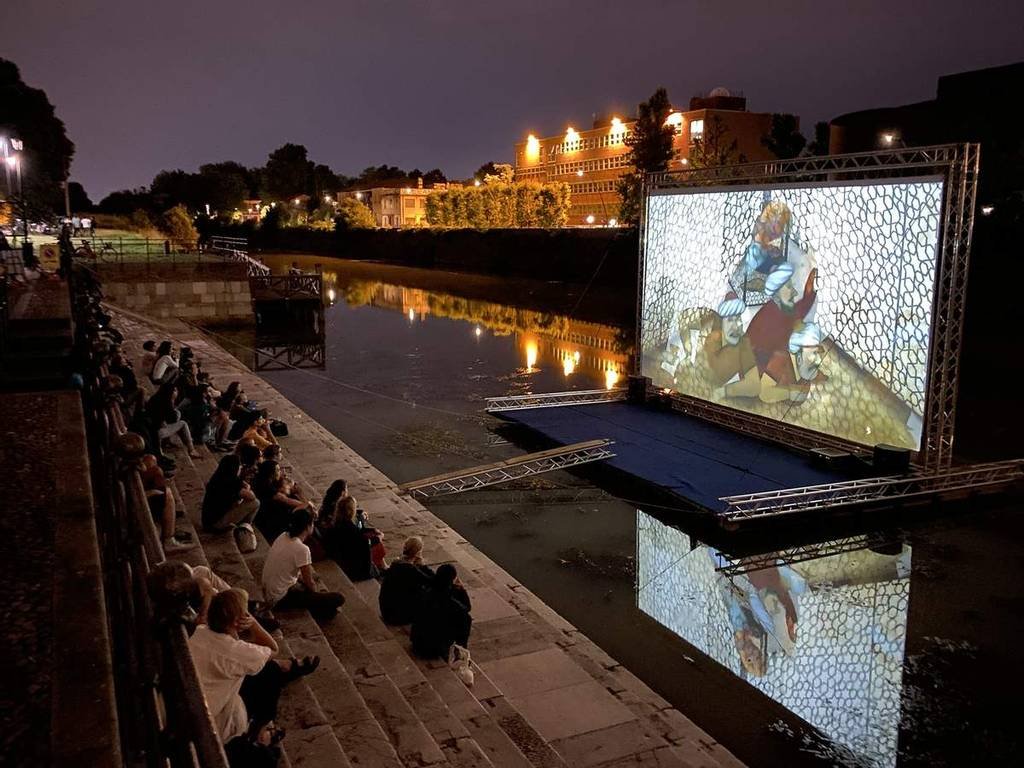
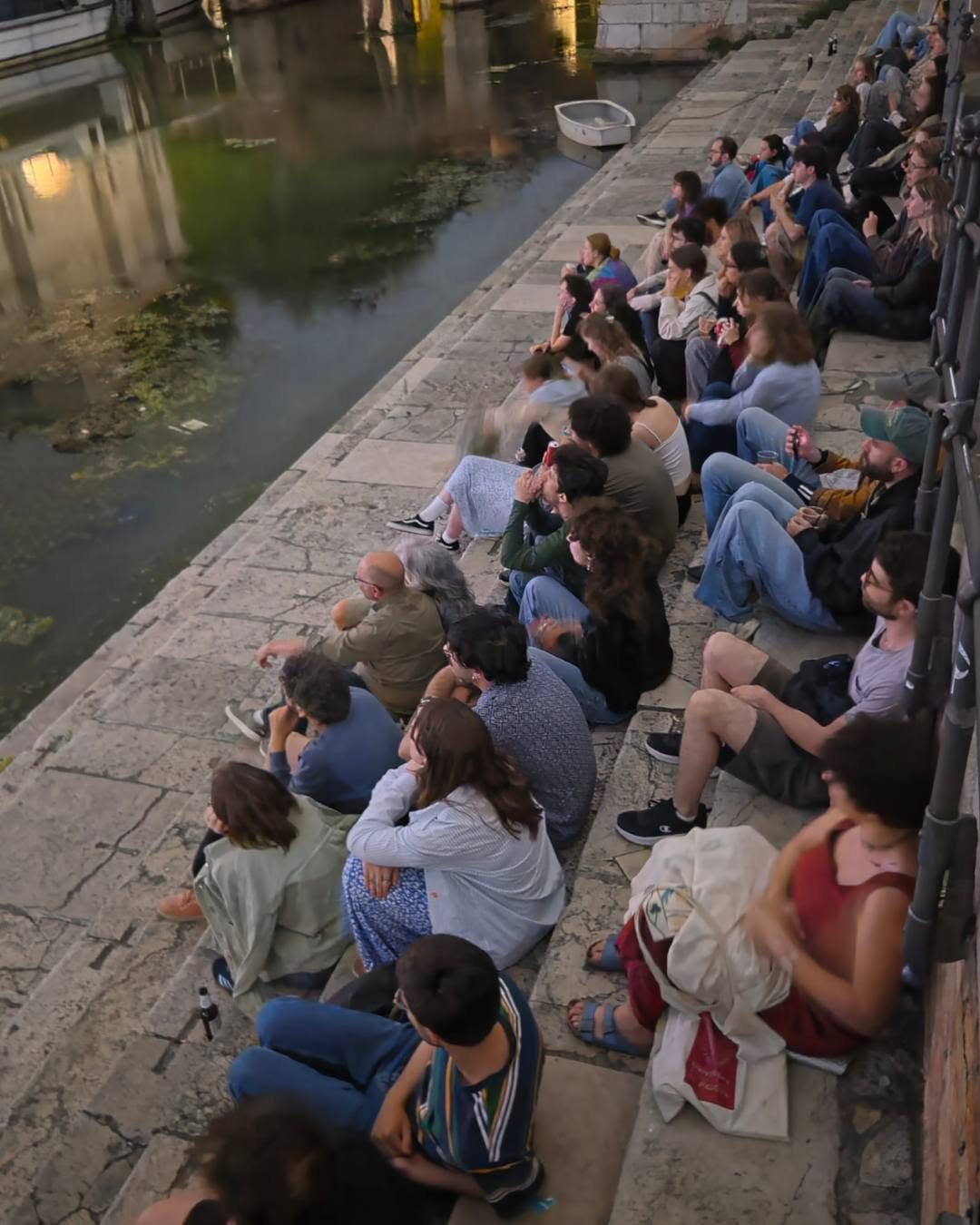
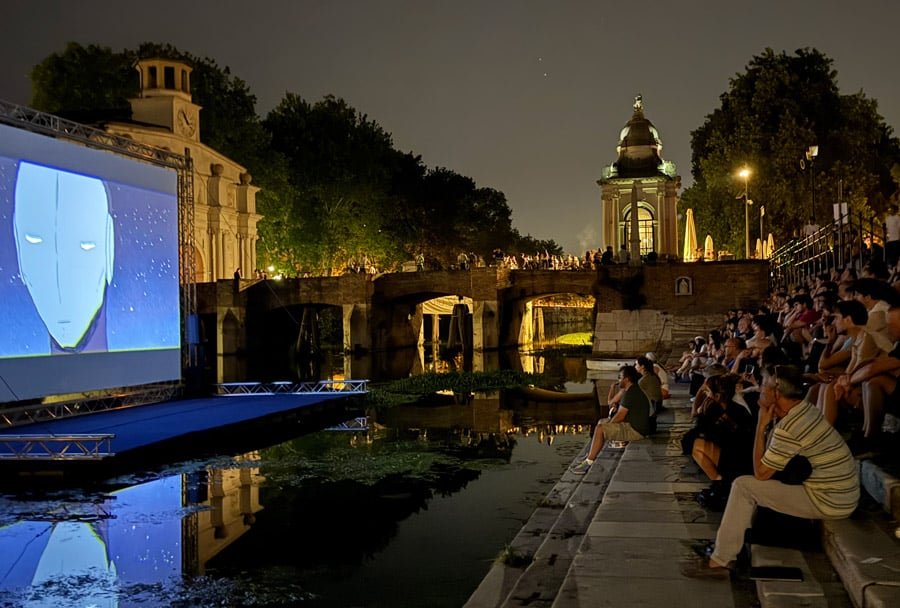
An open-air cinema on water: River Film Festival, often abbreviated as RiFF, is an international film festival that has become one of the most atmospheric cultural events in northern Italy. All screenings are free and open to the public with no ticket required, taking place on a floating screen placed in the middle of the 16th-century fluvial port at Porta Portello, the historic city gate once used for trade between Padua and Venice. This magical setting, where the audience sits along the ancient canal walls while films are projected over water, is one of the many reasons why audiences return year after year. The festival is organized by the Cultural Association Researching Movies and is supported by the Padua City Council, the Veneto Region and the Italian Ministry of Culture.
A UNESCO art city as backdrop: Padua has recently been added to the UNESCO World Heritage List thanks to Giotto’s Scrovegni Chapel and the city’s 14th-century fresco cycles, making it a truly special art city that attracts tourists and creative minds from all over the world. The festival leverages this heritage by combining cinema with the city’s historic waterways, creating a dialogue between contemporary filmmaking and Renaissance architecture. Over the course of the 18-day festival, directors and their crews have the opportunity to present their films and engage in post-screening Q&A sessions with the audience, fostering an intimate, accessible atmosphere despite the festival’s international scope.
Independent cinema with global reach: The festival welcomes short films between 100 seconds and 30 minutes and long feature films of any duration, covering fiction, documentary, animation, fantastic, experimental, music video and other genres. No work or artist is discriminated against or favored based on country of origin, language, age, race, education, gender, ideology or economic status. All forms, contents and techniques are welcome, with no censorship other than what is mandated by current Italian law, reinforcing its reputation as a fiercely independent platform.
Enjoy Your Event Stress-Free with Italy Travelo
Whether you're traveling for a world-famous festival, live concert, cultural celebration, or business event, Italy Travelo helps simplify every step of your journey. Our team provides personalized travel assistance, allowing you to focus on creating lasting memories.
Festival dates
Main edition: June 2–19, 2027
Duration: Eighteen days of open-air screenings, Q&As and collateral events, making it one of the longest-running free festivals in Italy.
Key deadlines: Call for entries opens in summer, early deadline at end of October, standard deadline in December and January, late deadline at end of March, with notification to finalists by mid-May.
Visiting this event? Don’t miss out on these amazing activities and local experiences while you’re here.
Venues & festival locations
Porta Portello – floating screen: The heart of the festival is the 16th-century fluvial port at Porta Portello, where a large floating screen is anchored in the middle of the historic basin. The audience watches from the stone steps and banks of the port, creating a natural amphitheater. This location, once the commercial gateway between Padua and Venice, has been transformed into a unique open-air cinema that blends industrial archaeology with contemporary art.
City-wide cultural venues: While the main screenings take place at Porta Portello, the festival also uses indoor venues for press screenings, workshops and special presentations, including cultural centers along Via Marzolo 34/A, the organizational headquarters, and partner spaces in Padua’s historic center.
UNESCO circuit: Screenings and events are often linked to Padua’s UNESCO sites, including areas around the Scrovegni Chapel and the 14th-century fresco cycles, allowing visitors to combine cinema with art tourism. The entire city becomes a festival campus, with bars and restaurants along the canal offering festival menus and meeting points for filmmakers.
Full programme
Competition categories: The program is structured into multiple competitive sections: Main Competition, International Horizons Fiction, Italian Gazes, Animation Shorts, Documentary Shorts, Film Schools Shorts, Queer and LGBTQIA+ Shorts, Anthropocene Shorts about Human Rights and Climate Change, Science-Fiction and Fantasy Shorts, AI Shorts and Long Feature Film. Each category is curated to highlight diverse voices and urgent themes.
Free public screenings: All screenings are free and open to the public with no ticket required, starting after sunset when the floating screen becomes visible. Each evening features a curated lineup of short films from different categories, followed by feature presentations on selected nights. Directors are present for Q&As, creating direct dialogue between creators and audience.
Q&As and audience engagement: Over the course of the festival, directors and their crews present their films and engage in post-screening Q&A sessions, discussing production processes, thematic choices and distribution challenges. These sessions are informal and multilingual, with English subtitles required for all non-English films.
Catalogue and awards: The catalogue listing selected films is published after mid-May, and winners are announced during the closing ceremony. Winning films must include a mention of the award received at River Film Festival in future screenings.
Featured films & premieres
Short film focus: The festival is primarily dedicated to short films with total running time between 100 seconds and 30 minutes including credits, welcoming any language and genre, from drama, noir, horror, fantasy, comedy, experimental, musical and thriller. All non-English films must include English subtitles in a separate .srt file, with .mov or .mp4 using H.265 codec preferred.
Feature and genre diversity: Long feature films with any duration and theme are also accepted, with recent editions highlighting international festival favorites, debut films and school projects. Genre sections such as Science-Fiction and Fantasy, Queer Cinema and Anthropocene allow for thematic curation that reflects contemporary concerns about identity, climate and technology.
Emerging and student voices: Categories dedicated to Film Schools, AI Shorts and Documentary Shorts give visibility to productions of academies, schools and universities of cinema and visual arts, as well as to works exploring virtual reality, immersive, augmented reality and interactive cinema up to 30 minutes.
Premiere policy: The festival accepts audiovisual works that have already been screened elsewhere, prioritizing artistic quality and originality over premiere status, which allows it to present a truly international panorama of the best recent short-form cinema.
Directors, actors & guests
International filmmakers: Each edition brings dozens of directors from around the world to Padua, many presenting their films outside their home country for the first time. The festival’s intimate scale allows for extended conversations, with filmmakers often staying for several days and attending other screenings.
Emerging talent and film schools: Directors from film schools and universities are a core presence, with dedicated Q&As that focus on learning processes, low-budget production and festival strategies. The waiver of entry fee for a single submission from applicants residing in Least Developed Countries further encourages global participation.
Jury and curators: Films are selected by a panel of judges appointed by the festival, with decisions final. The jury for awards consists of professionals from Italian and European film industry, including critics, programmers and filmmakers, who award the Golden River.
Community of cinephiles: Actors, producers and local cultural operators join the audience on the canal banks, creating a community where professional networking happens informally between screenings, often continuing in nearby osterias along Via Marzolo.
Screening schedule
Evening open-air schedule: Screenings begin after sunset at Porta Portello, with two to three hours of programming per night. Early evening slots are typically dedicated to short film competitions, while later slots feature feature films or special focus programs.
Daily thematic blocks: Each night is often themed around a competition category, such as Italian Gazes, Animation Shorts or Queer Shorts, allowing audiences to follow specific interests across multiple evenings. Special nights dedicated to Anthropocene or AI Shorts include introductory talks by experts.
Closing and awards: The final evenings include jury deliberations, announcement of winners and screening of awarded films, culminating in the Golden River ceremony.
Weather contingency: As an open-air festival, screenings are weather dependent, with announcements about cancellations or postponements made via official website and social channels on the day of screening.
Ticket types & accreditation
Free public access: All screenings are free and open to the public with no ticket required, valued at $0.00 USD. This free model, maintained since the festival’s founding, is supported by public institutions and ensures universal access regardless of economic status.
Filmmaker accreditation: Selected directors receive filmmaker accreditation that provides access to reserved seating area near the screen, backstage area for Q&As and invitations to networking events. No rental fees are charged for selected films, and the festival covers half of transport costs for hard copies.
Industry and press access: Press and industry professionals can request accreditation via the festival office at Via Marzolo 34/A, providing access to press materials, interview scheduling and photo opportunities on the floating screen.
Submission fees for entrants: For filmmakers submitting works, entry fees apply: feature films early bird $32.52 USD, regular $48.78 USD, late $65.04 USD; short films early bird $27.10 USD, regular $37.94 USD, late $48.78 USD; film schools early $21.68 USD, regular $27.10 USD, late $32.52 USD. Discounts of 8% and 23% are available with Festhome annual pass and PRO membership.
Industry & professional access
Researching Movies association: The organizing Cultural Association Researching Movies acts as industry hub, connecting independent filmmakers with Padua City Council, Veneto Region and Italian Ministry of Culture for funding and distribution advice.
Distribution and archival: Rights holders of winning films must deposit a copy in high-quality low-compression format for archival purposes, used exclusively for study and research. Any other use requires explicit permission, ensuring preservation of independent cinema heritage.
Networking along the canal: The informal setting at Porta Portello encourages industry networking without formal market, with directors, distributors and festival programmers meeting between screenings. The festival makes every effort to announce selected films and winners on time but cannot be held responsible for unforeseen delays.
Educational outreach: Film schools are invited to present their programs, and workshops on submission strategies, festival circulation and low-budget production are offered to emerging filmmakers.
Red carpet & special events
Floating red carpet: Instead of a traditional red carpet, the festival’s signature is the floating screen itself. Filmmakers walk along the historic port walls to reach the stage, greeted by audiences sitting on the canal steps, creating a uniquely democratic red carpet where everyone shares the same stone benches.
Opening and closing ceremonies: Opening night includes presentation of jury, institutional greetings and first competition screening, while closing night features award ceremony with Golden River, a Murano glass sculpture made by Venetian artists, given to best film in each category, followed by screening of winning films.
Special focus events: Special events include retrospectives of Italian masters, focus on human rights and climate change, LGBTQIA+ cinema celebrations and AI cinema showcases, often accompanied by live music or performances that complement the floating screen atmosphere.
City celebrations: Collateral events in Padua’s squares and cultural centers include exhibitions of set designs, photography exhibitions of previous editions and collaborative events with Scrovegni Chapel museums, linking cinema to Padua’s UNESCO heritage.
Festival rules
Eligibility and format: Films must have been completed after January 1, 2026. Total running time for short films must be between 100 seconds and 30 minutes including credits. Eligible formats include feature and short films, documentary, student films, virtual reality, narrative, fiction or animation. Short films can be in any language with English subtitles in separate .srt file.
Submission and selection: Maximum three entries per director. Pay entry fee according to category and deadline. Films selected by panel of judges appointed by festival, decision final. No discrimination based on country, language, age, race, education, gender, ideology or economic status. Submission implies unconditional acceptance of regulations.
Archival and copyright: Awarded films must deposit copy in .mov, .mp4 or similar high-quality format for archival purposes for study and research only. Winning films must include mention of award when shown. Screening and music copyright fall under author’s responsibility. Legal jurisdiction belongs to Law Courts of Padova.
Conduct at venue: As open-air public event, audience must respect historic port, avoid littering in water, follow safety instructions for canal banks and respect curfew for noise in residential area. Organizers reserve right of final decision on matters not explicitly addressed.
How to get there
By train: Padua railway station is served by high-speed and regional trains from Venice, Milan, Verona, Bologna and Rome. From station, Porta Portello is reachable by bus or 20-minute walk along the canal, or by tram to central areas then short walk to Via Marzolo.
By bus: Local bus lines operated by BusItalia Veneto connect railway station, city center and Porta Portello area, with frequent services during festival evenings. Night services are extended during festival period.
By car: Padua is accessible via A4 motorway with exits at Padova Est and Padova Ovest. Parking areas are available near Porta Portello, at Parcheggio City Center and along Via Marzolo, with paid parking and limited traffic zones to consider in historic center.
By air: Nearest airports are Venice Marco Polo and Treviso Antonio Canova, both offering bus and train connections to Padua, with Venice airport connected via direct bus to Padua in approximately one hour.
Public transport & parking
Local public transport: BusItalia Veneto and tram line SIR 1 serve Porta Portello and Via Marzolo area, with tickets available at automatic machines, tobacco shops and via mobility apps. Event evenings see increased frequency to handle festival crowds.
Parking facilities: Public parking near Porta Portello includes street parking along Via Marzolo and dedicated lots near the fluvial port. City center parking includes multi-storey garages such as Parcheggio Padova Centro and Parcheggio Piazza Insurrezione, with reserved spaces for visitors with reduced mobility.
Sustainable mobility: Organizers encourage use of public transport, bicycles and walking, especially for screenings at Porta Portello where car access is limited and canal banks are pedestrianized during festival. Bike racks are available near the port entrance.
Information and assistance: Festival staff at organizational headquarters Via Marzolo 34/A provide maps and assistance for navigating between venues, with clear signage and volunteer support during screening hours.
Accommodation areas
City centre and Portello area: Hotels, B&Bs and guesthouses in Padua’s historic center and near Porta Portello offer convenient access to floating screen, often within walking distance. Many offer views of canal and easy access to UNESCO sites.
Near station and university: Hotels near railway station and university district provide affordable alternatives with easy bus connections to Porta Portello. This area includes budget hotels, hostels and student residences.
UNESCO and cultural tourism: Staying near Scrovegni Chapel and historic center allows visitors to combine festival screenings with cultural tourism, including Giotto frescoes, Prato della Valle and Basilica of Saint Anthony.
Booking advice: Due to high demand during early summer tourist season, early booking is recommended. Partner hotels often include shuttle services and early breakfast options for festival attendees.
Food & dining
Canal-side dining: Restaurants, trattorias and osterias along the canal near Porta Portello serve Paduan cuisine, including bigoli, risotto, baccalà and local wines, with many offering festival menus and outdoor seating overlooking water during screenings.
Festival aperitifs and street food: Bars along Via Marzolo and near the port host festival aperitifs where filmmakers and audiences meet informally, with cicchetti, spritz and street food providing quick bites between screenings.
Historic centre options: Pizzerias, sandwich shops and bakery outlets in historic center provide fast options for attendees exploring UNESCO sites before evening screenings, allowing them to stay within festival circuit.
Accommodation dining: Hotels with restaurants often include breakfast and half-board options, convenient for attendees watching multiple evenings of films.
Accessibility
Venue accessibility: Porta Portello is an historic site with uneven stone surfaces and steps, but accessible viewing areas are designated near the entrance with ground-level access and reserved spaces for wheelchair users. Staff are available to assist with entry and positioning.
Hearing and visual support: All non-English films include English subtitles, and Italian films include English subtitles for international audience. Printed programs provide detailed synopses, and upon request staff can provide orientation for visually impaired visitors.
Inclusive access: Free admission ensures economic accessibility, with no ticket required and no reserved seating that would exclude latecomers. The festival provides free entry for carers accompanying visitors with disabilities.
Contact and support: Visitors requiring specific assistance are advised to contact organizers in advance via direzione@riverfilmfestival.org or phone +39 348 443 0112 to arrange support. Official website https://riverfilmfestival.org/ provides detailed information.
Best screenings to attend
Opening and Golden River nights: Opening night at floating screen offers magical first glimpse of festival atmosphere, while closing night award ceremony with Murano glass Golden River sculptures provides emotional culmination and screening of best films across categories.
Italian Gazes and International Horizons: These competition blocks showcase best of Italian short cinema and international fiction, often featuring debut films and emerging directors present for Q&As, representing the festival’s curatorial core.
Thematic focus screenings: Special programs dedicated to Anthropocene human rights and climate change, Queer LGBTQIA+ shorts and Science-Fiction and Fantasy provide thought-provoking curation that reflects urgent contemporary issues, often accompanied by expert introductions.
Film Schools and Animation: Screenings of film schools shorts and animation shorts reveal future talents and innovative techniques, with many films using experimental formats and AI tools, offering glimpse into next generation of filmmakers.
Previous year’s highlights
Floating screen magic: Previous editions confirmed the magic of floating screen at 16th-century port, with audiences filling canal banks each night despite variable weather, demonstrating resilience and love for open-air cinema.
Diverse winners: Winners included films across categories such as International Horizons, Italian Gazes and Documentary Shorts, with Golden River Murano glass sculptures awarded to best films, many of which went on to screen at other international festivals.
Director presence: Dozens of directors from around world attended, presenting films and engaging in Q&As that extended beyond scheduled times, with audiences asking about low-budget production, distribution and thematic choices.
Community and UNESCO synergy: Collaboration with Padua City Council and UNESCO heritage sites created special events linking cinema to Giotto’s frescoes, attracting tourists and cinephiles who combined art tourism with festival attendance, reinforcing Padua’s status as art city.
Official tickets & accreditation
Official channels: All screenings are free and open to public with no ticket required, valued at $0.00 USD. Official information is available at https://riverfilmfestival.org/, Via Marzolo 34/A headquarters and via email direzione@riverfilmfestival.org or phone +39 348 443 0112.
Filmmaker and press accreditation: Filmmakers and press can request accreditation via official website, providing proof of selection or professional activity. Approval is communicated via email with instructions for collecting badges at headquarters.
Submission pricing reference: While public screenings are free, submission fees for filmmakers converted to USD are approximately $32.52 USD early bird feature, $48.78 USD regular, $65.04 USD late; shorts $27.10 USD early, $37.94 USD regular, $48.78 USD late; film schools $21.68 USD early, $27.10 USD regular, $32.52 USD late, with discounts for Festhome pass holders.
Catalogue and archival: Catalogue listing selected films is published after mid-May, and awarded films must deposit high-quality copy for archival purposes for study and research only.
Video
Location
FAQ
Is River Film Festival really free and do I need to reserve seats?
Yes, all screenings are free and open to the public with no ticket required, valued at $0.00 USD, reflecting the festival’s commitment to universal access supported by public institutions. No reservation is needed, you simply arrive at Porta Portello canal banks before sunset and find a place on the stone steps, though early arrival is recommended for popular nights as seating is on a first-come basis along the historic port.
What makes the floating screen at Porta Portello so special?
The selected films are screened on a floating screen placed in the middle of the 16th-century fluvial port at Porta Portello, the historic city gate once used for trade between Padua and Venice, creating a natural amphitheater over water. This magical setting combines industrial archaeology, UNESCO heritage and contemporary cinema, with the reflection of the screen on the canal and the surrounding historic walls offering an atmosphere that cannot be replicated in conventional cinemas.
How can filmmakers submit films and what are the requirements?
Films must have been completed after January 1, 2026, with short films between 100 seconds and 30 minutes including credits, in any language and genre, with English subtitles in separate .srt file for non-English works, and feature films of any duration. Submissions are made via Festhome platform with entry fees varying by category and deadline, maximum three entries per director, with fee waived for single submission from Least Developed Countries, and selection by panel of judges appointed by festival.
Can I meet directors and participate in Q&A sessions?
Yes, over the course of the 18-day festival directors and their crews have the opportunity to present their films and engage in post-screening Q&A sessions with the audience, with informal multilingual discussions that often continue in nearby osterias. The intimate scale and free access encourage direct dialogue, allowing emerging filmmakers, film school students and established directors to share production insights, distribution challenges and thematic motivations with a diverse public.
What is the best way to experience the festival beyond screenings?
Beyond nightly screenings at floating screen, you should explore Padua’s UNESCO World Heritage sites including Giotto’s Scrovegni Chapel and 14th-century fresco cycles during the day, enjoy canal-side aperitifs along Via Marzolo where filmmakers gather and attend collateral exhibitions in cultural centers. Combining cinema with art tourism, local cuisine and evening strolls along the canal creates a holistic experience where the city itself becomes part of the festival’s celebration of independent cinema.

Leave a Reply