
What to expect in 2027
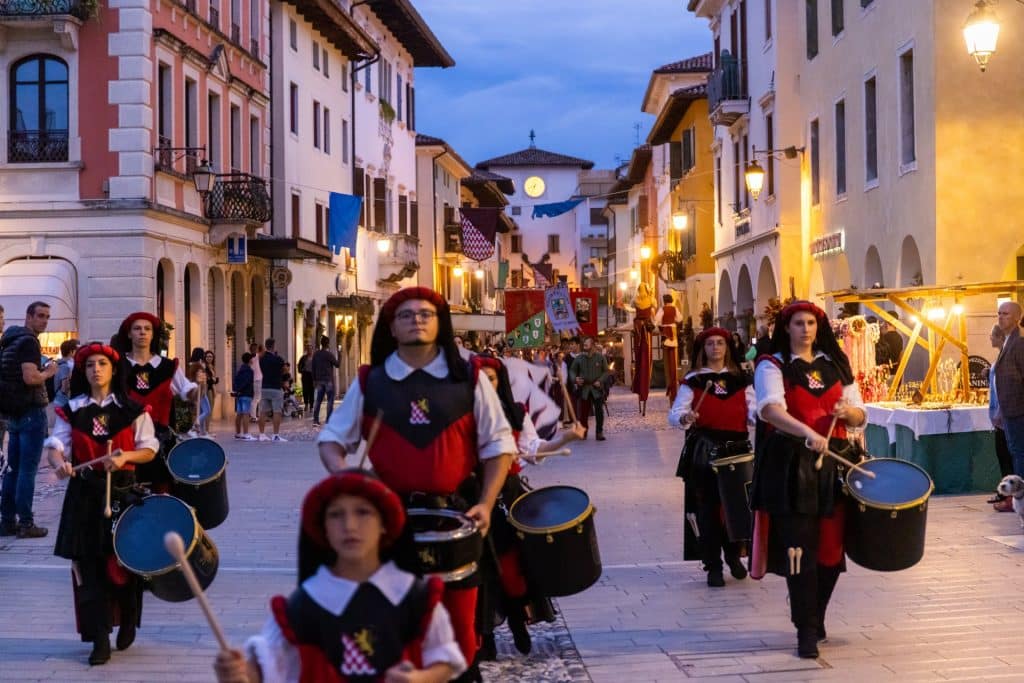
Rievocazione Storica della Macia is Spilimbergo’s major Renaissance-themed historical re-enactment, transforming the historic centre into a recreation of everyday life in the city during the early 1500s. The event brings together costumed nobles, knights, soldiers, merchants, artisans, musicians, flag-wavers, performers and townspeople in a programme focused on the history and traditions of Spilimbergo.
The name Macia comes from an ancient unit of measurement used for measuring fabrics. The measure was already in use in Spilimbergo in 1438 and is still represented by an engraved copy on a pillar of Palazzo La Loggia in Piazza Duomo.
Visitors can expect historical encampments, traditional crafts, period markets, taverns, music, theatrical performances, archery, flag-waving displays, historical games and a major costumed procession. The programme changes from one edition to another, while several traditional elements remain central to the celebration.
Enjoy Your Event Stress-Free with Italy Travelo
Whether you're traveling for a world-famous festival, live concert, cultural celebration, or business event, Italy Travelo helps simplify every step of your journey. Our team provides personalized travel assistance, allowing you to focus on creating lasting memories.
Event dates
2027 period: August 2027 (Dates TBD)
The official 2027 calendar has not yet been published. The event is traditionally held around the Ferragosto period and normally occupies several days of historical activities in the centre of Spilimbergo.
Visitors should check the official Macia website before travelling for the confirmed 2027 programme, opening information and any changes to individual activities.
Visiting this event? Don’t miss out on these amazing activities and local experiences while you’re here.
Venues & festival locations
Historic centre: The main setting is the historic centre of Spilimbergo, where streets and squares become the backdrop for the Renaissance re-enactment.
Piazza Duomo: Piazza Duomo is one of the most important locations because Palazzo La Loggia contains the historic Macia measurement and provides an important connection between the modern event and Spilimbergo’s commercial history.
Palazzo La Loggia: The building and its surrounding square provide an important historical reference point for understanding the origin of the event.
Historical encampments: Temporary camps recreate military and everyday life, with armigers, archers and other historical figures.
Market and tavern areas: Historic-style market stalls, food areas and taverns contribute to the immersive Renaissance atmosphere.
Full cultural programme
The 2027 programme is expected to continue the event’s established combination of historical re-enactment, entertainment, traditional crafts and community celebrations.
Key elements traditionally include:
- Renaissance historical settings and decorated streets
- Historical encampments
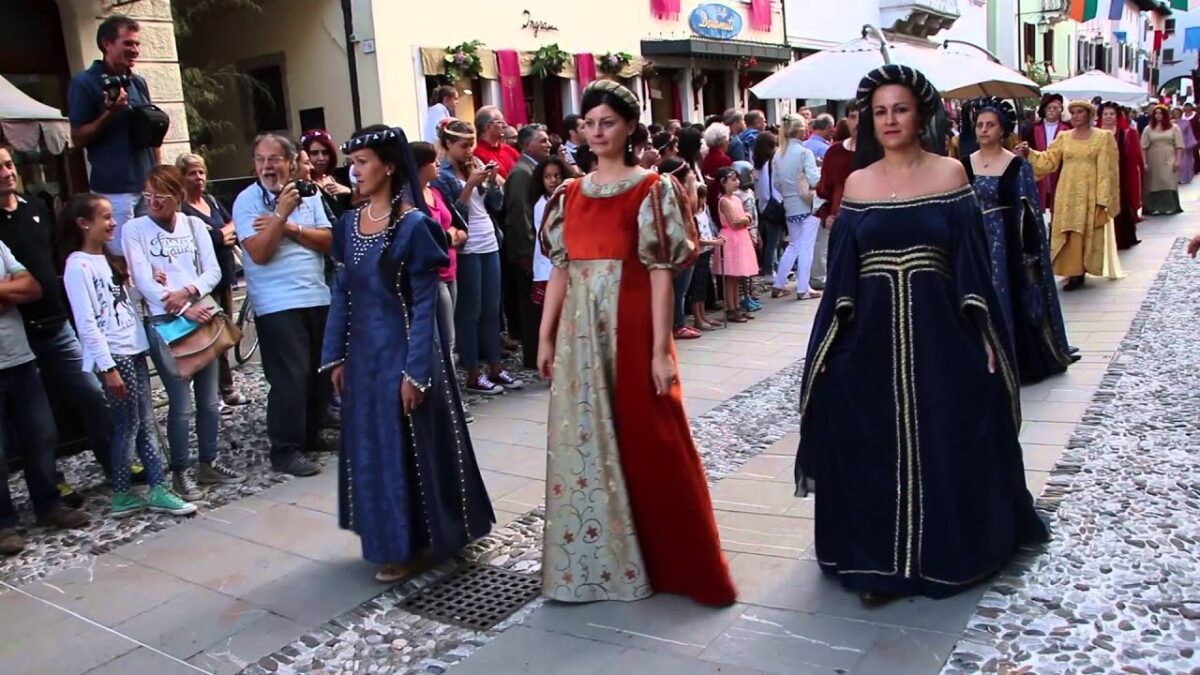
- Period costumes and costumed characters
- Ancient crafts and demonstrations
- Historical markets
- Musicians and traditional performers
- Jesters and theatrical entertainers
- Flag-waving performances
- Archery competitions
- Historical games and challenges
- Medieval and Renaissance-style taverns
- Traditional food and drink
- Religious and civic ceremonies
- Historical procession
- Performances involving knights, soldiers and other re-enactors
The official tourism description explains that the event recreates the daily atmosphere of Spilimbergo at the beginning of the sixteenth century, with merchants, bourgeois citizens, nobles, knights, artisans, common people and entertainers occupying the streets.
Featured traditions & performances
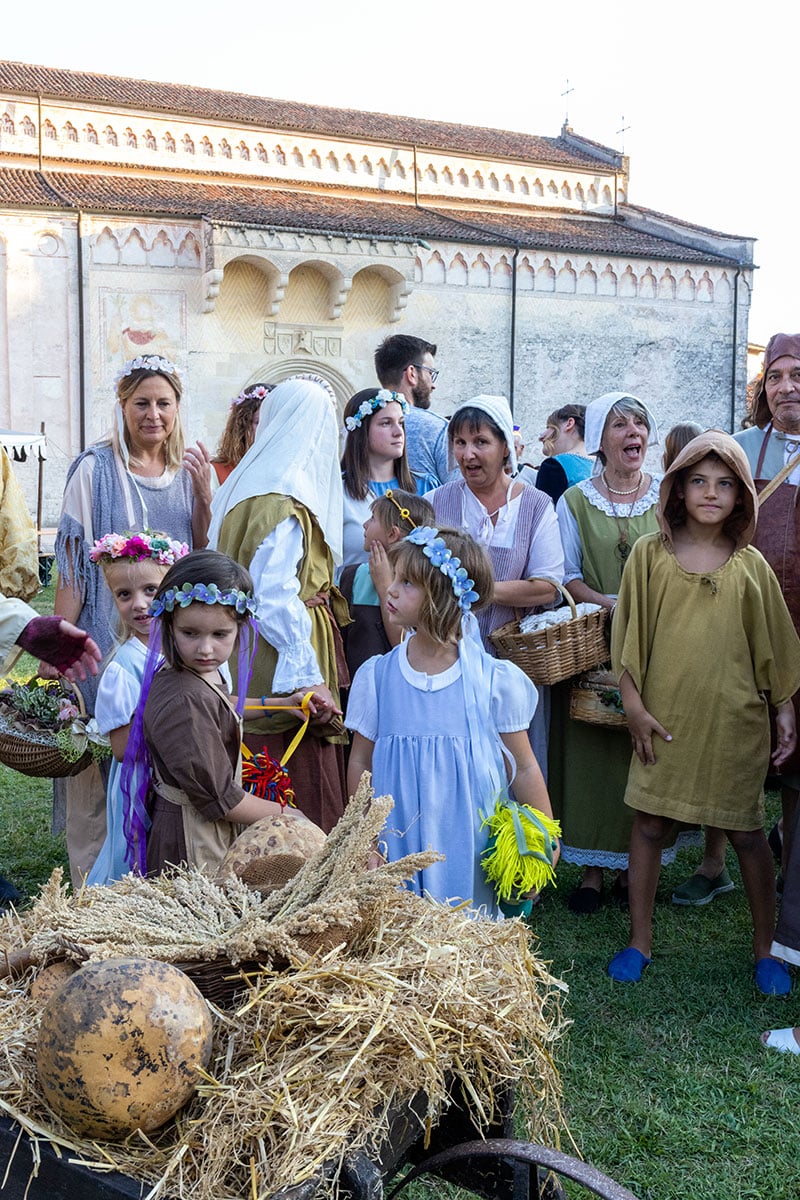
Historical characters: Costumed participants represent the different social groups that formed Renaissance Spilimbergo, including nobles, merchants, artisans, soldiers and ordinary townspeople.
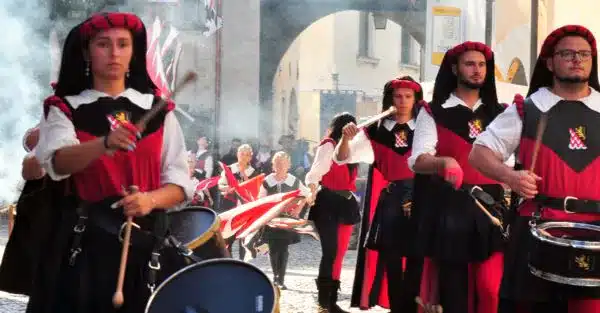
Flag-waving: The Sbandieratori Leon Coronato are among the recurring groups associated with the historical celebration. Their performances combine traditional flags, coordinated movement and Renaissance-inspired pageantry.
Archery: Historical archers form part of the military atmosphere, with archery competitions and demonstrations traditionally included in the programme.
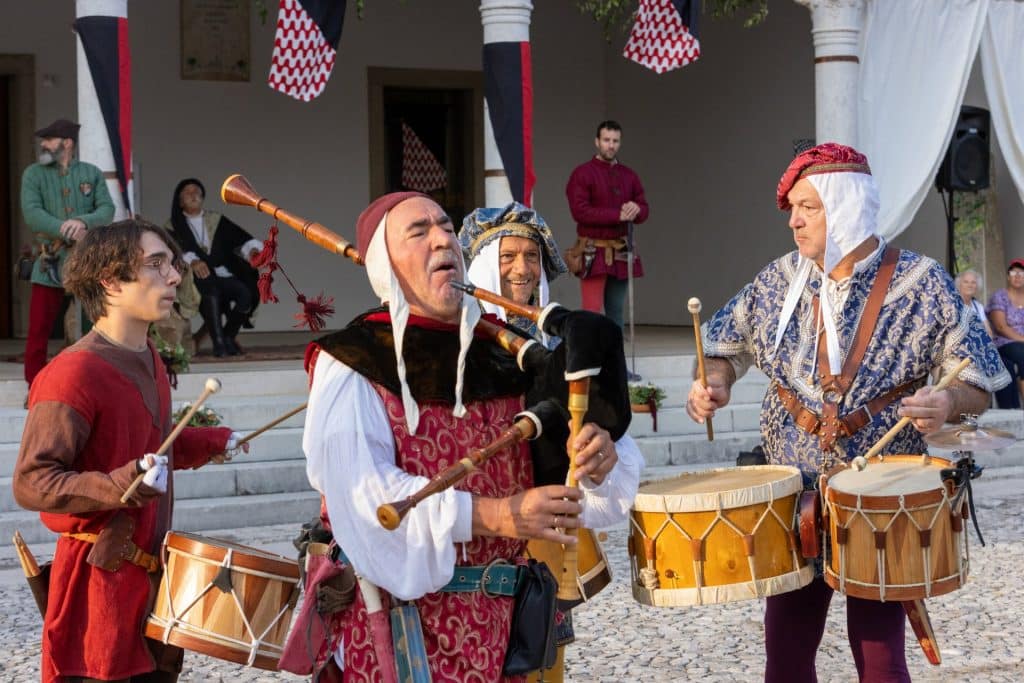
Music and entertainment: Musicians, dancers, jesters, theatrical performers and other artists animate the streets and historical areas.
Historical crafts: Artisans demonstrate traditional occupations and crafts, helping visitors understand the working life and commercial activity of the period.
Historical games: Palii, challenges and other games provide competitive elements within the broader cultural programme.
Historical & heritage highlights
The central historical theme is Spilimbergo during the Renaissance, particularly the city’s life and prosperity around the beginning of the sixteenth century.
The Macia itself is one of the event’s most distinctive heritage elements. It was an old unit of measurement for fabrics, documented in Spilimbergo from 1438, and its representation survives on a pillar of Palazzo La Loggia in Piazza Duomo.
The historical setting also reflects Spilimbergo’s importance as a political and cultural centre in Friuli. Merchants and textile traders are particularly relevant to the story because the Macia was associated with measuring cloth.
The re-enactment also incorporates military and religious elements, with knights, armigers, archers, guilds, confraternities and other historical figures forming part of the recreated society.
Events & activities schedule
The detailed 2027 schedule has not yet been released, but the programme traditionally develops across several types of activities:
- Historical encampments and living-history displays
- Ancient crafts and artisan demonstrations
- Historical market
- Archery and traditional competitions
- Flag-waving shows
- Music and period entertainment
- Historical games and palii
- Renaissance performances
- Taverns and food areas
- Religious ceremonies
- Civic celebrations
- Costumed historical procession
- Activities involving visiting historical groups and communities
The programme changes from year to year, so visitors should use the official programme once the 2027 edition is published rather than relying on a previous schedule.
Ticket types & entry options
General admission: The latest published municipal information describes the Rievocazione Storica della Macia as a free event.
Historical programme: General access to the outdoor historical areas and public activities has traditionally been free.
Food and drink: Meals, tavern experiences and individual food or drink purchases may be separate from general event admission.
Special activities: Any future workshops, dinners, guided experiences or reserved activities should be checked against the official 2027 programme because individual participation requirements may differ.
No separate 2027 admission price has been announced. Based on the latest published edition, the reference admission price is $0 / free.
Guided tours & cultural experiences
The historical re-enactment itself provides an immersive cultural experience, but visitors can also use the event as an opportunity to explore Spilimbergo’s heritage.
Historical centre: Walking through the streets during the re-enactment provides context for the buildings, squares and historic spaces used in the celebration.
Palazzo La Loggia: Visitors can see the historic Macia measurement and understand its relationship with the city’s textile commerce.
Local heritage: Spilimbergo is widely associated with mosaic craftsmanship, making the city particularly interesting for visitors combining the Macia with cultural sightseeing.
Tourist information: The local Tourist Office in Palazzo La Loggia can provide information about visits and cultural experiences in Spilimbergo.
Special ceremonies & celebrations
Religious and civic traditions are an important part of the Macia programme. The Italian national historical-re-enactment register identifies the solemn Mass, historical procession, San Rocco market, medieval dinner and the participation of historical groups as recurring elements of the event.
Historical procession: One of the major visual highlights is the procession of costumed participants through the town.
Religious ceremonies: Traditional religious celebrations form part of the event’s connection with local heritage.
Civic pageantry: Guilds, confraternities, nobles, soldiers and community groups contribute to the ceremonial character of the celebration.
Historical dinner: A Renaissance or medieval-style dinner may form part of the programme, with dedicated reservations potentially required.
Festival rules
Visitors should follow the instructions of event organisers and local authorities throughout the re-enactment.
Restricted areas: Historical encampments, performance areas and operational zones may have restricted access.
Safety: Visitors should remain behind barriers or designated spectator areas during archery, combat, historical games and other demonstrations.
Photography: Photography is generally an important part of the visitor experience, but guests should follow any restrictions announced for individual performances or private activities.
Children: Children should remain under adult supervision, particularly around horses, weapons demonstrations, fire performances, archery and crowded historical areas.
Programme changes: Outdoor historical events can change because of operational, safety or weather considerations, so the official programme should be checked before attending.
How to get there
By car: Spilimbergo can be reached from the regional road network connecting the town with Pordenone, Udine and surrounding Friuli areas. PromoTurismoFVG provides directions from the motorway network via the Cimpello-Sequals connection and Tauriano.
From Pordenone: Follow the regional road connections towards Spilimbergo.
From Udine: Spilimbergo can be reached through the Udine road network and the A23 area, following local directions towards the town.
By public transport: Spilimbergo is served by TPL FVG bus services, making regional bus travel an option for visitors arriving without a car.
Public transport & parking
Bus: TPL FVG provides public bus connections to Spilimbergo and the surrounding area.
Parking: Large parking areas are available a short distance from Piazza Garibaldi, allowing visitors to leave their vehicles outside the busiest historic-centre areas.
Historic centre: Because the re-enactment takes place through the historic centre, walking is often the most practical way to move between different festival areas once parked.
Camper facilities: Spilimbergo has a municipal camper parking area on Via Udine, close to the historic centre. The facility has 10 pitches, electricity, water and waste facilities and is described as accessible for disabled visitors.
Accommodation areas
Staying in Spilimbergo allows visitors to remain close to the historical centre and experience the festival atmosphere beyond the main programme.
Historic centre: Accommodation around the centre provides convenient access to Piazza Duomo and the surrounding event areas.
Hotels: Local accommodation options include Grand Hotel President, Albergo Stella D’Oro, Albergo Michielini and Albergo Consul.
Bed and breakfasts: B&B La Macia House, B&B Relais La Torre and Li Rivis dal Tiliment are among the local options listed by the Spilimbergo tourism office.
Agriturismo: Visitors seeking a countryside setting can consider agriturismo accommodation in the surrounding area.
Booking early is advisable because the event takes place during a busy summer travel period.
Food & traditional specialties
Food is an important part of the Macia experience, with taverns and temporary food areas helping recreate the atmosphere of historical celebrations.
Historical recipes: Previous editions and regional cultural sources describe dishes prepared using medieval or historical recipes.
Festival taverns: Temporary locande and taverns provide opportunities to eat and drink within the historical atmosphere.
Local cuisine: Visitors can also try Friulian specialities in restaurants around Spilimbergo.
Baccalà in umido: Regional tourism information specifically highlights this traditional salted-cod preparation as a local speciality available in Spilimbergo.
Local wine: Wine from the Friuli area is another natural accompaniment to the festival’s food programme.
Accessibility
Spilimbergo has dedicated accessibility resources for visitors, including an accessible city map and information designed for different visitor needs.
Accessible tourism: The town provides information covering accessible routes and facilities.
Visual accessibility: The Duomo di Santa Maria Maggiore has a tactile panel, while the Scuola Mosaicisti provides opportunities for visitors to experience mosaic art through touch.
Accommodation: Some local hotels provide accessibility facilities. For example, the Grand Hotel President and Albergo Consul are listed with disability-access services.
Festival access: Because many activities take place outdoors along historic streets and public spaces, visitors with mobility requirements should check the specific conditions of individual areas with the organisers before attending.
Best cultural experiences
Historical procession: The costumed procession is one of the most complete ways to see the different characters, guilds and groups represented by the re-enactment.
Piazza Duomo: This is essential for understanding the connection between the modern festival and the historic Macia measurement.
Historical encampment: The camps offer a closer look at military life, equipment, costumes and daily activities.
Artisan demonstrations: Traditional crafts provide a practical view of the occupations recreated during the event.
Flag-waving performances: The Sbandieratori performances add colour and pageantry to the historical programme.
Archery and games: Competitions and traditional games provide some of the most interactive elements of the celebration.
Historical food: Eating in a festival tavern or attending a dedicated historical dinner can add a culinary dimension to the visit.
Previous year’s highlights
The latest completed edition presented the Macia as a major historical re-enactment in Spilimbergo, with the historic centre transformed by period settings, characters, market areas, entertainment and traditional activities. The official event website describes spectacles, historical settings, costumed participants, armigers, markets, encampments, taverns and tournaments as key components.
The Municipality of Spilimbergo also described the latest edition as a free public event in the historic centre, with knights, nobles, ordinary citizens and religious groups recreating the atmosphere of the past through games, challenges, taverns and workshops.
The historical re-enactment continues a tradition that began in 1975, making it one of the established historical celebrations in Friuli-Venezia Giulia.
Official tickets
The Rievocazione Storica della Macia is generally presented as a free public historical event. The latest municipal event information confirms free admission, while the official website provides the programme and event information.
2027 admission: $0 / free for general festival access, based on the latest published edition.
Any separately organised historical dinners, guided experiences, workshops or special activities should be checked when the 2027 programme is released.
Official website: https://www.maciaspilimbergo.it/
Contact: prospilimbergo@gmail.com | +39 0427 2274. The event is organised by Pro Spilimbergo.
Video
Location
FAQ
What is the historical significance of the Macia in Spilimbergo?
The Macia is a historic standard length of iron permanently affixed to the town hall wall used to measure textile and commercial goods. It served as a vital legal symbol of fair trade and commercial honesty for merchants and citizens throughout the region. Today, it remains the central cultural emblem celebrating the industrious mercantile heritage of the municipality.
Do visitors need to purchase admission tickets to enter the festival grounds?
General public entry to the historic encampments, costume parades, markets, and street performances is completely free for all attendees. Certain specialized evening banquets or guided experiences may offer optional reservations through local organizing associations. Guests can freely wander the medieval quarters and enjoy the daytime attractions without buying a ticket.
What types of family-friendly activities are available for children at the event?
Families can explore dedicated play areas featuring interactive medieval skill games, storytelling circles, and hands-on crafting workshops. Children can participate in junior knight training camps and watch entertaining shows performed by traveling jesters and stilt-walkers. These engaging youth activities are designed to make history fun, educational, and accessible for younger visitors.
What kind of traditional food and drink can attendees expect to sample?
Pop-up medieval taverns serve authentic regional Friulian dishes such as sweet-and-savory cjarsons pasta, polenta, and wood-roasted meats. Visitors can also sample hypocras, a warm spiced honey wine inspired by historic Renaissance recipes, alongside local cheeses. All food stalls emphasize traditional culinary techniques and sustainable, eco-friendly serving practices.
How can travelers reach the primary festival location in Spilimbergo?
The main venue is situated within the historic town center and Castello di Spilimbergo in the Friuli-Venezia Giulia region. Visitors arriving by regional transport can access the town via local bus connections or travel by car using major provincial roadways. Clear directional signage guides pedestrians from parking zones straight to the main festival gates.

Leave a Reply