

Overview
The Palio of Asti, known locally as Palio di Asti or Palio Astese in its most archaic nomenclature, is one of Italy’s oldest and most revered historical festivals, culminating in a spectacular bareback horse race. Held in the heart of Asti, a charming city in Piedmont famous for its wines, medieval towers, and vibrant traditions, the Palio is far more than a sporting event. It is a profound expression of civic identity, medieval heritage, and community pride that transforms the entire city into a living stage.
The event centers on a competition between participants representing different neighborhoods and communities, each vying for the coveted Palio, a large crimson velvet cloth depicting the coat of arms of Asti and San Secondo, the patron saint of the town. The race itself is run bareback, without saddle, by skilled jockeys who guide powerful horses around a challenging track set in the city’s main square, Piazza Alfieri. The thunder of hooves, the roar of supporters, and the swirl of medieval banners create an electrifying atmosphere that has captivated audiences for centuries.
Surrounding the race is a rich tapestry of events including historical processions with over twelve hundred participants in sumptuous period costumes, flag-waving performances by the Gruppo Sbandieratori, propitiatory dinners, blessing ceremonies for horses and jockeys, and a week-long festival of music, food, and celebration. For visitors, the Palio offers an immersive journey into medieval Italy, where history is not merely remembered but lived with passion.
Enjoy Your Event Stress-Free with Italy Travelo
Whether you're traveling for a world-famous festival, live concert, cultural celebration, or business event, Italy Travelo helps simplify every step of your journey. Our team provides personalized travel assistance, allowing you to focus on creating lasting memories.
Cultural Significance & Origins
Medieval Roots: The Palio of Asti dates back to the thirteenth century, making it one of Italy’s oldest Palios, significantly older than its more famous cousin in Siena. The first recorded edition took place when chronicler Guglielmo Ventura documented that the people of Asti ran the Palio under the walls of their rival city, Alba, as an act of defiance and celebration. This spirit of civic pride and independence remains central to the festival’s identity.
Dedication to San Secondo: The festival originated as part of the patronal celebrations for San Secondo, patron saint of Asti. The ancient church of San Lazzaro and the cippo del pilone, the stone pylon marking the starting point of the historic race outside the city walls, are symbols of this sacred connection. The race is dedicated to the saint, and its history is intertwined with the religious and civic calendar of Asti, with the saint’s feast celebrated in early May and the Palio representing the civic culmination.
Crimson Velvet Banner: The word Palio literally refers to the prize itself, a large crimson velvet drape bearing the city’s coat of arms and the image of San Secondo. Winning the Palio is a matter of immense honor for the Rione, Borgo, or Comune that achieves victory, bringing prestige that lasts an entire year and is celebrated in community headquarters with banners displayed proudly.
Continuity Through Centuries: Despite interruptions and changes over centuries, including a period when the race was forgotten, the people of Asti have consistently reclaimed and revived the tradition. Today, the festival involves fourteen town wards and seven communes of the province, totaling twenty one participants, each maintaining its own museum, costumes, colors, and historical identity, ensuring that medieval heritage is actively preserved by the community itself.
Traditions, Rituals & Customs
Blessing of Horses and Jockeys: A deeply felt ritual is the benediction ceremony where horses and jockeys are blessed before the race. This solemn moment, held in front of churches or in the square, invokes protection and good fortune, blending religious faith with equestrian tradition and reflecting the festival’s origins in patronal celebrations.
Propitiatory Dinners: On the eve of the race, each Rione and Borgo hosts propitiatory dinners, known as cene propiziatorie, where members gather in streets and courtyards decorated with their colors to share traditional food, sing anthems, and build communal spirit. These dinners are open to visitors and offer an intimate glimpse into neighborhood solidarity.
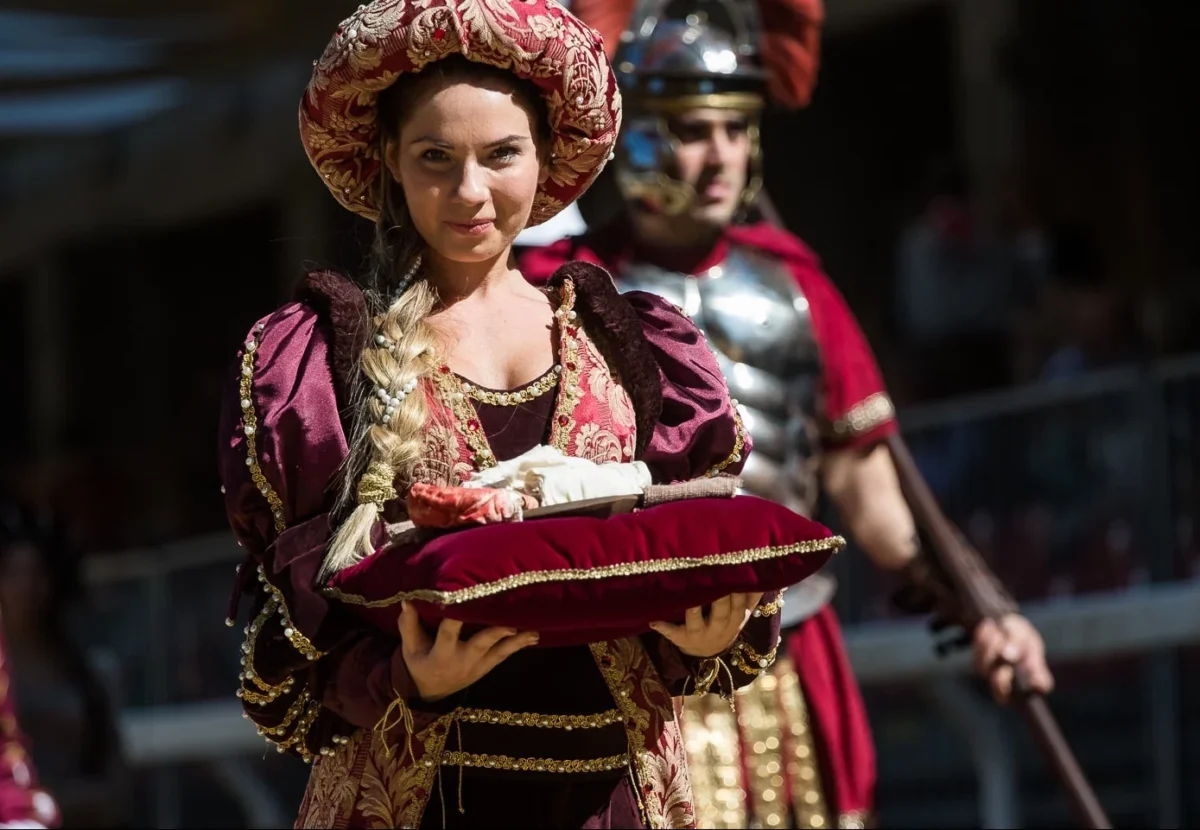
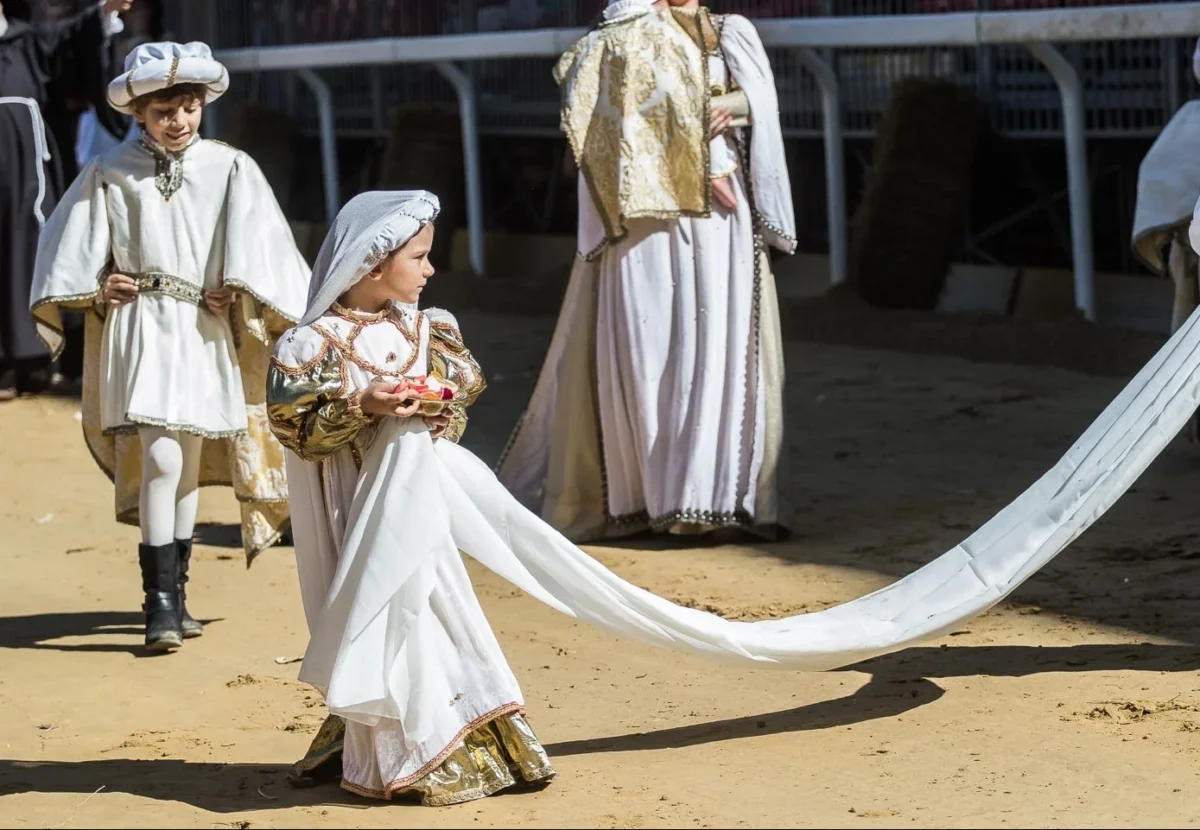
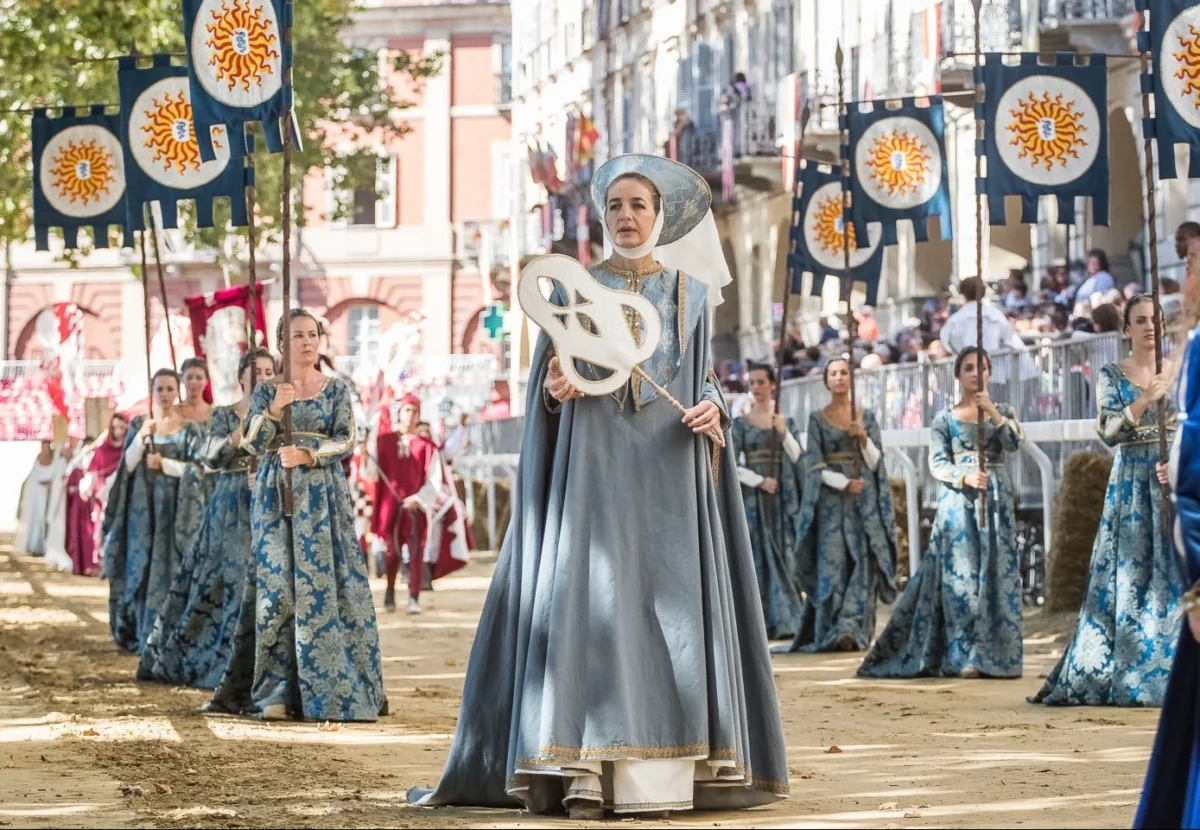
Historical Procession: Preceding the race is an enthralling historical procession of over twelve hundred participants in meticulously researched medieval costumes, representing nobility, clergy, merchants, soldiers, and common people of medieval Asti. The procession recreates the social hierarchy and splendor of the medieval commune, complete with flag-wavers, drummers, and trumpet fanfares.
Flag-Waving Art: The Sbandieratori del Palio di Asti perform elaborate flag-throwing and waving routines that are both athletic and artistic. Their performances, including the dedicated Palio degli Sbandieratori, involve complex choreography, high tosses, and synchronized movements that require years of training and symbolize medieval military signaling and celebration.
What to Expect at the Festival
A City Transformed: Expect Asti to be completely transformed during Palio week. Streets are draped with the colors and banners of competing districts, medieval music fills the air, and the scent of traditional Piedmontese cuisine emanates from outdoor kitchens. The atmosphere is one of friendly rivalry and collective excitement that builds toward race day.
The Race Experience: The bareback horse race itself is intense, brief, and unpredictable. Horses and jockeys complete three laps around Piazza Alfieri, navigating tight turns and a demanding track surface. Without saddles, balance and horsemanship are paramount, and unexpected outcomes are common, adding to the drama and excitement for spectators in grandstands and the free central Parterre.
Cultural Immersion: Beyond the race, expect to encounter reenactments, medieval markets, exhibitions at the Palio Museum, and performances throughout the historic center. The city becomes an open-air museum where every corner reveals a piece of history, from tower houses to Baroque churches.
Emotional Intensity: The Palio evokes powerful emotions among participants and spectators alike. Victory brings euphoric celebrations that last deep into the night, while defeat is met with determination to return stronger. For visitors, witnessing this authentic passion offers a profound connection to Italian community traditions.
Date & Schedule
Event Dates: September 2027 (Dates TBD)
Typical Schedule Structure: The official schedule will be published by the City of Asti on visit.asti.it. The Palio week typically includes opening of the Palio Museum and exhibitions, flag-waving competitions and trials, presentation and veterinary checks of horses, blessing ceremonies for horses and jockeys, historical procession with over twelve hundred costumed participants, flag-waver exhibition, and the main bareback horse race in Piazza Alfieri with award ceremony for the winning Rione, Borgo, or Comune. Propitiatory dinners are held on the eve of the race in districts across the city.
Visiting this event? Don’t miss out on these amazing activities and local experiences while you’re here.
Main Events & Programme
Historical Procession: The corteo storico is a highlight, winding through the streets of Asti from the historic center to Piazza Alfieri. Participants represent medieval Asti’s social structure, with detailed costumes representing the Capitano del Popolo, the Podestà, guilds, and noble families, accompanied by the Sbandieratori and musicians.
Palio degli Sbandieratori: A dedicated competition where flag-waving groups from each district showcase their skill, judged on technique, choreography, and historical accuracy. This event often takes place in the days leading up to the main race and is highly competitive.
Horse Trials and Presentation: Before the race, horses undergo veterinary checks and are presented to the public. Trial heats allow jockeys to familiarize themselves with the track and allow spectators to assess form, adding an element of anticipation similar to modern horse racing.
Main Bareback Race: The culmination features twenty one horses and jockeys representing fourteen Rioni, Borghi, and seven Comuni. The race consists of three laps around the piazza, with a dramatic start and tight turns that test horse and rider. The winner receives the Palio banner and eternal glory for their community.
Traditional Dress, Arts & Crafts
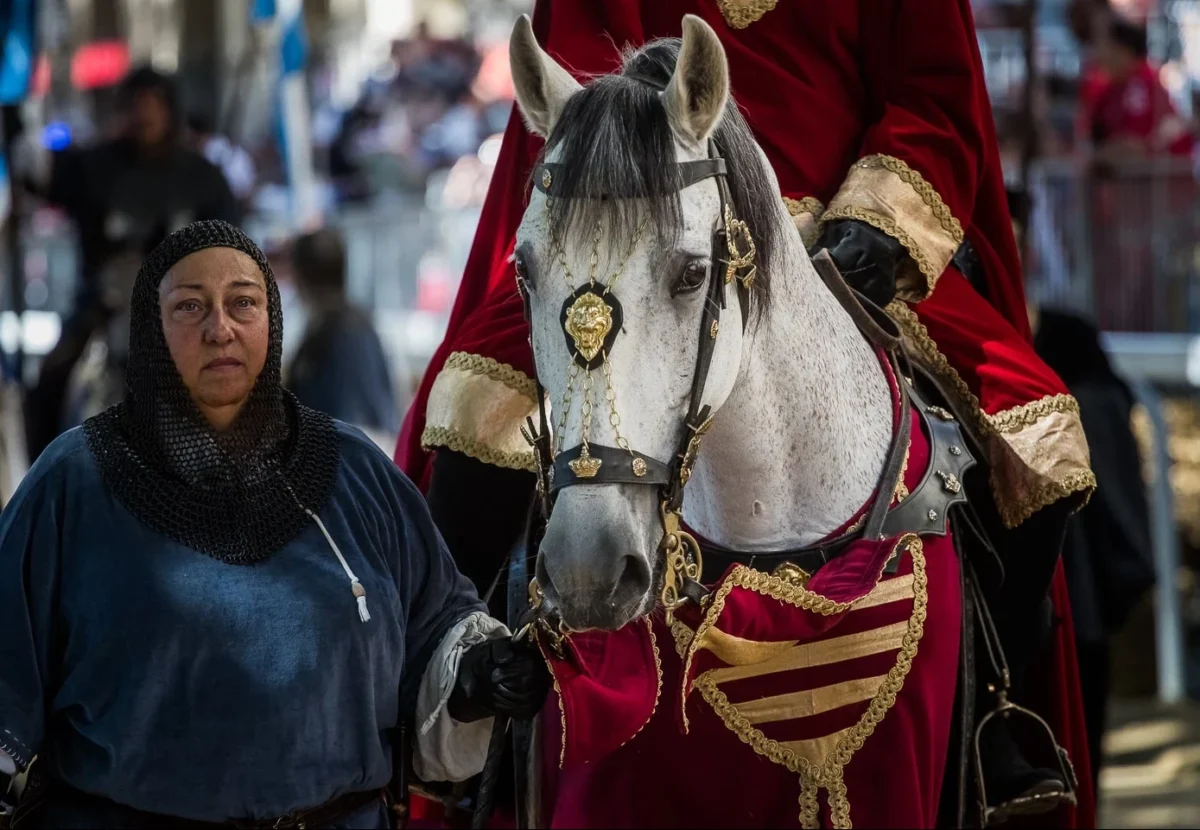
Medieval Costumes: Each Rione maintains an extensive wardrobe of medieval costumes, handcrafted by local tailors using historical research. Fabrics include rich velvets, brocades, and linens in district colors, with armor, helmets, and accessories recreated from medieval manuscripts and frescoes. The costumes are displayed in district museums and worn with pride during processions.
Flag Making and Heraldry: The creation of flags, banners, and heraldic symbols is a specialized craft. Artisans produce large silk flags painted with district coats of arms, religious symbols, and medieval motifs. The Sbandieratori flags themselves are works of art, balanced for throwing and designed to create visual patterns when in motion.
Equestrian Tack and Horsemanship: Although the race is bareback, the preparation of horses involves traditional tack, grooming tools, and decorative elements. Local artisans craft leatherwork and maintain knowledge of bareback riding techniques passed down through generations of jockeys.
Palio Museum Exhibits: The Palio Museum in Asti preserves historic costumes, banners, photographs, and memorabilia from past editions. The museum showcases the evolution of artistic styles in costume design and offers workshops on medieval textile arts and heraldic painting for visitors interested in craftsmanship.
Traditional Food & Local Specialties
Bagna Càuda: A quintessential Piedmontese dish served during Palio festivities, bagna càuda is a warm dip made from garlic, anchovies, and olive oil, served with raw and cooked vegetables. It is a communal dish that embodies the convivial spirit of the propitiatory dinners.
Agnolotti del Plin and Tajarin: Handmade pasta specialties of the region, agnolotti del plin are small, pinched ravioli filled with roasted meats, while tajarin are fine egg noodles often served with ragù or butter and sage. These dishes are staples of district dinners and local restaurants during festival week.
Asti Spumante and Barbera Wines: Asti is world-famous for its wines, particularly Asti Spumante made from white Moscato grapes, and robust reds such as Barbera d’Asti and Grignolino. Wine flows freely during celebrations, with local vineyards offering tastings and special Palio-labeled bottles.
Hazelnuts and Tartufi: Piedmont is renowned for its IGP hazelnuts and white truffles, which feature in many festival dishes, from hazelnut cakes to truffle-infused pastas. Local markets during Palio week offer these delicacies alongside cheeses such as Robiola and Toma.
Location & Festival Areas
Piazza Alfieri: The main square where the race takes place, one of the largest squares in Piedmont, surrounded by elegant porticoes, cafes, and historic buildings. On race day, the square is transformed with a sand track, grandstands, and barriers, with the central Parterre offering free standing viewing.
Historic Center: The medieval core of Asti, characterized by towers, churches, and narrow streets, serves as the route for the historical procession. Areas around Corso Alfieri, Via Cavour, and Piazza San Secondo are key locations for events and processions.
Palio Museum: Located near the historic center, the museum is open throughout Palio week with extended hours, offering exhibitions on the history of the festival and serving as an information point for visitors.
District Headquarters: Each Rione and Borgo has its own headquarters, often in historic buildings, decorated with banners and colors, where propitiatory dinners and celebrations are held. Visiting these headquarters offers an intimate look at community life.
Getting to the Festival
By Train: Asti railway station is well connected to Turin, Milan, and Genoa via regional and intercity trains operated by Trenitalia. From the station, bus numbers three and seven run towards Piazza Vittorio Alfieri, the main square, with a journey time of approximately ten to fifteen minutes. During festival week, additional shuttle services are often provided.
By Car: Asti is accessible via the A21 motorway connecting Turin to Piacenza, with exits for Asti Est and Asti Ovest. Driving in the historic center during Palio week is restricted due to processions and race preparations, so it is advisable to use peripheral parking areas and walk or use public transport.
By Air: The nearest airports are Turin Caselle and Milan Malpensa, both offering car rental and train connections to Asti. Genoa Cristoforo Colombo airport is also convenient for visitors combining the Palio with a Ligurian coast itinerary.
Local Mobility: The historic center is compact and best explored on foot. On race day, many streets are closed to traffic, creating a pedestrian-friendly environment that enhances the festive atmosphere.
Where to Stay Nearby
Historic Center Hotels: Staying in the historic center offers immediate proximity to processions and race events. Boutique hotels in restored medieval buildings provide charm and convenience, with rates during Palio week ranging from $150 to $350 per night due to high demand.
Agriturismi in Monferrato: The surrounding Monferrato hills, a UNESCO World Heritage Site, offer agriturismi surrounded by vineyards and hazelnut groves. These accommodations provide tranquil settings with authentic Piedmontese cuisine and wine tastings, ideal for combining festival attendance with countryside exploration.
Turin and Surrounding Towns: For visitors unable to find accommodation in Asti during the sold-out period, nearby cities such as Turin, Alba, and Alessandria offer additional options with easy train connections to Asti. Many visitors base themselves in Turin and travel to Asti for race events.
Early Booking Essential: Accommodation during Palio week sells out months in advance, with many hotels requiring minimum stays. Booking well in advance through official tourism channels is strongly recommended.
What Visitors Can Participate In
Propitiatory Dinners: Visitors are welcome to join the cene propiziatorie hosted by each district. Tickets for these dinners, priced around $35 to $60, include traditional multi-course meals, wine, music, and the chance to mingle with locals and learn district chants and anthems.
Flag-Waving Workshops: Some Sbandieratori groups offer introductory workshops for visitors, teaching basic flag handling and throwing techniques. These sessions provide hands-on appreciation for the skill and athleticism required for performances.
Costume and Heritage Tours: Guided tours of district museums and costume collections are available, where visitors can try on replica medieval garments and learn about heraldry and textile history from local artisans.
Procession Participation: While the main historical procession is reserved for registered participants, visitors can join informal street celebrations, wear district colors purchased from local shops, and support their adopted Rione during the race, becoming part of the communal rivalry.
Things to Do Before or After the Festival
Wine Tourism: The Monferrato and Langhe regions surrounding Asti offer world-class wine tourism, with vineyards producing Barbera, Moscato, and Barolo. Many wineries offer tours and tastings that can be combined with Palio attendance.
Medieval Towers and Churches: Asti is known as the city of one hundred towers, with several medieval towers still standing, including Torre Troyana and Torre Rossa. Visiting these towers and churches such as Collegiata di San Secondo provides deeper context for the medieval heritage celebrated in the Palio.
Truffle Hunting and Markets: Depending on season, visitors can participate in truffle hunting experiences in the Monferrato woods or visit weekly markets offering local produce, cheeses, and crafts, extending the culinary exploration beyond festival days.
Day Trips to Alba and Turin: The charming town of Alba, famous for white truffles, and the elegant city of Turin with its royal palaces, museums, and chocolate traditions, make excellent day trips that complement the historical focus of the Palio.
Local Food & Restaurants
Traditional Trattorias: Asti’s historic center is filled with trattorias serving authentic Piedmontese cuisine, including vitello tonnato, carne cruda all’albese, and finanziera. Restaurants along Corso Alfieri and around Piazza San Secondo are particularly popular during Palio week.
Enotecas and Wine Bars: Numerous enotecas offer extensive selections of local wines by the glass, accompanied by platters of local cheeses, salumi, and hazelnuts. These venues are ideal for pre-race aperitivo and post-race celebrations.
Street Food and Festival Stalls: During Palio week, street food stalls appear throughout the city offering farinata, fried anchovies, and other Ligurian-Piedmontese street foods that can be enjoyed while watching processions.
Fine Dining: For a more upscale experience, restaurants in the surrounding hills offer creative reinterpretations of Piedmontese classics with modern techniques, often with panoramic views of vineyards and castles.
Ticket Information & Access
Grandstand Tickets: To guarantee a seat with clear view of the race, grandstand tickets are required. Based on previous editions, prices in USD range from approximately $49 for Roero and other side grandstands to $88 for premium central grandstands with better sightlines. Some rows in certain grandstands have limited visibility due to same-level seating, so early booking for front rows is advisable.
Parterre Access: The cheapest way to attend the Palio is from the Parterre, the central free-standing area inside the track. Access to Parterre is free of charge but requires early arrival to secure a good position, as it fills quickly and offers standing-only viewing.
Ticket Office: Official tickets are sold through the Palio ticket office at the Municipality of Asti. Contact via biglietteriapalio@comune.asti.it, phone 0141 399057 or 0141 399040, fax 0141 399250. Tickets can also be purchased through the official tourism website.
Advance Purchase: Grandstand tickets sell out weeks in advance, especially for popular sections. Purchasing online or via email well before the event is strongly recommended. Tickets include access to pre-race exhibitions and flag-waver performances.
Official Event Information
Event Name: Palio of Asti 2027 – Italy
Official Website: https://visit.asti.it/en/september-in-asti/the-palio-of-asti/ as text
Ticket Office Email: biglietteriapalio@comune.asti.it
Ticket Office Phone: 0141 399057 / 0141 399040
Location: Piazza Alfieri and historic center, Asti, Piedmont, Italy
Organizer: City of Asti, Assessorato alla Cultura and Fondazione Palio
Museum: Palio Museum, Asti, with exhibitions on festival history
Tourist Information: Visit Asti official portal for accommodation and program updates
Video
Location
FAQ
What is the Palio banner and why is it so important?
The Palio is a large crimson velvet cloth painted with the coat of arms of Asti and the image of San Secondo, patron saint of the city. It is the prize awarded to the winning Rione, Borgo, or Comune and represents civic honor and pride rather than monetary value. Winning districts display the banner in their headquarters for a year and celebrate with community feasts.
Can visitors participate in the historical procession or race?
The historical procession and race are reserved for registered members of the Rioni, Borghi, and Comuni who have undergone costume preparation and equestrian training. Visitors cannot directly participate in the race itself for safety and tradition reasons. However, they can join propitiatory dinners, wear district colors, support a chosen district, and participate in side events and workshops.
Is the bareback horse race safe for horses and riders?
The City of Asti implements strict veterinary controls, with horses examined by veterinarians before and after the race and track conditions carefully maintained. Jockeys are experienced bareback riders who train specifically for this type of race. While horse racing always carries inherent risks, the Palio organization prioritizes animal welfare with protocols for track safety, medical assistance, and post-race care.
What should I wear and bring to enjoy the Palio comfortably?
Comfortable walking shoes are essential as the historic center has cobblestones and you will stand for extended periods, especially in the Parterre. Bring sun protection such as hat and sunscreen, as the piazza offers limited shade, and a light rain jacket as weather can be unpredictable. Many visitors wear district colors or scarves purchased from local shops to show support.
How does the Palio of Asti differ from the famous Palio of Siena?
While both are bareback horse races with medieval origins, the Palio of Asti is older, with first records from the thirteenth century compared to Siena's seventeenth century origins. Asti's race takes place in Piazza Alfieri, a large, more open square allowing a longer track, while Siena's is in the smaller, shell-shaped Piazza del Campo. Asti involves twenty one participants including both city wards and external communes, creating a broader territorial competition compared to Siena's seventeen Contrade.

Leave a Reply