
What to expect in 2027
Palio di Legnano is a historic cultural and sporting festival commemorating the Battle of Legnano and bringing together the city’s eight historic contrade. The programme combines medieval historical re-enactment, ceremonial traditions, a large costume procession and the Palio horse race at Stadio G. Mari.
The 2027 edition is expected to continue the established May programme, with activities taking place across Legnano before the main day of the Palio. Visitors can experience the contrade’s traditions, medieval costumes, flag performances, ceremonial events and equestrian competition.
The central celebration traditionally features the historic procession, the Carroccio, the Compagnia della Morte and the horse race representing the eight contrade.
Enjoy Your Event Stress-Free with Italy Travelo
Whether you're traveling for a world-famous festival, live concert, cultural celebration, or business event, Italy Travelo helps simplify every step of your journey. Our team provides personalized travel assistance, allowing you to focus on creating lasting memories.
Event dates
Palio di Legnano 2027 is scheduled for May 2027 (Dates TBD).
The wider Palio programme normally develops through a series of ceremonies, contrada activities, cultural events and preparatory competitions before the main celebration.
The exact 2027 calendar and individual event times have not yet been announced.
Visiting this event? Don’t miss out on these amazing activities and local experiences while you’re here.
Venues & festival locations
The festival uses several important locations throughout Legnano.
- Stadio G. Mari – principal venue for the historical carousel, honours to the Carroccio and Palio horse race.
- Piazza Carroccio – traditional starting point for the historical procession.
- Piazza San Magno – setting for the Mass on the Carroccio and religious investiture ceremonies.
- Historic streets of Legnano – used for the large historical procession.
- Eight Contrade headquarters – known as manieri and used for exhibitions, cultural activities, dinners and community events.
- Castello Visconteo di Legnano – used for medieval-themed cultural activities and special events.
The precise 2027 allocation of individual activities will be confirmed in the official programme.
Full cultural programme
The Palio programme extends well beyond the horse race and includes historical, religious, cultural and community activities.
- Historical costume procession.
- Medieval-themed performances and displays.
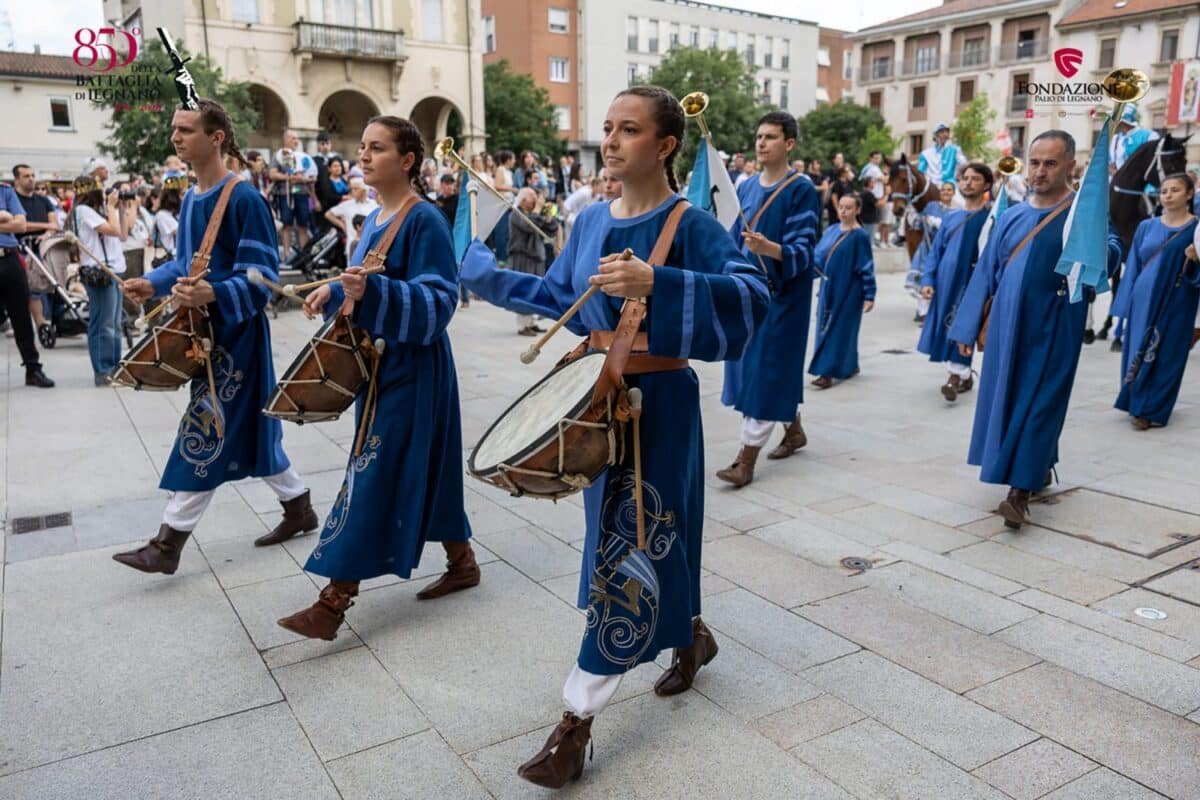
- Flag-throwing and musical performances.
- Mass on the Carroccio.
- Religious investiture of the Palio Captains.
- Blessing of the horses and jockeys.
- Historical carousel.
- Honours to the Carroccio.
- Charge of the Compagnia della Morte.
- Palio horse race.
- Contrada exhibitions and cultural activities.
- Manieri open to visitors.
- Medieval crafts, demonstrations and family activities.
The eight contrade contribute substantially to the cultural programme through their own museums, costume collections, exhibitions, workshops and community events.
Featured traditions & performances
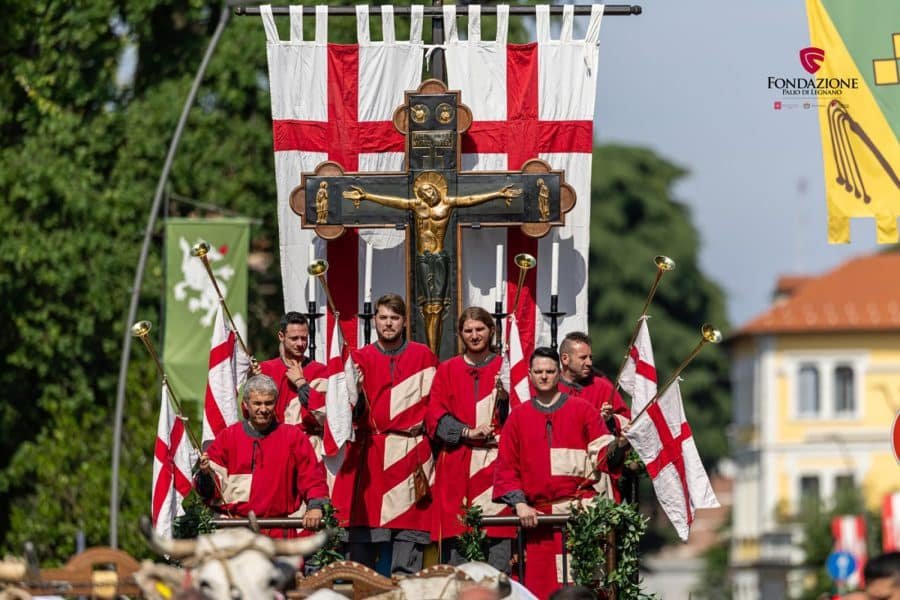
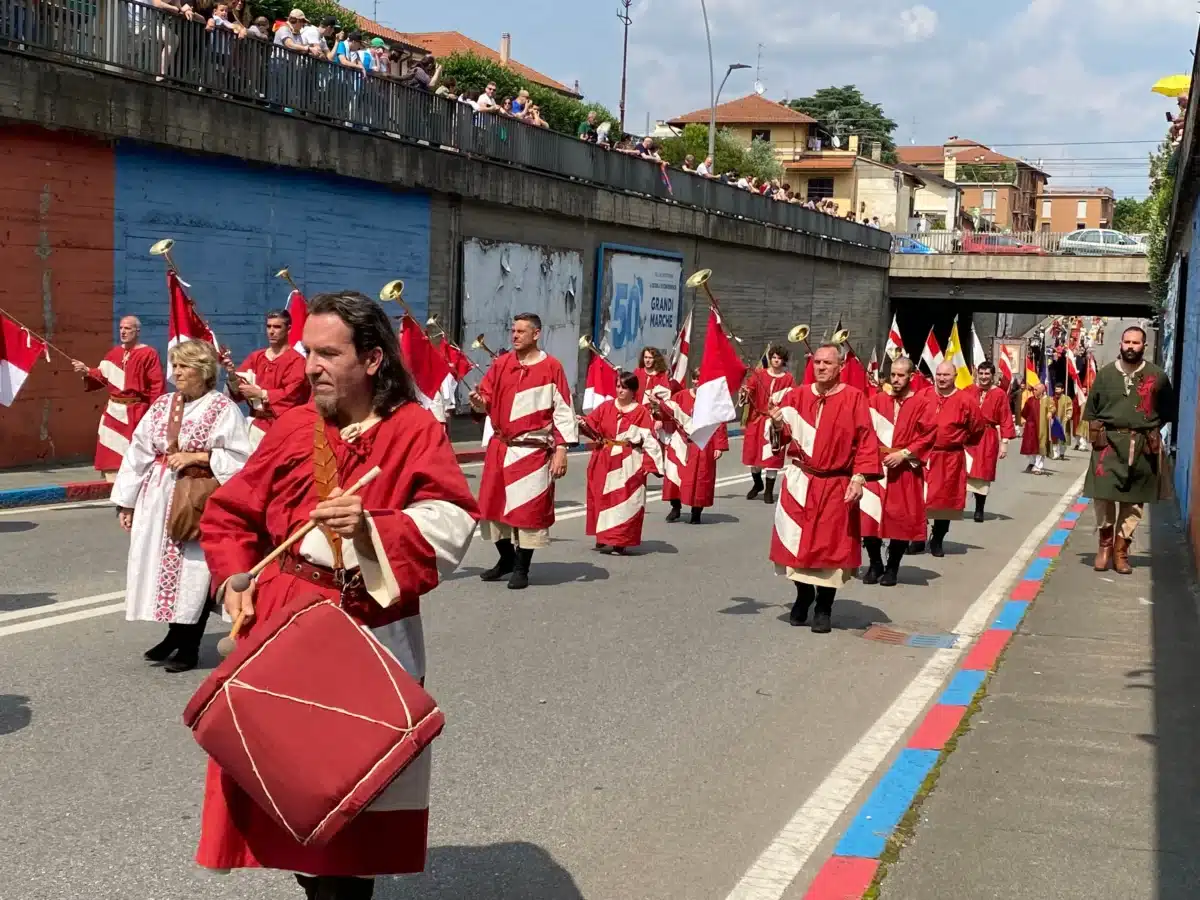
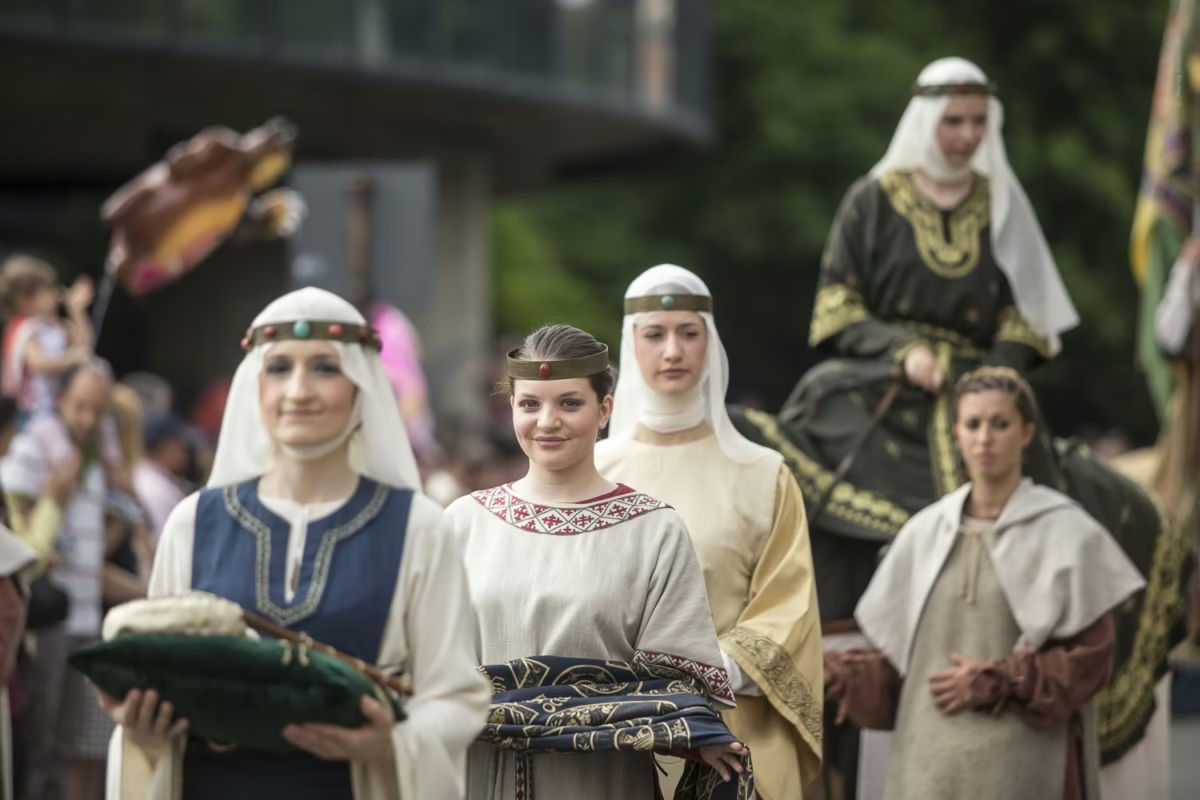
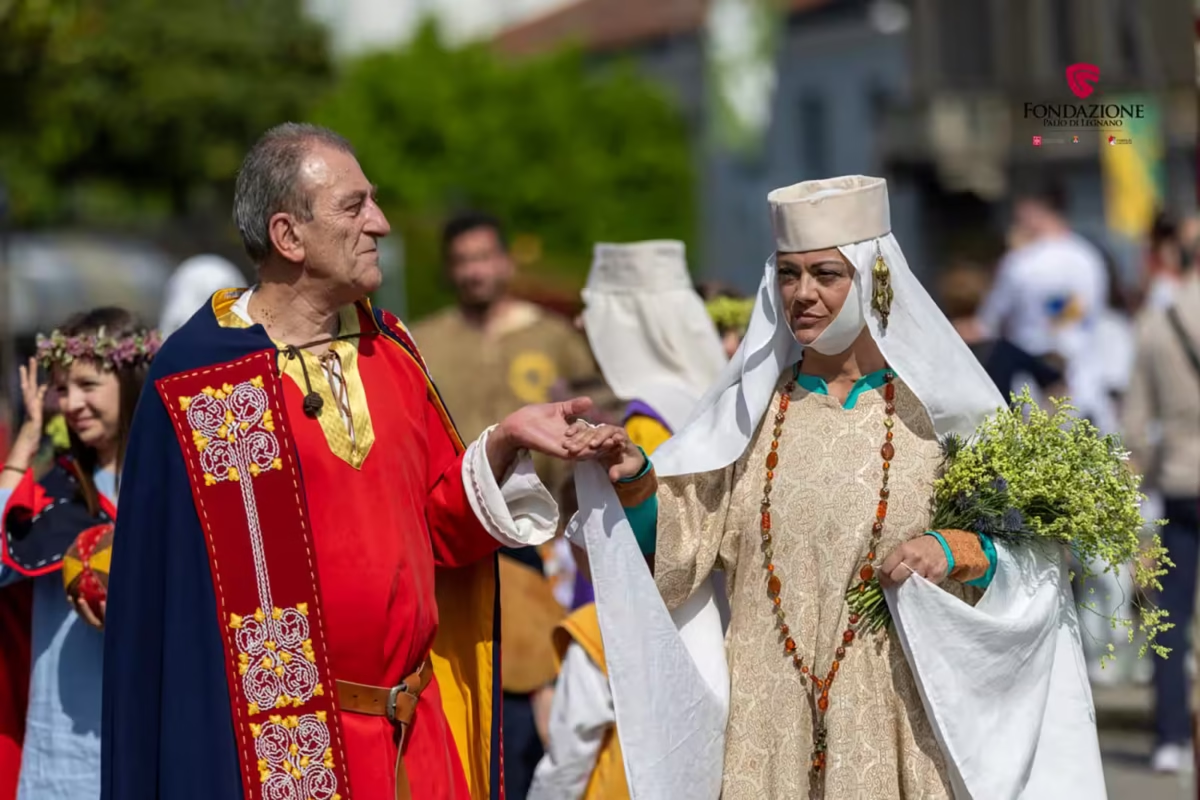
The Sfilata Storica is one of the most significant elements of the festival. The procession contains approximately 1,200 costumed participants and is organized according to specific historical and ceremonial rules.
Each contrada develops a medieval theme for its section of the procession, with subjects ranging from military life and courtly culture to agriculture, musicians, entertainers and other aspects of medieval society.
The procession also features the Carroccio, military formations, musicians, flag bearers and the Compagnia della Morte. The official organization states that each contrada can participate with up to 110 figures and 16 horses.
Historical & heritage highlights
The Palio commemorates the Battle of Legnano and the medieval conflict involving the Lombard League and the imperial forces of Frederick I, known as Barbarossa.
The modern Palio tradition developed from earlier commemorative celebrations. The first edition of the modern event was organized as the Festa del Carroccio, combining a historical costume procession with a horse race.
The eight historic contrade are:
- La Flora
- Legnarello
- San Bernardino
- San Domenico
- San Magno
- San Martino
- Sant’Ambrogio
- Sant’Erasmo
The festival’s historical identity is reinforced through carefully researched costumes, ceremonial objects, banners and themes reviewed by the Palio’s costume commission.
Events & activities schedule
The complete 2027 schedule has not yet been released. The established programme generally includes several stages leading to the main Palio.
- Contrada activities – exhibitions, dinners, cultural gatherings and community celebrations.
- Preparatory competitions – activities involving horses, jockeys and contrade.
- Provaccia – the traditional preparatory horse race associated with the Palio programme.
- Religious ceremonies – ceremonies involving the Carroccio, Captains and horses.
- Historical procession – the large medieval costume parade through Legnano.
- Historical carousel – presentation of the eight contrade at the stadium.
- Palio race – the main horse competition.
The official 2027 programme will confirm the final sequence and times.
Ticket types & entry options
The main Palio race uses temporary spectator stands and open seating areas at Stadio G. Mari.
The latest published ticket reference included:
- Covered starting grandstand: approximately $82
- Covered central starting grandstand: approximately $76
- Covered central finishing grandstand: approximately $70
- Covered finishing grandstand: approximately $53
- Open Distinti seating: approximately $29
- Reduced Distinti ticket for children: approximately $18
- Prato general admission: approximately $18
- Reduced Prato ticket for children: approximately $6
- Children below the applicable young-child age threshold: free in designated conditions.
These are previous-edition reference prices and are not confirmed 2027 prices. The latest published ticket information also limited purchases to four tickets per person.
Guided tours & cultural experiences
Visitors can explore the Palio’s heritage through the eight contrade and their manieri, where costumes, banners, historical objects and other memorabilia are preserved.
Manieri Open events have included guided visits, costume exhibitions, historical displays, workshops, medieval demonstrations, children’s activities and presentations by contrada members.
Some contrade also provide opportunities to learn about the creation of historical costumes, ceremonial objects and the preparation involved in the annual procession.
Special ceremonies & celebrations
Religious and ceremonial traditions are an important part of the Palio.
The programme traditionally includes the Mass on the Carroccio, followed by the religious investiture of the Palio Captains and the blessing of the horses and jockeys.
Other ceremonial moments include the honours to the Carroccio, the charge of the Compagnia della Morte and the symbolic traditions surrounding the transfer of the Palio victory trophy.
The contrade also organize propitiatory dinners, celebrations and other gatherings connected with the main competition.
Festival rules
Visitors must follow the regulations established by the Fondazione Palio, municipal authorities, stadium personnel and security staff.
The Palio organization publishes specific regulations covering access and conduct at events, the historical procession, costumes, the horse race, disciplinary procedures and prohibited substances.
Spectators must remain within designated areas and follow instructions concerning stadium access, restricted zones and emergency procedures. The latest published ticket rules also established capacity limits for dedicated accessible areas.
How to get there
Legnano is located in the Metropolitan City of Milan in Lombardy and is connected with Milan and surrounding towns by rail and road.
Visitors arriving by train can use Legnano railway station and continue toward the centre using local buses, taxis or walking routes.
Visitors arriving by car can reach Legnano from the Milan metropolitan area through the regional road network. On the main Palio day, temporary road restrictions and pedestrian controls can affect access to central areas and the stadium.
Public transport & parking
Public transport is useful during the Palio because streets around the procession route and stadium may be affected by temporary closures.
- Train: Legnano railway station provides connections with Milan and other destinations.
- Local buses: connect the railway station with central Legnano and surrounding neighbourhoods.
- Walking: useful for reaching central cultural locations and contrada areas.
- Car: visitors should follow the official temporary parking plan.
- Parking: designated areas are normally provided around the main event zone, subject to annual traffic arrangements.
The official Palio website publishes temporary road closures and parking information for the main programme.
Accommodation areas
Visitors can stay in Legnano itself or use nearby towns within the Milan metropolitan area.
- Legnano city centre – convenient for central ceremonies and contrada activities.
- Around Stadio G. Mari – useful for visitors prioritizing the main race venue.
- Cerro Maggiore – close to Legnano and suitable for visitors traveling by car.
- Busto Arsizio – provides additional accommodation and rail connections.
- Milan – a practical base for visitors combining the Palio with a wider Lombardy trip.
Booking accommodation early can be useful because the main Palio celebrations attract visitors from the surrounding region.
Food & traditional specialties
Food is closely connected with the social side of the Palio, particularly through contrada dinners and community celebrations.
Visitors can find Lombard and Milanese specialties in Legnano restaurants and at temporary food areas organized during individual contrada events.
Traditional dishes to look for include risotto alla milanese, ossobuco, cotoletta alla milanese, polenta, local salumi, grilled meats and regional desserts.
Some contrade also organize dedicated dinners, outdoor grills, food stands and seasonal community meals during the Palio programme.
Accessibility
Accessibility arrangements are provided for spectators with disabilities at the main stadium event.
The latest official ticket information included dedicated accessible areas with controlled capacity and free admission for eligible visitors with disability documentation, subject to advance reservation.
Visitors requiring accessible seating or assistance should contact the Fondazione Palio before attending because the temporary stadium configuration, pedestrian routes and capacity arrangements can change for each edition.
Best cultural experiences
Some of the most distinctive experiences associated with the Palio include:
- Watching the historical procession through Legnano.
- Seeing the Carroccio and the Compagnia della Morte.
- Experiencing the historical carousel at Stadio G. Mari.
- Watching the Palio horse race.
- Visiting the eight contrade and their manieri.
- Exploring historical costumes and ceremonial objects.
- Attending cultural activities organized by the contrade.
- Experiencing the religious traditions surrounding the Carroccio.
- Exploring medieval-themed activities at Castello Visconteo.
The historical procession is particularly important for visitors interested in the heritage side of the festival because it brings together the eight contrade and more than 1,000 costumed participants.
Previous year’s highlights
The latest edition marked the 850th anniversary commemorative programme connected with the Battle of Legnano and included the traditional historical procession, Carroccio ceremonies, historical carousel and Palio race.
The historical procession featured more than 1,000 participants wearing costumes representing the medieval period. The Carroccio was accompanied by the Compagnia della Morte, while the eight contrade presented their individual historical themes.
Sant’Erasmo won the latest Palio, adding another victory to its historical record. The official Palio archive records Sant’Erasmo as the latest winner and lists the previous winners from the preceding editions.
Video
Location
FAQ
What are the primary dates and operational schedule for the Palio di Legnano events during the spring season?
The festival unfolds over multiple weeks in May, culminating in the grand historical parade and bareback horse race on the final Sunday of the month. Visitors can explore daily neighborhood events, medieval markets, and preliminary athletic trials throughout the historic center. Checking the official festival website ahead of time provides precise daily timetables for church ceremonies and stadium events.
How can visitors access the event areas, and are admission tickets required for entry?
General public access to view the historic daytime street parades, medieval markets, and public squares is completely open and free of charge. No advance tickets or reservations are required to stroll along the avenues and enjoy the vibrant festival atmosphere. Elevated grandstands surrounding the Stadio Giovanni Mari racing track involve purchase fees for visitors seeking reserved seating during the final Sunday competitions.
Are there specific family-friendly activities and accessible facilities for visitors attending with children or mobility needs?
The festival features family-oriented youth games, open-air medieval encampments, and dedicated daytime entertainment designed to accommodate children safely. The historic center and stadium provide designated accessible walking routes and seating ramps, though navigating large crowds requires advance planning. Multilingual information desks situated near major arrival points offer accessibility maps and logistical guidance for all attendees.
What public transportation and parking options are recommended for travelers arriving from outside Legnano?
Travelers arriving from regional transit hubs can utilize frequent trains arriving directly at Legnano railway station, located a short walk from the historic center. Since private car access is heavily restricted in active event zones, visitors should utilize designated peripheral parking lots outside the central ring. Clear directional signage and local transit staff guide visitors smoothly toward pedestrian pathways and shuttle buses.
How should visitors prepare for the spring weather and walking conditions during festival days?
Spring weather in Lombardy is typically pleasant and warm, making it essential to wear comfortable walking shoes, light clothing, and sun protection. Since exploring the historic center involves navigating stone paving, ancient squares, and dense crowds, sturdy footwear ensures a comfortable experience. Carrying a reusable water bottle and utilizing shaded resting spots will help visitors fully enjoy the vibrant historical celebrations.

Leave a Reply