


What to expect in 2027
Palio di Ferrara is a historic Renaissance festival combining horse and donkey races, youth competitions, flag throwing, music, elaborate costumes and ceremonial processions. The event is centered on the eight historic contrade of Ferrara and culminates in the traditional races in Piazza Ariostea.
The 2027 edition is expected to continue the established May programme, with activities taking place throughout the historic centre before the main races. Visitors can experience Renaissance pageantry, historical costumes, flag performances, musicians and the competitive races representing the city’s historic districts.
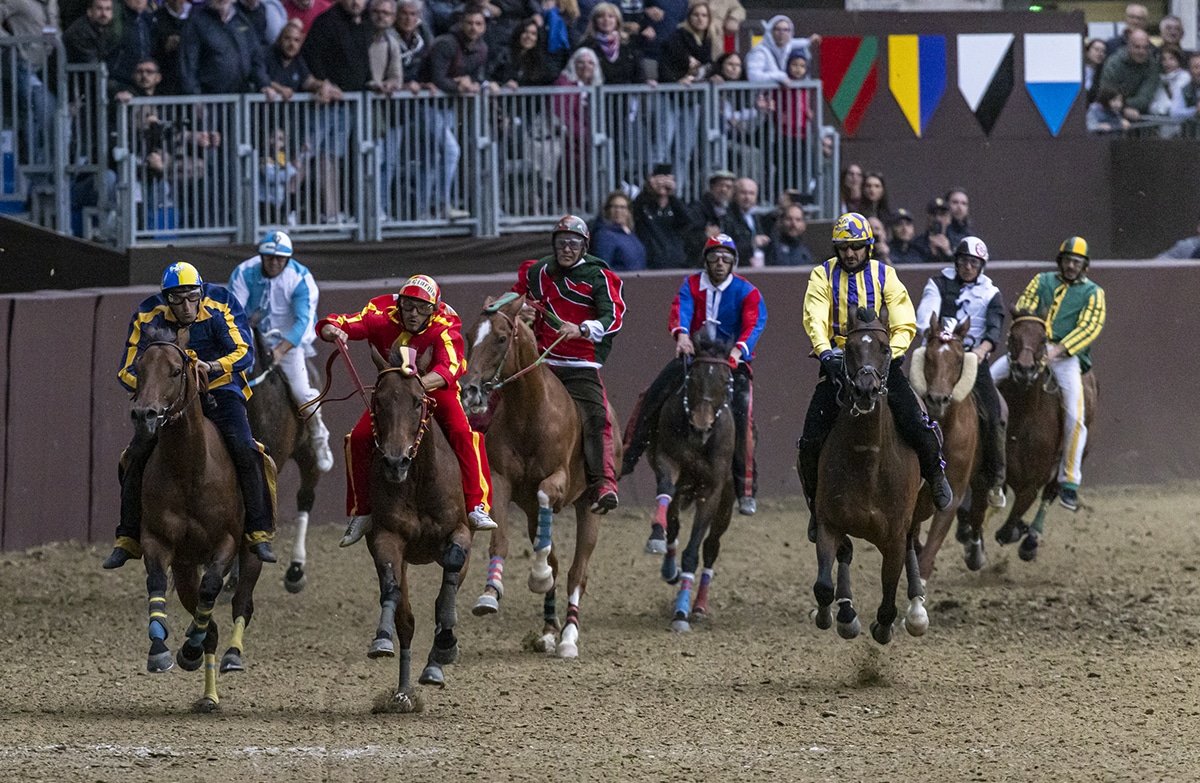
The main competition features four separate palii: the race for young boys, the race for young girls, the donkey race and the horse race.
Enjoy Your Event Stress-Free with Italy Travelo
Whether you're traveling for a world-famous festival, live concert, cultural celebration, or business event, Italy Travelo helps simplify every step of your journey. Our team provides personalized travel assistance, allowing you to focus on creating lasting memories.
Event dates
Palio di Ferrara 2027 is scheduled for May 2027 (Dates TBD).
The traditional programme develops throughout May and culminates in the four races held in Piazza Ariostea. The official 2027 calendar has not yet been released.
Visitors should check the official Palio programme before travelling because individual ceremonies, flag competitions, processions and race times are announced separately.
Visiting this event? Don’t miss out on these amazing activities and local experiences while you’re here.
Venues & festival locations
The Palio takes place across several important locations in Ferrara’s historic centre.
- Piazza Ariostea – principal venue for the four Palio races.
- Castello Estense – associated with historical ceremonies, processions and cultural activities.
- Historic centre of Ferrara – setting for the major Renaissance processions and public events.
- Piazza Municipale – traditionally used for flag and musicians’ competitions.
- Piazza della Cattedrale – associated with religious and ceremonial elements of the Palio.
- Contrade headquarters – local venues used for dinners, gatherings and preparatory activities.
The exact 2027 allocation of individual events will be confirmed in the official programme.
Full cultural programme
The Palio programme extends beyond the main races and includes a wide range of Renaissance-inspired cultural activities.
- Historical processions featuring the Corte Ducale and eight contrade.
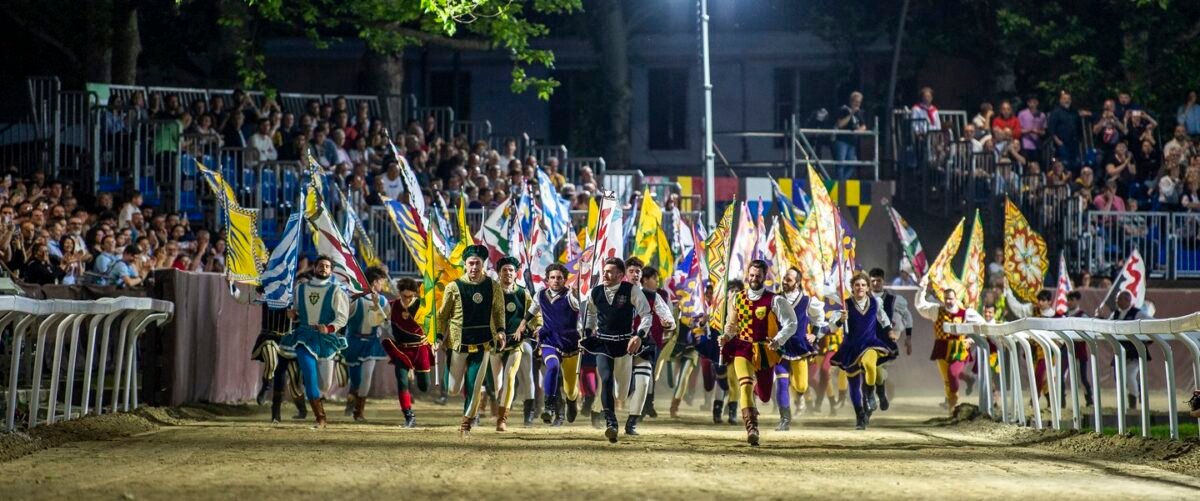
- Flag-throwing competitions.
- Musicians’ competitions.
- Youth running competitions.
- Donkey and horse races.
- Ceremonial presentations and registration of competitors.
- Historical costume displays.
- Public shows and entertainment.
- Cultural activities organized by the contrade.
- Educational initiatives connecting Ferrara’s history with younger generations.
The Historical-Artistic Commission of the Ente Palio coordinates projects involving processions, public performances, ceremonies and other activities connected with the Palio programme.
Featured traditions & performances
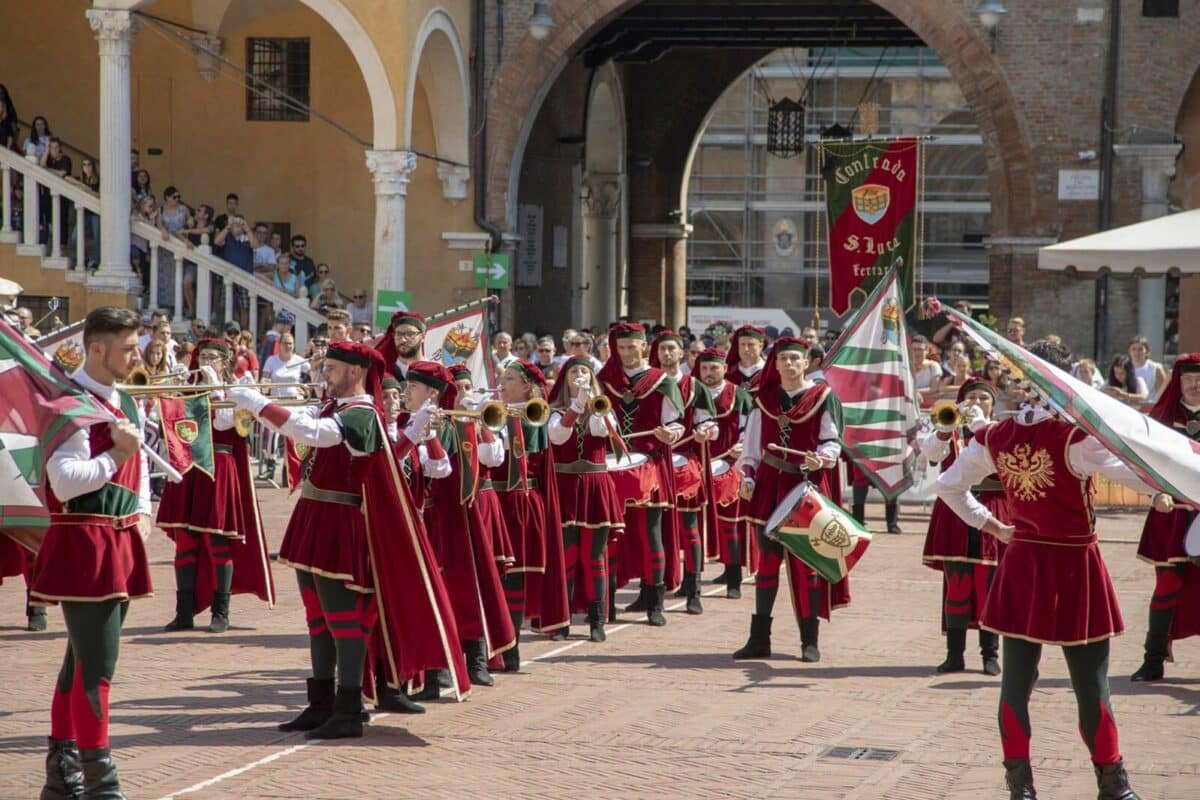
The Corteo Storico is one of the most visually distinctive traditions, bringing together more than 1,000 costumed participants from the Ducal Court and the eight contrade.
Participants appear in Renaissance-inspired costumes representing nobles, knights, flag bearers, soldiers, musicians and other historical figures. Drums, trumpets, flags, shields, armour and elaborate clothing contribute to the historical atmosphere.
The flag and musicians’ competitions are also central to the programme, with representatives of the eight contrade competing in several traditional disciplines including individual and double flag performances, team routines, choreography and musicians’ performances.
Historical & heritage highlights
The origins of the Palio di Ferrara are traced to the medieval period, with the modern organization preserving traditions associated with the Este court and Renaissance Ferrara.
The official Palio history records the first competition in the medieval era and explains that the rules were subsequently incorporated into Ferrara’s civic statutes. The tradition continued for centuries before being revived in the modern era.
The eight competing contrade consist of four rioni within the historic city walls and four borghi outside the walls:
- San Benedetto
- Santa Maria in Vado
- San Paolo
- Santo Spirito
- San Giacomo
- San Giorgio
- San Giovanni
- San Luca
The Corte Ducale represents the Este court and participates in the wider cultural and ceremonial programme.
Events & activities schedule
The complete 2027 schedule has not yet been announced, but the established programme includes several stages leading toward the main races.
- Flag and musicians’ competitions – performances by the eight contrade.
- Historical and ceremonial activities – events connecting the contrade with Ferrara’s Renaissance heritage.
- Corteo Storico – the large historical procession through the city centre.
- Registration of the contrade – ceremonial presentation of the competitors.
- Four Palio races – youth boys, youth girls, donkeys and horses.
- Cultural performances – shows, ceremonies and entertainment connected with the Palio.
The official programme will provide the exact order, venues and times for the 2027 edition.
Ticket types & entry options
The main public areas of the Palio have historically included free-access viewing, while selected grandstand areas can require tickets.
The latest published ticket information recorded:
- General Piazza Ariostea access: $0.
- Central grandstand: invitation only.
- Mossa grandstands: approximately $47 based on the latest published price of $40.
- Historical processions and many outdoor activities: generally publicly accessible.
The ticketed grandstand price is based on the latest official published reference and is not a confirmed 2027 price.
Guided tours & cultural experiences
The Palio can be combined with cultural visits to Ferrara’s UNESCO-recognized historic centre and the city’s Este heritage sites.
Visitors can explore the area around Castello Estense, the cathedral, historic streets and Renaissance buildings while attending the Palio programme.
The contrade themselves also contribute to educational and cultural initiatives. The official School Commission runs projects introducing students to Ferrara’s history and the relationship between the city and the Palio tradition.
Special ceremonies & celebrations
Ceremonial activities form an important part of the Palio programme.
The Corteo Storico formally presents the Ducal Court and the eight contrade, while the historical registration ceremony introduces the competitors participating in the races.
Other traditional activities can include religious ceremonies involving the palii and ceri, public tributes to the Este heritage of Ferrara, ceremonial flag displays and special performances by the contrade.
Festival rules
Visitors must follow instructions issued by event organizers, municipal authorities, security personnel and venue staff.
During the races, spectators must remain within authorized viewing areas and must not enter the competition track or restricted areas.
The organizers also publish specific rules concerning items that may be brought into the race venue. The latest official guidance prohibited spectators from bringing food and beverages into Piazza Ariostea during the races.
Photography and filming may also be subject to the event’s image and recording conditions. The official Palio website states that participants and spectators may be photographed, filmed or recorded during events for promotional and broadcast purposes.
How to get there
Ferrara is located in Emilia-Romagna and is well connected with other northern Italian cities.
Visitors arriving by train can use Ferrara railway station, from where the historic centre can be reached by local transport, bicycle or on foot.
The central Palio locations are concentrated within the historic city, making walking a practical option between many programme venues.
Visitors arriving by car should use designated parking areas outside the most restricted central streets and continue toward the historic centre on foot or by local transport.
Public transport & parking
Ferrara is a compact city and many Palio venues can be reached without a car.
- Train: Ferrara railway station provides connections with major cities in northern Italy.
- Local buses: connect the railway station and surrounding districts with the historic centre.
- Cycling: Ferrara is well known for its extensive cycling culture and cycle routes.
- Walking: many central Palio locations are within walking distance of one another.
- Parking: visitors should use authorized car parks outside restricted historic-centre areas.
Temporary road restrictions may be introduced during processions and major public events.
Accommodation areas
Staying close to the historic centre provides convenient access to the main Palio venues.
- Historic centre – convenient for Piazza Ariostea, Castello Estense and central events.
- Around Castello Estense – useful for visitors focusing on historical and ceremonial activities.
- Near Ferrara railway station – practical for visitors arriving by train.
- Via Bologna area – provides additional accommodation and transport options.
- City outskirts – suitable for visitors traveling by car and looking for larger parking facilities.
Accommodation availability can become more limited during the main Palio programme.
Food & traditional specialties
Ferrara offers a distinctive local cuisine that visitors can explore alongside the Palio.
Traditional dishes include cappellacci di zucca, pasta filled with pumpkin and traditionally served with butter and sage or other sauces.
Other local specialties include salama da sugo, pasticcio ferrarese, coppia ferrarese bread and traditional pastries such as tenerina.
Restaurants, cafés and food establishments around the historic centre provide options before and after the main Palio events.
Accessibility
Accessibility varies according to the historic location, temporary event infrastructure and crowd levels.
Piazza Ariostea and other central public spaces can become very busy during the main races, while temporary stands and restricted areas may affect movement.
Visitors requiring accessible seating or assistance should contact the Palio organization before attending so that current arrangements can be confirmed.
Best cultural experiences
Some of the most distinctive experiences associated with the Palio include:
- Watching the four traditional races in Piazza Ariostea.
- Seeing the Corteo Storico in Renaissance costume.
- Experiencing the flag-throwing competitions.
- Listening to the traditional musicians and ceremonial ensembles.
- Exploring the eight contrade and their distinctive colours.
- Visiting Castello Estense during the Palio programme.
- Exploring Ferrara’s Renaissance streets and historic centre.
- Combining the races with local Ferrara cuisine.
The combination of competitive races, Renaissance costumes and civic traditions provides the central cultural character of the event.
Previous year’s highlights
The latest official programme continued the traditional four-race format in Piazza Ariostea, with competitions for young boys, young girls, donkeys and horses. The event also included the historic activities of the eight contrade and the Ducal Court.
The latest edition also featured a large historical procession and the presentation of the contrade through Renaissance-inspired costumes, banners, musicians and flag performers. The official website reports more than 1,000 participants in the Corteo Storico.
The programme also included the Nino Franco Visentini Award for the best historical parade, with Borgo San Luca receiving the latest published edition’s award.
Video
Location
FAQ
What are the primary dates and operational schedule for the Palio di Ferrara events during the spring season?
The festival unfolds over the entire month of May, with major historical processions, flag games, and final race days scheduled primarily on weekends. Visitors can explore daily neighborhood events, costume exhibitions, and trial runs throughout the historic center. Checking the official festival website ahead of time provides precise daily timetables for cathedral ceremonies and Piazza Ariostea events.
How can visitors access the event areas, and are admission tickets required for entry?
General public access to view the historic processions, street flag-throwing games, and public plazas is completely open and free of charge. No advance tickets or reservations are required to stroll along the medieval avenues and enjoy the vibrant festival atmosphere. Elevated grandstands surrounding the Piazza Ariostea racing track involve purchase fees for visitors seeking reserved seating during the final weekend competitions.
Are there specific family-friendly activities and accessible facilities for visitors attending with children or mobility needs?
The festival features family-oriented youth foot races, open-air flag displays, and dedicated viewing areas designed to accommodate children safely. The historic center provides designated accessible walking routes and ramps, though navigating large crowds around the arenas requires advance planning. Multilingual information desks situated near major arrival points offer accessibility maps and logistical guidance for all attendees.
What public transportation and parking options are recommended for travelers arriving from outside Ferrara?
Travelers arriving from regional transit hubs can utilize high-speed trains arriving directly at Ferrara railway station, located a short walk from the historic center. Since private car access is restricted within ancient fortification walls, visitors should utilize designated peripheral parking lots outside the zone. Clear directional signage and local transit staff guide visitors smoothly toward pedestrian pathways and shuttle buses.
How should visitors prepare for the spring weather and walking conditions during festival days?
Spring weather in Ferrara is typically pleasant and warm, making it essential to wear comfortable walking shoes, light clothing, and sun protection. Since exploring the historic center involves navigating stone paving, ancient squares, and dense crowds, sturdy footwear ensures a comfortable experience. Carrying a reusable water bottle and utilizing shaded resting spots will help visitors fully enjoy the vibrant historical celebrations.

Leave a Reply