

What to expect
Il Carnevale di Tricarico is one of the most ancient and distinctive carnivals in southern Italy and is known as L’màsh-k-r in local dialect. It is a tradition that revolves entirely around animals and the ancient practice of transumanza, the seasonal migration of herds from lowlands to highlands and back that takes place twice a year. The carnival takes place in Tricarico, a village of about 5,000 inhabitants with Arabo-Norman heritage perched at 600 meters above sea level overlooking the Basento river valley, home of the mayor-poet Rocco Scotellaro and possessing one of the best preserved medieval town centers in Basilicata.
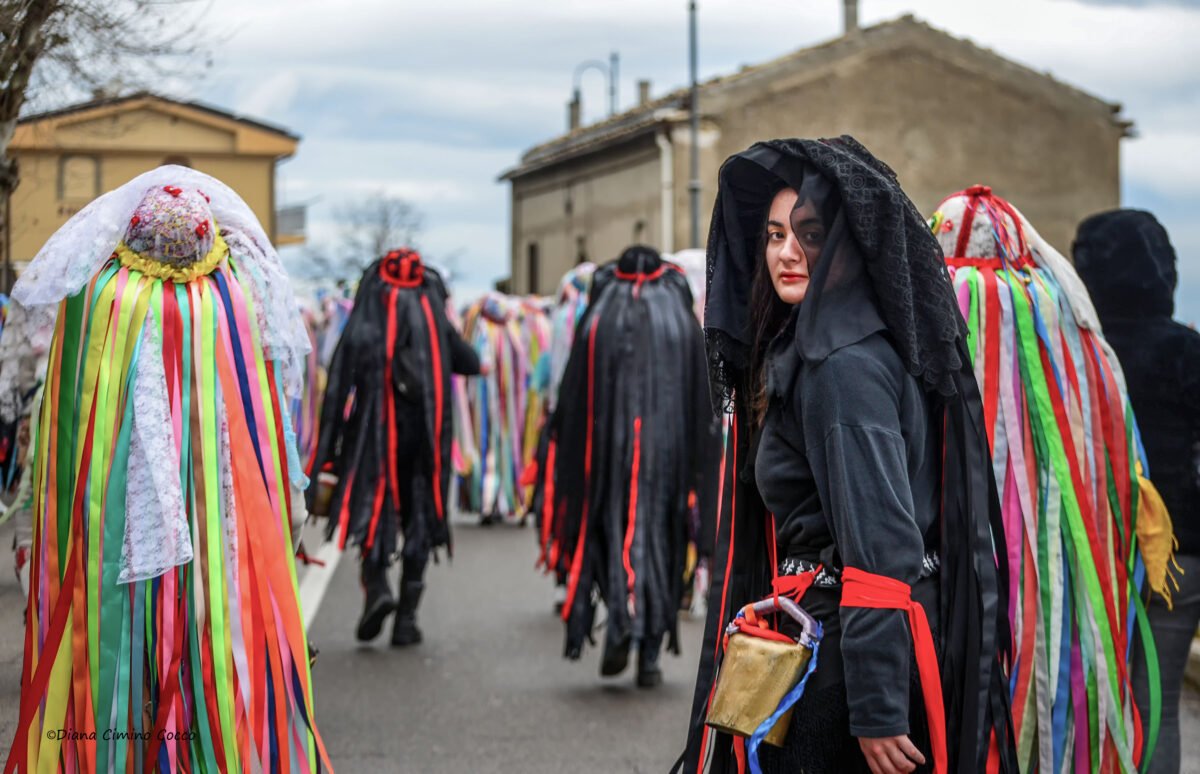
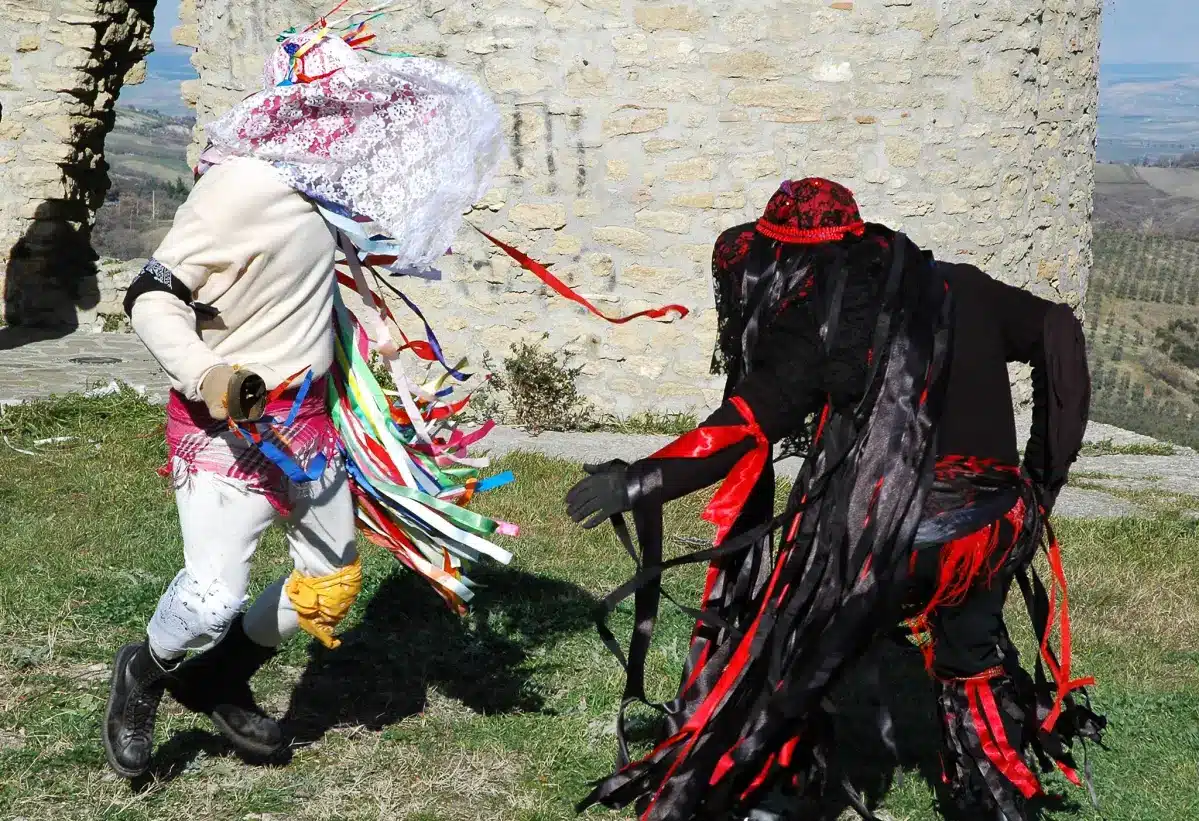
You can expect a ritual with very ancient pagan origins mixed with Christian ones, where participants mimic with costumes and movements the process of transumanza. The masks epitomize the bull and the cow, symbolizing the herd. The procession is opened by the mask of the Massaro, who wears clothes made of skins and holds a stick and a rifle, leading the rest of the procession composed of masks depicting bulls and cows. The bulls are completely black with red ribbons, the cows wear a wide-brimmed hat covered with scarves with colorful ribbons that go down to their ankles. They all wave huge cowbells that contribute to the wild party atmosphere.
The other masks that make up the procession are those of the count and countess, owners of the herds. During the final parade, people gather to share a meal, followed by picturesque carnival floats which are a further eulogy to nature and animals. Prominent among the floats is the Quaremma, Lent float, on which a large puppet depicting Carnival is placed. The route ends in Garibaldi Square, where the puppet is burned while the mask of Quaremma, Carnival’s wife, mourns his death. The festivities continue amid serenades, concerts and other convivial moments.
Enjoy Your Event Stress-Free with Italy Travelo
Whether you're traveling for a world-famous festival, live concert, cultural celebration, or business event, Italy Travelo helps simplify every step of your journey. Our team provides personalized travel assistance, allowing you to focus on creating lasting memories.
Event dates
Month: January 2027 – Dates TBD
Opening ritual: Kicks off on the day when St. Anthony Abbot, protector of animals, is celebrated, with early dawn gathering in front of the Church of St. Anthony Abbot, bonfire in honor of the saint, and three propitiatory laps around the sacred building to receive blessing and initiate carnival ritual.
Main parades: First parade on opening day and second parade on the last Sunday of Carnival period before Shrove Tuesday and Mardi Gras, with repetition of mask parade.
Final ritual: On Mardi Gras, parade of masks is repeated, shared meal, new parade together with floats, and burning of Carnival puppet in Piazza Garibaldi with mourning of Quaremma, followed by concert at 20:30 in Piazza Garibaldi preceding death of Carnival.
Official information: https://www.sharry.land/en/events/il-carnevale-di-tricarico – Basilicata region, Tricarico MT, Italy – Reported by Cercatori di Eventi – A Carnival with ancient roots.
Visiting this event? Don’t miss out on these amazing activities and local experiences while you’re here.
Venue & event locations
Main village: Tricarico, province of Matera, Basilicata. The historic center with medieval streets, Norman towers, and stone houses provides the natural stage for the procession crossing the streets of the historic center.
Key religious venue: Church dedicated to Sant’Antonio Abate, protector of animals. The procession begins in early hours of dawn in front of this church, where bonfire is lit and three rounds around church are completed by special herd composed of cows and bulls called màshkr to receive blessing.
Main squares: Piazza Garibaldi is the final destination where puppet is burned and Quaremma mourns, and where concert precedes death of Carnival. Piazza is surrounded by historic buildings and serves as gathering point for shared meal and convivial moments.
Procession route: Starts at Church of Sant’Antonio Abate, winds through historic center, passes through narrow alleys, viewpoints over Basento valley, and ends in Garibaldi Square. The route is walkable and allows close contact with masks and cowbells.
Full holiday programme
Opening ceremony: Early dawn gathering, preparation of masks, bonfire lighting in honor of St. Anthony Abbot, blessing of animals, and three propitiatory laps around sacred building.
First parade: Morning procession opened by Massaro in skins with stick and rifle, followed by herd of cows and bulls with huge cowbells, count and countess, and community participants.
Second parade: On last Sunday of Carnival, repetition of mask parade with expanded participation and cultural activities.
Mardi Gras finale: Parade of masks repeated, community meal sharing, new parade together with picturesque carnival floats eulogizing nature and animals, Quaremma float with large puppet depicting Carnival, burning of puppet in Garibaldi Square, mourning by Quaremma mask, serenades and concerts.
Evening entertainment: Concerts, traditional music, dancing, and convivial gatherings in historic center and squares.
Main attractions & highlights
The masks L’màsh-k-r: White costume with colorful ribbons representing cow, la mucca, and black costume with lace hood representing bull, il toro, both with huge cowbells creating powerful soundscape.
Transumanza ritual: Reenactment of seasonal migration of herds, symbolizing ancient pastoral life, transhumance, and connection to land, unique among Italian carnivals for its focus on animals rather than purely satirical floats.
Massaro figure: Leader of procession in skins with stick and rifle, representing herdsman guiding herd, opening ritual with strong symbolic authority.
Quaremma and Carnival puppet: Large puppet on Lent float representing Carnival, burned in Garibaldi Square while wife Quaremma mourns, marking symbolic death of Carnival and transition to Lent.
Soundscape: Campanacci, large cowbells, dominate acoustic experience, creating wild party atmosphere and ancient ritual sound.
Markets, decorations & themed areas
Historic center decorations: Medieval streets decorated with ribbons, animal motifs, pastoral symbols, and traditional textiles reflecting cow and bull theme.
Themed areas: Area around Church of Sant’Antonio Abate decorated with bonfire installation and blessing symbols. Piazza Garibaldi transformed into stage for burning ritual with float display area.
Local markets: Stalls offering local crafts, masks, cowbells, wool products, skins, and traditional foods. Artisans selling handmade hats with colorful ribbons, scarves, and pastoral tools.
Food areas: Zones dedicated to Basilicata specialties, with shared meal gatherings during Mardi Gras finale, offering communal dining experience.
Events & entertainment schedule
Dawn ritual: Bonfire lighting and blessing at Church of Sant’Antonio Abate, with three laps by herd.
Morning parade: Procession through historic center with Massaro, bulls, cows, count and countess, with singing and dancing ensuing.
Afternoon community gathering: Shared meal where people gather to eat together before evening parade.
Evening parade with floats: Picturesque carnival floats eulogizing nature and animals, including Quaremma float.
Night finale: Burning of Carnival puppet in Garibaldi Square, mourning performance by Quaremma, concert at 20:30 in Piazza Garibaldi, serenades and convivial moments continuing into night.
Admission & ticket information
Street parades: Free and open to all, as traditional carnival takes place in public streets and squares of Tricarico. Watching the parade costs nothing, since street parade is free.
Special events: For special events or concerts in Piazza Garibaldi, it is advisable to reserve or buy tickets ahead of time to secure entry, though most events remain free.
Workshops: Mask preparation workshops, cowbell making, and transhumance cultural talks may require small registration fee.
Official pricing in USD: General admission $0 USD for street events. Special concert seating if ticketed typically ranges from $22 USD to $33 USD for single day pass based on similar Italian carnival events, with grand parade seating ranging from $27 USD to $55 USD depending on seat choice. Prices exclude portal fees. Actual Tricarico events remain predominantly free as community tradition.
Special experiences & activities
Transumanza delle Maschere: Participatory experience where visitors can join guided explanation of transhumance, learning about seasonal migration and pastoral culture.
Mask dressing experience: Opportunity to see masks preparing very early, with white costumes with colorful ribbons and black costumes with lace hoods, and understand symbolism.
Cowbell chorus: Visitors can experience wearing huge cowbells and joining rhythmic procession, creating immersive soundscape.
Bonfire blessing: Participating in bonfire lighting and three propitiatory laps around sacred building for blessing.
Quaremma mourning performance: Theatrical performance where mask of Quaremma mourns death of Carnival husband, blending satire, drama and folk tradition.
Family & children’s activities
Mini herd: Children can dress as small cows and bulls with smaller bells and colorful ribbons, participating in safe sections of parade.
Animal education: Workshops about St. Anthony Abbot as protector of animals, learning about farm animals and pastoral life.
Craft workshops: Making small hats with scarves, colorful ribbons, and paper cowbells.
Float viewing: Family-friendly viewing of picturesque floats eulogizing nature and animals, including Quaremma float.
Shared meal: Family communal meal during Mardi Gras gathering, offering taste of local cuisine in convivial setting.
Event rules
Respect ritual: Do not interrupt three propitiatory laps around church or bonfire ceremony. Follow instructions of Massaro and organizers.
Mask handling: Do not touch cowbells or costumes without permission. Photography allowed but avoid flash during early dawn ritual.
Procession route: Stay within designated spectator areas along historic center streets. Do not block herd movement.
Safety: Wear warm clothing as event starts in early hours of dawn with average January temperatures ranging from high 51°F to low 35°F. Wear sturdy shoes for cobblestone streets.
Environmental respect: No littering, respect medieval heritage buildings, and follow local customs.
Animal respect: As carnival is dedicated to animals, maintain respectful behavior toward any live animals present for blessing.
How to get there
Location: Tricarico, Province of Matera, Basilicata, Italy, 75019 MT, perched at 600 meters above sea level overlooking Basento river valley.
By air: Nearest airports are Bari Karol Wojtyla and Brindisi, with bus or train connections to Matera and then to Tricarico.
By train: Matera or Ferrandina stations, then bus to Tricarico via regional services.
By car: Accessible via SS7 Appia and SP roads from Matera, about 50 km northwest of Matera. Parking outside historic center, then walk into medieval town.
Public transport & parking
Public transport: Regional buses connect Matera, Potenza, and Tricarico. Local buses serve historic center outskirts.
Parking: Designated parking outside historic center walls, as medieval streets are narrow and closed during parades. Follow signage for visitor parking and shuttle.
Shuttle: During carnival days, shuttle services may run from parking areas to Church of Sant’Antonio Abate and Piazza Garibaldi.
Walking: Best way to experience historic center is on foot, as procession crosses streets of historic center.
Accommodation areas
Tricarico historic center: Small guesthouses and B&Bs within medieval walls, offering authentic stay with walking distance to Church of Sant’Antonio Abate and Piazza Garibaldi. Book early as village is small with limited beds.
Matera: About 50 km away, offering extensive accommodation including famous Sassi cave hotels, with day trips to Tricarico.
Potenza and surrounding villages: Larger towns with hotels and agriturismi offering Basilicata hospitality.
Agriturismi: Farm stays in Basento valley offering pastoral experience aligned with transhumance theme, with local foods and animal encounters.
Food, drinks & seasonal specialties
Shared meal tradition: During Mardi Gras finale, people gather to share a meal before new parade, featuring local Basilicata dishes.
Local specialties: Try dishes linked to pastoral tradition such as lamb, cheeses, bread of Matera, and local wines from Basento valley.
Street food: During parades, stalls offer roasted meats, sweets, and warm drinks to combat January chill.
Seasonal sweets: Carnival sweets such as chiacchiere and local fried pastries.
Drinks: Local wines, including Aglianico del Vulture, and warm beverages.
Accessibility
Historic center: Medieval town with cobblestones, steps, and steep alleys, challenging for wheelchairs and strollers. Some areas may require assistance.
Main squares: Piazza Garibaldi and area around Church of Sant’Antonio Abate provide more level access with ground-level entry.
Services: Accessible toilets available in main squares during event, with volunteer support.
Viewing areas: Designated accessible viewing spots along procession route for those with mobility needs.
Inclusive program: Community meal and concerts designed to be inclusive, with seating available in Piazza Garibaldi.
Best days & times to visit
Opening dawn: Best for authentic ritual experience with bonfire, blessing, and three laps around church in early hours, experiencing most ancient part of carnival.
Morning parade: Ideal for seeing full herd of cows and bulls with huge cowbells, Massaro opening, and count and countess.
Final Sunday: Larger parade with expanded participation, more elaborate costumes, and community involvement.
Mardi Gras evening: Most dramatic finale with floats, Quaremma float, burning of Carnival puppet, mourning performance, and concert, offering complete narrative arc from birth to death of Carnival.
Afternoon shared meal: Best for community immersion and tasting local cuisine with locals.
Previous year’s highlights
Ancient roots celebrated: Previous edition highlighted carnival with ancient roots linked to transhumance, with special herd composed of cows and bulls completing customary three rounds around Church dedicated to Sant’Antonio Abate to receive blessing, thus initiating carnival ritual.
Community participation: Singing and dancing ensued after parades, with procession opened by Massaro in skins with stick and rifle, bulls completely black with red ribbons, cows in wide-brimmed hats covered with scarves and colorful ribbons down to ankles, all waving huge cowbells contributing to wild party atmosphere.
Floats and Quaremma: Prominent Quaremma float with large puppet depicting Carnival, route ending in Garibaldi Square where puppet burned while mask of Quaremma mourned death, festivities continuing amid serenades, concerts and convivial moments.
Cultural recognition: Event reported by Cercatori di Eventi, with 4 people liking it, and coverage emphasizing unique celebration characterized by cow and bull masks symbolizing transhumance, distinguishing Tricarico among Lucanian carnivals.
Pagan and Christian blend: Coverage noted rituals with very ancient pagan origins mixed with Christian ones, with procession beginning in early hours of dawn in front of Church of St. Anthony Abbot, after which bonfire lit and actual procession crossing streets of historic center.
Official event information
Official listing: https://www.sharry.land/en/events/il-carnevale-di-tricarico – Event type Tradition – Location Basilicata, 75019 Tricarico MT, Italia – Published date on platform and updated regularly.
Organization: Local Pro Loco and cultural associations in Tricarico, with support from Basilicata Turistica.
Admission: Street events free, special events may require reservation.
Contacts: Information via local tourism offices in Tricarico and Matera, plus Basilicata regional tourism portal.
Authenticity: Only official channels guarantee accurate program of ancient roots carnival with L’màsh-k-r masks.
Video
Location
FAQ
What are L'màsh-k-r masks and what do they represent?
L'màsh-k-r in Tricarico dialect epitomizes the bull and the cow, representing transhumance and pastoral life. The white costume with colorful ribbons represents a cow, la mucca, and the black costume with lace hood represents a bull, il toro, both wearing huge cowbells. The masks are all-male actors dressed in two distinct costumes, symbolizing herd and seasonal migration, and are central to a carnival entirely dedicated to animals.
How does the opening ritual work at the Church of Sant'Antonio Abate?
The procession begins in early hours of dawn in front of the Church of St. Anthony Abbot, protector of animals, after which a bonfire is lit in honor of saint. The special herd composed of cows and bulls completes customary three propitiatory laps around sacred building to receive blessing, thus initiating carnival ritual. The procession is opened by Massaro in skins with stick and rifle, leading rest of herd through historic center streets.
What happens during the final parade with Quaremma?
During Mardi Gras, parade of masks is repeated, people gather to share a meal, after which new parade begins together with picturesque carnival floats eulogizing nature and animals. Prominent among floats is Quaremma Lent float on which large puppet depicting Carnival is placed. Route ends in Garibaldi Square where puppet is burned while mask of Quaremma, Carnival's wife, mourns his death, followed by concert, serenades and convivial moments.
Is Il Carnevale di Tricarico free and suitable for families?
Watching the street parade costs nothing as open-air event in public streets and squares, making it accessible for families. Special events or concerts may advise buying tickets ahead to secure entry, but most events remain free as community tradition. Family activities include mini herd for children, animal education workshops, craft making of hats with ribbons, and shared meal gatherings offering taste of Basilicata hospitality.
What should I wear and how should I prepare for the carnival?
Prepare for early dawn start with very cold January temperatures averaging high around 10 degrees Celsius and low around 2 degrees Celsius, requiring warm layered clothing and sturdy shoes for cobblestone medieval streets. Respect ritual by not interrupting bonfire or three laps, follow organizer instructions, and avoid touching cowbells or costumes without permission. Bring camera for photography but avoid flash during dawn ritual, and stay in designated spectator areas to not block herd movement.

Leave a Reply