

What to expect in 2027
Festino di Santa Rosalia 2027 will celebrate Palermo’s patron saint through a major combination of religious tradition, street theatre, music, dance, visual arts and public celebrations. The festival transforms the historic centre into a large-scale cultural stage centred on the story of Santa Rosalia and Palermo’s identity.
The main celebration traditionally revolves around the spectacular Carro Trionfale, which carries the symbolic figure of Santa Rosalia through the historic centre. The procession is accompanied by performers, musicians, dancers, theatrical scenes and large public gatherings.
The 2027 edition is also expected to connect the traditional Festino with Palermo’s wider cultural programme, particularly the city’s Arab-Norman heritage and the broader cultural initiatives associated with the European Year of the Normans.
Enjoy Your Event Stress-Free with Italy Travelo
Whether you're traveling for a world-famous festival, live concert, cultural celebration, or business event, Italy Travelo helps simplify every step of your journey. Our team provides personalized travel assistance, allowing you to focus on creating lasting memories.
Event dates
Festival period: July 2027 (Dates TBD)
The detailed 2027 calendar has not yet been published. The main Festino traditionally takes place during Palermo’s July celebrations, with the major public procession and religious observances forming the central part of the programme.
The final schedule, procession arrangements, performances and associated cultural activities should be confirmed by the City of Palermo and the official Festino website.
Visiting this event? Don’t miss out on these amazing activities and local experiences while you’re here.
Venues & festival locations
Palazzo dei Normanni: The traditional starting point of the main procession and an important symbol of Palermo’s Arab-Norman heritage.
Cassaro: The historic route through Via Vittorio Emanuele forms the central corridor of the Festino and provides the setting for performances and public celebrations.
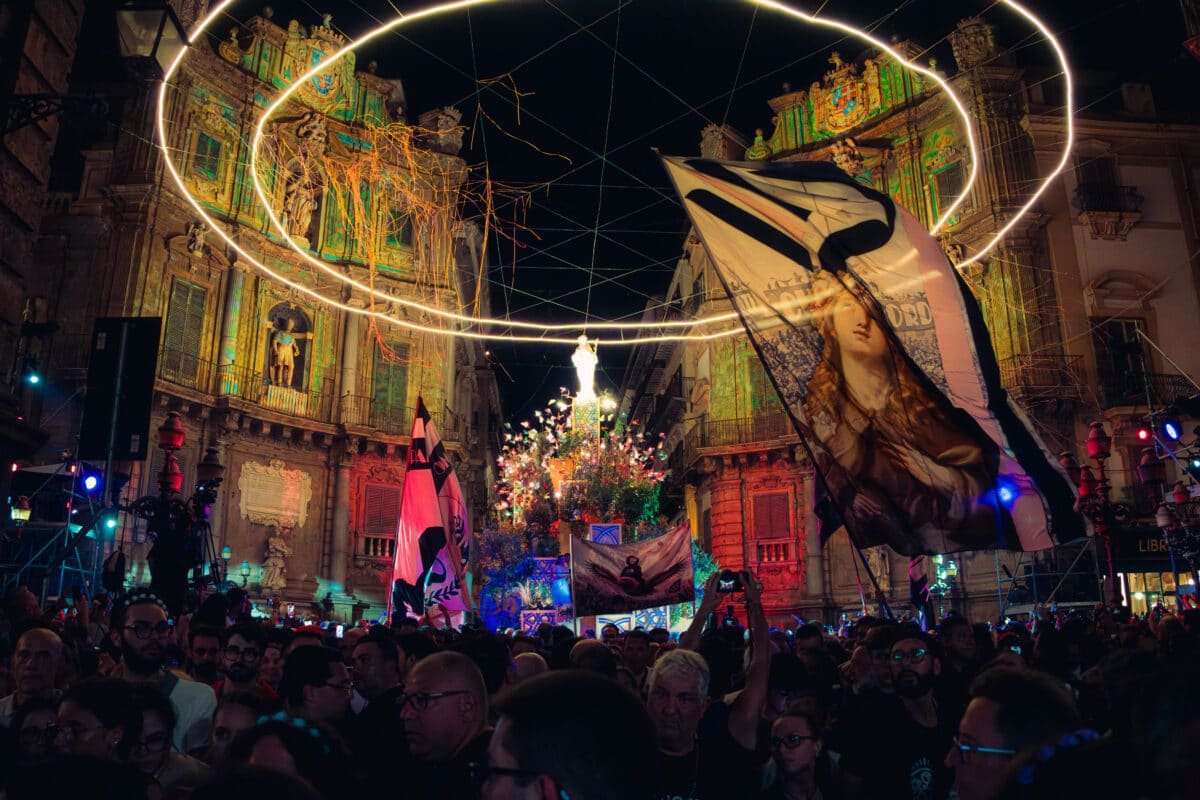
Quattro Canti: One of the principal symbolic points along the route and a traditional location for theatrical and musical elements of the celebration.
Cattedrale di Palermo: A major religious and architectural landmark connected with the celebrations surrounding Santa Rosalia.
Porta Felice: The historic gateway near the waterfront traditionally marks the end of the main procession route.
Foro Italico: A major gathering area associated with the final part of the festivities and large public celebrations.
Santuario di Santa Rosalia: Located on Monte Pellegrino, the sanctuary and grotto are central to the religious heritage of Santa Rosalia.
Full cultural programme
The 2027 programme is expected to combine religious celebrations with a broad cultural programme across Palermo.
Typical activities can include:
- The Carro Trionfale procession
- Street theatre
- Live music
- Dance performances
- Artistic installations
- Historical storytelling
- Religious ceremonies
- Traditional Sicilian performances
- Cultural exhibitions
- Contemporary art projects
- Children’s activities
- Street entertainment
- Food and traditional markets
- Special events around Palermo’s historic monuments
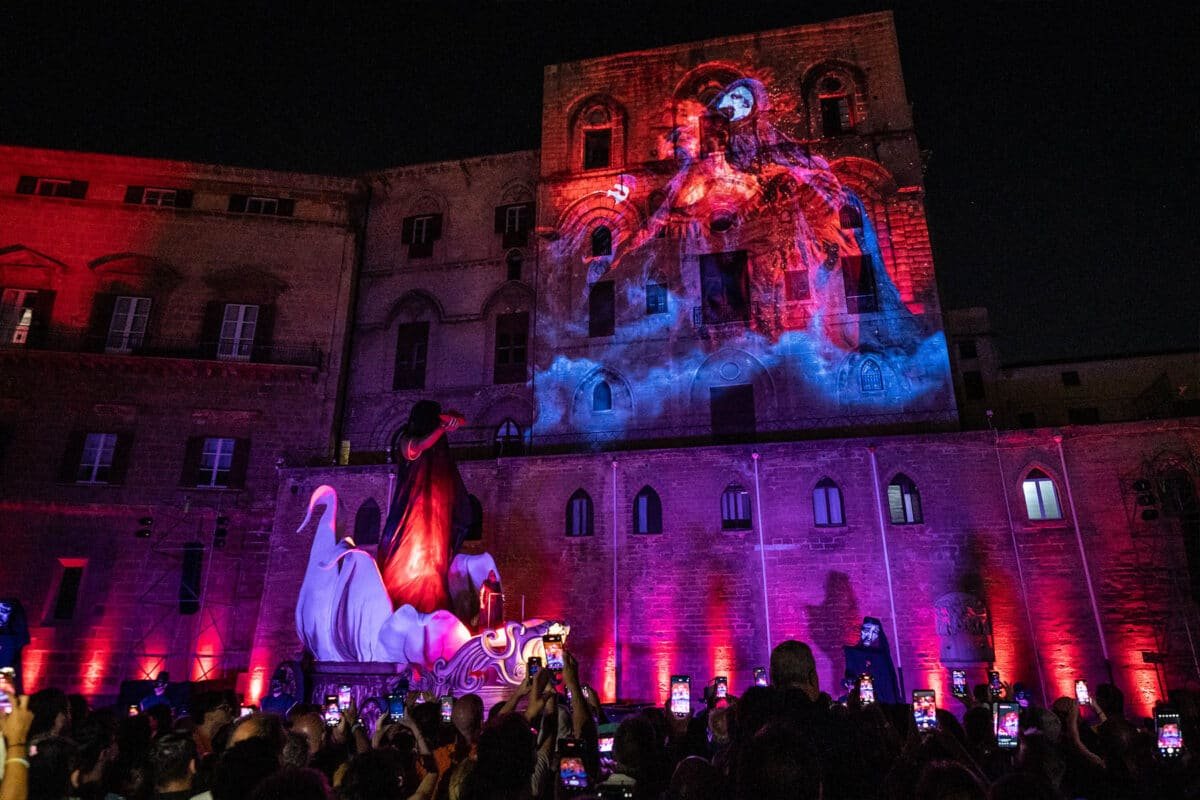
Recent editions have deliberately combined traditional religious elements with contemporary artistic languages, including theatre, visual arts, digital media, music and large-scale scenography.
Featured traditions & performances
Carro Trionfale: The monumental triumphal carriage is the visual centrepiece of the main celebration and carries the symbolic image of Santa Rosalia through the historic city.
Corteo: The procession combines the carriage with performers, musicians, dancers and large crowds moving through the historic Cassaro.
Cunti: Sicilian storytelling traditions are frequently used to narrate the life, devotion and cultural importance of Santa Rosalia.
Music and dance: Recent programmes have included concerts, devotional songs, contemporary performances, traditional music and dance.
Street theatre: Performers use the historic streets and squares as open-air stages to tell stories connected with Palermo and the Santuzza.
Fireworks: The final celebrations traditionally include a large fireworks display visible from the waterfront area.
Historical & heritage highlights
The Festino of Santa Rosalia is deeply connected with Palermo’s history and religious identity. The tradition commemorates Santa Rosalia, the city’s patron saint, and the belief that her intercession helped Palermo overcome the plague.
The celebration has developed into a major expression of Palermo’s popular culture, combining religious devotion with theatre, music, visual art, architecture and public celebration.
The Carro Trionfale has been a defining element of the Festino for centuries. Historical accounts identify the monumental carriage tradition as an important part of the transformation of the celebration into a spectacular public festival.
The route through the Cassaro also connects the Festino with Palermo’s historic urban heritage, linking the Norman palace area with the Cathedral, Quattro Canti and the waterfront.
The Santuario di Santa Rosalia on Monte Pellegrino provides the religious centre of the saint’s cult and is associated with the grotto where her remains were traditionally discovered.
Events & activities schedule
The detailed 2027 programme has not yet been announced. Previous editions have generally developed around several interconnected phases.
Cultural build-up: Concerts, theatre, exhibitions and neighbourhood performances introduce the story of Santa Rosalia before the main celebration.
Festival performances: Artists, actors, musicians and dancers perform at major squares and cultural venues.
Main procession: The Carro Trionfale travels through the historic centre along the traditional Cassaro route.
Waterfront celebrations: The festivities continue toward the Foro Italico, where large public performances and entertainment have traditionally taken place.
Religious programme: Religious ceremonies and celebrations honour Santa Rosalia and form an essential part of the wider Festino.
The final 2027 schedule should be checked through the official programme once released.
Ticket types & entry options
Main public celebration: Free to attend.
The Festino is fundamentally a public city celebration, and the main street procession can traditionally be experienced without purchasing a general admission ticket.
Recent official cultural programmes have also included free concerts, theatre performances, artistic presentations and religious events. The City of Palermo has explicitly listed associated Festino performances as free public events.
Some individual cultural venues or special events may have controlled capacity or require advance reservation. Any 2027 ticketed experiences should be confirmed through the official programme.
Guided tours & cultural experiences
Visitors can combine the Festino with guided exploration of Palermo’s historic and religious heritage.
Historic-centre tours: Walking tours can explore the Cassaro, Cathedral, Quattro Canti and other monuments associated with the procession.
Santa Rosalia heritage: Visitors can learn about the saint’s history and religious significance through the churches, monuments and cultural sites connected with her devotion.
Monte Pellegrino: A visit to the Santuario di Santa Rosalia provides a deeper understanding of the religious traditions surrounding the Festino.
Arab-Norman heritage: Palermo’s Norman Palace, Cathedral and other historic monuments provide important context for understanding the city’s cultural background.
Festino storytelling: Local cultural experiences may explore Sicilian legends, popular devotion, traditional music and the history of the celebration.
Special ceremonies & celebrations
Religious observances form an important part of the Festino alongside the major public spectacle.
Religious celebrations: Churches and religious institutions in Palermo organise services and devotional activities connected with Santa Rosalia.
Procession of the relics: The religious programme traditionally includes the solemn procession associated with the saint’s silver urn and relics.
Blessings and ceremonies: Religious events connected with the patron saint take place in churches and other important locations.
Santuario celebrations: Monte Pellegrino remains an important destination for visitors wishing to experience the devotional side of the festival.
Public celebration: The religious programme is complemented by music, theatre, artistic performances and large public gatherings throughout the city.
Festival rules
Visitors should follow instructions from organisers, police, municipal authorities and security personnel throughout the celebrations.
Follow crowd-control measures: Temporary barriers, controlled routes and restricted areas may be introduced around the procession.
Respect religious ceremonies: Visitors should behave appropriately around churches, religious processions and devotional activities.
Keep emergency routes clear: Streets and access points may be reserved for emergency services and authorised vehicles.
Follow transport restrictions: Vehicle access can be restricted around the Cassaro, Foro Italico and other event areas.
Respect public spaces: Visitors should dispose of waste properly and avoid damaging historic buildings, decorations or festival installations.
Follow security instructions: Large crowds may be subject to additional safety controls, especially around the main procession.
How to get there
By air: Palermo Falcone Borsellino Airport is the principal international gateway to the city and has connections with Italian and European destinations.
By train: Palermo Centrale is the city’s main railway station, with connections to other Sicilian cities and mainland Italy.
By bus: Regional and urban bus services connect Palermo with surrounding areas and the airport.
By car: Palermo can be reached by Sicily’s main road network, although driving into the historic centre during the Festino can be difficult because of temporary restrictions.
On foot: Walking is often the most practical option once visitors reach the central festival area because the main procession takes place along pedestrianised or restricted streets.
Public transport & parking
Public transport is generally preferable during the Festino because large sections of central Palermo can experience temporary road closures and traffic restrictions.
Recent municipal traffic measures have restricted vehicle access and parking around areas including the Foro Umberto I and waterfront during the celebrations.
Public transport: Urban buses, trains and taxis can help visitors reach central Palermo before continuing on foot.
Parking: Visitors should use authorised car parks outside restricted areas and avoid relying on street parking close to the procession route.
Traffic restrictions: Temporary closures can affect the Cassaro, waterfront and surrounding streets, with additional measures introduced according to crowd and security requirements.
Accommodation areas
Palermo historic centre: The most convenient area for visitors who want to stay close to the main procession route, historic monuments and cultural activities.
Kalsa: A historic district near the waterfront with restaurants, accommodation and easy access to several festival locations.
Politeama: A central area with hotels, restaurants and public transport connections.
Mondello: A coastal option for visitors who want to combine the Festino with a beach stay.
Monte Pellegrino area: Suitable for visitors particularly interested in the religious heritage of Santa Rosalia and the sanctuary.
Food & traditional specialties
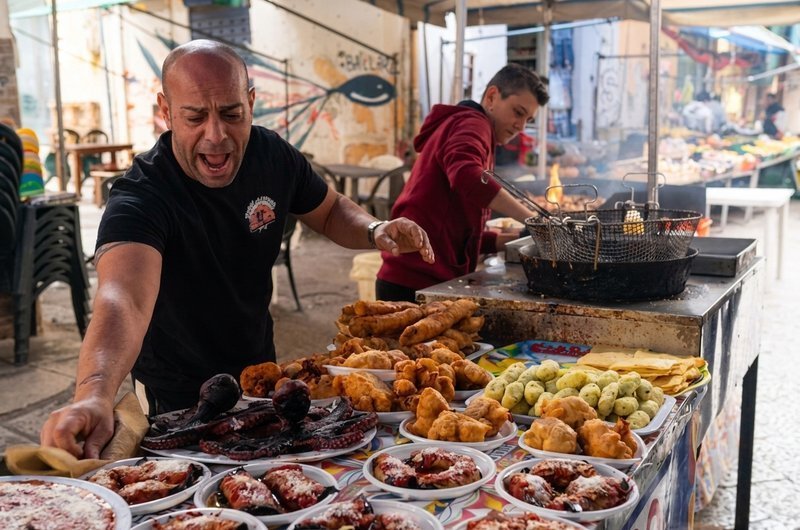
The Festino has a strong connection with Palermo’s traditional street food and festive culinary culture.
Babbaluci: Small snails traditionally prepared with garlic, parsley and olive oil are strongly associated with the Festino.
Anguria: Watermelon is traditionally sold chilled during the summer celebrations and is one of the characteristic foods associated with the festival.
Calia e simenza: Roasted chickpeas, pumpkin seeds and similar snacks are traditional street foods enjoyed during Palermo’s festivities.
Cubbaita: A traditional Sicilian sweet made with ingredients such as sesame, almonds, honey or sugar.
Lupini: Lupin beans are another traditional snack associated with Palermo’s festive street-food culture.
Fichi d’India: Prickly pears are widely associated with Sicilian summer food traditions.
Visitors can also explore Palermo’s wider street-food culture, including arancine, panelle, crocchè and traditional pastries.
Accessibility
The main Festino takes place across central Palermo’s streets and public spaces, with large crowds expected around the principal procession route.
Temporary crowd-control barriers, restricted zones and pedestrian diversions can affect accessibility during the busiest periods.
Visitors with mobility requirements should plan their route in advance and check the latest municipal accessibility and transport information before attending. Some viewing areas or public spaces may have controlled access because of safety and crowd-management requirements.
The city’s main cultural venues and public transport services can provide additional accessibility options depending on the specific location.
Best cultural experiences
See the Carro Trionfale: The monumental carriage is the defining visual symbol of the main celebration and provides the central connection between the religious and theatrical elements of the Festino.
Follow the Cassaro: Walking part of the historic procession route allows visitors to experience Palermo’s architecture, performances and public celebrations together.
Visit Palermo Cathedral: The Cathedral provides important religious and architectural context for understanding Santa Rosalia’s place in the city.
Explore Monte Pellegrino: Visiting the sanctuary and grotto offers a more devotional experience away from the largest crowds.
Experience Sicilian street food: The Festino provides an opportunity to discover traditional Palermo snacks and festive foods.
Watch the waterfront celebrations: The Foro Italico has traditionally been one of the major gathering areas for the final part of the festivities and evening entertainment.
Previous year’s highlights
The previous edition featured a major artistic production inspired by Palermo’s Arab-Norman heritage and the city’s relationship with Santa Rosalia. The Carro Trionfale was designed by architect Mario Cucinella as a living “bio-carro” incorporating Mediterranean vegetation and references to Norman architecture and Arab gardens.
The 2026 programme used the theme “Dal dramma nasce il rito, dal rito la comunità” and combined visual arts, music, dance, theatre, costume design and contemporary technology with traditional religious elements.
The main procession travelled through the historic Cassaro from the Palazzo dei Normanni area toward Porta Felice and the waterfront. The programme included multiple narrative stages featuring actors, musicians and performers.
The City of Palermo subsequently reported that almost 400,000 people were estimated to have participated in the main celebration, with the public gathering along the route and at the Foro Italico.
Video
Location
FAQ
What are the primary dates and operational schedule for the festival events during the summer season?
The grand celebration takes place over multiple days in July, with exact dates determined annually by the municipal administration and cultural committee. Visitors can explore the outdoor street events, historical processions, and nightly shows throughout the core weekend schedule. Checking the official festival website ahead of time provides precise daily timetables for the triumphal car parade and marina fireworks.
How can visitors access the festival areas, and are admission tickets required for entry?
General public access to view the outdoor street processions, artistic spectacles, and public plazas is completely open and free of charge. No advance tickets or reservations are required to stroll along the historic avenues and enjoy the vibrant street atmosphere. Elevated grandstands or specialized cultural tours may involve nominal registration fees for visitors seeking reserved seating or curated packages.
Are there specific family-friendly activities and accessible facilities for visitors attending with children or mobility needs?
The festival features family-oriented street performances, open-air puppet shows, and dedicated viewing areas designed to accommodate children safely. The historic center provides designated accessible routes, ramps, and volunteer assistance personnel to help visitors using wheelchairs or strollers navigate the urban spaces. Multilingual information desks situated near the town hall offer accessibility maps and logistical guidance for all attendees.
What public transportation and parking options are recommended for travelers arriving from outside the city?
Travelers arriving from Catania, Trapani, or regional transit hubs can utilize expanded train services and connecting express buses arriving directly in Palermo. Designated peripheral parking lots with efficient shuttle bus services are established outside the historic center to handle high volumes of visitor vehicles safely. Clear directional signage and local traffic police guide motorists smoothly toward available parking zones and pedestrian entry points.
How should visitors prepare for the outdoor summer weather and walking conditions during festival days?
July weather in Palermo is typically hot and sunny, making it essential to wear comfortable walking shoes, light breathable clothing, and reliable sun protection. Since exploring the historic center involves navigating stone paving and dense pedestrian crowds, sturdy footwear ensures a comfortable experience. Carrying a reusable water bottle and utilizing shaded resting spots will help visitors fully enjoy the vibrant summer celebrations.

Leave a Reply