
-
December 6, 2026
Event date:
-
January 4, 2027
Event end:
What to expect in 2027
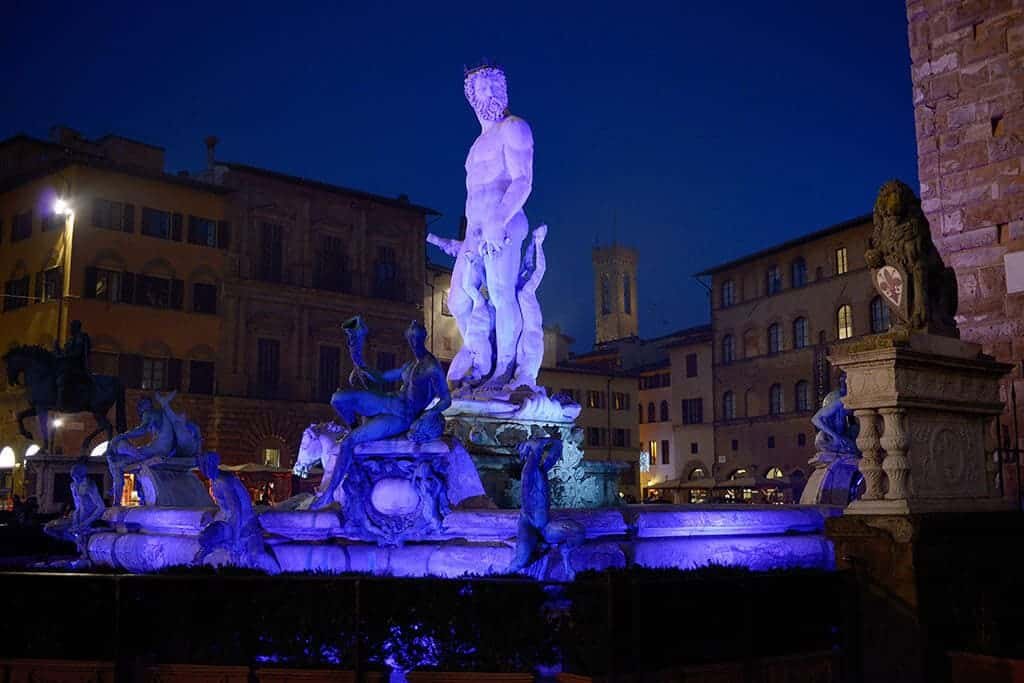
F-Light Festival, also known as Florence Light Festival, is a Christmas-season celebration of light, contemporary visual art and Florence’s historic architecture. The event turns monuments, bridges, churches, squares and other urban spaces into illuminated canvases, combining video mapping, projections, artistic lighting and festive decorations.
For the 2026–2027 Christmas season, the festival is scheduled to bring its distinctive evening atmosphere back to Florence from early December into early January. The event is traditionally promoted by the Municipality of Florence and organised by MUS.E, with installations designed to connect contemporary creativity with the city’s Renaissance and historic heritage.
The latest official Florence programme shows the scale of the Christmas lighting concept, with major installations extending beyond the historic centre into Florence’s neighbourhoods. Previous editions have included video mapping at Ponte Vecchio, Palazzo Vecchio and the Church of San Paolino, together with illuminated installations around Santa Maria Novella, San Lorenzo and Palazzo Medici Riccardi.
Enjoy Your Event Stress-Free with Italy Travelo
Whether you're traveling for a world-famous festival, live concert, cultural celebration, or business event, Italy Travelo helps simplify every step of your journey. Our team provides personalized travel assistance, allowing you to focus on creating lasting memories.
The detailed 2026–2027 artistic programme, individual projection subjects and complete installation map should be checked with the official event information when released.
Event dates
Festival dates: December 6, 2026 – January 4, 2027.
The 2026–2027 dates are currently listed for the Christmas edition, with the event taking place across Florence during the holiday period.
Typical evening hours: Previous official programming has presented installations from approximately 5:00 PM into the late evening, although individual locations can have different operating schedules.
Because F-Light uses multiple outdoor locations, visitors should check the official programme for the exact illumination hours of individual installations before visiting.
Visiting this event? Don’t miss out on these amazing activities and local experiences while you’re here.
Venue & event locations
F-Light is not held inside one conventional festival venue. It spreads across Florence, using major monuments, squares, streets, bridges and cultural sites as part of the exhibition environment.
Key locations used in recent official editions have included:
- Ponte Vecchio
- Piazza della Signoria and Palazzo Vecchio
- Church of San Paolino
- Piazza Santa Maria Novella
- Piazza San Lorenzo
- Palazzo Medici Riccardi
- Palazzo della Camera di Commercio
- Museo Novecento
- Museo degli Innocenti
- Ponte Santa Trinita
- Historic city gates and towers
- Selected locations in Florence’s five municipal districts
The main festival experience is concentrated around the historic centre, but the programme can extend into residential districts and other parts of the city.
Main event area: Florence Historic Centre, Florence, Tuscany, Italy.
Full holiday programme
The 2026–2027 programme has not yet been fully published. Based on the latest official Florence Lights Up programme, visitors can expect a combination of:
- Architectural video mapping
- Large-scale light projections
- Artistic lighting installations
- Illuminated historic monuments
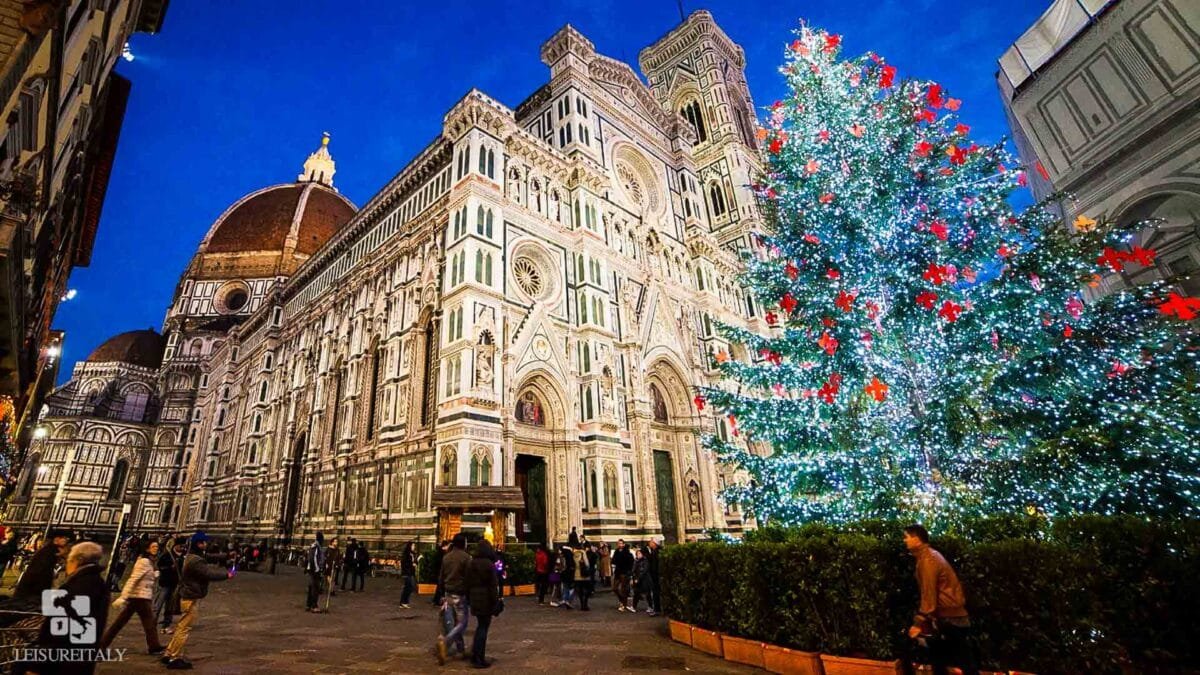
- Christmas trees and seasonal decorations
- Contemporary art projects
- Museum activities
- Educational workshops
- Guided experiences
- Cultural meetings
- Special performances
- Installations outside the historic centre
Recent official programming transformed landmark façades into visual surfaces where digital technology, light, architecture and Florentine heritage were brought together.
The programme is designed so visitors can experience the festival as a walking route through the city rather than as a single scheduled show.
Main attractions & highlights
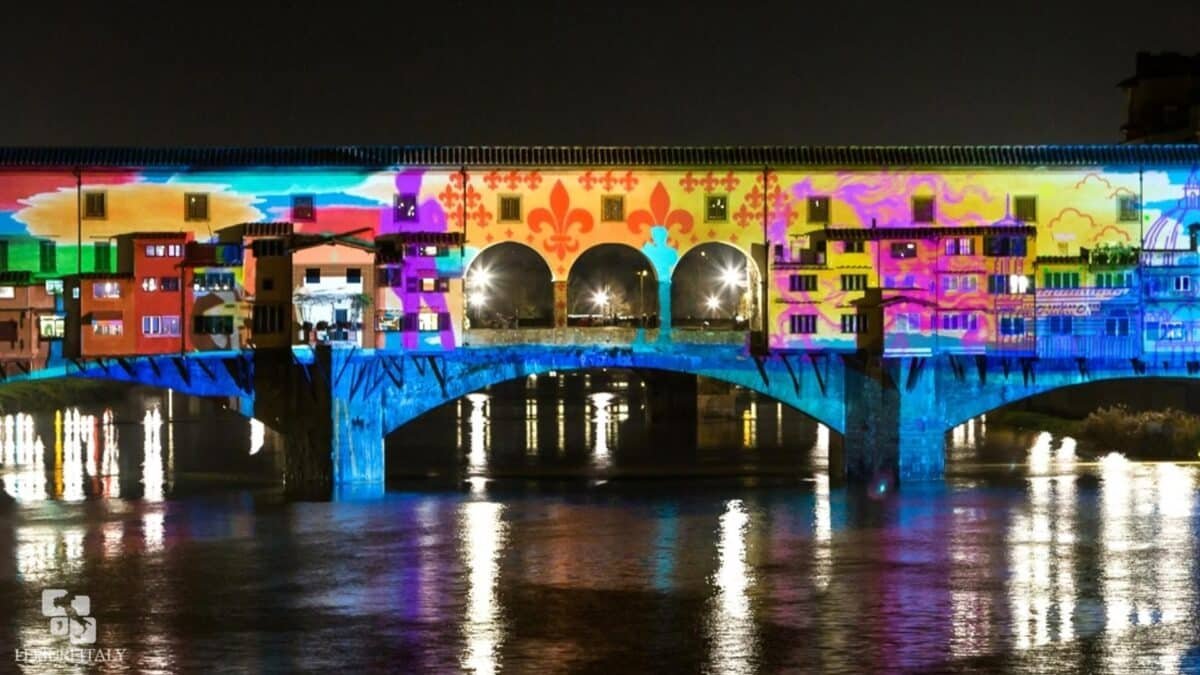
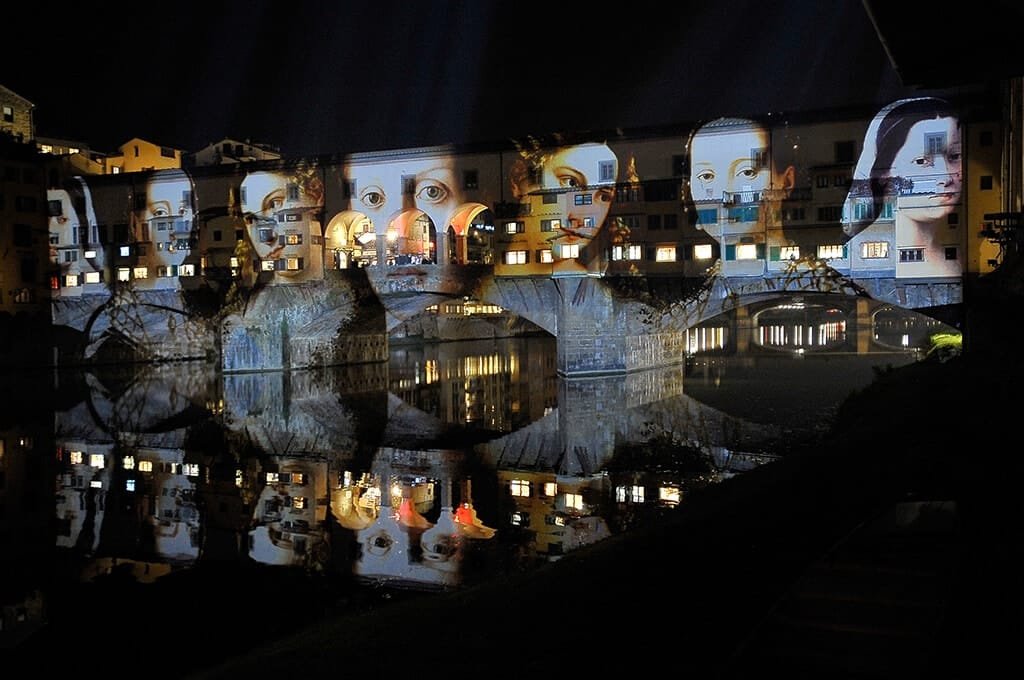
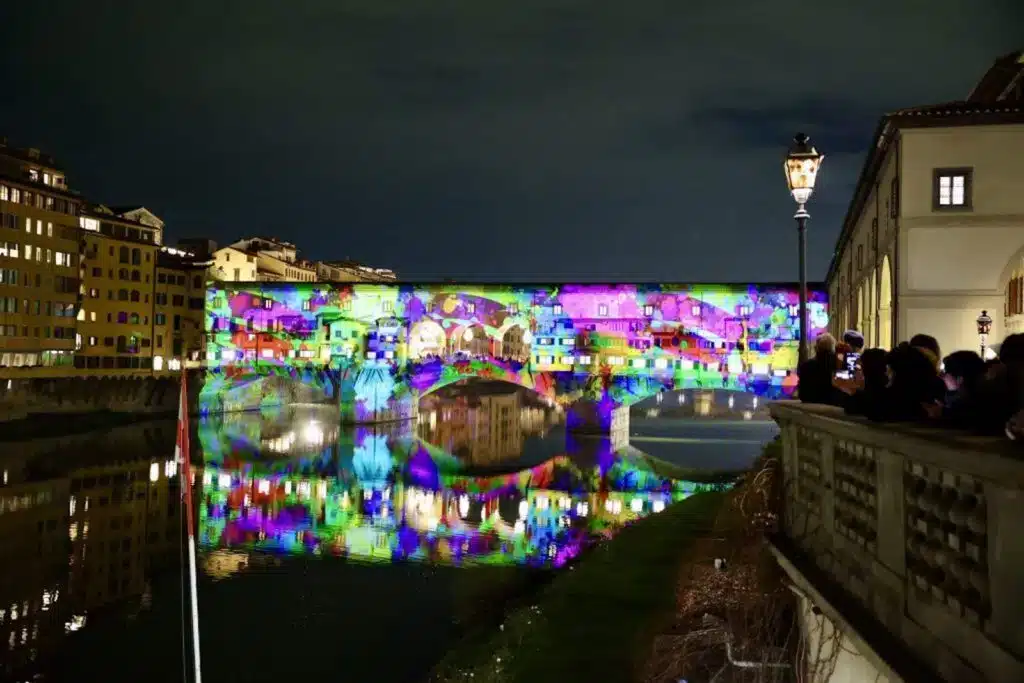
Ponte Vecchio: The historic bridge over the Arno has been one of the most recognisable F-Light projection locations, with video mapping used to create changing visual effects across the architecture.
Palazzo Vecchio: Florence’s famous civic palace has been used as a major projection surface, allowing contemporary light art to interact with one of the city’s most important historic buildings.
Santa Maria Novella: The area around the basilica has featured artistic lighting and large-scale Christmas installations in recent editions.
Palazzo Medici Riccardi: The Renaissance palace has also been included in the city’s wider light programme.
Historic towers and gates: Previous editions have illuminated structures such as Torre della Zecca, Torre di San Niccolò, Porta al Prato and Porta Romana.
Neighbourhood installations: F-Light has increasingly extended beyond the central tourist route, bringing artistic illumination to different districts of Florence.
Markets, decorations & themed areas
F-Light itself is primarily a light-art and cultural event rather than a traditional Christmas market. Its festive atmosphere works alongside Florence’s wider Christmas programme, including decorated streets, Christmas trees, seasonal shopping areas and holiday markets.
Recent Florence Christmas programming has included illuminated streets around central shopping areas, seasonal decorations and Christmas attractions throughout the city.
Visitors can combine an F-Light walking route with Florence’s Christmas market areas, especially around the central historic district. The precise 2026–2027 market programme should be checked separately because market dates and locations are organised independently from the light festival.
Events & entertainment schedule
The detailed 2026–2027 event schedule has not yet been fully announced.
F-Light programming in previous editions has gone beyond static lighting and projections, incorporating:
- Cultural meetings
- Museum activities
- Guided tours
- Light-focused workshops
- Educational activities
- Artistic performances
- Special Christmas events
- Temporary exhibitions
- Off-programme cultural activities
Previous official editions have included museum flashlight routes, artistic and educational workshops, scientific demonstrations and special cultural events connected with the theme of light.
Visitors should allow time for both the illuminated installations and any separately scheduled cultural activities.
Admission & ticket information
General admission: Free.
The main outdoor F-Light installations and projections are designed as free public experiences throughout Florence.
Visitors generally do not need a festival ticket to walk through the central outdoor installation areas. However, individual museum activities, guided experiences, exhibitions or special indoor events can have their own admission requirements.
For the 2026–2027 edition, any ticketed supplementary activities should be checked through the official programme once announced.
Special experiences & activities
F-Light provides a number of ways to experience Florence after dark. The central experience is an evening walking route linking illuminated buildings, bridges, squares and streets.
Special experiences associated with previous editions have included:
- Video-mapping shows on historic façades
- Artistic lighting installations
- Museum-based activities
- Guided cultural experiences
- Light-themed educational workshops
- Scientific demonstrations
- Temporary art projects
- Special Christmas performances
- Illuminated architectural landmarks
The festival has also been used to introduce permanent or longer-term lighting improvements to important Florentine monuments and public spaces.
Family & children’s activities
F-Light is suitable for families because much of the main experience takes place outdoors and does not require a formal ticket. Children can experience projections, changing colours, illuminated architecture and large-scale installations while walking through the historic centre.
Previous Christmas programming around Florence Lights Up has also included children’s activities, workshops and special family-oriented events.
Families should plan for walking between locations, evening temperatures and busy pedestrian areas. Strollers can be practical, although some historic streets and areas around monuments have uneven paving.
Event rules
Visitors should follow the normal rules for public spaces and cultural sites throughout the festival.
Respect the installations: Do not touch, climb or interfere with projection equipment, lighting structures or temporary artworks.
Keep pedestrian routes clear: Popular viewing areas can become crowded, particularly around major monuments.
Follow local instructions: Police, municipal staff, venue personnel and event staff may introduce temporary pedestrian controls or restricted areas.
Respect historic buildings: The festival takes place around protected cultural monuments, so visitors should follow site-specific rules.
Photography: Personal photography is generally suitable in public areas, but professional filming or commercial photography may require permission.
Children: Children should remain supervised, particularly near the Arno, busy streets and crowded viewing areas.
How to get there
Florence is well connected by rail, road and air, making it convenient for visitors arriving from elsewhere in Italy or from international destinations.
By train: Florence Santa Maria Novella is the principal railway station and is located within walking distance of many central F-Light locations.
By air: Florence Airport, Amerigo Vespucci, is the closest airport. Visitors can continue toward the city centre using public transport or taxi services.
By car: Driving into the historic centre is generally inconvenient because of restricted traffic areas and limited central parking. Visitors arriving by car should consider parking outside the restricted central zone and continuing by public transport or on foot.
On foot: Walking is one of the easiest ways to experience F-Light because many major installations are concentrated within Florence’s compact historic centre.
Public transport & parking
Florence’s central F-Light route is particularly well suited to public transport and walking.
Tram: Florence’s tram network connects the railway station and several areas of the city, providing useful connections for visitors staying outside the historic centre.
Bus: Local buses connect central Florence with neighbourhoods and districts where additional seasonal lighting installations may be located.
Rail: Santa Maria Novella station is the main transport hub for visitors arriving by regional or high-speed train.
Parking: Central parking is limited and traffic restrictions apply in parts of the historic centre. Visitors travelling by car should use authorised car parks outside restricted areas and continue toward the festival by public transport or on foot.
Recent official F-Light programming has included installations in several districts beyond the central tourist route, so visitors planning to see every location should check the current transport information before travelling.
Accommodation areas
Florence Historic Centre: The most convenient choice for visitors who want to walk between major F-Light installations, restaurants, museums and Christmas attractions.
Santa Maria Novella: A practical area close to the main railway station and within walking distance of many central sights.
Santa Croce: A lively historic neighbourhood with restaurants, cafés and easy access to central attractions.
San Lorenzo: Convenient for visitors interested in markets, food and the central historic district.
Oltrarno: Located across the Arno, this area offers access to Ponte Vecchio, Santo Spirito and other central attractions while providing a different neighbourhood atmosphere.
Outside the centre: Visitors seeking lower accommodation costs can stay farther from the historic centre and use tram or bus connections to reach central Florence.
Food, drinks & seasonal specialties
F-Light does not operate as a dedicated food festival, but the event takes place in the middle of Florence’s Christmas season, when restaurants, cafés, markets and food halls provide plenty of seasonal options.
Visitors can combine an evening light walk with traditional Tuscan dining, including:
- Florentine-style steak
- Ribollita
- Pappa al pomodoro
- Crostini and Tuscan antipasti
- Fresh pasta
- Local cheeses and cured meats
- Cantucci
- Panettone and other Christmas sweets
- Hot chocolate and winter drinks
- Tuscan wines
Mercato Centrale and other central food destinations can also be incorporated into a Christmas evening itinerary. Previous F-Light programmes have included the market among the illuminated and decorated areas of the city.
Accessibility
Because F-Light is primarily an outdoor urban festival, accessibility varies between locations.
Many installations in central Florence can be viewed from public streets and squares without entering a venue. However, historic paving, cobblestones, narrow pedestrian streets, crowds and bridges can present challenges for visitors with limited mobility.
Accessible planning: Check the current route before visiting and prioritise installations located in larger squares and accessible public areas.
Museums and indoor activities: Any museum-based or ticketed activity may have separate accessibility arrangements.
Public transport: Visitors with mobility requirements should check the current accessibility of individual tram and bus services before travelling.
The official programme should be consulted for the most current accessibility information for each location.
Best days & times to visit
The best experience is generally after sunset, when the projections and illuminated installations are fully visible.
Weekday evenings: Usually more comfortable for visitors who want to walk between installations with fewer crowds.
Early evening: A good option for families and visitors who want to see the main installations before the busiest period.
Later evening: Suitable for visitors who prefer a quieter atmosphere, although individual installation closing times should be checked.
Christmas holiday period: The city can be particularly busy, so visitors should allow additional time for walking between popular locations.
A two- to three-hour walking route can cover several major central installations, although visitors interested in museums, workshops or locations outside the centre should allow longer. The compact nature of central Florence makes it practical to combine F-Light with dinner, shopping and Christmas sightseeing.
Previous year’s highlights
The most recent official Florence Lights Up programme featured video mapping and lighting at Ponte Vecchio, Palazzo Vecchio and the Church of San Paolino, together with installations around Piazza Santa Maria Novella, Piazza San Lorenzo, the Chamber of Commerce and Palazzo Medici Riccardi.
The programme also extended beyond the historic centre, with seasonal lighting and installations appearing in Florence’s other districts. Museo Novecento, Museo degli Innocenti and other cultural locations were incorporated into the wider lighting programme.
Earlier F-Light editions have included artistic Christmas trees, illuminated historic towers and gates, museum activities, flashlight tours, scientific workshops and special cultural performances.
These previous highlights provide an indication of the festival’s format, but individual artists, projection themes and installation locations can change from one edition to another.
Official event information
Event: F-Light Festival / Florence Light Festival
2026–2027 dates: December 6, 2026 – January 4, 2027
Location: Florence, Tuscany, Italy
Main area: Florence Historic Centre
Admission: Free for the main outdoor installations
Promoter: Municipality of Florence
Organiser: MUS.E
Tourist contact: +39 055 000
Email: touristinfo@comune.fi.it
Official information: https://www.dolcevia.com/en/events/italy/f-light-festival-in-florence-at-christmas/
The official Florence tourism information should be checked for the final 2026–2027 installation map, individual projection times, special events and any changes to participating locations.
Video
Location
FAQ
What areas of the city are included in the festival light displays?
The illumination projects encompass the entire historic center, including major landmarks like the Ponte Vecchio and Piazza del Duomo. Additionally, the festival extends festive installations and decorated Christmas trees out into all five residential municipal districts across the city. This decentralized approach ensures that every neighborhood enjoys unique light displays throughout the entire winter holiday season.
Are the outdoor light installations and projections completely free to view?
All outdoor architectural video-mapping shows, street projections, and public light installations are entirely free for everyone to visit. Spectators can wander freely through the open plazas and historic squares without needing any ticket or advance reservation. Only specialized indoor museum workshops or guided night tours carry a small fee and require prior booking.
What are the typical evening hours when the lights are turned on?
The magical city-wide light displays and architectural projections activate every evening starting around twilight, typically around five o'clock. The illuminated journey remains fully active for pedestrians and visitors until late into the night, usually around midnight. These consistent evening hours provide ample time for families and late workers to experience the glowing monuments.
How can visitors with mobility needs navigate the illuminated walking routes?
The primary public squares, main bridge crossings, and wide pedestrian avenues in the historic center feature flat stone paving suitable for wheelchairs and strollers. Temporary ramps and accessible pathways are prioritized around major projection hubs to ensure smooth movement for all attendees. Visitors are encouraged to utilize well-lit central corridors where municipal accessibility standards are highest.
What is the best way to travel between the different light installations across Florence?
Walking remains the absolute best way to experience the festival, as most major monuments, bridges, and squares are located close together. For reaching suburban district installations or traveling quickly across the Arno River, the city operates extensive late-night tram and bus networks. Public transit schedules are often extended during the holiday season to accommodate evening crowds safely.

Leave a Reply