
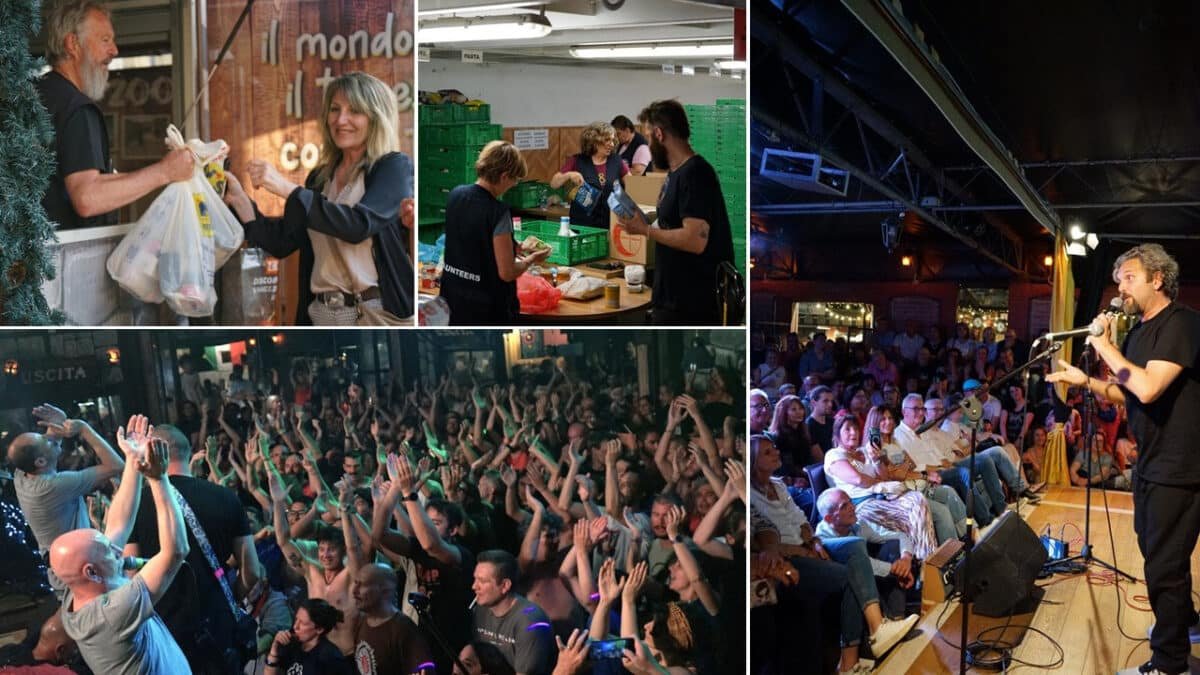
Music for Peace Philosophy and Humanitarian Mission
The festival operates under the profound founding philosophy of Music for Peace, an organization that views art, music, and cultural celebration as active instruments for global solidarity and humanitarian relief. By fusing vibrant live entertainment with grassroots political activism, the event transforms a traditional music festival into a powerful engine for material aid and social transformation. Every note played and every gathering organized serves a direct humanitarian purpose, reminding participants that culture and conscience are inextricably linked in the struggle for global justice.
The organization’s core humanitarian mission focuses on providing direct, unmediated aid to civilian populations suffering from war, poverty, and systemic oppression across international conflict zones. Without relying on bureaucratic intermediaries or commercial sponsors, Music for Peace ensures that 100 percent of collected resources go straight into the hands of those who need them most. This uncompromising commitment to transparency and direct action has turned the festival into a beacon of hope, proving that ordinary citizens can organize massive, effective relief operations through the power of collective community action.
Ultimately, this visionary ethos challenges the commercialized nature of modern entertainment, demonstrating that mass gatherings can be harnessed for profound altruistic good. The festival creates an immersive space where attendees do not just consume culture, but actively participate in global humanitarian relief, fostering a deep sense of global citizenship, empathy, and shared human responsibility that resonates long after the final concert ends.
Enjoy Your Event Stress-Free with Italy Travelo
Whether you're traveling for a world-famous festival, live concert, cultural celebration, or business event, Italy Travelo helps simplify every step of your journey. Our team provides personalized travel assistance, allowing you to focus on creating lasting memories.
Sampierdarena Headquarters and Logistics Hub
- The sprawling industrial headquarters in Sampierdarena serves as the nerve center for international humanitarian logistics and festival coordination.
- Massive indoor warehouses are temporarily converted into vibrant performance halls, debate stages, and giant sorting floors for humanitarian goods.
- Strategic dockside positioning allows heavy transport vehicles to load relief containers directly for international shipment following the festival.
- Industrial architecture provides a gritty, authentic backdrop that honors the working-class roots and maritime history of western Genoa.
- Specialized security and medical tents are strategically positioned across the compound to ensure guest safety and health throughout the event.
- Open-air courtyards accommodate bustling food kitchens, artisan craft markets, and interactive children’s play zones.
- Clear directional signage helps visitors navigate the expansive industrial facility safely between different stages and activity hubs.
- The venue’s central location near major transport links ensures seamless accessibility for thousands of arriving volunteers and community members.
Event Programme
- Event Date: May or June 2027 (Dates TBD)
- Event Duration: A multi-day international solidarity festival featuring continuous live musical performances, humanitarian debates, and community workshops spanning several consecutive days.
Visiting this event? Don’t miss out on these amazing activities and local experiences while you’re here.
Solidarity Entry Model and Goods Collection System
The festival’s signature solidarity entry model completely replaces traditional monetary ticketing with a direct goods-for-entry system that turns every attendee into an active humanitarian donor. Instead of purchasing passes, visitors bring specified essential items such as non-perishable food, medical supplies, school notebooks, or hygiene products to the festival entrance gates. This brilliant decentralized model transforms passive concertgoers into vital links in an international supply chain, harnessing the collective purchasing power of thousands of citizens for global relief efforts.
Volunteers stationed at the gates carefully inspect, catalog, and sort incoming contributions into massive industrial bins, ensuring everything is properly organized for future shipping containers. This transparent collection system allows attendees to see the immediate, tangible impact of their contribution before stepping foot onto the festival grounds to enjoy the music. By tying cultural entertainment directly to altruistic giving, the event redefines the relationship between artist, audience, and society, proving that generosity can be successfully scaled to mass festival proportions.
- Gate volunteers inspect and catalog incoming donations of non-perishable food items, pasta, and tinned goods.
- Essential medical supplies, first-aid kits, and pharmaceutical products are collected in designated sanitized storage zones.
- Educational materials, notebooks, pens, and school bags are gathered to support youth literacy projects abroad.
- Personal hygiene products, soaps, and sanitary items are bundled for distribution to vulnerable refugee populations.
- Clear daily entry lists published online inform attendees which specific humanitarian items are most urgently needed.
- Heavy-duty forklift trucks and pallet jacks operate continuously behind the scenes to move packed goods into storage.
- Friendly volunteer coordinators guide first-time visitors smoothly through the simple donation drop-off procedure.
- Giant public tally boards track the total volume of humanitarian supplies collected in real-time throughout the weekend.
Entry & Tickets
- How Tickets Are Sold: Tickets and cash admissions do not exist; instead, entry is gained by bringing humanitarian goods or donations directly to the festival gates.
- Admission Type: General admission is completely open to the public, welcoming all community members, families, and international solidarity advocates.
- Ticket Pricing: Free Admission ($0.00 minimum to $0.00 maximum range), as entry is entirely non-monetary and based on contributions of food, medical supplies, or essential items.
- Special Seating Options: Open communal seating areas and lawn spaces surround the main performance stages, encouraging an informal, accessible atmosphere for all attendees.
- VIP Options: No exclusive VIP sections are offered, as the festival proudly maintains a radically egalitarian environment where every participant shares equal status.
Independent Live Music and Global Soundscapes
- Diverse musical acts spanning roots reggae, ska, aggressive punk rock, and traditional folk music perform across multiple stages.
- International guest artists bring authentic global rhythms and traditional instrumentation from distant conflict and crisis zones.
- Local Genoese underground bands share headline billing with touring international solidarity musicians in a spirit of unity.
- Acoustic campfire jam sessions extend late into the night, featuring spontaneous collaborations between diverse global artists.
- High-decibel sound systems deliver crisp, powerful audio across vast industrial warehouse spaces and open-air courtyards.
- Dynamic vocal performances combine infectious dance grooves with trenchant political lyrics addressing global inequality.
- Dedicated sound engineers ensure optimal audio balance, allowing both whispered folk storytelling and heavy basslines to shine.
- Surprise guest appearances by legendary countercultural icons thrill long-time supporters and casual festivalgoers alike.
- The eclectic musical curation breaks down stylistic silos, proving that diverse sonic genres can unite under one banner of peace.
- Live-streaming provisions broadcast selected musical sets to international audiences unable to attend in person.
Civic Debates and International Crisis Forums
The intellectual backbone of the festival is forged through rigorous civic debates and international crisis forums that tackle the root causes of global conflict, poverty, and human displacement. Human rights lawyers, frontline activists, investigative journalists, and war survivors lead panel discussions addressing ongoing geopolitical crises and systemic global injustices. These forums provide critical spaces where abstract political theories meet firsthand eyewitness accounts, educating the public on complex international events that are often sanitized or ignored by mainstream media outlets.
Beyond foreign policy, these discussions examine domestic issues including labor rights, immigration policies, urban poverty, and the rising tide of nationalism across Europe. By encouraging active audience participation and open-floor question sessions, the forums empower attendees to think critically, question authority, and translate festival inspiration into long-term political organizing. This unwavering commitment to intellectual engagement proves that music festivals can—and should—serve as vital town squares for democratic resistance and social education.
Getting to the Event
- City and Country: Genoa, Italy
- Venue Name: Music for Peace Headquarter Logistics Hub, Sampierdarena
- Google Maps Address: Via Balleydier, 60, 16149 Genova GE, Italy
Global Street Food and Cultural Kitchens
- International culinary collectives operate bustling street food stalls offering authentic dishes from across the Mediterranean, Middle East, and Latin America.
- Traditional Genoese specialties, including freshly baked focaccia and savory vegetable tarts, are prepared on-site by local volunteers.
- Plant-based vegan and vegetarian kitchens showcase ethical, sustainable cooking methods that align with ecological stewardship principles.
- Communal long wooden tables encourage strangers to sit together, share meals, and engage in cross-cultural conversations.
- Fair trade coffee and organic botanical teas are served continuously to keep festival workers and visitors energized.
- Zero single-use plastics are permitted, with all food served exclusively on compostable plant-based plates and cutlery.
- Expert guest chefs host cooking demonstrations highlighting traditional recipes from communities affected by conflict.
- Dedicated dishwashing stations managed by environmental volunteers ensure rapid cleanup and waste reduction.
- The sale of international street food provides vital supplementary funds that directly cover festival operational overhead costs.
Artisanal Craft Markets and Fair Trade Stands
The bustling market lanes of the festival feature an eclectic array of artisanal crafts, independent book publishers, and fair trade solidarity stands from around the globe. Ethical merchants and cooperative groups offer handmade clothing, silver jewelry, recycled wood sculptures, and woven textiles created by marginalized artisan communities. Every item sold carries a story of economic empowerment, ensuring that artisans receive fair, living wages for their exceptional traditional craftsmanship without exploitative middleman markups.
Surrounding these craft stalls, radical bookstores and independent political publishers present a rich selection of critical literature, historical non-fiction, and underground zines. These spaces invite visitors to explore alternative economic models, environmental philosophies, and liberation struggles through the written word. This vibrant marketplace operates entirely on principles of mutual aid and ethical commerce, offering a refreshing antidote to the hyper-capitalist consumerism that dominates modern commercial retail.
Children’s Workshops and Creative Play Spaces
- Dedicated family areas provide safe, imaginative environments where children can engage in creative play and hands-on learning.
- Professional early childhood educators lead collaborative art workshops using recycled industrial materials and natural elements.
- Puppet theaters and storytelling circles introduce young minds to diverse global cultures, fairy tales, and traditions of peace.
- Open-air music and rhythm circles allow children to experiment with handmade percussion instruments and vocal harmonies.
- Face-painting stations transform enthusiastic kids into colorful jungle animals and mythical creatures for the day.
- Safe climbing structures and cooperative giant board games encourage physical activity and teamwork among participants.
- Parental rest zones equipped with comfortable seating allow families to relax while keeping a close eye on playing children.
- Special youth-led mural painting projects let kids leave their permanent artistic mark on the festival warehouse walls.
- Educational ecological games teach young participants about recycling, wildlife conservation, and urban sustainability.
- The inclusive family program ensures that parents with young children can fully participate in the weekend’s festivities.
Volunteer Network and Grassroots Organization
The beating heart of the entire operation is its vast, highly organized network of grassroots volunteers who handle everything from logistics and security to cooking and cleanup. Hundreds of dedicated individuals from Genoa and across Italy donate their time, energy, and professional skills year after year without receiving a single euro in compensation. This decentralized army of altruistic workers proves that large-scale cultural events can be successfully sustained through pure communal solidarity and voluntary cooperation rather than top-down corporate management.
Behind the scenes, weekly planning meetings and democratic assemblies ensure that every volunteer has a voice in shaping the festival’s operational strategies and humanitarian priorities. This empowering organizational model builds deep lifelong friendships and fierce community resilience, turning temporary event workers into a permanent social force for local and international activism. The volunteer network stands as a living testament to the extraordinary achievements possible when human beings unite behind a shared vision of peace and mutual aid.
- Hundreds of dedicated volunteers manage gate logistics, goods sorting, and site security around the clock.
- Specialized volunteer coordination teams provide comprehensive training briefings prior to the festival opening.
- Shared communal kitchens prepare hearty meals for the entire working crew throughout the multi-day event.
- On-site medical and first-aid volunteer squads ensure rapid response capabilities for minor injuries and health needs.
- Technical staging crews work tirelessly behind the scenes managing sound, lighting, and electrical infrastructure.
- Sanitation squads maintain immaculate environmental standards across all dining and warehouse zones.
- Volunteer interpreters facilitate smooth communication between visiting international delegations and local participants.
- Post-event teardown crews work efficiently to restore the industrial headquarters back to its normal operational state.
Guide
- Email: info@musicforpeace.it
- Phone Number: +39 010 857 2540
- Website: https://chefestival.it/
Zero-Profit Culture and Commercial Independence
The financial and operational architecture of the festival is built upon a strict zero-profit ethos and absolute independence from corporate sponsorship or institutional advertising. Every single euro generated through food sales, bar revenues, and minor merchandise offerings is meticulously reinvested directly into funding upcoming humanitarian shipping containers. By rejecting corporate money, product placements, and commercial branding, the organization maintains total artistic freedom and political integrity, ensuring that its message is never compromised by hidden corporate agendas.
This commercial independence allows the festival to remain a fearless, uninhibited platform for radical political discourse, anti-war mobilization, and uncompromising artistic expression. Sponsors and advertisers are replaced entirely by the collective goodwill of attending citizens, independent merchants, and cooperative worker associations. This revolutionary economic model serves as a shining global blueprint for how cultural institutions can thrive outside the suffocating grip of late-stage capitalism, proving that true freedom requires complete financial autonomy.
International Aid Missions and Direct Distribution
- Collected humanitarian goods are packed into standardized shipping containers and dispatched directly to international crisis zones.
- Trusted grassroots partner organizations on the ground in war-torn regions oversee safe, uncorrupted delivery to civilians.
- Medical convoys organized by Music for Peace frequently travel across European borders to deliver life-saving surgical supplies.
- Post-delivery documentation, photographs, and video reports are published online to provide complete transparency to donors.
- Long-term developmental projects funded by festival proceeds help build schools, clinics, and clean water wells abroad.
- Direct humanitarian relief missions have successfully reached refugee camps, disaster areas, and conflict zones worldwide.
- Volunteer delegates travel alongside cargo shipments to monitor distribution and assess ongoing community needs firsthand.
- Public accountability forums held after each mission detail every dollar spent and every box of aid delivered.
- The unbroken chain of direct distribution ensures that no donated item is ever lost, sold, or diverted by corrupt intermediaries.
Genovese Community Integration and Social Inclusion
The festival is deeply woven into the social fabric of Genoa, acting as a powerful unifying bridge across diverse neighborhoods, generations, and immigrant communities. Working-class families from Sampierdarena, university students from the historic center, and newly arrived migrant populations share physical and cultural space on completely equal terms. This intentional social inclusion breaks down xenophobic barriers, fostering genuine intercultural dialogue and building robust neighborhood solidarity against social fragmentation.
Special outreach initiatives actively invite marginalized residents, elderly citizens, and individuals experiencing homelessness to participate fully in the weekend’s culinary, musical, and intellectual offerings. By transforming an industrial warehouse zone into an inclusive civic living room, the festival demonstrates how local community organizing can successfully combat urban loneliness and social exclusion. Genovese citizens take immense pride in hosting this global beacon of peace, cementing the city’s historic identity as an open, welcoming Mediterranean port of solidarity.
Environmental Sustainability and Waste Reduction Practices
- Comprehensive waste sorting protocols are rigorously enforced across all food courts, backstage zones, and warehouse areas.
- Reusable stainless steel cups and plates eliminate single-use plastic consumption entirely from the festival grounds.
- Organic food waste from communal kitchens is composted locally to support regenerative urban gardening projects in Liguria.
- Energy-efficient LED lighting systems illuminate indoor stages and outdoor courtyards to minimize electrical power draw.
- Clear educational signage guides visitors on proper recycling habits and ecological stewardship throughout the site.
- Bicycle parking stations and public transit promotional campaigns encourage low-emission travel for local attendees.
- Upcycled art installations created from discarded industrial scrap metal decorate the entry gates and courtyards.
- Environmental activist groups host daily workshops addressing climate justice, zero-waste living, and water preservation.
- Post-festival site restoration guarantees that the industrial park is left pristine, clean, and entirely undamaged.
The Artist Solidarity Collective and Zero-Cachet Performances
The musical soul of the festival is anchored by the Artist Solidarity Collective, a remarkable community of international musicians, poets, and performers who donate their talents entirely free of charge. Rejecting standard commercial performance fees, these visionary artists step onto the festival stages driven solely by a shared commitment to humanitarian relief and anti-war advocacy. Their willingness to perform without financial compensation underscores the radical, altruistic spirit of the gathering, proving that true art transcends the transactional logic of the commercial music industry.
This zero-cachet model ensures that every resource generated by the community goes directly toward purchasing humanitarian supplies and funding international aid missions rather than lining celebrity pockets. In return, participating artists receive an intensely passionate, deeply appreciative audience and the rare satisfaction of knowing their music directly saves lives. This profound bond of mutual respect between creators and audiences creates an electric, emotionally charged atmosphere that makes every festival performance an unforgettable, transcendent experience of shared human solidarity.
Video
Location
FAQ
What is required to gain entry to the festival events?
Admission is completely non-monetary and requires bringing specified humanitarian goods, such as non-perishable food or medical supplies. Attendees drop off these essential items at the entrance gates to secure immediate access to the grounds.
Where does the festival take place each year?
Events are hosted at the expansive Music for Peace headquarters and industrial logistics hub located in Sampierdarena, Genoa. The venue features large indoor warehouse spaces and open courtyards designed for mass community gatherings.
What happens to all the humanitarian goods collected at the gates?
Volunteers meticulously sort, pack, and load all donated supplies into shipping containers for direct distribution to international conflict zones. The organization guarantees transparent, unmediated delivery without relying on corrupt bureaucratic intermediaries.
Are there food and drink options available on site?
International street food collectives, vegan kitchens, and traditional Genoese food stalls operate continuously throughout the event. All proceeds from the food and beverage sales directly support ongoing humanitarian shipping costs.
How can individuals participate beyond attending the concerts?
Visitors can volunteer their time to help with gate sorting, kitchen prep, site logistics, or administrative coordination during the event. Interested participants can sign up directly through the official website or contact the organizers via email.

Leave a Reply