
What to expect
A Town Built for Festivals: Carnevale di Larino is the most famous expression of a town that lives for celebrations. Larino is a historic municipality of about six thousand inhabitants in the province of Campobasso, Molise, anchored by a compact hilltop old town and two standout monuments, a first century Roman amphitheatre and the medieval Cathedral of San Pardo with its decorated Gothic portal and rose window. Visitors who have experienced it describe it as Italy as it once was, where festivals are either being planned or in full swing throughout the year, all staffed by the populace young and old. The carnival has characterized the history of the charming Molise town since 1974 and, according to local accounts, since 1955 in its earliest parade form, and has acquired an international reputation.
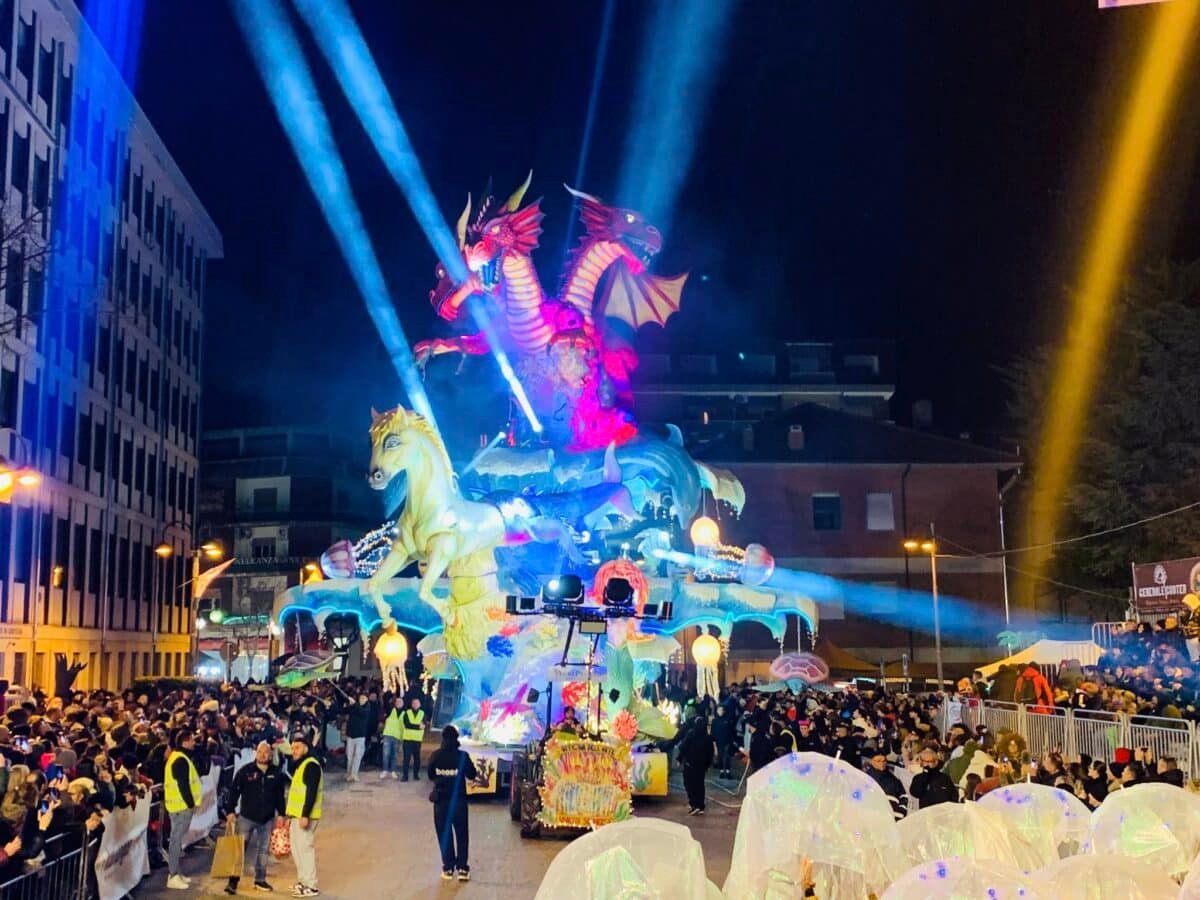
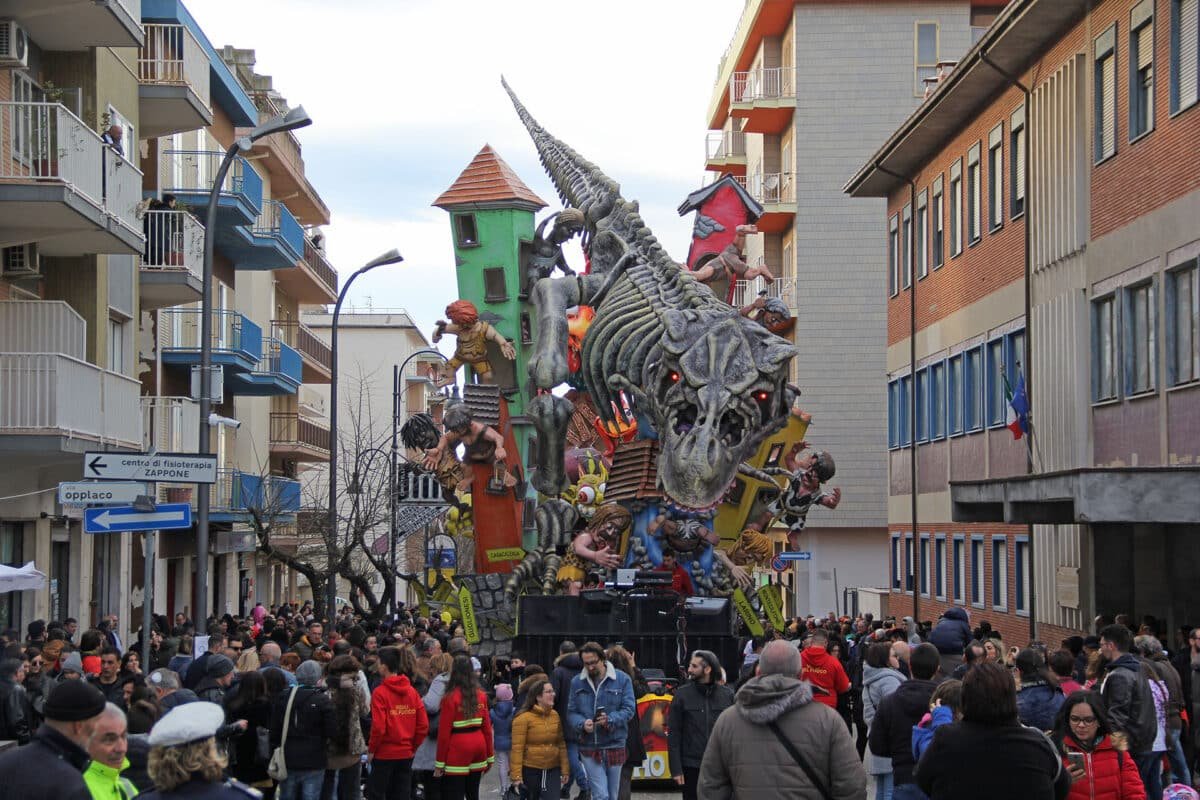
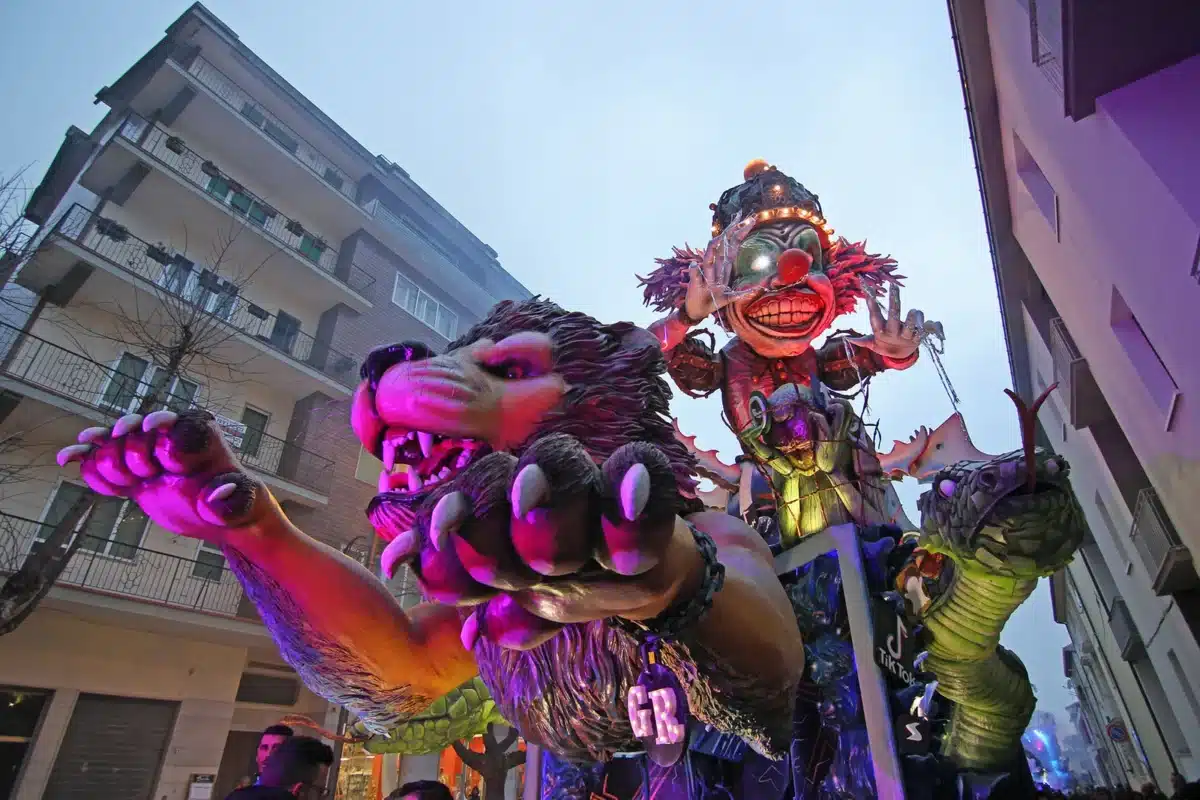
Handmade Giganti: What makes Larino unique in the panorama of Italian carnivals is that each float is made by hand by the citizenry. First made from whatever community members could find, after twenty years of parades a dedicated committee was formed to create the enormous animatronic floats the event is known for today. These are not rented professional structures but gigantic constructions built over months in community hangars, often featuring animatronic movements, satirical themes, colorful costumes, and elaborate storytelling. The sociopolitical commentary and satire is obvious and sometimes shocking in the design of many floats, accompanied by dozens of dancers and singers, creating a vibrant tapestry of color, music, and revelry.
Community Spirit: The carnival is completely non-commercial, completely spontaneous in spirit, and deeply woven from centuries of history and tradition. The town comes alive with sounds of music and laughter echoing the spirit of festivity that has captivated generations. Each float embodies a story or ancient event, and the entire event is staffed by volunteers who regularly check streets for debris, build costumes, and prepare choreographies, making visitors feel they have entered into every moment of preparation and parade.
Enjoy Your Event Stress-Free with Italy Travelo
Whether you're traveling for a world-famous festival, live concert, cultural celebration, or business event, Italy Travelo helps simplify every step of your journey. Our team provides personalized travel assistance, allowing you to focus on creating lasting memories.
Event dates
Scheduled Period: February 2027, exact dates to be announced. The organizing association indicates that the edition will take place within the traditional carnival window, with final dates confirmed closer to the event. The official app and website will publish the definitive program. For planning purposes, the event traditionally includes multiple parade days across two weekends with the main corso featuring I Giganti di Larino.
Visiting this event? Don’t miss out on these amazing activities and local experiences while you’re here.
Venue & event locations
Historic Center: The main venue is the historic center of Larino, with its maze of narrow ancient streets just large enough for Vespas, small delivery trucks, and parade floats, and its cobblestoned courtyard in front of Palazzo Ducale. The old town is marvelously preserved, restored after the earthquake in pastel colours echoing how homes looked two centuries ago, creating a stunning backdrop for carnival colors.
Parade Circuit: The giant float parades take place along a ring that winds through the old town and the more modern Piano San Leonardo area, starting near Via de Curtis and moving through central streets. The route passes by the Cathedral, Palazzo Ducale which houses municipal offices and a museum with artefacts from 500 BC and mosaic floors, the Bishop’s Palace, Galuppi Tower built in 1312 as part of a Franciscan monastery, and Villa Zappone, a liberty style home built on top of a classical bath house with mosaics featuring sea monsters.
Cultural Venues: The Civic Museum inside Palazzo Ducale, the museum devoted to ecclesiastical art, the permanent Igino Pilone photography galleries documenting town history, and the Roman amphitheatre built into a natural slope near the forum of ancient Larinum serve as cultural anchors where visitors can explore between parades.
Workshop Hangars: Outside the parade circuit, community hangars where animatronic floats are built serve as behind-the-scenes venues. Visitors with connections to Pro Loco can sometimes arrange guided tours to see months of work on papier-mâché masterpieces.
Full holiday programme
Float Preparation Phase: Months before the public events, associations begin design and construction. These hangars become community hubs where artisans, welders, painters, and choreographers collaborate. This long preparation is part of the holiday experience for locals and is occasionally open to visitors who want to understand the engineering behind animated giants.
Opening Celebrations: The programme traditionally opens with presentation of the carnival theme, blessing of floats, and small parades with children’s groups, masked groups, and marching bands. The air is filled with music and laughter as the town begins its transformation.
Main Corso of I Giganti: The centerpiece is the parade of I Giganti di Larino, enormous animatronic floats handcrafted by citizen groups. Each float is accompanied by dozens of dancers in elaborate costumes performing choreographed routines, singers, and live music. The parade moves slowly to allow animatronic movements, satirical details, and costume details to be appreciated. The event attracts thousands of guests from all over the world, despite Larino’s small population.
Dance and Music Program: Evening programmes include dance events, as referenced by dedicated dance sections on the official site, magic farm themed areas for families, music concerts, and spontaneous festivals. The town band, with musicians as young as seven or eight, performs in splendid form, sounding like an orchestra with much greater experience.
Closing and Awards: The programme concludes with award ceremonies for best float, best costume group, and satirical theme, followed by community dancing and farewell celebrations that keep the town in festive mood late into the night.
Main attractions & highlights
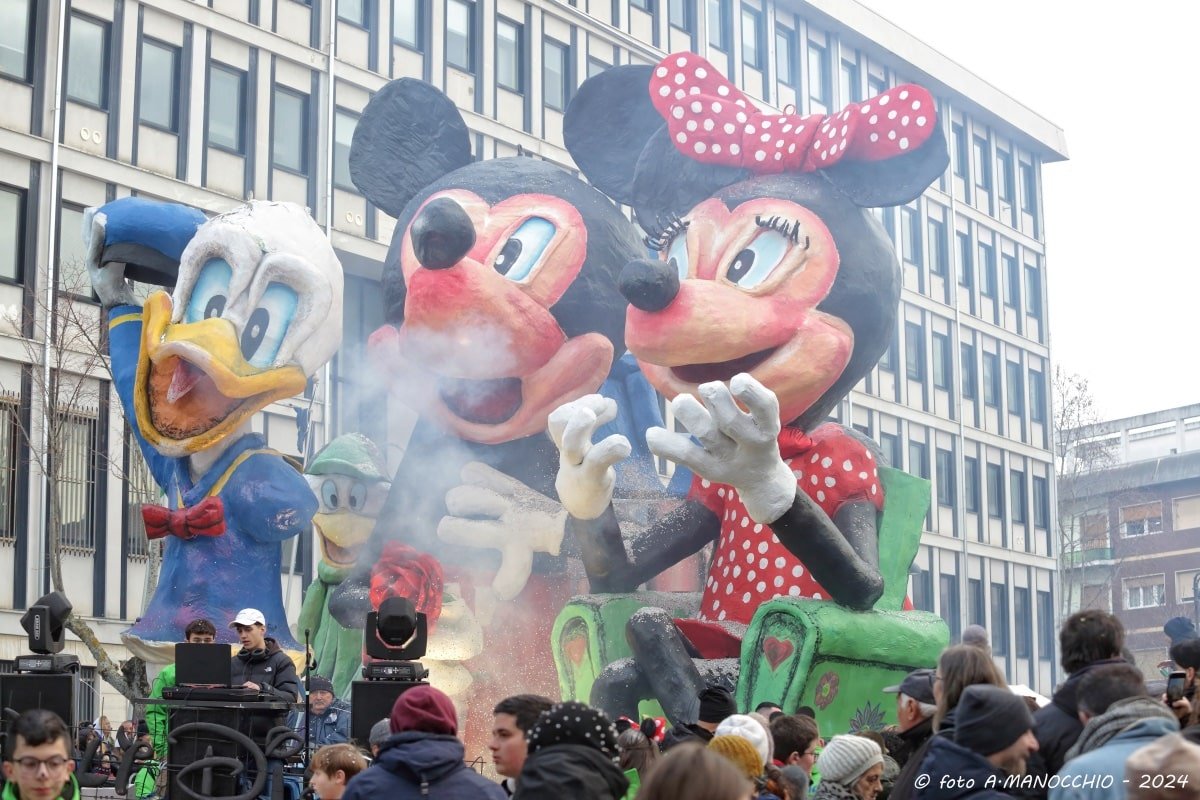
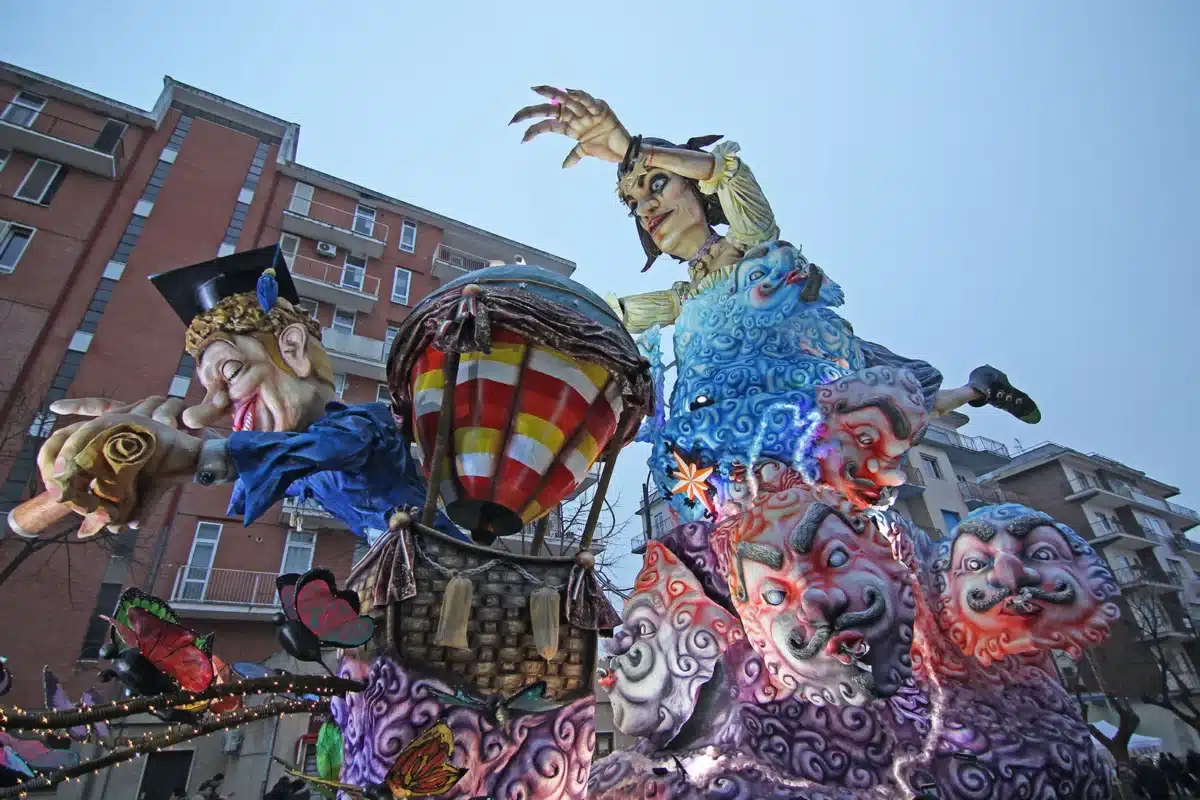
Gigantic Animatronic Floats: The floats are true works of art handcrafted by families who devote months to design and construction. Themes range from political satire, local stories, celebrations of popular culture, ancient events, and fairy-tale parodies, always with a touch of creativity that amazes every year. Believe it or not, these huge creations are animated with moving parts.
Handmade by Citizens: The international reputation comes from the fact that each float is made by hand by the citizenry, not by professional carnival companies. This creates authenticity and diversity, as each association brings its own style, humor, and technical innovation.
Colorful Costumes and Dance: A stunning array of colorful costumes accompanies each float, with choreographed dance groups performing along the route. The combination of moving giants and human choreography creates a layered spectacle.
Satirical Edge: The sociopolitical commentary and satire is a hallmark, with floats often portraying current affairs, local politics, and social phenomena with humor that is sometimes shocking but always rooted in community voice.
Fiftieth Anniversary Heritage: The carnival recently marked its fiftieth anniversary, celebrating half a century of tradition, artistry, and community spirit since its formal organization in the seventies, though roots go back to the fifties. This milestone showcased how a small town can maintain a major cultural event through volunteerism.
Markets, decorations & themed areas
Street Decorations: The historic centre is decorated with carnival banners, lights, and colorful installations. Balconies and windows become viewing boxes draped with colors. The town’s status as a town of festivals means decorations are elaborate and maintained by volunteers who regularly check streets for debris.
Artisan Areas: Around Palazzo Ducale and the cathedral square, small artisan markets sell handmade masks, costumes, and local products. These are not large commercial markets but community stands run by local families.
Themed Float Zones: Each float has its own themed area before and after the parade where the association presents its work, explains its satirical message, and interacts with visitors. Magic Farm is one such themed family area referenced in official materials.
Light Installations: During carnival period, evening light installations illuminate the medieval centre, highlighting the Gothic portal, rose window, and Roman ruins, creating a magical atmosphere that has attracted fifty thousand visitors for the Christmas Festival of Lights as well.
Events & entertainment schedule
Parade Schedule: The main events are the giant float parades along the central circuit, typically held in afternoon with encores and evening illuminations. Each parade lasts several hours due to size of floats and number of accompanying dancers.
Dance and Music: The official programme includes dance events, with workshops, competitions, and performances. Marching bands, folk groups, and modern music groups perform on stages set up in squares, including the courtyard of Palazzo Ducale which hosts summer festivals and cultural events.
Children’s Program: Morning programmes often feature children’s carnival where little ones can see floats close up, meet master float builders, and participate in costume contests, ensuring family engagement.
Community Events: Spontaneous festivals, contests, concerts, amateur theatrical presentations, and special presentations to honored citizens occur throughout the period, with possibilities ranging from Miss Molise pageants to classic car feasts dedicated to cinquecento cars and vintage motorcycles.
Admission & ticket information
General Admission: Access to street parades in the historic center is generally free, as the carnival is a community celebration. This aligns with most traditional Molise carnivals which are open to public.
Grandstand and Special Experiences: For prime viewing, some editions offer paid grandstand seating or special experiences. Based on recent editions, ticketed experiences for I Giganti di Larino have been priced around $43 per person for specific parade days with reserved seating. Pricing is managed through official partners and the official app.
Donations and Support: Visitors can support associations by purchasing official merchandise, food from community stands, or making donations to float builders, which helps cover costs of animatronic mechanisms, papier-mâché, and months of work.
Free for Children: Children often enter for free for morning viewings and can meet float builders, reflecting the family-oriented nature of the event.
Special experiences & activities
Meet the Float Builders: Arrange through Pro Loco a guided tour of hangars where enormous animatronic floats are built. Seeing the engineering of moving heads, arms, and satirical mechanisms reveals the ingenuity of citizen artists.
Photography with Giganti: The huge dimensions and animatronic features provide extraordinary photographic opportunities. The official app, created in collaboration with University of Molise, enhances experience with information on events and papier-mâché masterpieces, inviting participation.
Historic Tour Combination: Combine carnival with exploration of Larino’s Roman amphitheatre built at roughly same time as Rome’s Colosseum, the forum remains with mosaic floors, Villa Zappone built on classical bath house, and Palazzo Ducale museum. The town’s history includes Hannibal, Fabio Massimo, Sannite warriors, and the trial defended by Cicero involving Sassia.
Culinary Workshops: Participate in workshops on Molise cuisine, including handmade cavatelli, scattone, and local olive oils, offered by local agriturismi during festival period.
Night Illumination: Experience the historic centre after dark when lights illuminate the cathedral’s thirteen-section rose window, creating a magical backdrop for carnival revelry.
Family & children’s activities
Children’s Carnival: Morning programmes allow children to enter for free, see famous floats close up, meet master builders, and participate in costume parades. This educational aspect teaches traditional craftsmanship.
Magic Farm Area: A dedicated family area offers activities for younger children, including small rides, face painting, and interactive storytelling related to float themes.
Costume Contests: Children and families are encouraged to come in costume, with contests for most creative handmade costumes, reflecting the town’s emphasis on handmade artistry over purchased outfits.
Safe Viewing: The historic centre’s compact nature allows families to find safe viewing spots on side streets, balconies, and courtyard entrances, away from densest crowds while still enjoying animatronic details.
Event rules
Respect for Handmade Art: Floats are months of volunteer work. Climbing on floats, touching animatronic mechanisms, or interfering with dancers is prohibited. Respect barriers and instructions from association members.
Costume Guidelines: Costumes are encouraged but should not include offensive symbols or obstruct security checks. Masks that fully cover face may be asked to be lifted at entry points for safety.
Litter and Cleanliness: Larino prides itself on being pristine, with volunteer groups regularly checking streets for debris. Visitors are asked to use bins, avoid littering, and respect restored medieval buildings in pastel colours.
Traffic and Pedestrian Rules: Historic centre streets are narrow and become pedestrian during parades. Follow volunteer instructions, avoid blocking emergency routes, and respect private properties including Galuppi Tower which is a family home.
Photography: Photography is allowed and encouraged, but use of flash near animatronic mechanisms that may distract operators, and use of drones without permission over crowded parades, is prohibited.
How to get there
By Air: Nearest airports are Pescara, Naples, and Bari, each about two to three hours drive. From airports, rental car is most flexible as public transport to small Molise towns is limited.
By Car: Larino is located in province of Campobasso, Molise, accessible via A14 motorway exit at Termoli and then inland roads, or via SS87 from Campobasso. The town is described as a relatively short ride by car, bus, or train from Campobasso. Parking is organized outside historic centre.
By Train: Larino is on the Termoli to Campobasso railway line, with station near town center. Train service is limited, and timetables should be checked in advance as public transport timetables can be restrictive.
By Bus: Buses connect Larino with Termoli, Campobasso, and other Molise towns. During carnival days, extra services may operate but should be confirmed via local transport operators.
Public transport & parking
Parking: Parking areas are set up outside historic centre, with shuttle or walking access to parade circuit. Due to narrow ancient streets, parking inside old town is restricted to residents. Arriving early helps secure convenient parking.
Public Transport: Bus and train connections are available but infrequent, especially in evening after parades. Many visitors staying in Termoli, which is minutes from beach, drive or arrange group transfers.
Pedestrian Access: Once in historic centre, the entire event is walkable. The old part is a maze of narrow ancient streets just large enough for Vespas and small delivery trucks, so comfortable shoes are essential.
Accessibility: Cobblestones and slopes can be challenging for those with mobility issues. Main squares like Piazza Duomo and courtyard of Palazzo Ducale are more accessible than narrow side alleys.
Accommodation areas
Historic Center: Small B&Bs, guesthouses, and apartments inside old town offer immersive experience with balcony views of parades. Superb little restaurants mixing culinary art with humanity are located here, with breakfasts often described as almost like brunch.
Piano San Leonardo – New Town: The more modern area offers amenities, first class hotel Campitelli Due, hospital, and easier car access. It is within walking distance to historic centre and hosts some carnival services.
Termoli Coast: Termoli, minutes from beach, offers larger hotels, seaside resorts, and more frequent transport, popular for visitors combining carnival with coast. Many visitors stay in Termoli and drive to Larino for parades.
Agriturismi Surroundings: Surrounding countryside offers agriturismi and wellness for sight lodges in agricultural sector, offering quiet retreats after festive days, with production activities mainly in olive and wine sectors.
Food, drinks & seasonal specialties
Molise Cuisine: Local specialties include cavatelli pasta, scattone wine, caciocavallo cheese, ventricina spicy salami, and olive oils from ancient groves. During carnival, fried sweets such as chiacchiere, castagnole, and calzoni are abundant.
Community Food Stands: Food stands run by associations offer traditional dishes prepared by local families, with proceeds supporting float construction. These stands provide authentic taste of Molise home cooking rather than commercial fast food.
Wine and Hospitality: The area around Larino produces Tintilia, a native red grape, and Falanghina white wines. Hospitality is highlighted as a core value, with friendly and kind people offering food and stories.
Carnival Sweets: Traditional carnival sweets are shared among parade participants and visitors, creating convivial atmosphere where culinary art mixes with humanity and community pride.
Accessibility
Terrain: Historic centre has cobblestones, slopes, and narrow streets that can be slippery. While main squares and Palazzo Ducale courtyard are more accessible, some mural and float viewing areas require steps.
Crowds: Parades attract thousands of guests from all over world, creating dense crowds along circuit. Early arrival helps secure accessible viewing spots with less crowding.
Facilities: Recent restoration after earthquake has improved street furniture and services, but cleanliness and facilities still need improvement in some areas according to visitor reviews.
Assistance: Pro Loco volunteers, including highly kind guides, often assist visitors with mobility issues and can arrange guided tours that avoid steepest sections, showcasing cathedral, Palazzo Ducale, amphitheatre, and museum.
Best days & times to visit
Parade Days: The main parade days featuring I Giganti are the most spectacular, with afternoon parades offering best light for photography of colorful costumes and elaborate floats, and evening illuminations creating magical atmosphere.
Early Arrival: Arriving early in day allows exploration of Roman amphitheatre, cathedral with its beautiful rose window with thirteen sections, Palazzo Ducale, and Galuppi Tower, plus chance to see float preparations and meet builders.
Evening Atmosphere: Evenings offer dance events, music concerts, and light installations in historic centre, with spontaneous festivals continuing late. The town’s status as town of concerts and festivals means something is happening almost every night.
Combining with Other Festivals: Larino is also famous for Festival of San Pardo with over one hundred cattle-drawn carts covered in handmade flowers pulled by pairs of pure white oxen, and Christmas Festival of Lights that has attracted fifty thousand visitors, so combining carnival visit with exploration of these traditions provides deeper understanding.
Previous year’s highlights
Fiftieth Anniversary: The recent edition marking fiftieth anniversary showcased stunning array of colorful costumes and elaborate floats, each embodying a story or ancient event, woven from centuries of history and tradition, celebrating half a century of artistry and community spirit.
Giganti Parades: Highlights included parades of enormous animatronic floats built by citizenry, accompanied by dozens of dancers and singers, with satirical themes that captured local and national attention, attracting thousands of guests from all over world to a town of roughly eight thousand people.
Community Recognition: Visitor reviews emphasized that town is pristine, staffed by populace young and old, with town band in splendid form, remarkable annual events, Roman era amphitheatre, Palazzo Ducale, and unforgettable collection of images by master photographer Igino Pilone, describing it as Italy as it once was.
International Reputation: The carnival’s international reputation was confirmed by coverage noting that each float is made by hand by citizenry, with huge creations that are animated, and by participation of exchange students and Erasmus groups who assisted colourful shows and experienced carnival in small Italian town setting.
Official event information
Official Name: Carnevale di Larino – I Giganti di Larino
Location: Larino, Province of Campobasso, Molise, Italy
Official Website: https://www.carnevaledilarino.com/
Contact Phone: +39 347 711 6400
Contact Email: associazionelarinella@gmail.com
Organizer: Associazione La Rinella and Comune di Larino in collaboration with University of Molise
Venue: Historic center streets, Via de Curtis, Piazza Duomo, Palazzo Ducale courtyard, and surrounding hangars
History: Since 1974 formally, with roots from 1955, marking its fiftieth anniversary recently, characterized by enormous animatronic floats handmade by citizenry
App: Carnevale di Larino official Android app enhancing experience with information on events and papier-mâché masterpieces
Video
Location
FAQ
What makes Carnevale di Larino different from other Italian carnivals?
Larino is unique because each gigantic animatronic float is made by hand by the citizenry over months in community hangars, not by professional companies, creating authentic satirical art that reflects local voice. The town of about eight thousand inhabitants attracts thousands of international guests for its parade of I Giganti, where enormous animated constructions are accompanied by dozens of dancers and singers. The event is completely community-staffed, with volunteers building floats, performing in bands with musicians as young as seven, and maintaining pristine streets, offering Italy as it once was.
Do I need a ticket and where is the best place to watch the parades?
Street parades through the historic center are generally free to watch, as the carnival is a community celebration, while some editions offer paid grandstand seating for prime views of I Giganti with tickets around forty-three dollars per person. The best viewing is along the central circuit near Palazzo Ducale, Cathedral square, and Via de Curtis where floats move slowly to showcase animatronic details. Arriving early allows you to explore the Roman amphitheatre and cathedral before securing a spot, and the official app provides real-time parade information.
Is the carnival suitable for families with children?
The carnival is very family-friendly with dedicated children's programmes in the morning where little ones can enter for free, see famous floats close up, and meet master float builders. Areas like Magic Farm offer activities for younger children, and costume contests encourage families to come in handmade costumes. The slow-moving animatronic floats and choreographed dancers fascinate children, while the historic centre's maze of narrow streets provides safe viewing spots away from densest crowds.
How do I reach Larino and where should I stay?
Larino is in Molise, reachable via A14 motorway exit at Termoli then inland, or via train on the Termoli-Campobasso line with station near town center, though public transport timetables are limited. Driving or arranging group transfers is most flexible, with parking outside the historic centre and walking access to parades. Accommodation includes superb B&Bs in the historic centre with magnificent landscape and brunch-like breakfasts, first class hotel Campitelli Due in new town, and seaside hotels in Termoli minutes from beach.
What else can I see in Larino beyond the carnival?
Beyond carnival, Larino offers a remarkably preserved medieval centre, a first century Roman amphitheatre built into a natural slope, a forum with mosaic floors, Villa Zappone built on a classical bath house, Galuppi Tower from 1312, Palazzo Ducale with museum housing artefacts from 500 BC and Igino Pilone photography galleries, and Cathedral of San Pardo with decorated Gothic portal. The town is also famous for Festival of San Pardo with over one hundred flower-covered ox-drawn carts, Christmas Festival of Lights, and culinary traditions that mix art with humanity, making it worthy of UNESCO consideration according to visitors.

Leave a Reply