



Qué esperar en 2027
The Palio di Oria is a major medieval historical re-enactment in Oria, Puglia, centred on the legacy of Emperor Frederick II and the traditional competition between the city’s four historic districts. The festival combines a grand historical procession, medieval performances, flag-waving, music, chivalric displays, cultural events and the Torneo dei Rioni.
The 2027 edition is expected to continue the established programme across July and August, with activities taking place in the historic centre, public squares, Parco Montalbano, Piazza Lorch and the Torneo field. The official festival describes the event as a celebration featuring hundreds of costumed participants representing the Swabian imperial court.
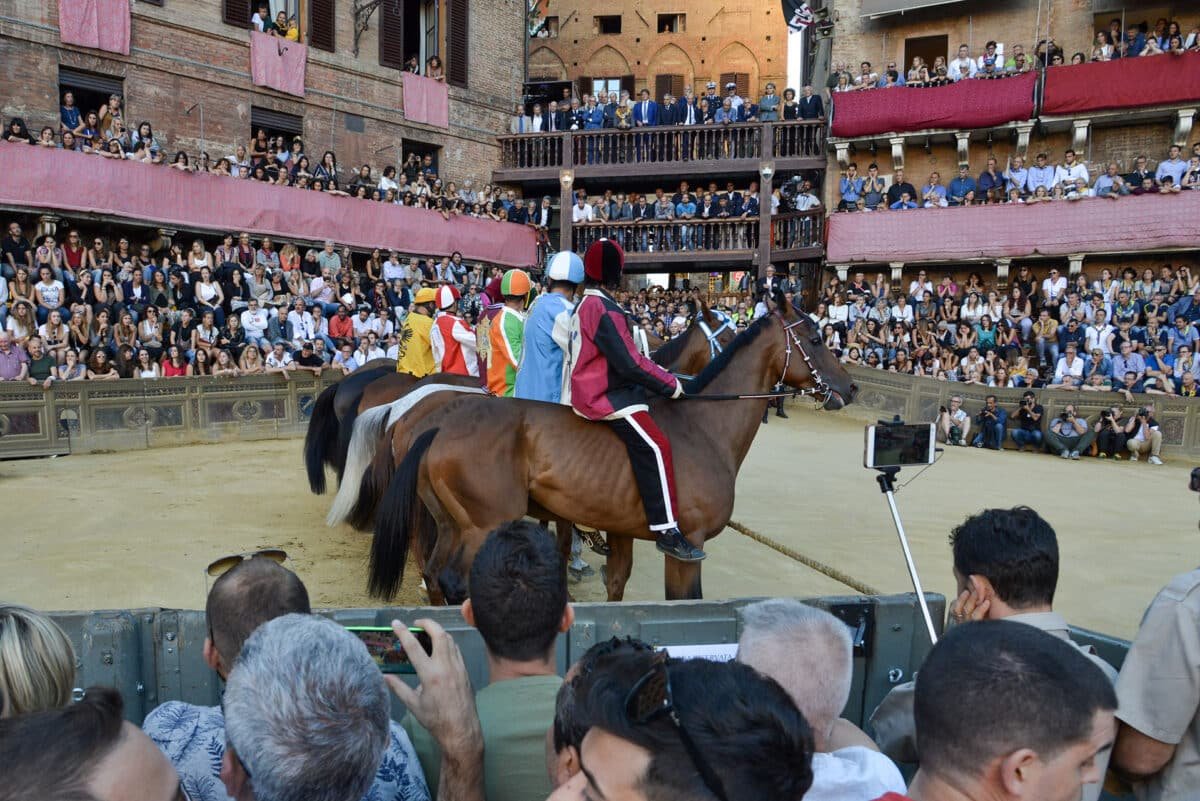
The four competing districts are Castello, Judea, Lama and San Basilio. Each district has its own colours, traditions, athletes and supporters, creating a strong neighbourhood identity throughout the festival.
Disfruta de tu evento sin estrés con Italy Travelo
Tanto si viajas para un festival de fama mundial, concierto en vivo, celebración cultural o evento de negocios, Italy Travelo te ayuda a simplificar cada paso de tu viaje. Nuestro equipo ofrece asistencia personalizada para viajar, permitiéndote centrarte en crear recuerdos duraderos.
Fechas de los eventos
The Palio di Oria 2027 is planned for July and August 2027 (Dates TBD).
The detailed 2027 programme and exact calendar dates have not yet been announced by the official organisers. The festival traditionally develops over several weeks, with cultural activities and district events leading towards the historical procession, presentation of the Palio and Torneo dei Rioni.
Visitors should check the official Palio di Oria website as the 2027 programme is released.
¿Vas a visitar este evento? No te pierdas estas increíbles actividades y experiencias locales mientras estés aquí.
Sedes y lugares del festival
The festival uses several historic and public locations around Oria.
Centro histórico: The medieval centre provides the setting for historical re-enactments, cultural activities, food experiences, performances and Notti Federiciane.
Piazza Lorch: A major performance and presentation location used for flag-waving events and the ceremonial presentation of the Palio.
Parco Montalbano: Hosts historical and ceremonial activities, including medieval-themed performances and the investiture traditions.
Basilica Cattedrale di Oria: Used for the solemn blessing of the Palio.
Campo del Torneamento: The principal arena for the Torneo dei Rioni, where the four districts compete in the historical tournament.
City streets: The Corteo Storico di Federico II moves through the decorated streets of Oria before reaching its ceremonial destination.
Programa cultural completo
The 2027 programme is expected to include the main cultural traditions associated with the Palio di Oria.
- Corteo Storico di Federico II
- Torneo dei Rioni
- Cerimonia di Presentazione del Palio
- Notti Federiciane
- Torneo degli Sbandieratori
- Medieval-themed performances
- Historical combat demonstrations
- Flag-waving and musical performances
- Medieval market activities
- Traditional crafts
- Medieval food experiences
- District celebrations
- Athlete presentations and blessings
- Chivalric ceremonies
- Music, dance and theatrical performances
- Fire performances and street entertainment
The latest published programme demonstrates how the festival combines formal historical ceremonies with entertainment, food, crafts and interactive experiences throughout the city.
Tradiciones y actuaciones destacadas
Corteo Storico di Federico II
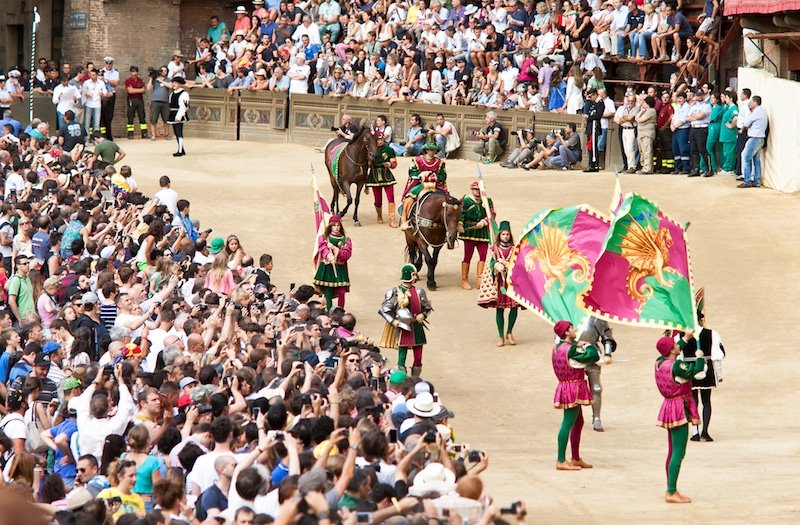
The historical procession recreates the atmosphere of the court of Frederick II. Costumed participants represent nobles, ladies, knights, crusaders, archers, musicians, dancers, jesters, standard-bearers and other medieval figures.
Sbandieratori e Musici
Flag-wavers and musicians are an important part of the Palio tradition. The festival programme includes both local performances and competitive flag-waving activities.
Medieval combat
Historical combat and chivalric demonstrations recreate the atmosphere of medieval tournaments, with armed knights using period-inspired weapons and protective equipment.
Giullari and performers
Jesters, acrobats, fire performers and other entertainers contribute to the medieval atmosphere during the public celebrations.
Four Rioni
Castello, Judea, Lama and San Basilio form the four districts competing for the Palio. Their colours, athletes and supporters are central to the festival’s identity.
Aspectos históricos y patrimoniales
The Palio di Oria is closely connected with the historical presence of Frederick II in Oria. According to the festival’s historical material, Frederick II stayed in the city while awaiting his future bride, Isabella II of Jerusalem.
The tradition is based on the tournament announced by Frederick II for the four districts of Oria. The historical re-enactment presents this medieval connection through costumes, processions, ceremonies and the Torneo dei Rioni.
The Corteo Storico is one of the central heritage elements of the festival. Large numbers of costumed participants recreate the imperial court, including nobles, knights, archers, crusaders, musicians, dancers, jesters and other historical characters.
The Palio has been organised as a modern historical re-enactment since the 1960s and has developed into one of Oria’s defining cultural traditions. The official historical archive records the competition between the four Rioni and its changing winners across the decades.
Calendario de eventos y actividades
The exact 2027 calendar is not yet published, but the programme traditionally develops through several stages.
Opening cultural activities
The festival period begins with cultural performances, historical presentations, district activities and medieval-themed events.
Flag-waving programme
Sbandieratori and musicians perform in public squares, with local groups presenting choreographies and competitive routines.
District ceremonies
The four Rioni organise ceremonies and presentations for their athletes, creating a build-up to the main tournament.
Notti Federiciane
The historic centre becomes an evening medieval setting with food routes, interactive activities, re-enactments, dance, music, combat demonstrations, flag-wavers, jesters and a medieval market.
Procesión histórica
The Corteo Storico di Federico II moves through Oria with a large cast of historical characters before reaching its ceremonial location.
Presentation of the Palio
The herald reads the traditional tournament proclamation associated with Frederick II before the Palio is presented to the city.
Torneo dei Rioni
The four districts compete in the main historical tournament, combining chivalric displays with athletic challenges.
Tipos de entradas y opciones de entrada
2027 ticket prices have not yet been announced. The following figures are based on the latest published edition and are provided as previous-edition references.
Presentation of the Palio: Previous-edition full ticket approximately $5.85, reduced ticket approximately $3.51, with children under 3 admitted free without a seat.
Torneo dei Rioni central grandstand: Previous-edition full ticket approximately $29.25, reduced ticket for children aged 3–10 approximately $17.55, with children under 3 admitted free without a seat.
Torneo dei Rioni lateral grandstand: Previous-edition full ticket approximately $21.06, reduced ticket for children aged 3–10 approximately $11.70, with children under 3 admitted free without a seat.
The official programme indicates that many outdoor cultural activities are part of the wider public festival, while the principal presentation and tournament events can have separately ticketed seating.
Visitas guiadas y experiencias culturales
The Palio di Oria is primarily experienced through public historical performances rather than conventional guided tours.
Visitors can explore the historic centre during Notti Federiciane, where medieval scenes, food routes, performances, craft demonstrations and historical characters create an immersive environment.
The historical procession provides another cultural experience, allowing visitors to see the imperial court recreated through costumes, music, banners and theatrical movement.
The medieval market also offers opportunities to observe traditional crafts and demonstrations of handmade objects.
Ceremonias y celebraciones especiales
Blessing of the Palio
The Palio is traditionally blessed in the Basilica Cattedrale di Oria in a formal ceremony involving representatives of the four Rioni.
Athlete blessings
The individual districts organise ceremonies connected with their athletes before the main tournament.
Ceremony of Presentation of the Palio
The historical procession concludes at Piazza Lorch, where the herald reads the tournament proclamation associated with Frederick II and the Palio is ceremonially presented to the city.
Investiture of the Knight
The programme also includes a medieval-style knight investiture, recreating the ceremonial appointment of a worthy squire as a knight.
Normas del festival
Visitors should follow all instructions provided by the Pro Loco di Oria, venue staff, security personnel and event organisers.
Spectator areas: Visitors should remain within designated public and seating areas during the tournament and historical performances.
Restricted areas: Spectators should not enter the tournament field, performer areas or other restricted zones.
Fotografía: Visitors should follow any instructions concerning professional photography, filming and restricted access.
Hijos: Children should be supervised around horses, weapons, combat demonstrations and crowded public areas.
Safety: Historical weapons, fire performances and tournament equipment are handled by authorised participants and performers.
The organisation may introduce additional safety and crowd-management measures depending on individual events and venue conditions.
Cómo llegar
Oria is located in the province of Brindisi in Puglia and is accessible by road and rail.
En coche: Oria can be reached through the regional road network connecting it with Brindisi, Francavilla Fontana, Manduria and other towns in Puglia.
En tren: Oria has a railway station served by regional services, providing connections with other towns in the area.
Por aire: Visitors arriving internationally can use airports serving the wider Puglia region, with Brindisi Airport being the closest major airport.
Centro histórico: Visitors attending events in central Oria should allow additional walking time because some activities take place within historic streets and pedestrian areas.
Transporte público y aparcamiento
Local and regional transport can be used to reach Oria from nearby towns, while visitors arriving by car should plan parking before entering the busiest festival areas.
Rail: Oria railway station provides an alternative to driving for visitors travelling from nearby Puglia destinations.
Transporte local: Regional bus services connect Oria with surrounding towns.
Aparcamiento: The official Palio website provides dedicated information about parking areas for visitors. Visitors should use authorised parking areas rather than attempting to drive into restricted historic-centre zones.
Crowd management: Temporary road restrictions may be introduced during processions and major evening activities.
Zonas de alojamiento
Oria historic centre: The most convenient option for visitors who want to be close to the medieval streets, Piazza Lorch, the Cathedral and central cultural activities.
Parco Montalbano area: Convenient for visitors interested in activities taking place around the park and nearby historic locations.
Oria railway station area: Suitable for visitors arriving by train and looking for straightforward transport connections.
Brindisi: A useful wider accommodation base for visitors who want access to a larger selection of hotels while remaining within the province.
The official Palio website maintains information about accommodation structures and tourism services associated with the event.
Gastronomía y especialidades tradicionales
Food is an important part of the wider Palio experience, particularly during Notti Federiciane and medieval-themed dinners.
The historic centre can feature food routes and interactive gastronomic experiences, while individual districts may organise medieval-style dining events.
Puglian cuisine: Visitors can explore regional specialties based on local vegetables, pasta, olive oil, bread, cheeses and traditional meat dishes.
Local products: Oria and the surrounding Salento area are known for products associated with Puglian agriculture and Mediterranean cuisine.
Medieval dining: The festival’s medieval dinner experiences recreate the atmosphere of historical communal meals while incorporating local culinary traditions.
Accesibilidad
The Palio takes place across historic streets, public squares, parks and an outdoor tournament field. Accessibility can therefore vary considerably between individual locations.
Visitors with reduced mobility should consider the historic-centre streets, uneven surfaces, crowds and temporary barriers that may be present during major performances.
Accessible seating or specific arrangements may vary between individual ticketed events. Visitors requiring assistance should contact the organisers before attending.
Official organiser: Pro Loco di Oria APS
Correo electrónico: info@paliodioria.net
Teléfono: +39 0831 845939
Las mejores experiencias culturales
Corteo Storico di Federico II: Experience the large-scale historical procession featuring nobles, knights, archers, musicians, dancers and other medieval characters.
Notti Federiciane: Explore the historic centre transformed into a medieval-themed environment with food, crafts, performances and historical re-enactments.
Torneo dei Rioni: Watch the four districts compete in the main chivalric tournament.
Palio presentation: Experience the ceremonial proclamation and presentation of the Palio at Piazza Lorch.
Sbandieratori: Watch traditional flag-waving and musical performances by local groups.
Medieval market: Browse demonstrations and displays connected with historical crafts and handmade objects.
Cathedral ceremony: Attend the solemn blessing of the Palio and experience one of the festival’s principal ceremonial traditions.
Aspectos destacados de años anteriores
The latest published edition featured a broad programme of cultural and historical activities beginning with theatrical and musical events and continuing with flag-waving, medieval dinners, district ceremonies and historical re-enactments.
The programme included Notti Federiciane in the historic centre, featuring gastronomic routes, medieval market activities, dance, courtly combat, flag-wavers, musicians, jesters, acrobats and fire performers.
The Corteo Storico di Federico II featured approximately one thousand costumed participants representing the imperial court, while the Torneo dei Rioni brought together the four districts in the principal tournament.
The latest official Albo d’Oro records Rione San Basilio as the most recent winner before the current edition, while Rione Lama has also recorded recent victories in the competition’s modern history.
Entradas oficiales
2027 ticket sales have not yet been announced by the organisers.
The official Palio di Oria website provides ticket information for the main ticketed events when sales open. Previous-edition tickets included reserved seating for the Torneo dei Rioni and admission for the ceremonial presentation of the Palio.
Visitors should use the official Palio di Oria website for 2027 ticket announcements rather than relying on unofficial ticket sellers.
Página web oficial: https://www.paliodioria.net/
Official organiser: Pro Loco di Oria APS
Correo electrónico: info@paliodioria.net
Vídeo
Ubicación
Preguntas frecuentes
What is the primary historical inspiration behind the Palio di Oria?
The festival commemorates the deep historical presence and cultural legacy of Emperor Frederick II of Hohenstaufen in Apulia. It specifically recreates the magnificent court atmosphere, chivalric values, and medieval traditions established during the thirteenth century. Local organizers use authentic archival documents to guide every aspect of the historic pageantry.
How do the four historic districts participate in the main events?
The four districts—Castello, Lama, Judea, and Santo Basilio—compete fiercely in the signature equestrian jousting tournament. Residents spend months preparing elaborate handmade costumes, crafting heraldic banners, and training athletes for the historic games. Their active involvement drives the passionate community spirit and lively rivalries defining the festival.
What can visitors experience during the Grand Corteo Storico procession?
Visitors witness over a thousand local residents marching through the streets in meticulously researched medieval garments and armor. The grand parade features noble lords, ladies, knights, musicians, and civic authorities arranged in strict social order. It offers a stunning visual recreation of the political hierarchy and aesthetic elegance of the Swabian court.
Are the evening tavern feasts and entertainment accessible to the general public?
Pop-up historic taverns and dining halls open their doors across the town to serve authentic regional dishes and local wines. Menus feature seasonal ingredients, ancient grain breads, wild game, and roasted meats served in communal seating arrangements. These culinary gatherings are fully open to visitors seeking an immersive medieval dining experience.
Where do the main tournament events and grand ceremonies take place?
The signature equestrian jousting tournaments take place within a specially constructed medieval arena setting near the town center. Cultural pageantry, street performances, and the grand procession wind through the historic streets and public squares of Oria. This combination of ancient monuments and dedicated arenas creates an unforgettable event backdrop.

Deja una respuesta