


Qué esperar en 2027
Giostra del Saracino is Arezzo’s historic jousting festival, combining medieval pageantry, equestrian competition, flag performances, musicians and the traditions of the city’s four historic quarters. The June edition takes place in Piazza Grande, where the jousters compete against the Buratto, a rotating target representing the Saracen.
The 2027 June edition is expected to recreate the traditional atmosphere of the Giostra, with the Corteggio Storico procession preceding the competition and the four quarters competing for the coveted Saracino prize.
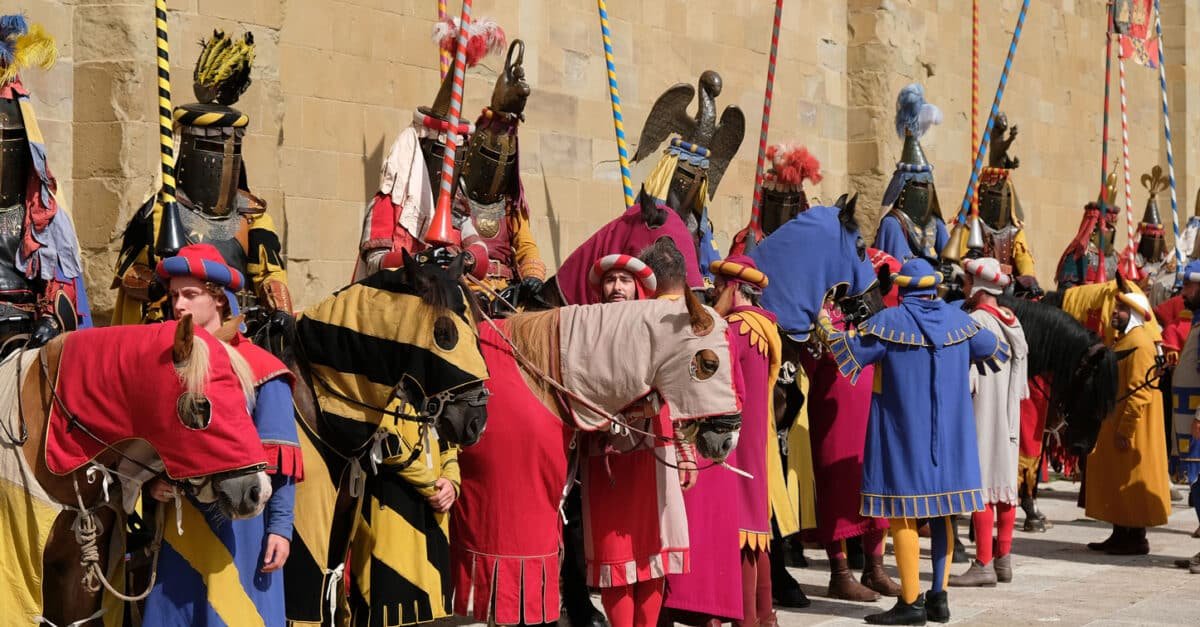
Visitors can experience Renaissance and medieval-inspired costumes, trumpeters, flag-wavers, ceremonial figures and the dramatic jousting competition in one of Arezzo’s most important historic squares.
Disfruta de tu evento sin estrés con Italy Travelo
Tanto si viajas para un festival de fama mundial, concierto en vivo, celebración cultural o evento de negocios, Italy Travelo te ayuda a simplificar cada paso de tu viaje. Nuestro equipo ofrece asistencia personalizada para viajar, permitiéndote centrarte en crear recuerdos duraderos.
Fechas de los eventos
Giostra del Saracino 2027 (June Edition) is scheduled for June 2027 (Dates TBD).
The celebration traditionally includes preparatory ceremonies, the historical procession and the main jousting competition in Piazza Grande.
The exact 2027 calendar and programme times have not yet been officially announced.
¿Vas a visitar este evento? No te pierdas estas increíbles actividades y experiencias locales mientras estés aquí.
Sedes y lugares del festival
The main activities are concentrated around Arezzo’s historic centre.
- Piazza Grande – principal arena for the jousting competition.
- Piazza San Domenico – associated with the historical procession and ceremonies.
- Cathedral area – connected with religious and ceremonial traditions.
- Corso Italia – part of the historical procession route.
- Historic centre of Arezzo – setting for various cultural and preparatory activities.
- Four Quartieri – Porta Crucifera, Porta del Foro, Porta Sant’Andrea and Porta Santo Spirito organize activities in their respective districts.
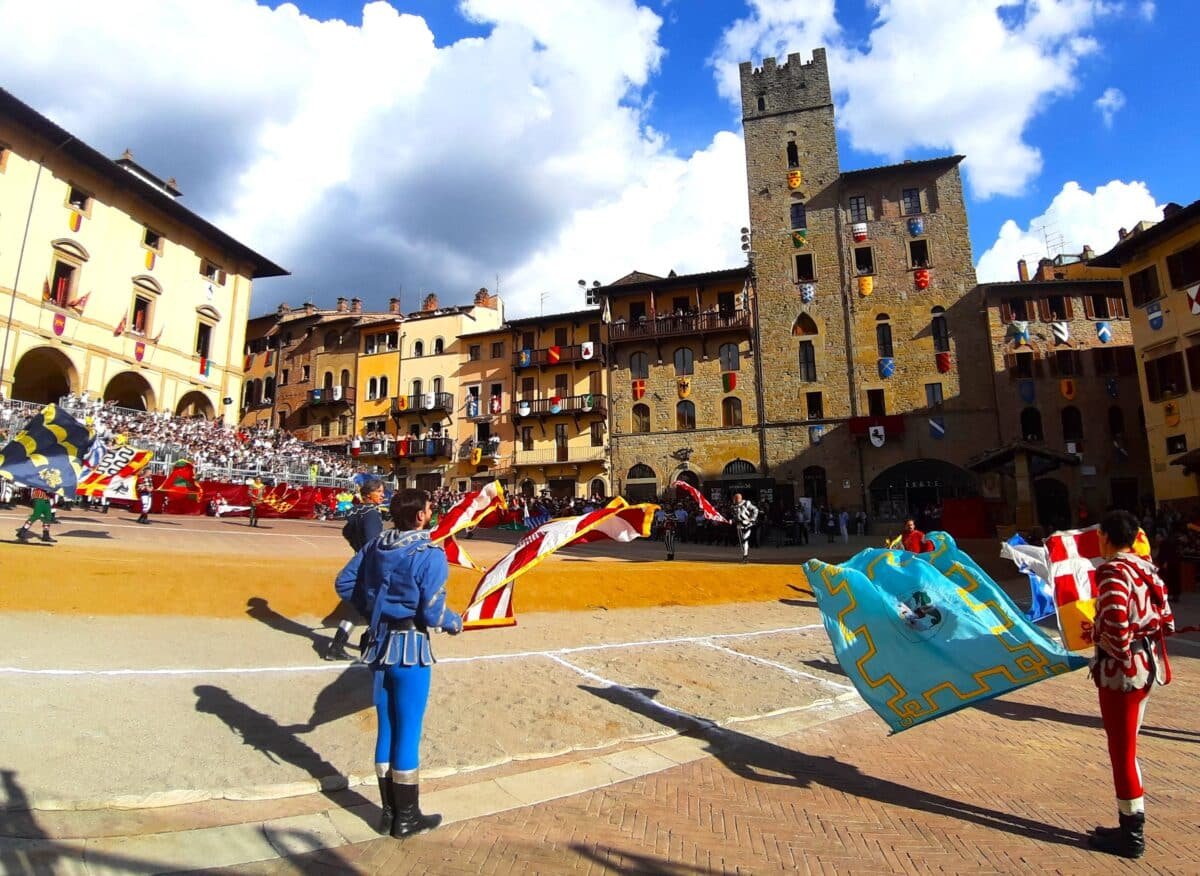
Piazza Grande is transformed into a temporary medieval-style arena for the competition, with spectators surrounding the jousting field.
Programa cultural completo
The Giostra programme combines sporting competition with a wider series of historical and ceremonial traditions.
- Historical costume processions.
- Flag-waving performances.
- Renaissance-style musicians and trumpeters.
- Ceremonial appearances by the four quarters.
- Religious ceremonies and blessings.
- Presentation of the jousters and horses.
- Entrance of the Buratto.
- Jousting competition.
- Prize presentation.
- Quarter celebrations following the competition.
The programme also includes activities organized by the individual quarters before and around the main Giostra.
Tradiciones y actuaciones destacadas
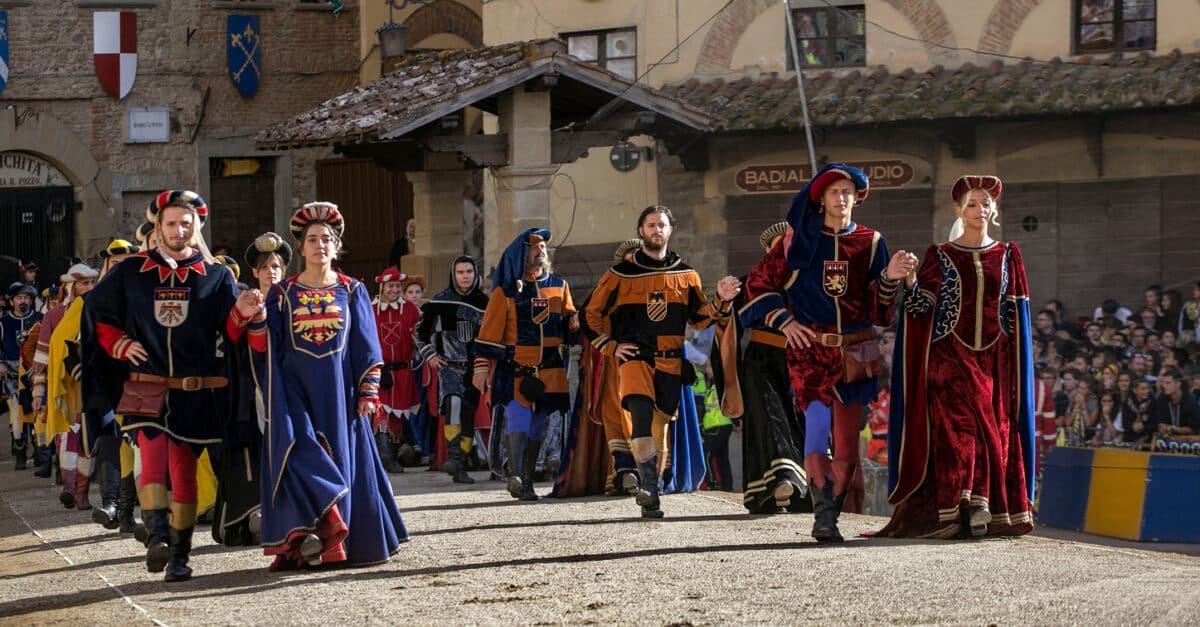
The Corteggio Storico is one of the most important parts of the celebration. Hundreds of participants in historical costumes parade through the centre before entering Piazza Grande.
Flag-wavers, musicians, trumpeters, knights, pages, magistrates and other historical figures recreate the ceremonial atmosphere of medieval and Renaissance Arezzo.
The four quarters are represented by their distinctive colours and symbols, creating a strong competitive identity throughout the procession and jousting event.
Aspectos históricos y patrimoniales
The Giostra del Saracino has medieval origins and is connected with Arezzo’s historic military and civic traditions. The modern form of the competition was established in the twentieth century while maintaining historical elements of the city’s earlier jousting traditions.
The competition represents a symbolic confrontation between Arezzo’s Christian knights and the Saracen figure represented by the Buratto.
The four competing quarters are:
- Porta Crucifera
- Porta del Foro
- Porta Sant’Andrea
- Porta Santo Spirito
The event is closely connected with Arezzo’s historic centre, particularly Piazza Grande, which forms part of the city’s UNESCO-listed series of historic monuments and is surrounded by important medieval and Renaissance architecture.
Calendario de eventos y actividades
The detailed 2027 schedule has not yet been published. The established June programme generally follows a sequence of ceremonial and competitive activities.
- Preparatory ceremonies – activities involving the four quarters and their jousters.
- Procesión histórica – costumed participants move through the historic centre.
- Flag performances – traditional flag-waving and musical displays.
- Entry into Piazza Grande – the historical procession enters the competition arena.
- Presentation of the jousters – the competing knights and horses are introduced.
- Jousting rounds – the four quarters compete against the Buratto.
- Final ceremonies – the winner receives the Palio and celebrations follow.
The official 2027 programme will confirm the final sequence and times.
Tipos de entradas y opciones de entrada
Access to the Giostra is organized around spectator areas surrounding the temporary arena in Piazza Grande.
The latest published ticket information should be used only as a previous-edition reference because 2027 ticket arrangements have not yet been announced. Public viewing outside the controlled arena area may be possible, while official seating inside Piazza Grande generally requires a ticket.
Previous editions have offered different categories of grandstand seating, with prices varying according to location and visibility. No reliable current 2027 price has been published, so visitors should wait for the official ticket release before making travel arrangements based on seating costs.
Visitas guiadas y experiencias culturales
The Giostra can be combined with guided exploration of Arezzo’s medieval and Renaissance heritage.
Visitors can explore Piazza Grande, the historic centre, churches, museums and streets connected with the four quarters. Specialist cultural tours can also explain the history of the Giostra, its symbols, costumes and relationship with Arezzo’s civic traditions.
The quarter districts provide another way to understand the festival, particularly for visitors interested in the identities, colours and traditions associated with each competing group.
Ceremonias y celebraciones especiales
Ceremonies are central to the Giostra and give the event much of its historical character.
The programme traditionally includes religious blessings, ceremonial presentations of the jousters, the historical procession and the formal entrance of the Buratto into Piazza Grande.
After the competition, the winning quarter celebrates its victory, while the Palio prize is ceremonially awarded. Quarter celebrations can continue beyond the main competition through dinners, gatherings and community events.
Normas del festival
Visitors must follow instructions from event organizers, municipal authorities, security personnel and stadium or grandstand staff.
The Piazza Grande arena and competition field are restricted areas reserved for authorized participants, horses, officials and production staff. Spectators must remain in designated areas and must not enter the arena.
Large crowds and temporary structures can affect normal movement through the historic centre. Visitors should follow temporary pedestrian routes and any restrictions introduced during the procession and competition.
Cómo llegar
Arezzo is located in Tuscany and has convenient rail connections with major cities including Florence and Rome.
Visitors arriving by train can use Arezzo railway station, which is within walking distance of the historic centre. The journey toward Piazza Grande continues through the city’s central streets.
Visitors arriving by car should plan to park outside the restricted historic centre and continue on foot or by local transport, particularly during the main Giostra programme when temporary traffic restrictions can be introduced.
Transporte público y aparcamiento
Public transport and walking are practical options for reaching the central event area.
- Tren: Arezzo railway station provides connections with Florence, Rome and other Italian cities.
- Local buses: connect the station and outer districts with central Arezzo.
- Caminar: Piazza Grande is accessible on foot from the railway station and major central attractions.
- Aparcamiento: visitors arriving by car should use authorized parking areas outside restricted historic-centre streets.
Traffic and pedestrian arrangements can change during the procession, so visitors should check the municipality’s latest notices before travelling.
Zonas de alojamiento
Staying close to the historic centre provides the easiest access to the Giostra programme.
- Centro histórico – convenient for Piazza Grande and ceremonial events.
- Piazza Grande area – ideal for visitors prioritizing the main competition.
- Around Arezzo railway station – practical for train travelers.
- Porta Crucifera and surrounding streets – useful for experiencing quarter traditions.
- Porta Sant’Andrea and other quarter districts – suitable for visitors interested in the local atmosphere surrounding the competition.
Hotels, guesthouses and apartments in central Arezzo can become busy during the Giostra period.
Gastronomía y especialidades tradicionales
Arezzo’s Tuscan cuisine provides plenty of options for visitors attending the Giostra.
Traditional dishes include chianina beef, pici, ribollita, crostini toscani, local cured meats and Tuscan cheeses.
Visitors can also find traditional Tuscan wines, extra-virgin olive oil, seasonal dishes and local desserts throughout the historic centre.
During the wider Giostra period, the four quarters may also organize dinners and food-based community events connected with their celebrations.
Accesibilidad
Accessibility can vary considerably because the event takes place within Arezzo’s historic centre and uses temporary structures in Piazza Grande.
Visitors with reduced mobility should consider the historic paving, slopes and pedestrian routes when planning their visit. The temporary grandstand configuration may also affect access to specific seating sections.
Visitors requiring accessible seating or assistance should contact the official Giostra organization before purchasing tickets so that current arrangements can be confirmed.
Vídeo
Ubicación
Preguntas frecuentes
What are the primary dates and operational schedule for the Giostra del Saracino June Edition events?
The festival unfolds over select days in June, culminating in the spectacular nighttime jousting tournament on Saturday evening. Visitors can explore daily historical processions, neighborhood propitiatory dinners, and open-air rehearsals throughout the historic center. Checking the official festival website ahead of time provides precise daily timetables for gate openings and parade routes.
How can visitors access the event viewing areas, and are admission tickets required for entry?
General public access to view daytime street processions and public squares outside the main arena is completely open and free of charge. Reserving numbered grandstand seats inside Piazza Grande requires purchasing advance tickets through authorized online ticketing portals. Securing seats early is essential because high global demand causes grandstands to sell out rapidly weeks before the event.
Are there specific family-friendly activities and accessible facilities for visitors attending with children or mobility needs?
The festival features family-oriented daytime parades, costumed musicians, and community banquets designed to safely welcome visitors of all ages. The historic center provides designated accessible walking paths, though navigating steep medieval stone paving and large crowds requires careful planning. Multilingual tourist information desks offer accessibility guidance, maps, and logistical support for attendees requiring special assistance.
What public transportation and parking options are recommended for travelers arriving from outside Arezzo?
Travelers arriving from regional transit hubs can utilize frequent high-speed trains arriving directly at Arezzo railway station, located a short walk from the historic center. Since private vehicle access is heavily restricted within ancient fortification walls, visitors should utilize designated peripheral parking lots outside the zone. Clear directional signage guides visitors smoothly from transit hubs toward pedestrian pathways leading into the city center.
How should visitors prepare for the summer weather and evening conditions during the June tournament?
June weather in Arezzo is typically warm during the day and pleasantly mild after sunset, making layered clothing and comfortable walking shoes essential. Since exploring the historic center involves navigating stone paving, ancient squares, and dense crowds, sturdy footwear ensures a comfortable experience. Carrying a reusable water bottle and arriving early helps visitors safely enjoy the vibrant evening festival environment.

Deja una respuesta