

-
1 de mayo de 2027
Fecha del evento:
-
1 de mayo de 2027
Final del evento:
What to expect
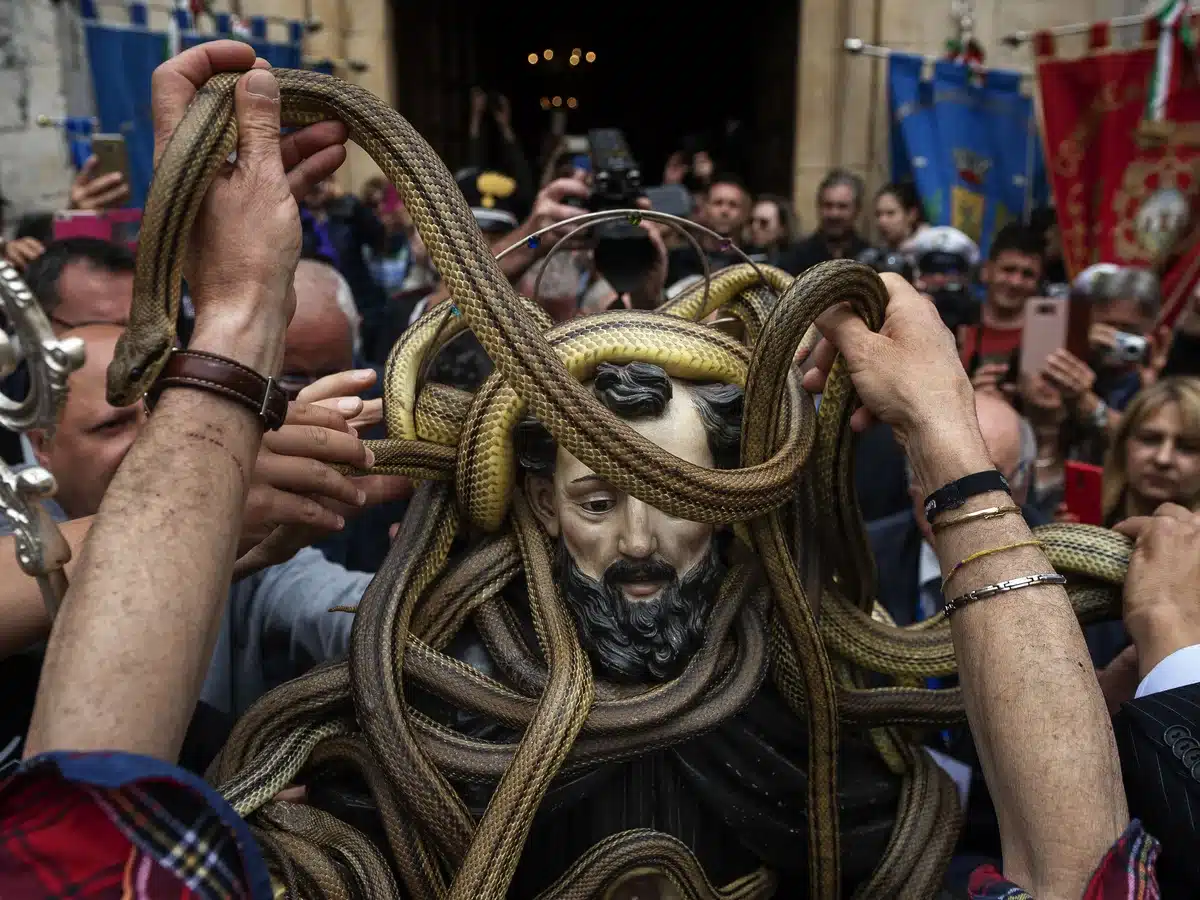
A Living Ritual of Faith and Nature: The Procession of the Snake Catchers, known locally as Festa dei Serpari, Rito dei Serpari, or Festival of the snake-catchers, is one of Italy’s most singular and photographed patron saint holidays. Held in Cocullo, a medieval village in Abruzzo perched in the upper Sagittario Valley between Cocullo village and Casale, the celebration blends Catholic devotion, pre-Christian mythology, and ecological awareness. Expect a reverent yet festive atmosphere where a statue of the patron saint is transported in procession covered with many live snakes, mainly four-lined snakes, Aesculapian snakes, grass snakes, and green whip snakes, handled by a hereditary brotherhood of local snake charmers.
The Serpari Brotherhood: The heart of the festival lies with the serpari, skilled individuals who capture snakes in the weeks leading up to the event using traditional methods. They use a stick pressing on the neck and historically used the rim of an old hat for handling. These handlers are not performers but keepers of a sacred tradition dating back about two thousand years, when the region was inhabited by the Marsi, an ancient Italic people skilled in handling poisonous snakes and knowledgeable about herbs, magic potions, and incantations, capable of healing people bitten by poisonous snakes and rabid dogs. Today their practice is part of scientific conservation effort, with biologists and herpetologists studying captured snakes since 2009 to monitor health and population trends before releasing them back into the wild.
Ancient and Modern Beliefs: The key element is the statue of San Domenico di Sora, also called Domenico di Sora, Saint Dominic Abbot, a Benedictine monk who lived in Cocullo around the end of the tenth century and into the eleventh century, believed to protect from toothache, snakebite, and rabid animals. According to tradition, he left the town one of his teeth, still kept as a holy relic in the local church. His legend absorbed elements from the ancient Roman myth of the snake goddess Angitia, whose sanctuary priests were the original snake charmers, and snakes were associated with healing. The festival was nominated as a cultural ceremony to be protected by UNESCO and represents a dramatic fusion where time seems to pause.
Disfruta de tu evento sin estrés con Italy Travelo
Tanto si viajas para un festival de fama mundial, concierto en vivo, celebración cultural o evento de negocios, Italy Travelo te ayuda a simplificar cada paso de tu viaje. Nuestro equipo ofrece asistencia personalizada para viajar, permitiéndote centrarte en crear recuerdos duraderos.
Fechas de los eventos
Main Procession: May 1, 2027. The main event takes place on this day, with lead-up activities starting the previous afternoon. The religious program begins with early morning masses and culminates around midday with the main procession featuring serpari and Saint Dominic’s statue draped in live snakes, followed by closing mass and veneration of the relic.
¿Vas a visitar este evento? No te pierdas estas increíbles actividades y experiencias locales mientras estés aquí.
Lugares de los eventos y lugares de los eventos
Cocullo Village: Cocullo is usually a quiet hamlet with fewer than three hundred residents, located approximately one hundred seventy kilometers from Rome, about one and a half hours by car. Its origins are closely related to the ancient Roman town of Koukoulon, situated between Cocullo village and Casale. The village is built in medieval stone, with narrow cobbled streets that become thronged with thousands of pilgrims and curious travelers for the festival.
Church of San Domenico: The Church of San Domenico is the spiritual center. After Mass, the statue of St. Dominic is brought out and paraded. The church houses the holy relic tooth and serves as starting and ending point for the procession.
Procession Route: The route winds through the streets of the village, passing piazzas lined with food stalls, souvenir stands, and traditional costume displays. The streets echo with church bells, traditional bagpipes, prayer, and celebration. Galleria San Domenico and surrounding piazzas become focal points for viewing.
Surrounding Territory: The surrounding hills and forests where serpari collect snakes in preceding weeks are part of the broader venue. This territory was historically that of the Marsi and later became part of Majella National Park and Sagittario Valley landscapes, connecting the ritual to its ecological context.
Programa completo de vacaciones
Lead-Up Activities: The programme typically begins the afternoon before the main day with an opening Mass, memorial ceremony for the fallen, and evening concerts such as Armonia, The Music Experience. Food stalls begin operating and pilgrims arrive.
Morning Religious Program: On the main day, early morning Mass is followed by pilgrim’s Mass and a solemn Mass led by bishop. These masses prepare the community and visitors for the procession, emphasizing protection against snakebite and toothache.
Main Procession: The highlight is the midday procession where the statue of Saint Dominic, completely covered in live snakes, is carried through streets, followed by serpari who are also draped with snakes. Children dressed in traditional costumes carry baskets of ciambellati, traditional ring-shaped sweets, and locals dress in traditional costumes. The atmosphere is reverent and electric, a surreal blend of sacred and folkloric.
Closing Rituals: After the procession, snake charmers take back their snakes from the statue. The snakes are carefully removed and later released. A closing Mass and veneration of the relic tooth takes place in late afternoon, followed by continued festivities, food tasting, and market activity.
Traditional Practices: Cocullo’s serpari generally capture dozens of snakes in weeks preceding festival. The snakes’ fangs are removed traditionally, though modern conservation practices emphasize non-harmful handling, monitoring, and careful release. The interaction is handled only by trained local serpari.
Principales atracciones y puntos destacados
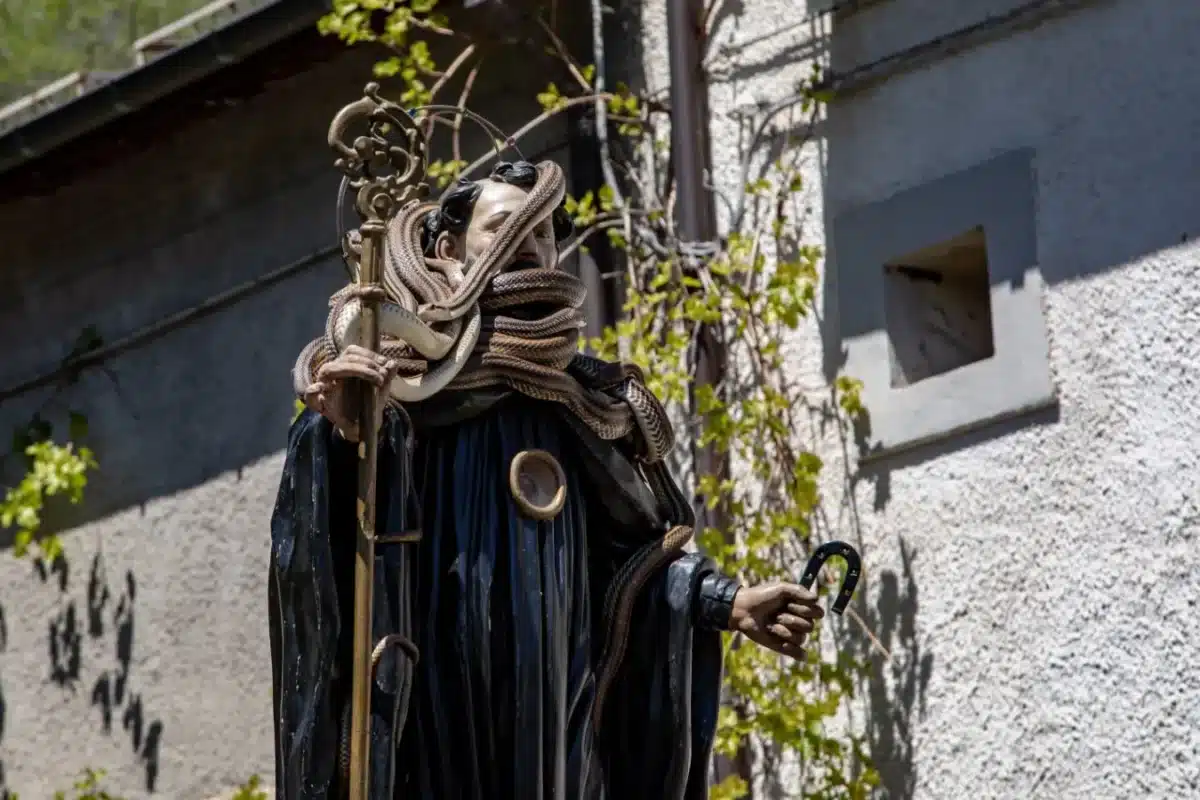
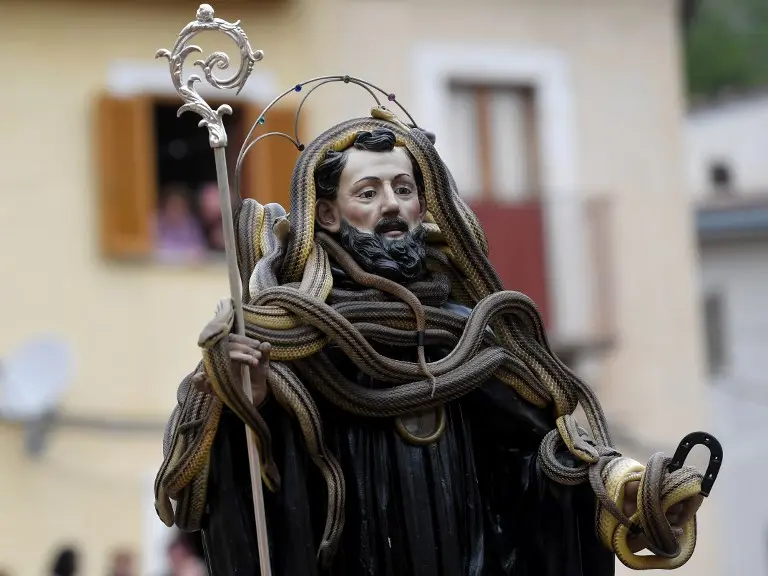
Statue Draped with Live Snakes: The central attraction is the statue of St. Dominic being carried in procession completely covered with live snakes that slither over it in symbolic display of man’s harmony with nature. This image is considered one of the most photographed places in Italy and one of the most peculiar patron saint days.
Serpari Brotherhood: Watching the hereditary brotherhood handle snakes with skill passed through generations is a highlight. Their knowledge of herbs, magic potions, and incantations connects to Marsi heritage. Their role as both religious participants and ecological stewards adds depth.
Blend of Pagan and Catholic: The festival’s origins date back to paganism with roots in ancient celebration in honor of Roman goddess Angitia, later absorbed into Catholic tradition. This duality makes it a unique case where pre-Christian snake deity worship and Benedictine monastic protection coexist.
Scientific Conservation: Since 2009, the ritual has become intersection of ritual and research, with biologists monitoring captured snakes for health and population trends, turning ancient rite into modern conservation effort. This aspect is highlighted by organizers and environmental associations.
Community Atmosphere: Despite its dramatic visual, the festival is described as festive, safe, and family-friendly. Pilgrims touch the statue and snakes for blessing, food stalls sell local delicacies, and the scent of roasting meats mingles with floral perfumes of mountain herbs.
Mercados, decoraciones y zonas temáticas
Food and Souvenir Stalls: After religious start, people go to many stalls all around Cocullo where you can taste tasty local food and buy souvenirs. Piazzas are lined with stalls selling local delicacies, sweets, roasted meats, cheeses, and traditional crafts.
Ciambellati and Traditional Sweets: Children carrying baskets of ciambellati, snake-shaped sweets and bread, and other Abruzzo specialties such as confetti from nearby Sulmona, create themed food areas that link taste to ritual.
Religious Decorations: The church and procession route are decorated with flowers, religious banners, and images of San Domenico. Traditional costumes with embroidery add color to the stone streets.
Conservation Information Areas: In recent editions, areas are dedicated to herpetological information where biologists explain snake species, conservation efforts, and safe handling, educating visitors about four-lined, Aesculapian, grass, and green whip snakes.
Calendario de eventos y entretenimiento
Religious Schedule: The day is structured around masses, with early morning Mass, pilgrim’s Mass, solemn Mass, main procession around midday, and closing Mass with relic veneration in late afternoon. This structure maintains religious focus amid folkloric spectacle.
Musical Program: Evening before main day features concerts, while main day includes traditional bagpipes, church bells, and folk music accompanying procession. Local bands and choirs perform in piazzas.
Market and Food Program: Throughout the day, market stalls operate, offering tastings and sales from morning until evening, with peak activity after procession.
Educational Talks: Side events include talks by herpetologists, anthropologists, and local historians about the Marsi, Angitia cult, and evolution of serpari tradition, providing context for visitors.
Entrada e información sobre entradas
Entrada gratuita: The procession and all religious ceremonies are free to attend. There is no ticket to watch the statue being carried through streets. This reflects its nature as a patron saint holiday and community ritual.
Tour Costs: Some tour operators offer day trips from Rome or Pescara that include transportation, guide, and sometimes food. These tours typically range from $110 to $220 per person depending on inclusions such as hotel pickup, food and drinks, and optional donations. Personal expenses, entrance fees to museums, and food are generally extra.
Donations: While free, visitors often make optional donations to church or Pro Loco organization that supports festival organization, snake monitoring, and conservation efforts.
Aparcamiento: Limited parking in village may involve small fees, typically $5 to $11 per vehicle in designated areas outside center, with heavy traffic expected.
Experiencias y actividades especiales
Close Encounter with Serpari: While generally only serpari handle snakes, visitors can get up close for photos and observe snakes during procession. Some serpari allow careful touching of statue draped with snakes for blessing, under supervision.
Pilgrim Experience: Join pilgrims who walk to Cocullo from surrounding towns, participating in masses and procession as an act of devotion seeking protection from snakebite and toothache, touching the relic tooth.
Herpetological Learning: Engage with biologists studying captured snakes, learning about non-venomous species, their habitat in Sagittario Valley, and conservation challenges. This adds ecological dimension to spiritual experience.
Photography: The festival offers extraordinary photographic opportunities, with statue covered in live snakes against medieval stone background, children in traditional costumes, and serpari draped with serpents. Early arrival ensures good viewing position for midday procession.
Taste Local Cuisine: Taste local food at stalls, including arrosticini, porchetta, pecorino, and ciambellati, while experiencing the chatter of pilgrims and sound of bagpipes.
Actividades familiares e infantiles
Educational and Exciting: The festival is described as educational, exciting, filled with tradition and spectacle, suitable for kids. Children dressed in traditional costumes carrying baskets participate directly, making it inclusive.
Safe and Festive: Despite live snakes, the atmosphere is safe as snakes are non-venomous and handled by trained serpari. The snakes’ fangs are traditionally managed, and modern monitoring ensures safety. The event is considered family-friendly with reverent yet joyful mood.
Traditional Costumes: Children can wear traditional Abruzzo costumes and participate in procession periphery, learning about local heritage and religious traditions.
Nature Connection: For nature-loving families, the festival offers rare chance to see live snakes up close in respectful context, fostering respect rather than fear, and understanding of ecological balance.
Reglas del evento
Respect for Religious Ceremony: The festival begins with church service and maintains reverent character. Respectful behavior during masses, procession, and relic veneration is expected. Do not interfere with carrying of statue.
Snake Handling: Interaction with snakes is handled by trained local serpari only. Visitors should not attempt to capture, handle, or provoke snakes. Follow instructions from serpari and civil protection volunteers.
Photography Ethics: Photography is allowed and encouraged, but do not use flash directly on snakes or statue during close procession, and avoid obstructing procession route for better shot. Drones are prohibited over crowded streets without permission.
Environmental Respect: Snakes are carefully monitored and released after celebration. Do not litter in surrounding hills where snakes are collected, and respect natural habitats. The festival emphasizes harmony with nature.
Crowd Management: Town can be crowded during festival, with thousands flooding cobbled streets. Plan for transport and parking accordingly, arrive early for good view, wear comfortable walking shoes, and follow crowd control barriers.
Cómo llegar
By Car: Cocullo is easily accessible via A25 Autostrada, exit at Cocullo or nearby. Be prepared for heavy traffic and limited parking, especially on main day. Arrive early or the day before to secure parking in designated areas outside village.
By Train: Regional trains run from Sulmona and Avezzano, connecting to Rome-Pescara line. Check Trenitalia schedules. From Sulmona station, about thirty minutes away, buses or taxis can reach Cocullo. Train plus bus combination is popular for visitors without car.
By Tour: Some tour operators offer day trips from Rome or Pescara, including transportation to and from Cocullo, guide, and sometimes food and drinks. These tours handle logistics of heavy traffic and parking.
On Foot: For nearby visitors, hiking trails from Sagittario Valley and Abruzzo National Park lead to Cocullo, offering scenic approach through landscapes where serpari collect snakes.
Transporte público y aparcamiento
Aparcamiento: Accommodations in Cocullo are extremely limited, and parking is even more limited. Designated parking areas outside village fill quickly. Expect to park in lower areas and walk uphill to center. Arrive early morning to secure spot.
Public Transport: Regional trains from Sulmona and Avezzano provide access, but schedules are limited, especially in evening after closing Mass. Bus connections from Sulmona to Cocullo operate, but may be crowded. Planning return transport in advance is essential.
Traffic: Heavy traffic is expected on A25 and local roads, with congestion near village entrance. Local police and volunteers manage traffic, but delays are common.
Caminar: Expect outdoor walking on cobbled streets and slopes. Comfortable walking shoes are recommended. The procession route involves standing for extended periods.
Zonas de alojamiento
Cocullo Village: Accommodation in Cocullo itself is extremely limited, with only a few B&Bs and guesthouses. Booking a year in advance is often necessary for main day. Staying in village allows experiencing early morning Mass and late evening atmosphere.
Sulmona: Sulmona, about thirty minutes away, offers more hotel and transport options, famous for confetti and medieval architecture. It is a popular base with regular train and bus connections to Cocullo and serves as gateway to Majella National Park.
Scanno and Pescina: Charming, scenic towns not too far, offering boutique stays, lake views, and traditional hospitality, ideal for combining snake festival with exploration of Abruzzo’s mountain villages.
Avezzano: Larger town offering more hotel and transport options, with better connectivity to Rome and Pescara, suitable for visitors relying on public transport.
Rome and Pescara: For day-trippers, Rome and Pescara offer extensive accommodation and tour operators running day trips. Pescara provides seaside option, Rome offers cultural extension.
Comida, bebidas y especialidades de temporada
Local Delicacies: Food stalls line piazzas selling local delicacies and sweets, including arrosticini, lamb skewers typical of Abruzzo, porchetta, pecorino cheeses, and cured meats. The scent of roasting meats mingles with floral perfumes of mountain herbs.
Ciambellati: Traditional ring-shaped sweets called ciambellati are carried by children in traditional costumes and sold at stalls. Snake-shaped sweets and bread are also produced for festival, linking food symbolism to ritual.
Confetti and Sweets: Nearby Sulmona is famous for confetti, sugar-coated almonds, which are sold as souvenirs and used in celebrations. Other sweets include ferratelle and mostaccioli.
Wine and Drinks: Montepulciano d’Abruzzo red wine and Trebbiano white are served, along with local liqueurs such as genziana made from gentian root. Water and soft drinks are available, but bringing water bottle is recommended.
Mountain Cuisine: The area’s cuisine reflects mountain and pastoral traditions, with hearty soups, polenta, and grilled meats, providing warmth during outdoor festivities.
Accesibilidad
Cobblestones and Slopes: Cocullo’s medieval stone streets include slopes, steps, and uneven cobblestones that can be challenging for those with mobility issues. Comfortable walking shoes and early arrival to secure accessible viewing spot near church are recommended.
Crowds: The village transforms from quiet hamlet to crowded festival with thousands flooding streets, making movement difficult for wheelchairs or strollers. Side streets offer less crowded alternatives but still involve slopes.
Viewing: Good view of procession requires standing for extended periods along narrow streets. Some balconies and elevated piazzas offer better visibility, but access may involve stairs.
Facilities: Limited facilities in small village become even more stretched during festival. Planning for water, hat, sunscreen, and personal needs is essential. The Pro Loco provides information but accessibility services are minimal.
Mejores días y momentos para visitar
Main Day Midday: The main procession around midday is the highlight, when statue draped with live snakes is carried through streets. Arriving early morning ensures good view, as streets become crowded quickly.
Previous Afternoon: Arriving the afternoon before allows experiencing opening Mass, memorial ceremony, and evening concert with fewer crowds, plus securing parking and accommodation.
Early Morning Atmosphere: Early morning on main day offers quieter moments with morning Masses, pilgrim arrivals, and serpari preparing crates holding serpents they have spent weeks collecting, providing behind-the-scenes insight.
Late Afternoon: After main procession, late afternoon offers closing Mass, veneration of relic, and more relaxed market atmosphere where you can taste local food and buy souvenirs without peak crowd.
Aspectos destacados de años anteriores
Religious Participation: Recent editions featured solemn Masses led by bishop, pilgrim’s Masses, and participation of thousands of pilgrims touching statue for blessing, emphasizing continued religious devotion alongside folkloric interest.
Serpari and Conservation: The heart of recent festivals has been the serpari gathering with crates holding serpents, carefully monitored and eventually released, with biologists present to study health and population trends, highlighting beautiful intersection of ritual and research.
Community and Tourism: Cocullo’s festival is considered one of the most famous events not only in Abruzzo but in Italy as a whole, attracting tourists from all over world, photographers, and anthropologists, while maintaining community character where locals dress in traditional costumes and carry statue.
Cultural Recognition: Efforts to gain UNESCO recognition have been highlighted, with media coverage describing it as Italy’s fascinating festival of snake catchers, blending pre-Christian roots related to snake deity Angitia and Marsi magic arts with Catholic devotion, creating surreal blend of sacred and folkloric where time pauses.
Información oficial del evento
Official Name: The Procession of the Snake Catchers – Festa dei Serpari di Cocullo
Ubicación: Cocullo, Province of L’Aquila, Abruzzo, Italy
Official Information Source: https://www.carnifest.com/the-procession-of-the-snake-catchers-serpari-2027/
Organizer: Comune di Cocullo and Pro Loco di Cocullo with Church of San Domenico
Patron Saint: San Domenico di Sora, protector against snakebite and toothache, relic tooth kept in local church
Genre: Religious procession with folkloric and pre-Christian roots
Snakes: Mainly four-lined, Aesculapian, grass, and green whip snakes, non-venomous, captured by serpari and released after
Status: Active annual festival nominated for UNESCO cultural protection
Vídeo
Ubicación
Preguntas frecuentes
What exactly happens during the main procession?
After Mass, the statue of St. Dominic is brought out of the church completely covered in live snakes that have been collected by serpari in preceding weeks and carefully monitored. The statue is then carried through narrow stone streets of Cocullo in a procession followed by serpari also draped with snakes, while pilgrims touch the statue for blessing and children in traditional costumes carry baskets of ciambellati.
Is it safe to attend with live snakes involved?
Yes, the festival is considered festive, safe, and family-friendly, with snakes handled only by trained serpari who are part of a hereditary brotherhood skilled in traditional capture methods. The snakes used are non-venomous species such as four-lined and Aesculapian snakes, their health is monitored by biologists since 2009, and they are released back into the wild after celebration, with crowd control ensuring safe viewing distance.
Why does Cocullo have this unusual snake tradition?
The origins date back about two thousand years to when region was inhabited by Marsi people skilled in handling snakes and healing bites, and to pagan worship of snake goddess Angitia whose sanctuary priests were original snake charmers. When Saint Dominic lived in Cocullo and became known for miraculously saving people from snake bites, his Catholic cult absorbed the ancient rite, and his tooth relic preserved in church cemented association, creating fusion of pre-Christian and Catholic beliefs.
How do I get to this small mountain village and where should I stay?
Cocullo is easily accessible via A25 Autostrada about one hundred seventy kilometers from Rome, with heavy traffic and limited parking requiring early arrival. Regional trains run from Sulmona and Avezzano, and tour operators offer day trips from Rome or Pescara handling transport logistics. Accommodation in Cocullo is extremely limited, so consider staying in nearby towns like Sulmona thirty minutes away, Scanno, Pescina, or Avezzano for more hotel and transport options.
Can I touch or handle the snakes?
Generally only serpari handle snakes, as they are trained in traditional methods and hold special permits for capture and monitoring, but you can get up close for photos and observe them slithering over statue during procession. Pilgrims often touch the statue itself draped with snakes to receive blessing against snakebite and toothache, and under supervision some serpari allow careful contact, though direct handling by visitors is not permitted for safety and conservation reasons.

Deja una respuesta