


-
12월 24, 2026
행사 날짜:
-
12월 24, 2026
이벤트 종료:
무엇을 기대해야 할까요?
Fiamma del Natale, known locally as the Fiaccole di Abbadia San Salvatore, is one of the most powerful and authentic Christmas rituals in Tuscany and one of the oldest fire traditions still alive in Italy. In the charming mountain town of Abbadia San Salvatore, on the slopes of Monte Amiata, the community revives a millenary custom that transforms the entire historic center into a trail of giant bonfires, music, and shared warmth.
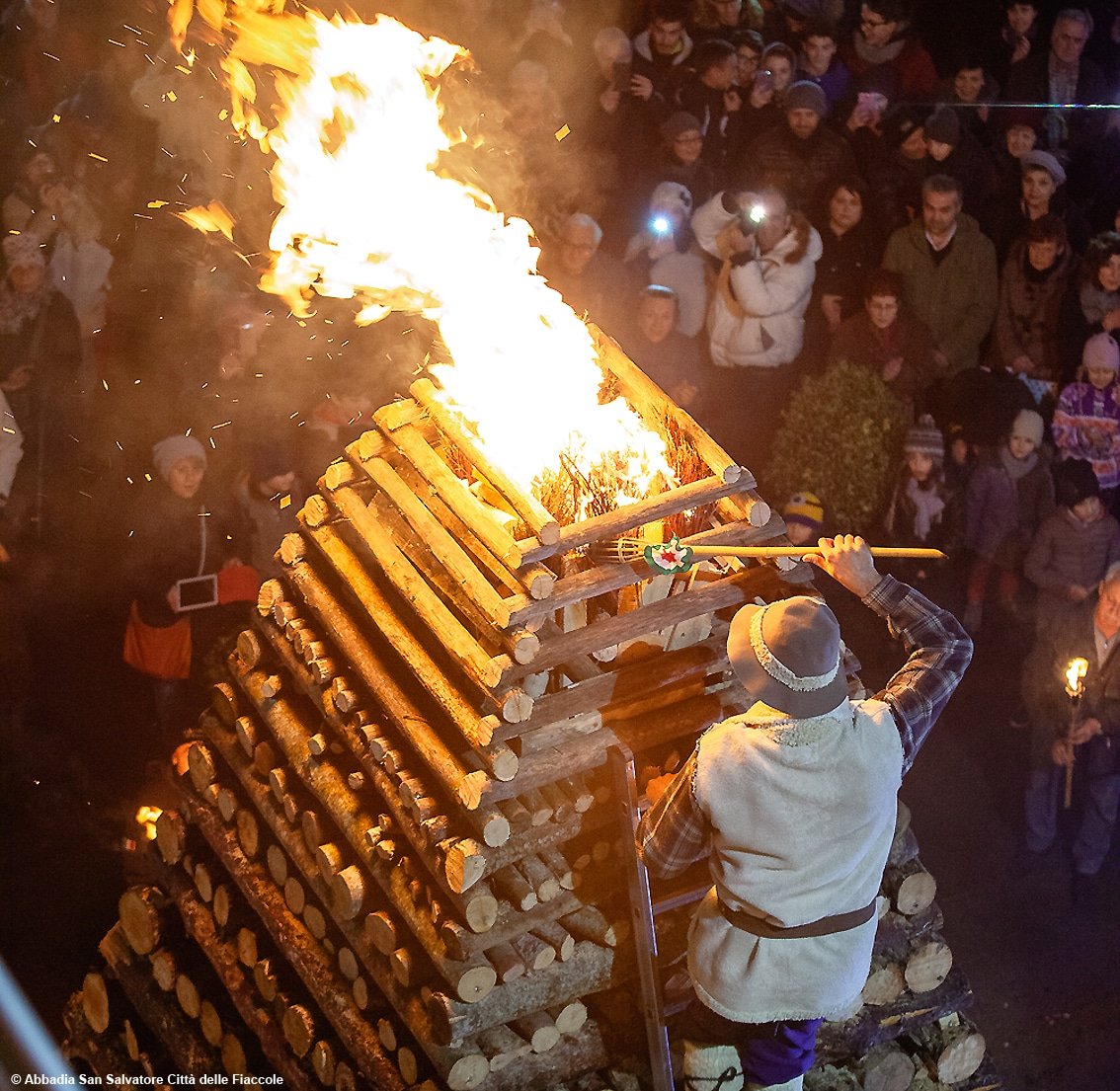
You can expect enormous stacks of wood, called fiaccole, piled several meters high in front of the ancient abbey and in squares throughout the old town. As darkness falls, the town fills with shepherds’ songs, the sound of traditional instruments, and the crackle of fire. Residents and visitors walk together from one fiaccola to another, following the choristers in a journey back in time that has its roots in the Notte dei Tempi, well before the year 1000.
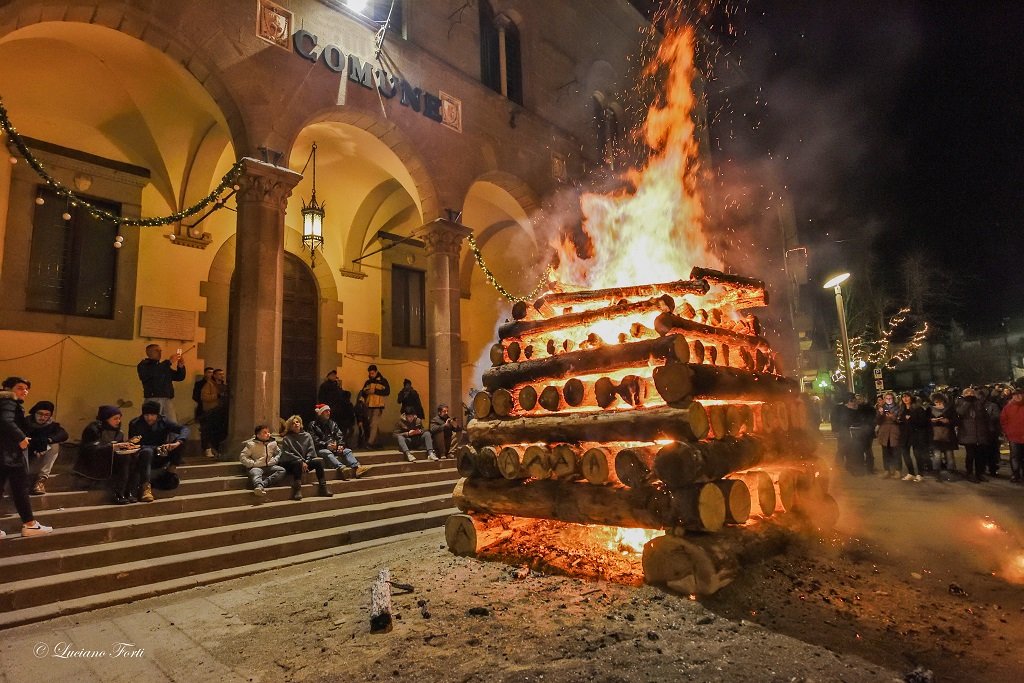
This is not a staged show but a living community ritual. The fiaccole are built by the historic districts of the town over many weeks, using only wood and ancient techniques without nails. The lighting begins in the early evening under the porticoes of the municipal offices, continues with the blessing of the choristers, and culminates around midnight mass at the Abbey of San Salvatore. Afterward, wine cellars open for a collective toast. Expect intense heat, smoke, music, and a deeply moving atmosphere that feels both sacred and pagan.
행사 일정
행사 날짜: Thursday 24 December 2026
Main ritual night: The lighting of the fiaccole takes place on the night of Christmas Eve, from early evening until after midnight.
Build-up period: The construction of the wood piles starts weeks before, and visitors can see the structures growing in the historic center throughout the month leading up to the event.
Opening times: Festivities begin around 6:00 PM with the lighting of the first bonfire below the porticoes of the municipal offices. The choristers’ blessing and itinerant singing take place around 9:00 PM, followed by the walk through all districts. The final celebrations continue after midnight mass.
마무리: Wine cellars and taverns remain open late after mass, typically until 1:30 AM.
이 행사에 참석하실 건가요? 이 멋진 활동과 지역 경험을 놓치지 마세요.
장소 및 행사 장소
Town: Abbadia San Salvatore, Province of Siena, Tuscany, Italy.
주소: Via Fosso Canali, 44, 53021 Abbadia San Salvatore SI, Italia. The main locations are spread across the historic center, not in a single venue.
Core locations: The largest fiaccola is traditionally erected in front of the Abbey of San Salvatore, the spiritual heart of the town and the reason for its foundation. Other major fiaccole rise in Piazza del Comune, Piazza della Repubblica, and in the squares of the historic rioni including Borgo, Gragnolo, and Crocifisso.
Route: The ritual route connects all fiaccole, winding through narrow medieval alleys, stone stairways, and covered passages. The municipal porticoes serve as the official starting point for the lighting.
Landscape: Abbadia San Salvatore is a small gem hidden in the heart of Monte Amiata, at about 800 meters altitude, surrounded by beech and chestnut forests. The abbey itself dates from the 8th century and is one of the most important Romanesque monuments in Tuscany.
전체 휴일 프로그램
Late afternoon: Gathering of the community and visitors in the historic center, with artisan market stalls and hot drink stands opening.
Early evening lighting: Ceremonial lighting of the first fiaccola below the municipal offices, accompanied by greetings from the mayor and the Comitato Cittadelle Fiaccole.
Itinerant choir walk: Groups of choristers, musicians, and shepherd singers dressed in traditional mountain clothing walk through the districts, stopping in front of every fiaccola to sing Christmas carols, pastorales, and ancient Amiata chants. The blessing is performed with music and simple instruments like accordion, guitar, and bagpipes.
Midnight moment: The community converges toward the Abbey for midnight mass. The fires, now at full height, light the way for pilgrims, just as they did centuries ago for travelers along the Via Francigena who came to the abbey.
After mass: Opening of cantine, or traditional wine cellars, in the historic center. Locals offer vin brulé, local wines, and sweets to visitors in an informal, warm celebration.
Throughout the night: Continuous tending of the fires by district teams, who feed the flames to keep them alive until the early hours.
주요 명소 및 하이라이트
The giant fiaccole: Towering piles of firewood up to 7 meters high and 3 meters wide, built entirely by hand without nails, using interlocking techniques passed down through generations. Each one is a sculpture that burns for hours.
The Abbey of San Salvatore: The Romanesque abbey, founded in 743 AD, is the spiritual center of the ritual. Its crypt and facade illuminated by firelight create an unforgettable sight.
Shepherds’ songs: The canti dei pastori, ancient Christmas pastorals sung in dialect, create a haunting acoustic journey through the streets.
Living district rivalry: Each historic rione builds its own fiaccola, and there is friendly competition for the tallest, most stable, and most beautiful structure.
The communal fire experience: Unlike a fireworks show, you stand close to the fire, feel its heat on your face in the cold mountain air, and become part of a circle of people singing and warming themselves.
Ancient origins: The tradition traces back to the Notte dei Tempi, when fires were lit to guide pilgrims to midnight mass and to keep them warm on their journey to the abbey. It has survived for over a millennium.
시장, 장식 및 테마 구역
Christmas market: A small but authentic market of local artisans is set up in the historic center, offering Monte Amiata wood carvings, wool products, ceramics, and Christmas decorations.
Nativity scenes: Churches and cellars host traditional presepi, including hand-carved wooden nativities made by local craftsmen. The abbey crypt often hosts a special nativity exhibition.
Lights and atmosphere: While the main light comes from the fires, the town is decorated with simple white lights, natural garlands, and traditional decorations that respect the medieval stone architecture.
Rioni decorations: Each district decorates its own area around the fiaccola with lanterns, pine branches, and handmade banners.
Tasting corners: Corners dedicated to local products like chestnut flour, honey, and Amiata beer are arranged near the fires.
Photo points: Designated safe viewing areas allow visitors to photograph the fiaccole without getting too close to the intense heat.
행사 및 엔터테인먼트 일정
Afternoon entertainment: Acoustic folk groups perform in squares, and storytellers recount legends of Monte Amiata and the abbey’s foundation.
Early evening ceremony: Official welcome and lighting of the first fire under the porticoes, with speeches and traditional music.
Choir procession: The main entertainment is the moving choir, which performs continuously for several hours, stopping at each fiaccola for about 10 to 15 minutes.
Children’s moment: Earlier in the evening, smaller bonfires and storytelling are organized for families, so children can experience the fire before late hours.
Midnight mass: The religious climax inside the abbey, with choir and organ, open to all.
After-midnight cantine: Live music in wine cellars, with accordion players and spontaneous singing, creates a festive, intimate after-party.
Continuous tending: Volunteers entertain visitors by explaining how the wood is stacked and how the fire is managed.
입장 및 티켓 정보
일반 입장: The Fiamma del Natale event is entirely free and open to the public. There is no ticket required to walk the route, watch the fires, or attend midnight mass. This has been the tradition in all previous editions.
Guided tours: Optional guided tours of the historic center and the abbey during the afternoon are offered for about $11 USD to $16 USD per person. Tours of the fiaccole construction sites before the lighting are around $8 USD.
Cantine tastings: Entry to the wine cellars after mass is free, with tastings of vin brulé and local products offered for a small contribution of about $5 USD to $10 USD per glass and plate.
주차: Organized parking areas outside the historic center cost around $5 USD to $8 USD for the evening, including shuttle service.
예약: No reservation is needed for the main event, but it is recommended to book guided tours and accommodation in advance.
특별한 경험 및 활동
Participate in building: In the weeks leading up, visitors can watch and, with permission, help the rioni teams stack wood, learning the interlocking method.
Learn the songs: Join the choir workshops held in the afternoon where locals teach the traditional pastorales and Christmas carols in dialect.
Night photography walk: Special photography tours are organized for enthusiasts who want to capture the fires with long exposure techniques, priced around $22 USD to $33 USD.
Blessing walk: Walk alongside the choristers for the full route, a deeply immersive experience that takes you to every fiaccola in town.
Abbey by firelight: Special access to the abbey crypt and museum by candlelight and firelight, a rare opportunity to see the Romanesque architecture in a mystical atmosphere.
Tasting in cantina: Sit in a medieval cellar dug into tuff stone, taste Monte Amiata chestnut products and local wines while listening to stories from elders.
가족 및 자녀 활동
Early lighting for kids: The first fires are lit earlier in the evening, allowing families with young children to experience the warmth and music without staying until very late.
Storytelling: In the library and in squares, actors tell legends of the abbey, of Count Erimberto, and of the wolves of Monte Amiata, in child-friendly language.
Small fiaccole workshops: Children can build miniature fiaccole with small sticks under supervision, learning the stacking technique safely.
Nativity trail: A treasure hunt through the presepi in churches and cellars, with a small prize for completing the route.
Hot drinks and sweets: Stands offer hot chocolate, roasted chestnuts, and befanini, traditional Tuscan Christmas biscuits, which children love.
Safe viewing areas: Barriers and designated areas keep children at a safe distance from the largest fires, while still allowing excellent views.
이벤트 규칙
Safety distance: Visitors must respect barriers around the fiaccole and follow instructions from volunteers and firefighters. The heat is intense within a few meters.
No fireworks or open flames: Personal fireworks, candles, or portable stoves are forbidden in the historic center due to fire risk.
Respect for the sacred: During the choir stops and midnight mass, maintain respectful silence and avoid blocking the path of singers and processions.
No climbing on wood piles: The fiaccole are sacred structures built by the community. Climbing or removing wood is strictly prohibited.
Alcohol and behavior: While wine is part of the celebration, excessive drinking and disruptive behavior are not tolerated. The event is family-oriented and religious in nature.
개들: Dogs are allowed on leash, but due to crowds, loud music, and large fires, it is not recommended to bring pets close to the main fiaccole.
Waste: Use bins provided and avoid throwing anything into the fires. The community cleans the sites after the event and recycles ash.
가는 방법
자동차로: From Florence and Siena, take the Cassia road SR2 toward Abbadia San Salvatore and Monte Amiata. From Rome, take A1 to Chiusi-Chianciano and continue via SR Cassia. During the event, the historic center is closed to traffic and well-signed parking areas are set up at the town entrances.
By train and bus: The nearest train stations are Chiusi-Chianciano Terme and Buonconvento. From there, Tiemme bus services run to Abbadia San Salvatore. Extra buses are added for the event night.
항공편: The closest airports are Florence Peretola at about 150 kilometers, Pisa at about 200 kilometers, and Rome Fiumicino at about 180 kilometers. From airports, rent a car or take train to Chiusi.
On foot inside town: Once parked, the entire ritual route is walkable. The town is built on a slope, so comfortable, warm, non-slip shoes are essential for cobblestones and possible frost.
대중교통 및 주차
주차: Several large parking areas are located at the lower entrances of town, including Parcheggio del Cimitero, Parcheggio Via Aldo Moro, and sports field area. Cost is around $5 USD to $8 USD for the evening. Disabled parking is available near the town hall with prior authorization.
Shuttle service: Free shuttle buses connect the main parking areas to the edge of the historic center from 5:00 PM until 2:00 AM, running every 15 to 20 minutes.
Public buses: Regional buses from Siena, Grosseto, and Chiusi increase frequency for the evening, but return services after midnight are limited. Check Tiemme timetables in advance.
Taxis: Limited taxi service is available in Abbadia. It is advisable to book return transport in advance if staying outside town.
Traffic closure: The historic center is completely closed to private cars from mid-afternoon until the end of celebrations. Residents only access is controlled.
숙박 구역
In Abbadia historic center: Small hotels, B&Bs, and vacation rentals such as Hotel Amiata, Albergo Toscana, and Casa Pacina put you steps away from the fires. Rates from $80 USD to $150 USD per night. They sell out months in advance for this night.
Agriturismi on Monte Amiata: Farm stays in the chestnut woods around Abbadia, Vivo d’Orcia, and Piancastagnaio offer cozy rooms with fireplaces and home cooking. Rates from $70 USD to $130 USD.
Val d’Orcia towns: Nearby towns like Castiglione d’Orcia, Radicofani, and Piancastagnaio offer more availability and are 15 to 30 minutes away by car. Rates from $90 USD to $180 USD.
Thermal spas: Bagni San Filippo and San Casciano dei Bagni, famous for hot springs, are 30 to 40 minutes away and ideal for combining the fire ritual with wellness. Rates from $120 USD to $250 USD.
Booking tip: Accommodation for this night should be booked at least 4 to 6 months ahead. Many properties require a two-night minimum during holiday period.
음식, 음료 및 계절별 특산품
Chestnut specialties: Monte Amiata is the land of the IGP Castagna del Monte Amiata. Try roasted chestnuts, castagnaccio, chestnut polenta, and chestnut beer.
Tuscan soups: Hearty mountain soups like zuppa di farro, ribollita, and acquacotta are served in osterias and cantine.
Grilled meats and sausages: Local cinta senese pork, wild boar sausages, and grilled meats cooked near the fires.
Pecorino di Rocca: Aged pecorino from Amiata pastures, sometimes served melted near the flames.
Wine and vin brulé: Montecucco DOC and Orcia DOC reds, plus vin brulé prepared with spices and citrus, perfect for cold mountain air.
Sweets: Panforte, ricciarelli, cavallucci, and befanini, traditional Christmas biscuits from the area, often offered in cantine with Vinsanto.
Honey and jams: Chestnut honey and forest fruit jams from local beekeepers sold at market stalls.
접근성
Terrain: Abbadia San Salvatore historic center is medieval, with steep cobbled streets, steps, and uneven surfaces. Some areas can be slippery with frost.
Accessible route: The main fiaccola in front of the abbey and the one under the municipal porticoes are accessible with assistance. The tourist office provides a map showing less steep routes.
지원: Volunteers are present at every fiaccola to assist visitors. Firefighters and civil protection ensure safety around fires.
Viewing for all: Designated raised and less crowded viewing spots are set aside for visitors with mobility needs and for families with strollers.
Restrooms: Public restrooms are available near the main squares, with additional temporary facilities during the event.
Sensory considerations: The event involves loud music, large crowds, intense fire heat, and smoke. Visitors sensitive to smoke or loud sounds should wear masks and choose viewing spots upwind.
방문하기 좋은 요일과 시간
Arrival time: Arrive in the early afternoon to explore the abbey, museum, and construction sites before crowds gather, and to secure parking.
Best viewing moment: The most impressive moment is between early evening lighting and the start of the choir walk, when all fires are burning high simultaneously.
For photography: Blue hour just after sunset offers the best balance of sky and fire light. Later at night, fires glow more dramatically against complete darkness.
가족을 위한 경우: Early evening provides a more relaxed experience with smaller crowds and manageable temperatures for children.
분위기를 위해: The period after midnight mass, when cantine open and locals sing in cellars, offers the most authentic and intimate experience.
Weather tip: Monte Amiata can be very cold, with temperatures often below freezing. Dress in layers, with warm coat, hat, gloves, and waterproof boots.
전년도 하이라이트
Previous edition: The last edition saw six major fiaccole built by the historic districts, with the tallest reaching about 7 meters, plus several smaller fires.
지역사회 참여: Over 200 volunteers worked for more than a month stacking wood, and thousands of visitors from across Tuscany and abroad attended.
Music program: Traditional pastorales were performed by three different choirs, accompanied by bagpipes and accordions, with a special performance inside the abbey crypt.
Special guests: The event hosted cultural talks about the Via Francigena and the history of the abbey, with historians from the University of Siena.
Cantine success: More than 20 historic cellars opened after mass, offering tastings of local wines and chestnut products, with long queues showing strong appreciation.
Media coverage: The ritual was featured on national TV and travel magazines as one of the most authentic Christmas traditions in Italy, praised for maintaining its non-commercial character.
공식 행사 정보
Official organizers: Comune di Abbadia San Salvatore and Associazione Cittadelle Fiaccole, with support from Regione Toscana, Provincia di Siena, and Parco Faunistico del Monte Amiata.
Official websites: For updated program, history, and live construction updates, check cittadelledellefiaccole.it and visittuscany.[STRIPPED 71 bytes].
연락처: Tourist Information Office, Via Fosso Canali, 44. Email info@cittadellefiaccole.it and telephone 0577770361. During the event period, an info point operates in Piazza del Comune.
Social media: Search for Cittadelle Fiaccole on social platforms for real-time photos and videos of construction progress.
Environmental commitment: The wood used is sourced from managed forest cleaning and pruning. Ash is collected and reused for agricultural purposes. The event promotes zero plastic and reusable cups in cantine.
비디오
위치
자주 묻는 질문
Do I need a ticket to see the fiaccole and join the procession?
No, the entire ritual of the fiaccole is free and open to everyone, with no tickets or reservations required to walk the route and watch the fires. The event is organized by volunteers from the historic districts who welcome visitors to share the tradition. You can simply arrive in the historic center and follow the flow of people from one bonfire to another throughout the evening.
Is the event suitable for children and how late should we stay?
The event is very family friendly, especially in the early part of the evening when the first fires are lit and choirs begin their walk through town. Children enjoy the smaller bonfires, the storytelling, and the hot chocolate stands before it gets too late. Families often leave before midnight, while the most intense and late part after mass is more suited to adults who want to experience the cantine.
What should I wear and bring for the night of the fires?
Monte Amiata in winter is very cold, often around freezing with wind, so warm layered clothing, a heavy coat, hat, gloves, and waterproof non-slip shoes are essential. The fires are extremely hot at close range but streets between them are cold, so layers help you adjust. Bringing a small flashlight for dark alleys and a reusable cup for vin brulé tastings is also useful.
Can I take photos and videos of the giant bonfires?
Yes, photography is allowed and encouraged, but for safety you must respect barriers and instructions from volunteers who manage the area around each fiaccola. Tripods can block narrow streets during peak crowds, so they are better used in designated viewing areas or during less crowded afternoon hours. Drone flying is prohibited over the historic center during the event for safety and privacy reasons.
Are the wine cellars open to everyone after midnight mass?
The cantine are traditional private cellars opened by families and associations for the celebration, and most are open to all visitors on a free entry basis. Inside, you can taste local wines, vin brulé, and small bites offered for a small contribution, and enjoy spontaneous singing and accordion music. Due to small size, some cellars have queues, so it is best to visit several rather than waiting long at one.

답글 남기기