


개요
Douja d’Or Festival in Asti is one of the most prestigious and historic wine events in Italy, launched by the Asti Chamber of Commerce in 1967 as a national wine competition and grown year after year into a ten-day citywide celebration of wine, food, culture and conviviality that transforms the entire historic center of Asti into an open-air wine salon. The name itself holds deep cultural meaning: in Piedmontese dialect the douja, pronounced dooya, was an ancient terracotta jug used for centuries to decant, store and serve wine, a humble yet symbolic object that the Piedmontese mask Gianduja, Gian d’la Douja, famously uses instead of a glass for his merry drinking.
Adding d’Or, golden in French, creates the symbol of the golden jug, the ultimate award given to the best wines. Today the Douja d’Or is recognized as one of the three flagship events of Asti’s great autumn season, alongside the historic Palio and the Festival delle Sagre, and is considered the Oscars of Italian wine by professionals and enthusiasts.
The heart of the event is the national competition that confers awards to hundreds of DOC and DOCG wines from all regions of Italy, with an expert commission of over 200 trained wine tasters evaluating nearly a thousand labels each year. Only the best are admitted, and the golden pitcher symbol seen in osterias and restaurants around Italy is a coveted mark of excellence approved by the Italian Ministry of Agricultural Food and Forestry Policies. What makes Douja d’Or truly democratic and unique, however, is that this competition is open to the public.
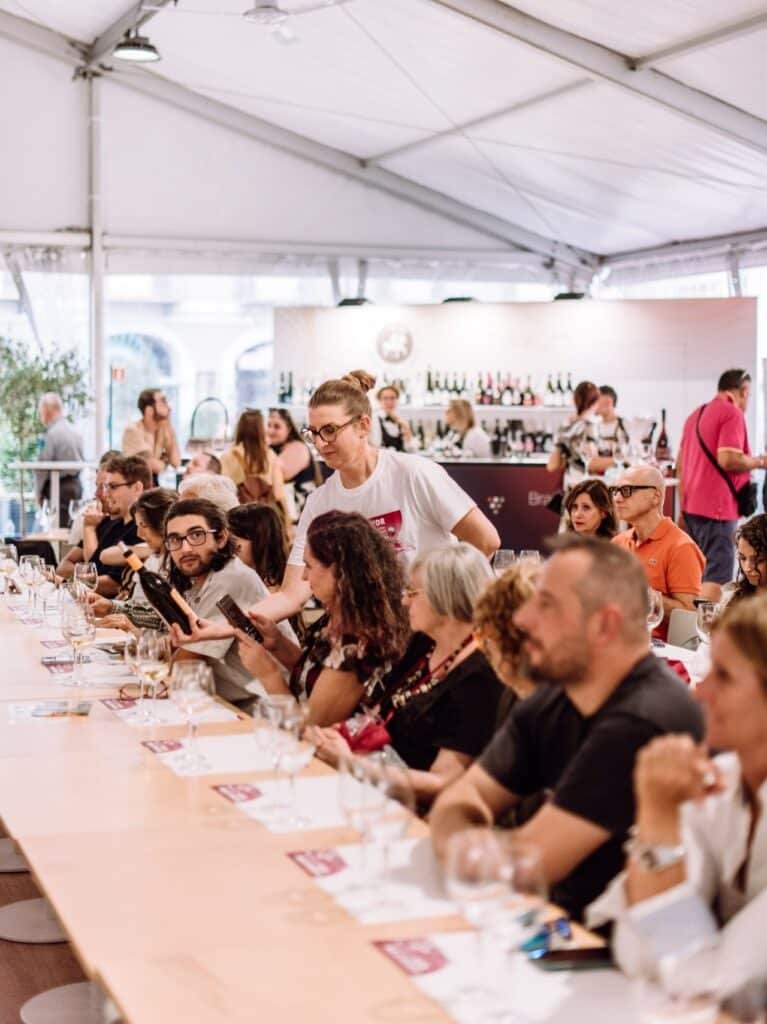
The city becomes a widespread tasting itinerary where historic palaces, squares, courtyards and urban spaces become places of degustation, sociality, culture and storytelling. Piazza San Secondo is transformed into the Wine Salon, Palazzo Alfieri hosts Monferrato tastings, Palazzo Ottolenghi hosts tastings of Asti Spumante, Moscato d’Asti, Brachetto and Vermouth, and many other venues including Palazzo Gastaldi, Cascina del Racconto, the Chamber of Commerce and the City Hall participate.
Beyond wine, the festival offers gourmet experiences, aperitivi, music, convivial moments, encounters, talks, showcooking, masterclasses and a rich calendar of Douja Off events that animate other iconic places of the city with tastings, meetings and performances. It is a festival designed to be accessible, open and engaging, thought for wine lovers, for those who want to know the territory better and for those who wish to experience Asti in a new way, step by step and glass by glass.
What Makes This Food Event Special
A national wine competition with public soul: Unlike many wine fairs that are only trade events, Douja d’Or was born as a national competition open to all DOC and DOCG wines of Italy and has remained faithful to this mission. An expert commission of over 200 tasters selects the best labels, awarding the golden pitcher. Yet the award ceremony is only the beginning. The public can taste the same award-winning wines, meet producers, attend debates at the Cortile dell’Enofila and purchase wines at competitive prices at the Self Service Cantina. This direct connection between jury and consumer makes it one of the most democratic wine events in Italy.
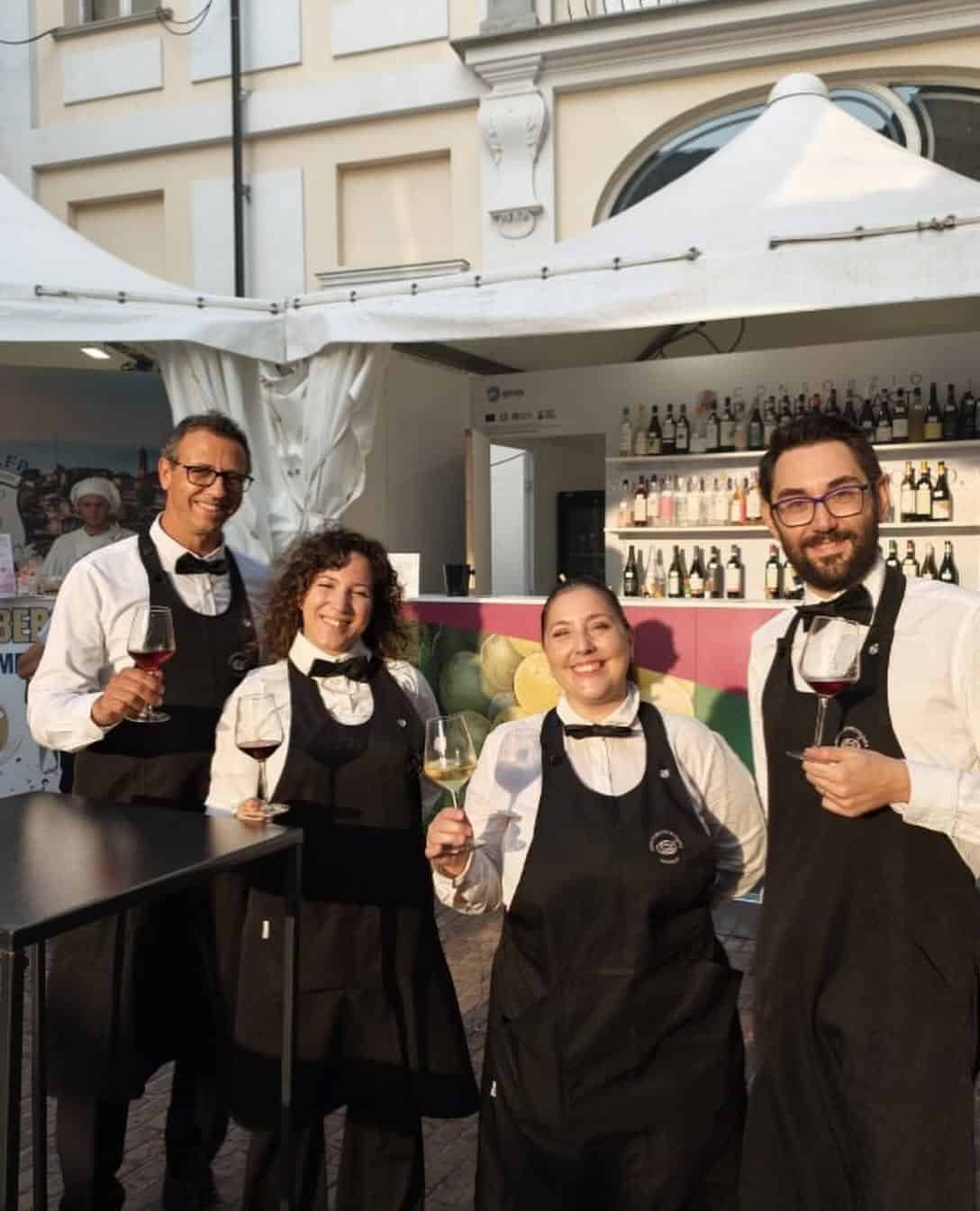
A whole city as venue: The festival is not confined to a single exhibition center. It is a diffuse experience that uses Asti’s most beautiful historic buildings as tasting rooms. Piazza San Secondo becomes the Wine Salon dedicated to Piedmontese wines, Palazzo Alfieri hosts Monferrato wines curated by Consorzio Barbera d’Asti e Vini del Monferrato and Scuola Alberghiera di Agliano Terme e Asti, Palazzo Ottolenghi hosts Asti Spumante, Moscato d’Asti, Brachetto and Vermouth curated by Consorzio Tutela dell’Asti, Consorzio Tutela del Brachetto and Consorzio del Vermouth di Torino, and other palaces host organic wines, special tastings and cultural events. Walking from one palace to another means discovering Asti’s medieval towers, Baroque churches and UNESCO-recognized vineyard landscapes.
The link with Festival delle Sagre and Palio: Douja d’Or is the opening beat of Asti’s great festive period. It kicks off the Palio week and culminates in the Festival delle Sagre, defined as the most truthful representation of peasant life, where over 40 pro loco organizations of the province of Asti offer their gastronomic specialties in an open-air restaurant enriched with Asti DOCG wines, biodegradable dishes and colorful parasols. This continuity between wine, food and historical reenactment creates a unique cultural ecosystem.
Focus on Piedmontese excellence and diversity: The tastings are curated by Piemonte Land of Wine and by protection consortia to guide the public on a journey of discovery. From sparkling wines, whites, rosés, reds, aromatic wines and passito wines, from structured and characterful reds to fresher and more immediate expressions, from fresh and aromatic bubbles of Asti Spumante to delicacy of Moscato d’Asti, from fragrant and enveloping notes of Brachetto to spiced complexity of Vermouth di Torino, every glass tells a different territory, grape and tradition.
Culture, music and conviviality: Between one glass and another, visitors can enjoy musical shows, concerts, theatrical productions, children’s events, wine discussions and debates, making the festival a holistic celebration of lifestyle where gastronomy, wine and culture harmoniously converge.
Food, Cuisine & Specialties
While wine is always at the center, food is an essential co-protagonist, with a program that celebrates the outstanding culinary heritage of Piedmont, one of the most renowned gastronomic regions in the world.
The food offerings are structured around tasting plates that allow visitors to sample many products without committing to a full meal. A gourmet sampling plate features Gorgonzola DOP, a creamy blue cheese that is a favorite among cheese enthusiasts, alongside a selection of DOP and IGP Piedmontese cheeses and cured meats, from sharp aged cheeses like Castelmagno and Toma to smoky salami, lardo, coppa and bresaola. These plates are designed to explore a range of textures and flavors that pair perfectly with different wine styles, from sparkling to structured reds.
Another signature is the sweet treat sampling plate featuring dry pastries made with hazelnuts, a specialty of Piedmont, including baci di dama, brutti ma buoni, hazelnut cookies and torte di nocciole. These nutty delights, with their crunchy texture and sweet undertones, complement the varied wine profiles, especially aromatic wines and passito.
Every evening, a new master chef from the area and a master pastry chef serve both unique and traditional Piedmontese dishes and desserts at showcooking events. Expect bagna cauda, vitello tonnato, tajarin al tartufo, agnolotti del plin, bollito misto, brasato al Barolo, and bonet and panna cotta for dessert. Street vendors, pop-up restaurants and traditional eateries serve local delicacies, allowing visitors to indulge in authentic Piedmontese cuisine while tasting award-winning wines.
The Festival delle Sagre, which is part of the same festive period, amplifies this with over 40 local municipalities showcasing their culinary skills, offering dishes like polenta, rabbit, wild boar, mushrooms, truffles and handmade pasta, all accompanied by Asti DOCG wines.
Chefs, Restaurants & Food Vendors
Douja d’Or brings together a collective of institutions, consortia, schools and artisan producers rather than a lineup of celebrity chefs, emphasizing education, territory and authenticity.
Consortia and Protection Bodies: The tastings are curated by Piemonte Land of Wine, Consorzio Barbera d’Asti e Vini del Monferrato, Consorzio Tutela dell’Asti, Consorzio Tutela del Brachetto, Consorzio del Vermouth di Torino and Piemonte Organic Wine Producers Association. These bodies ensure that each tasting is educational, with trained sommeliers and producers explaining grape varieties, terroir and winemaking techniques.
Scuola Alberghiera di Agliano Terme e Asti: The hotel school collaborates to lead the public on a journey of discovery of Monferrato wines, with students and teachers guiding tastings, preparing pairing dishes and providing hospitality services, creating a link between education and territory.
Local Chefs and Pastry Chefs: Every evening a different master chef from Asti and Monferrato and a master pastry chef take turns in the kitchen of the Wine Salon, presenting both traditional and innovative dishes. These are often chefs from Michelin-starred restaurants, historic trattorias and agriturismi who showcase their interpretation of Piedmontese cuisine.
Artisan Food Producers: Stands offer Gorgonzola DOP, DOP and IGP cheeses, salami, hazelnut pastries, honey, truffles and other products from Piedmont, with direct sales at competitive prices. The Self Service Cantina allows visitors to purchase wines they have tasted.
Street Food and Pop-Up Restaurants: Throughout the city, especially around Piazza San Secondo, Piazza Alfieri and Palazzo Ottolenghi, pop-up restaurants and street food vendors offer quick bites, aperitivo and full meals, creating a vibrant atmosphere from late morning to midnight.
Food Experience
The food experience at Douja d’Or is designed as an itinerary of experiences and tastings with wine always at the center, but with many ways to engage.
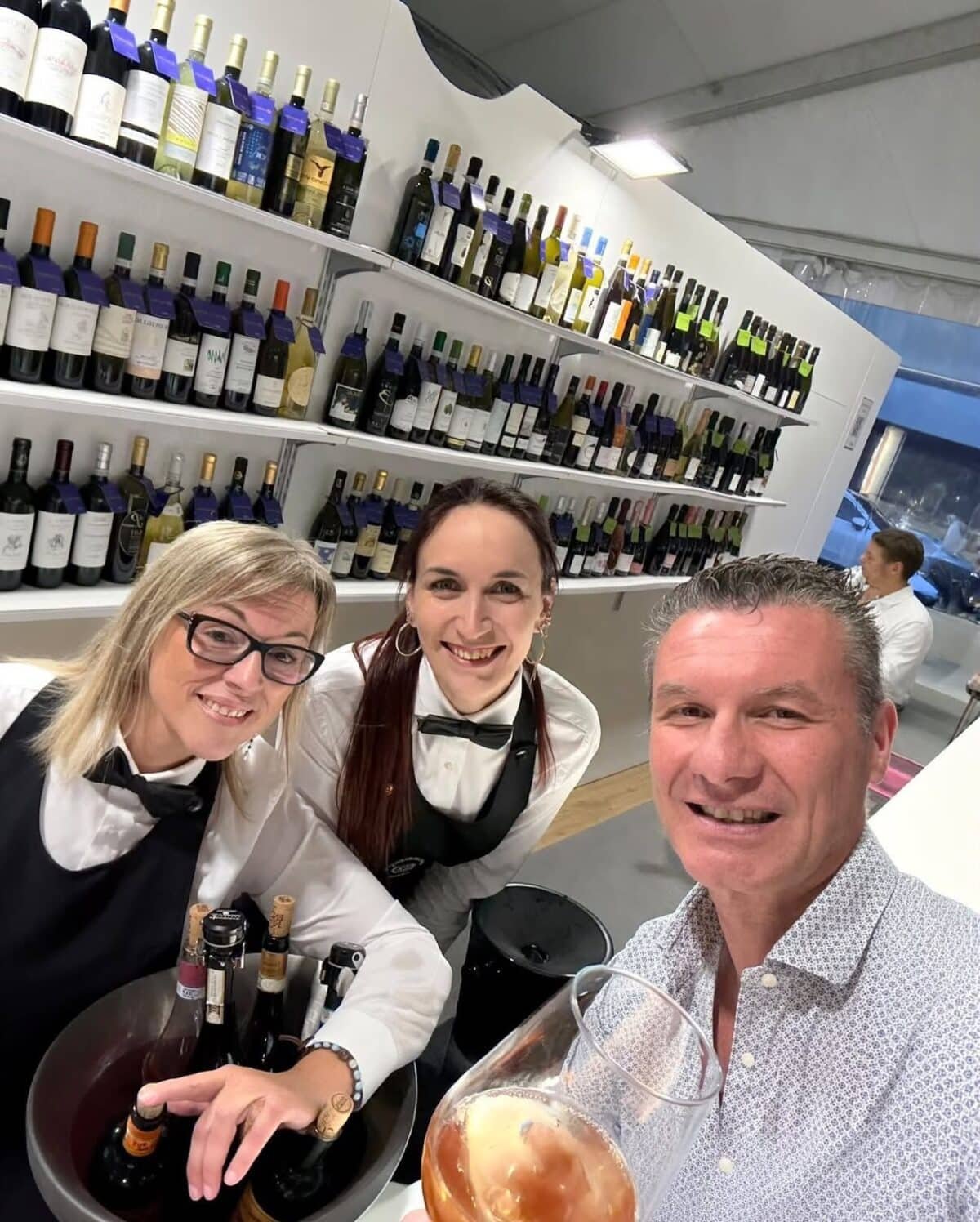
Walk-around tastings with digital wine card: Visitors can access a digital wine card featuring over 500 labels through a QR code, guiding them in choosing from a wide range of wine types including sparkling, whites, rosés, reds, aromatic and passito. Tastings are priced per glass, allowing you to compose your own itinerary, from fresh aperitivo to structured reds. You can taste at least 200 Barberas as well as 500 other wines from all over the region and Italy.
Guided tastings and masterclasses: At Palazzo Alfieri, Palazzo Ottolenghi and Piazza San Secondo, daily guided tastings dedicated to single grapes or appellations are held, such as vertical tastings of Barbera d’Asti, Moscato d’Asti, Brachetto, Vermouth and organic wines. These sessions are led by sommeliers and producers, offering deep dives into aromas, flavors and characteristics that tell the story of Monferrato hills.
Gourmet pairing plates: Visitors can pair their wine with tasting plates of Gorgonzola DOP, Piedmontese cheeses and cured meats, or sweet plates of hazelnut pastries, creating their own food and wine pairing journey. The plates are served in biodegradable materials with parasols and colorful table settings, especially during Festival delle Sagre.
Aperitivi, music and conviviality: Informal spaces are dedicated to aperitivo, where wine becomes an occasion for sociality and sharing. From late afternoon, squares and courtyards host live music, DJ sets, theatrical productions and children’s events, making the festival lively until midnight.
Douja Off and cultural encounters: In addition to official tastings, a rich calendar of Douja Off events animates other iconic places of the city with degustazioni, incontri and moments of spettacolo diffusi, including wine discussions, book presentations, art exhibitions and workshops about wine pairing and cooking.
날짜 및 일정
행사 날짜: 2027년 9월 (날짜 미정)
Official Timing and Program Structure Based on Previous Editions:
Ten-Day Format: The festival typically runs for ten consecutive days, from the second week to the third week of the period, with events spread across the city from late morning to late night.
Inauguration: The unveiling and opening to the public is usually scheduled in Piazza San Secondo in the late afternoon, around 5:00 PM, with institutional greetings, presentation of award-winning wines and opening of tasting counters.
Daily Opening Hours: Monday to Thursday from 6:00 PM to 12:00 AM, Friday from 6:00 PM to 1:00 AM, Saturday from 11:00 AM to 1:00 AM, Sunday from 11:00 AM to 12:00 AM. Daytime hours on weekends allow for extended tastings, family visits and cultural itineraries.
Tasting Schedule: Piedmontese wine tastings curated by Piemonte Land of Wine take place every day in Piazza San Secondo, Monferrato wine tastings curated by Consorzio Barbera d’Asti e Vini del Monferrato take place every day at Palazzo Alfieri, tastings of Asti Spumante, Moscato d’Asti, Brachetto and Vermouth take place every day at Palazzo Ottolenghi, and organic wines are available daily at Piazza San Secondo. Check daily schedule for masterclasses and showcooking times.
Evening Program: Every evening includes showcooking with a new master chef and pastry chef, musical shows, concerts, theatrical productions, children’s events and wine debates at Cortile dell’Enofila.
Festival delle Sagre: Takes place on the second Sunday of the period, starting with a parade of living historical scenarios and moving tableaux vivants from Piazza Marconi, followed by an open-air restaurant with over 40 pro loco.
이 행사에 참석하실 건가요? 이 멋진 활동과 지역 경험을 놓치지 마세요.
위치 및 장소
Asti is a historic city in the heart of Piedmont, in northwestern Italy, capital of the province of Asti, known worldwide for its wines, especially Asti Spumante, and for its rich medieval heritage of towers, churches and palaces. The city is located between the Langhe, Roero and Monferrato hills, in a landscape of vineyards recognized by UNESCO as a World Heritage Site, with rolling hills adorned with vineyards that stretch as far as the eye can see, bathed in sunlight and nourished by fertile soil.
The venue is not a single location but a citywide itinerary. The heart of the event is Piazza San Secondo, transformed into the Wine Salon, a place of encounter between local excellence and international guests, with tasting counters, stages and seating areas. Palazzo Alfieri, birthplace of the poet Vittorio Alfieri, hosts Monferrato wine tastings in its historic rooms and courtyard. Palazzo Ottolenghi, a magnificent Baroque palace, hosts tastings of Asti Spumante, Moscato d’Asti, Brachetto and Vermouth. Palazzo Gastaldi, La Cascina del Racconto, the Chamber of Commerce and the City Hall in Piazza San Secondo also serve as backdrops, each with a distinct character.
The historic center of Asti is compact and walkable, with cobbled streets, medieval towers, the Cathedral, the Church of San Secondo and many other landmarks within a few minutes’ walk. During the festival, squares, palaces, courtyards and urban spaces become places of degustation, conviviality, culture and storytelling, with each place being a stage of the overall narrative.
행사 시작 방법
By Car: Asti is easily reachable via the A21 Torino-Piacenza and A33 Asti-Cuneo motorways, with exits at Asti Est and Asti Ovest. The city is about 60 kilometers from Turin, 120 kilometers from Milan and 150 kilometers from Genoa. During festival days, traffic in the historic center is restricted, with large parking areas organized outside the center in areas such as Piazza Campo del Palio, with shuttle buses and clear signage. Arriving early on weekends is advisable.
By Train: Asti railway station is served by regional and intercity trains on the Turin-Genoa and Turin-Alessandria lines, with direct connections from Turin in about 40 minutes, from Milan in about two hours and from Genoa in about 90 minutes. From the station, the historic center is about 10 minutes’ walk or a short bus ride.
By Air: The closest airports are Turin Caselle, Milan Linate and Milan Malpensa, all within 90 to 120 minutes by car or train. From the airports, rental cars or train connections via Turin are available.
Local Mobility: The historic center is largely pedestrian during the festival, with all event areas within walking distance. Comfortable shoes are recommended due to cobblestones. Information points with maps, assistance for visitors with limited mobility and designated rest areas are available. The city offers bike rental and local buses for longer distances.
근처 숙박 장소
Asti offers a wide range of accommodation options that allow visitors to experience the festival fully, from boutique hotels inside historic palaces to agriturismi surrounded by vineyards.
Staying inside the historic center offers the advantage of walking to all tasting venues and enjoying the evening atmosphere without needing transportation after wine tastings. Boutique hotels and bed and breakfasts in renovated medieval buildings offer authentic charm, often with terraces overlooking Piazza San Secondo or Piazza Alfieri.
Agriturismi and country resorts in the Monferrato hills just outside Asti offer tranquility, swimming pools, vineyard views and farm-to-table breakfasts with local cheeses and hazelnut pastries. These are ideal for those who want to combine the festival with vineyard tours, truffle hunting, cooking classes and wine estate visits. Many estates offer special Douja d’Or packages that include tastings, cellar tours and shuttle services to the city.
Nearby towns such as Alba, Barbaresco, Nizza Monferrato, Canelli and Costigliole d’Asti offer additional hotels, wine resorts and boutique accommodations, with easy train or car connections to Asti. The Langhe and Roero areas, UNESCO World Heritage sites, are only 30 to 60 minutes away and provide luxurious wine hotels.
Booking well in advance, at least three to four months ahead, is strongly recommended, as the festival period is peak season in Piedmont and accommodations fill up quickly, especially for weekends and for the Festival delle Sagre and Palio days.
행사 전후에 할 일
Visit Asti’s historic landmarks: Explore the Cathedral of Santa Maria Assunta, the Collegiate Church of San Secondo, Palazzo Mazzetti with its art gallery, Torre Troyana, Torre Rossa and the many medieval towers that define Asti’s skyline.
Wine tours in Monferrato, Langhe and Roero: The area around Asti is one of Italy’s most famous wine regions. Visit estates producing Barbera d’Asti, Moscato d’Asti, Asti Spumante, Brachetto, Grignolino and Ruchè, with vineyard walks, cellar tours and barrel tastings. Canelli, with its underground cathedrals, UNESCO World Heritage cellars, is only 30 minutes away.
Festival delle Sagre and Palio: If your visit extends, experience the Festival delle Sagre on the second Sunday, with its parade of living historical scenarios and open-air restaurant, and the Palio di Asti, one of the oldest horse races in Italy, held on the third Sunday, with medieval costumes, flag throwers and bareback horse race in Piazza Alfieri.
Gastronomic experiences: Join truffle hunting experiences in the Monferrato woods, cooking classes for tajarin, agnolotti del plin and bagna cauda, cheese tasting tours for Toma, Castelmagno and Gorgonzola, and hazelnut farm visits.
Cultural excursions: Visit the village of Albugnano with its abbey, the castle of Costigliole d’Asti, the Romanesque churches of the area, and the city of Turin with its museums, Egyptian Museum and chocolate tradition.
Wellness and nature: Enjoy cycling tours through vineyards, e-bike culinary tours, hiking trails in the Monferrato hills and wellness centers with spa treatments using grape-based products.
Restaurants & Local Food to Try
Asti and Monferrato offer outstanding trattorias, osterias, enotecas and fine dining restaurants where you can deepen your culinary journey beyond the festival.
Must-try dishes: Bagna cauda, a warm dip of anchovies, garlic and olive oil served with vegetables; vitello tonnato, veal with tuna sauce; tajarin, thin egg pasta often served with white truffle; agnolotti del plin, small pinched pasta filled with meat; bollito misto, mixed boiled meats with sauces; brasato al Barolo, beef braised in Barolo wine; finanziera, a traditional Piedmontese dish; and for dessert, bonet, a chocolate and amaretto pudding, panna cotta, and hazelnut cakes.
현지 제품: Piedmont is famous for white truffle from Alba, hazelnuts from Langhe, Gorgonzola DOP, Castelmagno DOP, Toma, Robiola, DOP and IGP salami, honey, and wines such as Barbera d’Asti DOCG, Moscato d’Asti DOCG, Asti Spumante DOCG, Brachetto d’Acqui DOCG and Vermouth di Torino.
Recommended restaurant styles: Historic osterias in the center for traditional Piedmontese cuisine at reasonable prices, enotecas and wine bars around Piazza San Secondo for aperitivo with tasting plates, Michelin-starred restaurants in the hills for creative interpretations, and agriturismi for farm-to-table experiences.
Food shopping: Local shops sell wines, vermouth, hazelnut products, truffles, cheeses, cured meats and artisanal chocolates that make excellent souvenirs, with many vendors offering shipping services.
Dietary & Food Allergy Information
The festival is attentive to dietary needs, with many options available across different venues.
Vegetarian and vegan options: Many food stands and restaurants offer vegetarian preparations such as bagna cauda with vegetables, tajarin with butter and sage, vegetable flans, salads with hazelnuts and cheese platters. Vegan options are available but more limited, as many traditional recipes use butter, eggs or meat broth. Some stands offer vegan plates with grilled vegetables, polenta and salads.
Gluten-free: Piedmontese cuisine includes many naturally gluten-free dishes such as polenta, grilled meats, bollito, cheese platters and many desserts based on hazelnut flour. Pasta alternatives such as rice-based tajarin and gluten-free bread are increasingly available. For guided tastings, inform staff in advance.
Allergens: All authorized food points are required to display allergen information in accordance with EU regulations, listing presence of gluten, nuts, dairy, eggs, celery and other major allergens. Since preparation takes place in open-air kitchens and in crowded conditions, cross-contact cannot be fully excluded for severe allergies. Speak directly with vendors, carry personal medication if needed and contact organizers in advance for specific guidance.
Wine allergies and sulfites: All wines contain sulfites, naturally produced during fermentation and sometimes added in small quantities to preserve freshness. Organic wines from wineries belonging to protection consortia and members of Piedmont Organic Wine Producers Association are highlighted, with minimal intervention methods that may be more suitable for sensitive individuals.
티켓 정보
Entry to the Douja d’Or festival area and to cultural events, musical shows, concerts and theatrical productions is generally free, creating an open and accessible atmosphere. Paid tastings are the core of the experience, with prices based on previous editions converted to USD.
Pricing Based on Previous Editions, Converted to USD, Full Prices Shown in Dollars:
Wine Tastings: Depending on variety, prices for tastings are set at USD 3.25, USD 4.30 and USD 5.40 per glass, with premium labels at the higher end. A digital wine card with over 500 labels guides selection, from sparkling, whites, rosés, reds, aromatic and passito wines. Visitors can purchase multiple tasting tokens or pay per glass.
Gourmet Sampling Plate: USD 5.40 per plate. Includes samples of Gorgonzola DOP, DOP and IGP Piedmontese cheeses and cured meats, allowing exploration of textures and flavors from sharp aged cheese to smoky cured meats.
Sweet Treat Sampling Plate: USD 3.75 per plate. Features samples of dry pastries made with hazelnuts, such as baci di dama, brutti ma buoni and hazelnut cookies, perfect pairing with aromatic wines.
Organic Wines: Tastings of organic wines by the glass from wineries belonging to protection consortia are available at similar price points, around USD 4.30 to USD 5.40.
Masterclasses and Showcooking: Some special masterclasses and showcooking events may require advance booking and may have separate pricing, typically USD 11 to USD 27 depending on content and duration, with some free-entry performances every evening.
Self Service Cantina: Wines can be purchased at competitive prices to take home, with bottles starting from USD 11 to USD 32 depending on denomination and producer.
공식 행사 정보
Title: Douja d’Or Festival 2027 – Asti, Italy
주최자: Azienda Speciale della Camera di Commercio di Asti – Asti Chamber of Commerce, in collaboration with Comune di Asti, Regione Piemonte, Piemonte Land of Wine, Consorzio Barbera d’Asti e Vini del Monferrato, Consorzio Tutela dell’Asti, Consorzio Tutela del Brachetto, Consorzio del Vermouth di Torino and other consortia
공식 웹사이트: https://www.doujador.it/
Contact E-mail: doujador@aa.camcom.it
전화: +39 0141 535211
장소: Historic Center of Asti – Piazza San Secondo, Palazzo Alfieri, Palazzo Ottolenghi, Palazzo Gastaldi, Cascina del Racconto, Chamber of Commerce, City Hall and other iconic places, Asti, Piedmont, Italy
Social and Updates: Full program, tasting schedules, maps, winery lists and booking links for masterclasses are published on the official website and on official Douja d’Or social media channels. Check opening hours and schedules on the website for daily updates.
Notes: The event takes place regardless of weather conditions, with covered locations available. Visitors are asked to drink responsibly, use biodegradable materials and support local producers.
비디오
위치
자주 묻는 질문
Is there an entrance fee to enter Douja d'Or Festival?
Entry to the Douja d'Or festival area and to cultural events, musical shows and theatrical productions is generally free. You only pay for the tasting formulas you choose, such as wine tastings per glass and gourmet sampling plates. This open-access model allows everyone to enjoy the atmosphere of Asti’s historic center while supporting local producers through tasting purchases.
What does Douja d'Or mean and what is the symbol?
Douja d'Or means golden jug in Piedmontese dialect. Douja was an ancient terracotta jug used to decant, store and serve wine, and d'Or means golden. The golden jug is the symbol of the national wine competition award given to the best DOC and DOCG wines, approved by the Ministry of Agricultural Food and Forestry Policies, and is seen in osterias and restaurants around Italy as a mark of quality.
What is the difference between Douja d'Or and Festival delle Sagre?
Douja d'Or is the national wine competition and citywide wine festival with tastings in historic palaces, while Festival delle Sagre is the Food Festival of Food Festivals held on the second Sunday, where over 40 pro loco of the province of Asti offer their gastronomic specialties in an open-air restaurant. Both are part of Asti’s great festive period and share the same spirit of celebrating peasant life and local excellence.
Do I need to book in advance for tastings?
General walk-around tastings with digital wine card do not require advance booking and can be purchased directly at tasting counters. For special masterclasses, showcooking with master chefs and pastry chefs, and guided tastings dedicated to single grapes or appellations, advance booking is recommended because places are limited. Booking information is published on the official website.
Can I buy wines during the festival?
Yes, one of the best parts of Douja d'Or is the vast offer of Italian wines, especially from Piedmont, that can be tasted and purchased at competitive prices at the Self Service Cantina. You can buy bottles of award-winning wines, organic wines, Asti Spumante, Moscato d'Asti, Brachetto and Vermouth di Torino directly from producers and consortia, with many vendors offering shipping services.

답글 남기기