
-
19 septembre 2026
Date de l'événement :
-
20 septembre 2026
Fin de l'événement :
À quoi s’attendre en 2026
The Palio di Parma returns in 2026 for its 40th modern edition, bringing medieval history, historical re-enactment, traditional performances, archery, music, flag-waving, processions and the Corsa dello Scarlatto to Parma. The main festival atmosphere is centred around Parco Ducale, where visitors can explore a medieval village with historical camps, crafts, merchants, traditional activities and live performances.
The 2026 programme combines entertainment with historical interpretation. Visitors can watch the five historic Porte compete, see medieval-style combat demonstrations, attend the solemn blessing of the Palio, follow historical processions through the city and experience the final Corsa dello Scarlatto.
The modern Palio was revived in 1978 by the Centro Sportivo Italiano and has developed into a historical and cultural event based on research into Parma’s medieval traditions. The organisers state that the modern format has been adapted to contemporary safety requirements while retaining connections with the city’s historical sources.
Profitez de votre événement sans stress avec Italy Travelo
Que vous voyagez pour un festival mondialement connu, un concert en direct, une célébration culturelle ou un événement professionnel, Italy Travelo vous aide à simplifier chaque étape de votre voyage. Notre équipe propose une assistance personnalisée aux voyages, vous permettant de vous concentrer sur la création de souvenirs durables.
Dates des événements
The Palio di Parma 2026 takes place on Saturday, September 19, and Sunday, September 20, 2026.
Saturday features the opening of the festival, historical performances, the procession to Parma Cathedral, the blessing of the Palio, the evening Convivio della Vigilia, the archery tournament draw and evening performances.
Sunday continues with the Medieval Village, the Five Porte archery tournament, historical performances, the Great Historical Procession and the Corsa dello Scarlatto.
Vous visitez cet événement ? Ne manquez pas ces activités et expériences locales étonnantes pendant votre séjour.
Lieux et lieux de festival
Parco Ducale is the principal festival location and hosts the Medieval Village, historical camps, performances, combat demonstrations, archery activities and the final race.
Other locations featured in the 2026 programme include:
- Parco Ducale – Main festival area and Medieval Village.
- Parco Ducale central avenue – Athlete presentation, awards and Corsa dello Scarlatto.
- Parma Cathedral – Solemn blessing of the Palio.
- Piazza Duomo – Historical procession and performances.
- Piazza Pilotta – Historical dances, flag-waving and musical performances.
- Historic centre of Parma – Procession routes connecting the main festival locations.
Programme culturel complet
The cultural programme focuses on medieval Parma and the historical traditions associated with the Palio.
Les visiteurs peuvent faire l'expérience :
- Medieval historical re-enactment
- Historical processions
- Flag-waving and traditional music
- Medieval dance performances
- Historical weapons demonstrations
- Combat médiéval
- Archery competitions
- Medieval crafts and traditional trades
- Historical camps
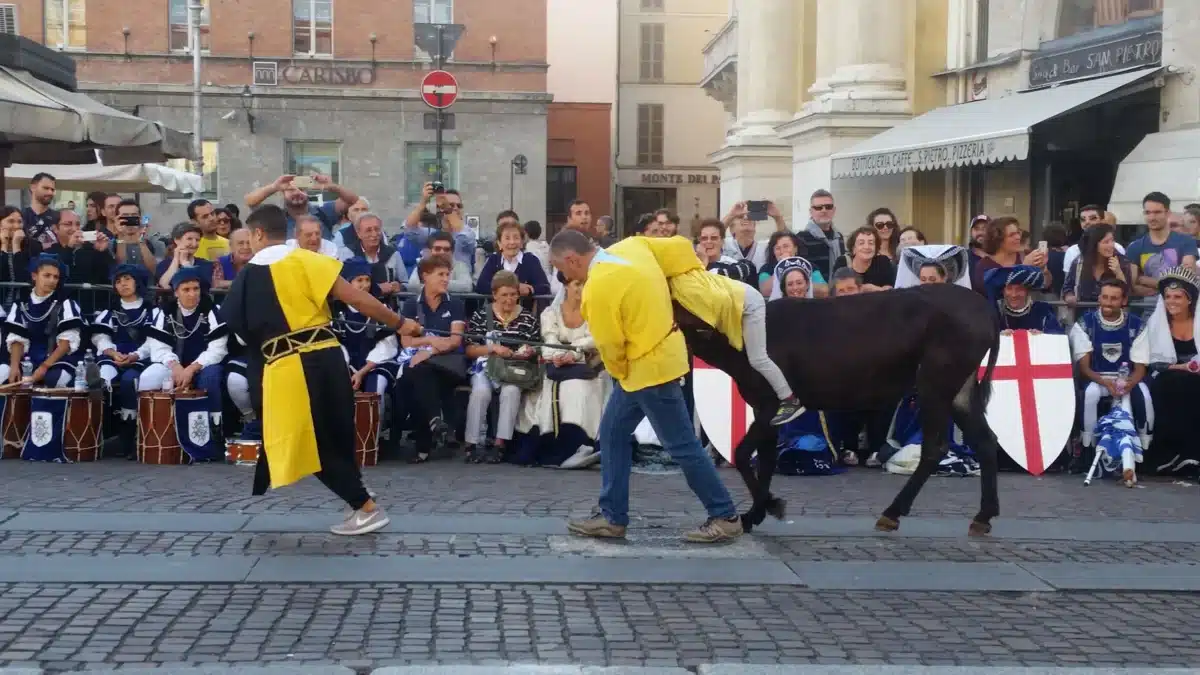
- Medieval games
- Traditional tavern activities
- Ancient beverages
- Performances by musicians and drummers
- Costumed historical characters
The Medieval Village provides an immersive setting where visitors can discover historical crafts, demonstrations and representations of medieval daily life.
Traditions et performances mises en avant
Maestà della Battaglia
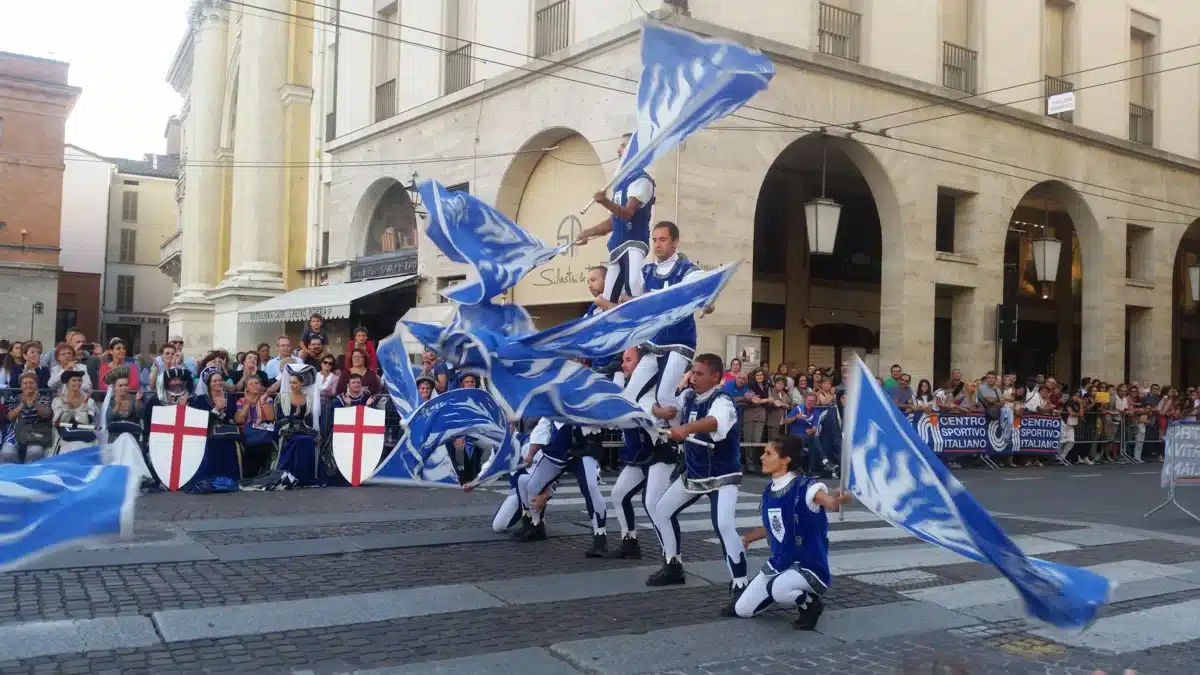
The Sbandieratori e Musici Maestà della Battaglia provide traditional flag-waving and musical performances during the festival.
Il Torrione
The historical group Il Torrione presents medieval-inspired dances and performances at Parco Ducale and Piazza Pilotta.
Ducato di Parma
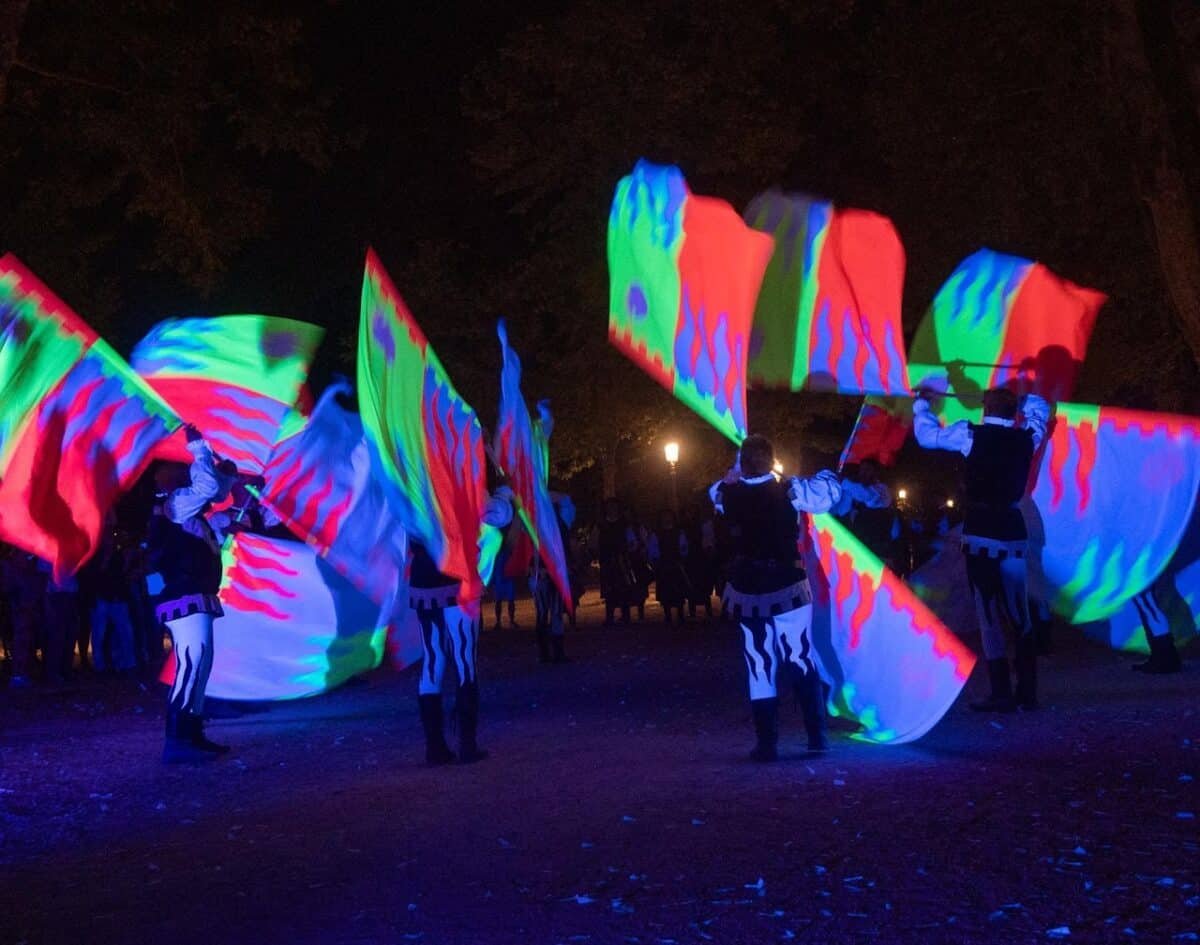
Ducato di Parma participates with flag-waving and musical performances, including an evening display with illuminated flags.
Flumen Temporis
Flumen Temporis presents historical combat demonstrations within the Medieval Village.
Pendragon
Pendragon contributes historical combat performances, including an evening demonstration featuring flaming swords.
Five Porte
The modern Palio is organised around five historic city gates: Porta Santa Croce, Porta San Barnaba, Porta San Michele, Porta Nuova and Porta San Francesco.
Points forts historiques et patrimoniaux
The history of the Palio di Parma reaches back to medieval Parma. The city’s second municipal statute, dated between 1259 and 1304, records the purchase of scarlet cloth associated with the race from which the name Corsa dello Scarlatto derives.
Historical sources connect the race with August 15, the Feast of the Assumption of the Virgin Mary, which was closely associated with Parma Cathedral. The Chronicon Parmense also records the Corsa dello Scarlatto in medieval Parma.
Over the centuries, the Palio changed form. Historical records describe different types of races and competitions, while the last known reference to the older form dates to 1525.
The modern Palio was revived in 1978 and subsequently developed around the five Porte. The organisers use historical documents, municipal statutes, ecclesiastical records and other studies to connect the contemporary event with Parma’s medieval heritage.
Programme des événements et activités
Samedi 19 septembre
- Opening gathering at Parco Ducale
- Sbandieratori e Musici Maestà della Battaglia performance
- Historical dances by Il Torrione
- Flumen Temporis combat demonstration
- Historical procession towards Parma Cathedral
- Pendragon historical combat
- Solemn blessing of the Palio
- Return procession to Parco Ducale
- Performances by Ducato di Parma and Maestà della Battaglia
- Convivio della Vigilia
- Archery tournament draw
- Illuminated flag performance
- Flaming-sword demonstration
- Evening festival activities
Dimanche 20 septembre
- Medieval Village opening
- Five Porte archery tournament
- Historical performances at Piazza Pilotta
- Historical procession towards Piazza Duomo
- Agitation de drapeaux et performances musicales
- Flumen Temporis combat
- Il Torrione dances
- Historical procession and race formation
- Archery awards
- Presentation of athletes representing the five Porte
- Corsa dello Scarlatto
- Awards ceremony and honour lap
- Festival closing
The schedule and locations are based on the official 2026 programme.
Types de billets et options d’entrée
The Palio di Parma is officially promoted as a free-admission festival.
Admission générale : $0
Medieval Village: Free entry.
Historical performances: Accès gratuit.
Historical processions: Free to watch from public areas.
Archery experience: The official programme indicates that visitors can participate in the archery activity through a voluntary contribution.
No general paid entrance ticket is required for the main festival programme.
Visites guidées et expériences culturelles
The Palio di Parma is primarily a historical re-enactment and cultural festival rather than a conventional guided-tour event. Visitors can explore the Medieval Village independently while watching demonstrations of medieval crafts, historical camps, combat and traditional activities.
The public archery activity offers a more interactive experience, allowing visitors to try archery under the supervision of participating archers.
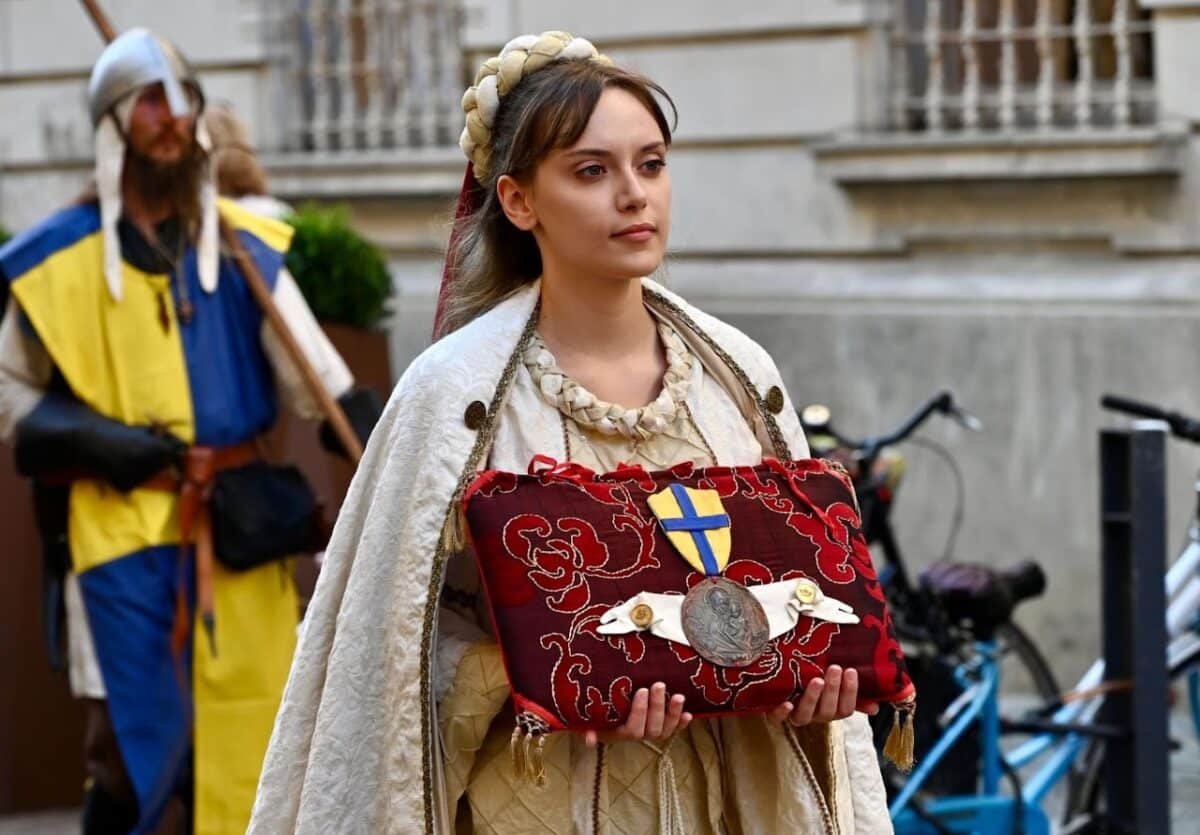
The historical processions also provide an opportunity to experience Parma’s historic centre while following costumed participants, musicians, flag-wavers and historical groups between Parco Ducale and the Cathedral.
Cérémonies et célébrations spéciales
The solemn blessing of the Palio at Parma Cathedral is one of the central ceremonial moments of the festival. The ceremony connects the modern Palio with Parma’s religious and historical traditions.
The Saturday evening programme continues with the Convivio della Vigilia, followed by the archery tournament draw, illuminated flags and a flaming-sword performance.
Sunday culminates in the presentation of the athletes representing the five Porte, followed by the Corsa dello Scarlatto, awards ceremony and honour lap.
Règles du festival
Visitors should follow instructions from festival organisers, performers, security personnel and venue staff.
Public safety: Spectators should remain in designated areas during archery, combat demonstrations and racing activities.
Historical equipment: Bows, weapons and other equipment used during demonstrations should only be handled by authorised participants.
Race area: Visitors should remain outside restricted areas while athletes are preparing for and competing in the Corsa dello Scarlatto.
Enfants : Children should be supervised around combat demonstrations, archery areas and other performance spaces.
Archery participation: Visitors taking part in the public archery activity should follow all instructions from the participating archers.
Additional temporary rules may be introduced on site depending on crowd management, weather, safety requirements or individual activities.
Comment y arriver
Parco Ducale is the principal festival location and is situated close to central Parma.
En voiture : Parma is connected to the Italian motorway network through the A1, providing road connections with Milan, Bologna and other cities in northern Italy.
Par train : Parma railway station has rail connections with several major Italian cities. From the station, visitors can continue towards the historic centre and Parco Ducale on foot or by local transport.
À pied : Visitors staying in central Parma can reach many of the festival locations on foot.
Because the historical processions move through central Parma, walking is particularly convenient during the main programme.
Transports en commun et stationnement
Local urban buses connect Parma railway station, the historic centre and surrounding neighbourhoods.
Transports en commun : Visitors staying outside the centre can use local bus services and continue on foot towards Parco Ducale.
Stationnement : Visitors arriving by car should use designated public parking areas outside the busiest central streets and continue towards the festival locations on foot.
Traffic changes: Temporary pedestrian or traffic restrictions may occur during historical processions. Visitors should follow local signs and allow additional time for walking.
Zones d’hébergement
Parma historic centre: Convenient for reaching Piazza Duomo, Piazza Pilotta and the central procession routes.
Parco Ducale area: Suitable for visitors who want to stay close to the Medieval Village and main festival activities.
Zone de la gare ferroviaire : A practical choice for visitors arriving by train, with convenient access to central Parma.
Central and southern Parma: Provides additional accommodation choices within walking distance or a short local transport journey of the festival.
Cuisine et spécialités traditionnelles
Food contributes to the atmosphere of the Medieval Village, which includes a traditional-style tavern and references to ancient beverages and medieval daily life.
The Saturday Convivio della Vigilia provides a dedicated food and social experience within the festival programme.
Visitors can also explore Parma’s broader culinary traditions during their stay, including Parmigiano Reggiano, Prosciutto di Parma and other specialties associated with Emilia-Romagna.
Accessibilité
The festival takes place across outdoor public spaces, historic streets, Parco Ducale and central city locations. Accessibility can therefore vary between individual activities and venues.
Visitors with mobility requirements should take into consideration the surfaces, crowds and temporary barriers that may be present around the Medieval Village, procession routes and race area.
For specific accessibility requirements, visitors should contact the organisers before attending.
Contact officiel : info@paliodiparma.com
Meilleures expériences culturelles
Medieval Village: Explore historical camps, merchants, crafts, games, demonstrations and performances.
Procession historique : Follow the costumed procession between Parco Ducale, Parma Cathedral and Piazza Duomo.
Blessing of the Palio: Attend the ceremonial blessing at Parma Cathedral.
Flag-waving performances: Watch Maestà della Battaglia, Il Torrione and Ducato di Parma perform traditional flag and musical displays.
Historical combat: See Flumen Temporis and Pendragon demonstrate medieval-style combat.
Archery: Watch the Five Porte tournament and participate in the public archery experience.
Corsa dello Scarlatto: Watch the principal modern race associated with the Palio and the five historic Porte.
Faits marquants de l’année précédente
The 2025 edition was the 39th Palio di Parma. Porta San Michele won the 39th Palio, according to the official festival website.
The previous edition featured the Medieval Village at Parco Ducale, historical re-enactments, flag-waving, musicians, combat demonstrations, archery, a historical procession, the blessing at Parma Cathedral and the Corsa dello Scarlatto.
The 2026 festival continues this established format while marking the 40th modern edition of the Palio di Parma.
Billets officiels
The Palio di Parma 2026 is officially listed as a free-admission event. General visitors therefore do not need to purchase an entrance ticket for the main festival programme.
Visitors should check the official website for programme updates and any specific arrangements concerning individual activities before attending.
Site officiel : https://www.paliodiparma.com/
Contact officiel : info@paliodiparma.com
Vidéo
Localisation
FAQ
What is the primary historical focus of the Palio di Parma festival?
The festival celebrates the rich medieval and Renaissance history of Parma by honoring its civic identity through authentic pageantry and sports. Local organizers meticulously recreate fourteenth-century customs, trade guilds, and athletic foot races based on verifiable archival documents. It serves as a major cultural landmark preserving the intangible heritage of the region.
How are the local neighborhoods and districts involved in the event?
Historic neighborhood districts drive the passionate community spirit through intense athletic competitions and artistic preparations. Residents spend months crafting custom heraldic banners, sewing period costumes, and training representatives for traditional games. These districts foster the lively rivalries and cooperative tavern gatherings that define the celebration.
What can visitors experience during the historic costumed processions?
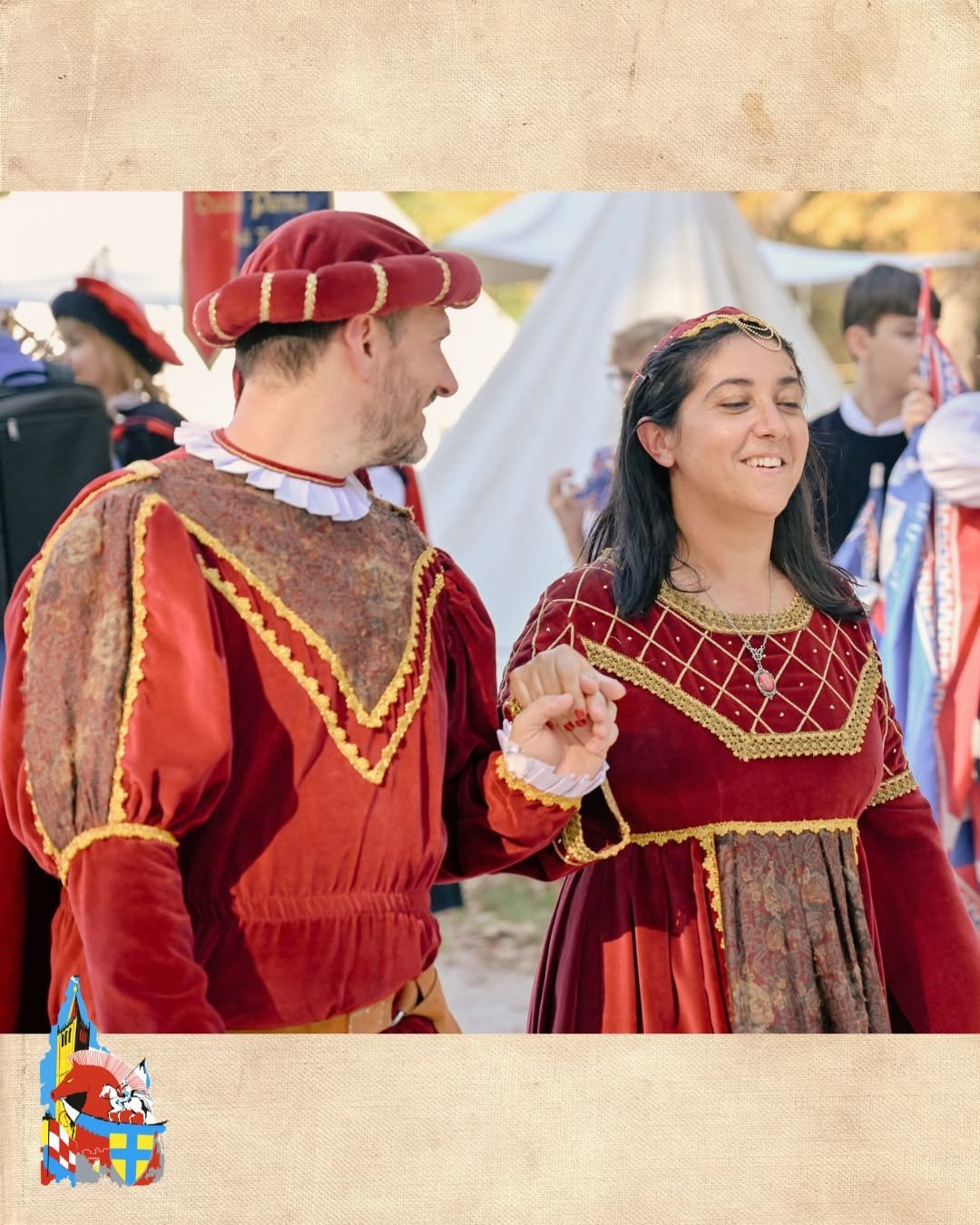
Visitors witness hundreds of local residents marching in meticulously researched, hand-stitched medieval garments and armor. The parade features noble lords, ladies, musicians playing period instruments, and civic authorities in strict social order. It recreates the aesthetic elegance and political hierarchy of the town's golden age in stunning detail.
Are the evening tavern gatherings and food options open to the general public?
Pop-up historic taverns and dining halls open their doors across the park to serve authentic regional dishes and local wines. Menus feature seasonal ingredients, ancient grain breads, wild game, and roasted meats served in communal settings. These culinary gatherings highlight the agricultural bounty and hospitality of the surrounding hills.
Où ont lieu les principaux événements du tournoi et les grandes cérémonies ?
The main athletic events, foot races, and theatrical pageants utilize Parco Ducale and the historic town center. This central urban area transforms into a medieval arena complete with temporary spectator stands and staging. It serves as the ultimate gathering point for the procession finales and evening entertainment.

Laisser un commentaire