
À quoi s’attendre en 2027
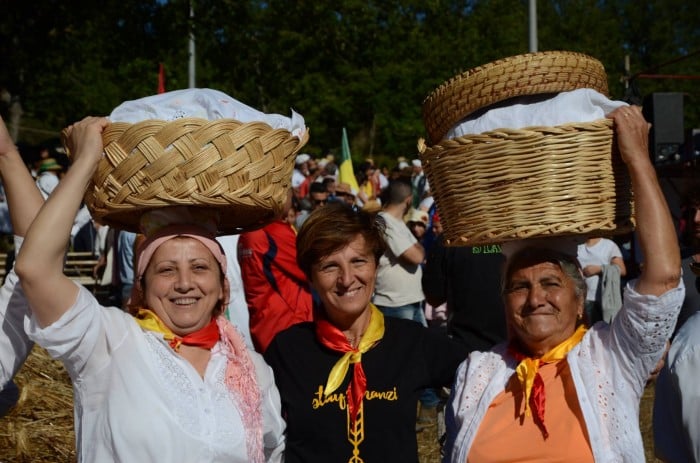
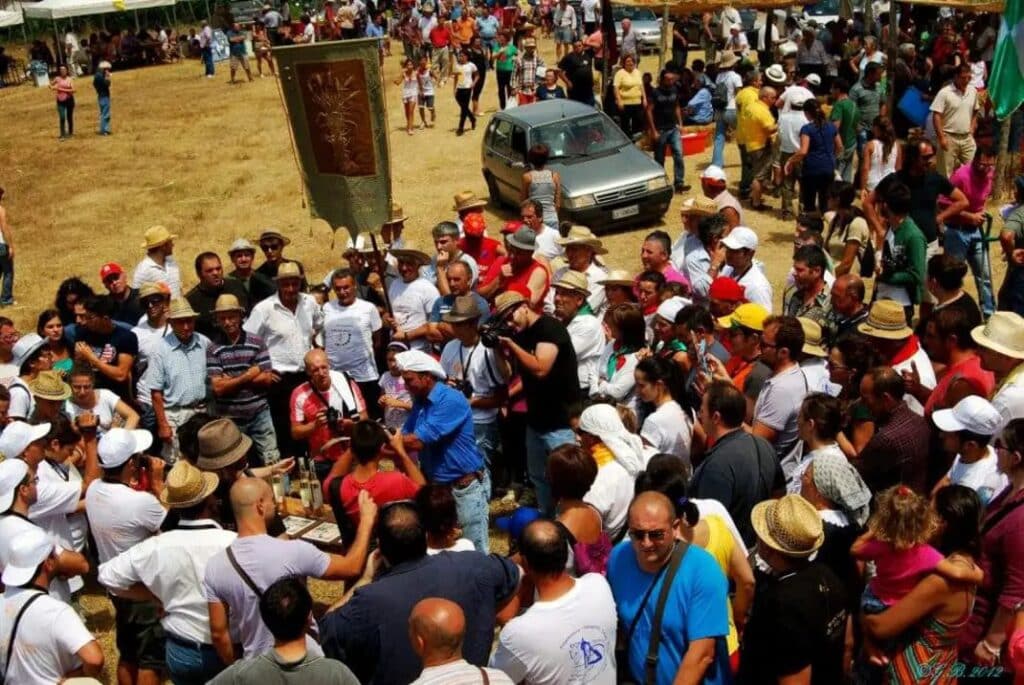
Palio del Grano Festival 2027 will celebrate the agricultural heritage, rural knowledge and community traditions of Caselle in Pittari in the Cilento area of Campania. The central event is an authentic hand-harvesting competition involving the town’s eight rioni and their associated “paesi cumpari,” combining agricultural skills, traditional knowledge, food, music and community participation.
The festival is closely connected with the Camp di Grano, an immersive programme focused on traditional farming practices. Participants can learn about manual harvesting, grain varieties, traditional threshing, breadmaking and the relationship between agriculture, food and local identity.
Rather than being a conventional agricultural fair, the Palio del Grano presents farming culture as a living community practice. Visitors can watch the competition, experience traditional demonstrations, discover local food traditions and observe the cooperation between the eight rioni and their partner communities.
Profitez de votre événement sans stress avec Italy Travelo
Que vous voyagez pour un festival mondialement connu, un concert en direct, une célébration culturelle ou un événement professionnel, Italy Travelo vous aide à simplifier chaque étape de votre voyage. Notre équipe propose une assistance personnalisée aux voyages, vous permettant de vous concentrer sur la création de souvenirs durables.
Dates des événements
Juillet 2027 (Dates à déterminer)
The official 2027 calendar has not yet been published. The event is traditionally held in July, while the wider Camp di Grano programme takes place around the Palio and provides several days of agricultural, educational and community activities.
Vous visitez cet événement ? Ne manquez pas ces activités et expériences locales étonnantes pendant votre séjour.
Lieu et site d’exposition
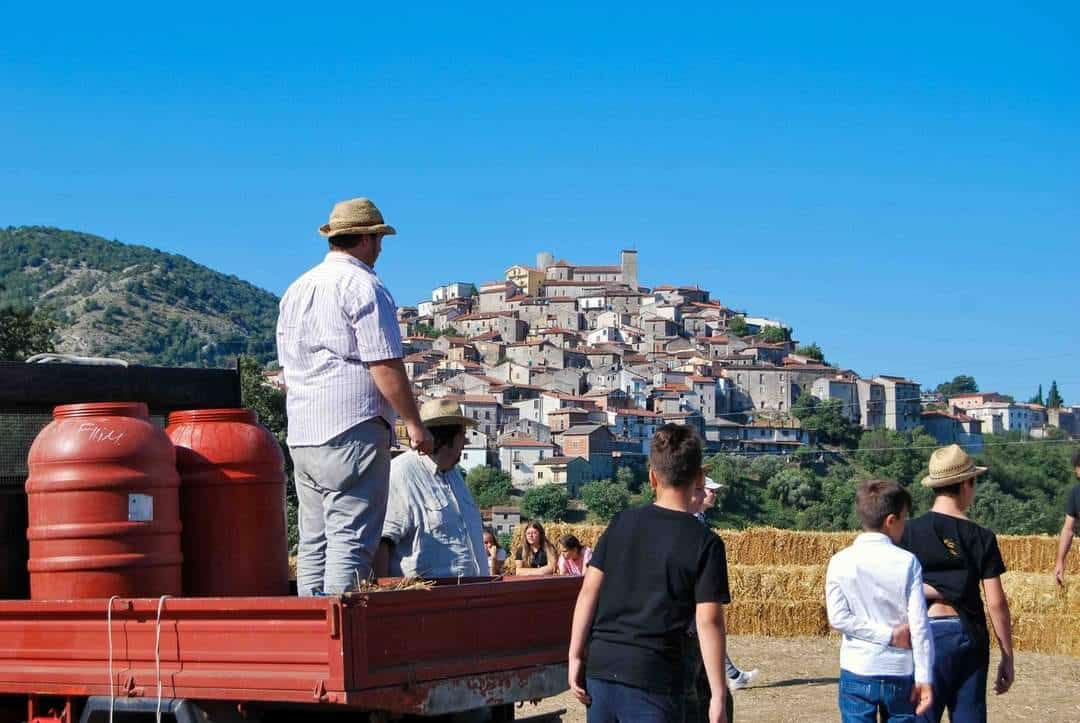
The Palio does not use a conventional exhibition centre. Activities take place around Caselle in Pittari, including public squares, streets, agricultural fields and community spaces.
- Caselle in Pittari: The historic town provides the main setting for meetings, gatherings, processions and community activities.
- Piazza Olmo: A traditional meeting point for the Palio company and participants.
- Competition field: The main agricultural setting where the hand-mowing competition takes place.
- Aia and agricultural areas: Used for traditional threshing and demonstrations of historic grain-processing methods.
- Camp di Grano locations: Fields and community spaces are used for practical agricultural learning.
- Rione areas: The eight districts provide additional locations for food, hospitality and community celebrations.
The event takes place in Caselle in Pittari, in the Province of Salerno, Campania, within the Cilento area.
Programme complet de l’événement
The programme combines agricultural demonstrations, community activities and the main Palio competition.
- Camp di Grano activities
- Manual wheat harvesting
- Grain collection and traditional processing
- Study of local wheat varieties
- Traditional threshing
- Traditional breadmaking
- Meetings with farmers and local knowledge keepers
- Cultural discussions and community gatherings
- Activities involving the eight rioni
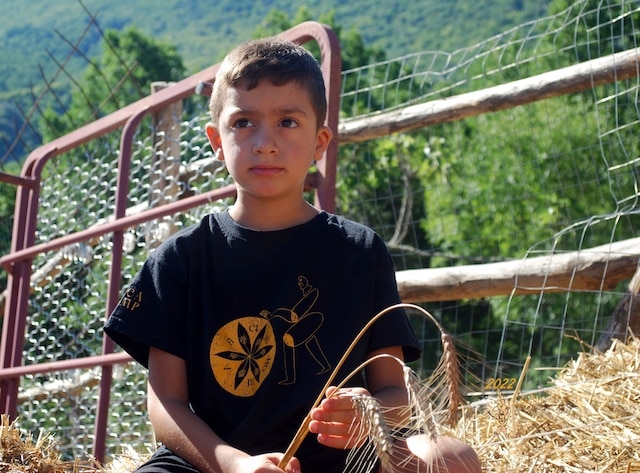
- Young and children’s harvesting activities
- Main Palio del Grano competition
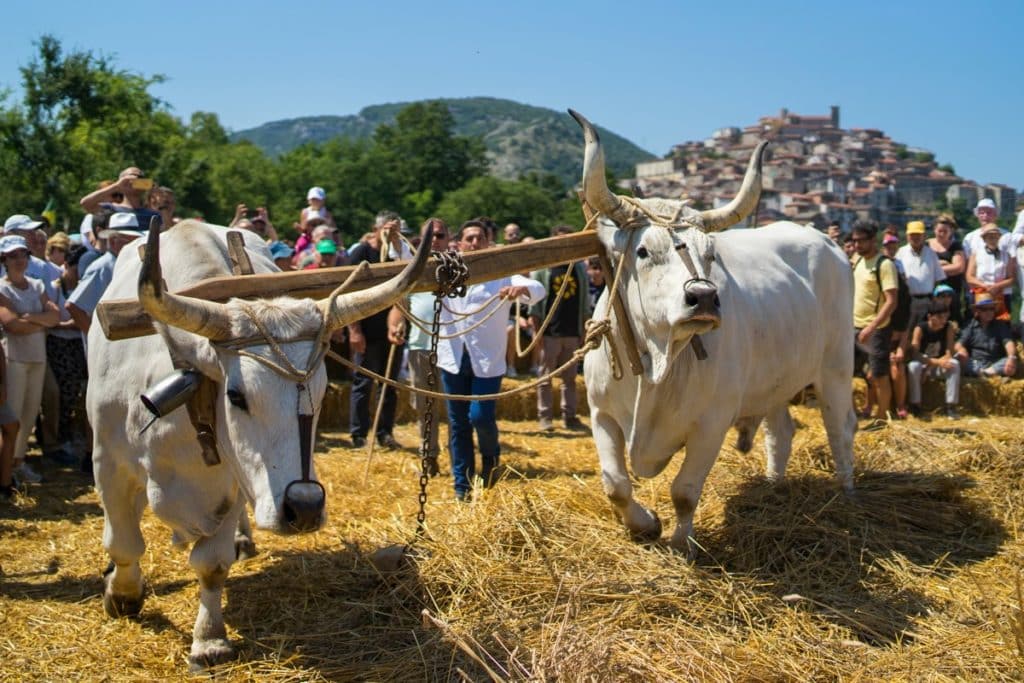
- Traditional ox-powered threshing demonstration
- Community food and celebrations
- Awards and closing activities
The exact 2027 programme will be published by the organizers when preparations are finalized. The latest programme confirms the combination of agricultural learning, traditional practices, food culture and the main rione competition.
Entreprises et exposants présentés
Palio del Grano is not organized as a commercial agricultural exhibition, so it does not have a conventional list of companies or commercial exhibitors.
Instead, the agricultural programme brings together:
- Local farmers and agricultural knowledge holders
- Producers connected with traditional grain cultivation
- The Pro Loco Caselle in Pittari
- Monte Frumentario and Terre di Resilienza
- Rete Semi Rurali and other rural-heritage networks
- Members of the eight participating rioni
- The communities of the associated “paesi cumpari”
The emphasis is on sharing agricultural knowledge, traditional practices and biodiversity rather than commercial product promotion.
Agriculture & environmental sectors
The festival focuses primarily on grain cultivation, traditional agriculture and rural biodiversity.
Important themes include:
- Traditional wheat cultivation
- Manual harvesting
- Local grain varieties
- Seed conservation and agricultural biodiversity
- Traditional threshing
- Milling and flour production
- Domestic breadmaking
- Sustainable relationships between land, food and community
- Preservation of rural knowledge
The Biblioteca del Grano project is particularly important to the event’s educational identity, connecting traditional grain knowledge with discussions about biodiversity and the future of agriculture.
Products, technologies & innovations
The festival concentrates on traditional agricultural products and methods rather than commercial agricultural machinery.
Visitors can discover:
- Local wheat varieties
- Traditional grain products
- Flour
- Homemade bread
- Traditional pasta and pizza preparation
- Hand harvesting tools
- Historic threshing equipment
- Ox-powered agricultural techniques
- Traditional methods of grain separation and cleaning
The event also connects older farming methods with contemporary discussions about biodiversity, rural resilience and the future of food systems.
Demonstrations & workshops
The Camp di Grano provides practical workshops that allow participants to experience agricultural processes directly.
Typical activities include:
- Manual mowing with traditional sickles
- Collecting and bundling wheat
- Learning about different grain varieties
- Traditional threshing
- “Pisatura” using oxen
- Separating grain from straw
- Traditional breadmaking
- Flour-based food preparation
- Meetings with local farmers
- Discussions about rural knowledge and agricultural heritage
The latest Camp programme specifically included manual harvesting, grain collection, traditional techniques, grain varieties, breadmaking and meetings with local agricultural communities.
Types de billets et immatriculation
No official 2027 ticket prices have been announced.
The Palio itself functions primarily as a community festival and agricultural tradition rather than a ticketed commercial exhibition. Previous programmes have presented the main competition and surrounding public activities as community celebrations rather than publishing a standard admission-price structure.
The Camp di Grano is a separate participatory experience and requires registration for those wishing to take part in the practical programme. Accommodation options associated with the Camp have previously included apartments and an equipped camping area.
Professional & trade visitor access
There is no separate professional or trade-visitor category because Palio del Grano is not a business-to-business agricultural trade fair.
Agricultural researchers, farmers, educators, rural-development groups, food specialists and cultural organizations can nevertheless find relevant opportunities through the Camp di Grano, Biblioteca del Grano and discussions about agricultural biodiversity and traditional knowledge.
Salles d’exposition et plan d’étage
There are no conventional exhibition halls or an exhibition floor plan.
The festival is distributed across the landscape and community spaces of Caselle in Pittari, with the agricultural field serving as the central competition area. Other activities can take place in Piazza Olmo, rione areas, community spaces, fields and the traditional threshing area.
Visitors should follow the organizer’s programme and local signage because individual activities can use different locations.
Sustainability & environmental initiatives
Sustainability is closely connected with the festival’s emphasis on agricultural biodiversity, traditional grain varieties and the preservation of rural knowledge.
The Biblioteca del Grano and related initiatives promote knowledge of grain diversity and traditional farming practices. The festival also encourages direct contact with farming methods that existed before widespread mechanization, while linking these traditions with contemporary discussions about resilient agriculture and rural communities.
The broader Camp di Grano approach also emphasizes learning from local farmers and understanding the relationship between land, cultivation, food and community.
Règles de l’épreuve
Participants in practical agricultural activities should follow the instructions of organizers and local agricultural experts.
- Follow safety instructions when using harvesting tools.
- Do not enter competition areas unless authorized.
- Keep a safe distance from working animals and agricultural equipment.
- Wear suitable clothing and footwear for field activities.
- Follow instructions during demonstrations involving oxen or traditional machinery.
- Respect agricultural land, crops and equipment.
- Children should remain supervised during practical activities.
- Participants in the Camp must follow the registration and participation requirements established by the organizers.
The Palio is a genuine hand-harvesting competition rather than a staged demonstration, so competition participants must follow the established procedures for mowing, bundling and completing their assigned field section.
Comment y arriver
Caselle in Pittari is located in the Cilento area of Campania in southern Italy. The village is surrounded by the rural landscapes of the Bussento area and is best reached by road from the surrounding Cilento towns.
By car, visitors can approach Caselle in Pittari through the regional road network connecting the inland Cilento communities. A car is particularly useful for visitors staying outside the village or exploring nearby attractions.
For visitors arriving by air, Naples is the nearest major airport mentioned by Italy’s official tourism information for exploring this part of the Cilento.
Transports en commun et stationnement
Public transport connections to Caselle in Pittari are more limited than those available in larger Cilento towns.
Visitors travelling by train can use connections toward Sapri and continue by local bus services toward the surrounding Cilento communities. Italy’s official tourism portal identifies Sapri as a useful rail connection when travelling toward the area.
During the festival, visitors arriving by car should follow local parking signs and organizer instructions. Agricultural and central village areas may have restricted vehicle access during major activities.
Zones d’hébergement
Visitors can stay directly in Caselle in Pittari or use nearby Cilento communities as accommodation bases.
- Caselle in Pittari: The most convenient option for experiencing the festival and Camp di Grano.
- Sapri: Useful for visitors relying on the railway network and wanting access to coastal accommodation.
- Morigerati: Suitable for visitors interested in combining the Palio with the Bussento natural area.
- Sanza and nearby Cilento villages: Useful alternatives for rural and nature-focused stays.
Camp di Grano participants have previously been offered accommodation options including apartments and an equipped camping area.
Accessibilité
Accessibility can vary because the festival uses agricultural fields, rural paths, historic village streets and outdoor community spaces.
The main public areas in the village may be easier to access than agricultural competition fields, which can involve uneven ground, soil and grass. Visitors with mobility requirements should check the location of individual activities with the organizers before attending.
The agricultural competition itself requires participants to work in field conditions and should not be considered an accessible spectator or participation environment without checking the specific arrangements.
Faits marquants de l’année précédente
The latest completed programme combined the Camp di Grano with the Palio competition and focused on traditional wheat cultivation, manual harvesting, grain varieties, traditional threshing and breadmaking. Participants were also able to meet local farmers and learn about the rural knowledge preserved by the community.
The Palio continues to involve the eight rioni of Caselle in Pittari: Chiazza, Maronna ra Grazia, Forgia Mardedda, Castieddu, Urmu, Taverna, Scarano and Pantanedda. The official website records previous victories for each of these districts.
The latest programme also reinforced the festival’s identity as a combination of agriculture, education and community celebration rather than simply a competitive race. Traditional grain processing, shared meals, local knowledge and hands-on activities remain central to the experience.
Billets officiels et inscription
Official 2027 ticket information has not yet been announced.
The Palio del Grano is primarily a public community celebration, while participation in the Camp di Grano requires registration. The latest Camp information lists Pro Loco Caselle in Pittari APS as the organization handling information and registrations.
For 2027 registration details, programme announcements and participation requirements, visitors should check the official Palio del Grano website and the Pro Loco Caselle in Pittari information channels. The official website lists prolococaselle@gmail.com as the Pro Loco contact address.
Vidéo
Localisation
FAQ
What is the core cultural mission of the Palio del Grano?
The festival preserves and celebrates ancient peasant traditions, wheat cultivation, and manual harvesting techniques unique to the Cilento region. It fosters intergenerational knowledge transfer by bringing together elderly farmers, historians, and modern agriculturalists. Additionally, it promotes agrobiodiversity and the sustainable cultivation of heritage grain varieties.
Are the daytime harvesting competitions and evening workshops open to the public?
All daytime wheat-reaping championships, artisan workshops, and public square exhibitions are completely open to attending visitors. While specialized evening feasts and academic symposia may require advance registration or nominal entry tickets, general street areas remain accessible. The inclusive layout ensures everyone can experience the rich rural atmosphere.
How do the local neighborhood rioni participate in the annual event?
The eight historic rioni drive the passionate community spirit through intense scythe-mowing competitions and food preparation teams. Residents spend months practicing traditional agricultural techniques, crafting district banners, and organizing communal hospitality stations. Their active involvement ensures the festival remains an authentic expression of local heritage.
What family-friendly activities are available for children during the festival?
Children can participate in junior agricultural games, traditional bread-making workshops, and interactive storytelling circles with village elders. The festival also features youth craft sessions focused on wheat weaving, seed sorting, and simple folk music instruction. These engaging tracks are designed to inspire a lifelong appreciation for rural traditions.
Where do the main harvesting championships and evening feasts take place?
The signature hand-reaping wheat championships take place within dedicated agricultural fields located just outside Caselle in Pittari. Cultural symposia, music performances, and the thousand-person farmhouse feasts utilize the historic village center and public squares. This combination of working farm fields and ancient stone alleys creates an unforgettable event backdrop.

Laisser un commentaire