

À quoi s’attendre en 2027
Palio dei Quartieri 2027 will transform the historic centre of Nocera Umbra into a large-scale medieval and Renaissance celebration, with the town’s historic districts competing through processions, historical performances, games, music and cultural activities. The festival is organised around the rivalry between the two traditional quarters, Porta Vecchia and Borgo San Martino.
The event combines historical reenactment with local community traditions. Streets and squares are decorated to recreate different historical periods, while residents take part in elaborate costumes, theatrical performances, artisan demonstrations, food events and district celebrations.
The central attraction is the competition between the two quarters, which present historical tableaux and performances before taking part in a series of challenges. Visitors can experience the festival as both a spectator event and an opportunity to explore Nocera Umbra’s medieval heritage.
Profitez de votre événement sans stress avec Italy Travelo
Que vous voyagez pour un festival mondialement connu, un concert en direct, une célébration culturelle ou un événement professionnel, Italy Travelo vous aide à simplifier chaque étape de votre voyage. Notre équipe propose une assistance personnalisée aux voyages, vous permettant de vous concentrer sur la création de souvenirs durables.
The detailed 2027 programme is expected to be released by the organisers closer to the festival.
Dates des événements
Période de l’événement : July or August 2027 (Dates TBD)
The Palio dei Quartieri is traditionally held during the summer and lasts for several days, with activities distributed across the historic centre of Nocera Umbra.
The programme normally builds toward the principal Palio competitions, with historical processions, performances, district events, food activities and evening entertainment taking place throughout the festival period.
The organisers have not yet published the final 2027 calendar.
Vous visitez cet événement ? Ne manquez pas ces activités et expériences locales étonnantes pendant votre séjour.
Lieux et lieux de festival
Historic centre of Nocera Umbra: The old town forms the principal setting for the festival, with streets and squares decorated according to the historical themes represented by the competing quarters.
Porta Vecchia: This historic district represents one of the two competing quarters and hosts its own activities, performances and traditional celebrations.
Borgo San Martino: The second competing quarter stages its historical displays, performances and community activities.
Main town squares: Public squares are used for ceremonies, entertainment, performances and gatherings associated with the Palio.
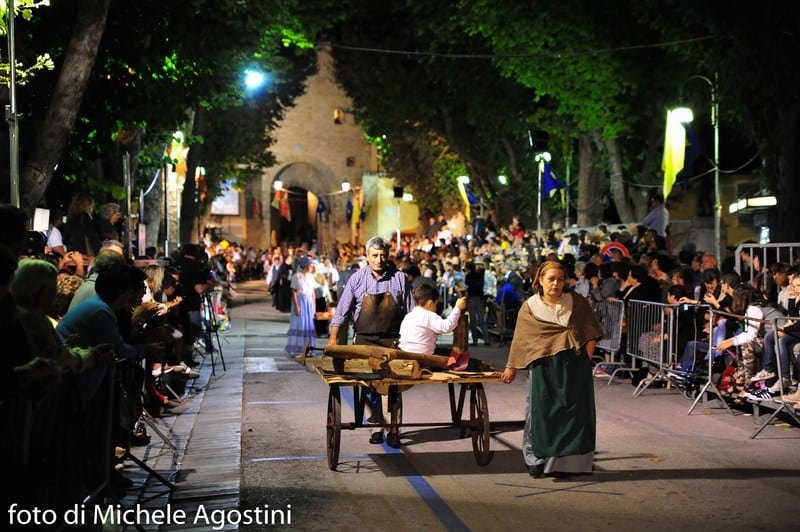
Historical streets: Processions and costumed performances move through the old town, creating an open-air historical setting.
Because the Palio uses multiple locations rather than one enclosed venue, visitors can experience different parts of the festival while walking through Nocera Umbra.
Programme culturel complet
The 2027 programme has not yet been published in full, but the established Palio format combines historical recreation, cultural activities and competitions.
Historical reenactments: Participants recreate scenes inspired by the history of Nocera Umbra, using costumes, theatrical presentations and decorated settings.
District competitions: Porta Vecchia and Borgo San Martino compete through a series of events designed to test different traditional and performance skills.
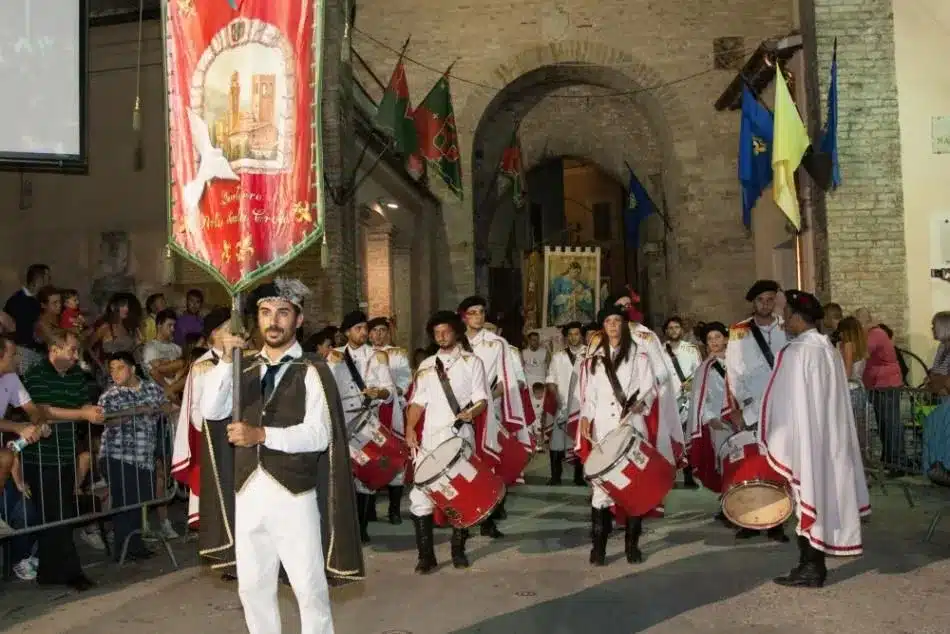
Historical processions: Costumed groups move through the town accompanied by musicians, flag-bearers and other performers.
Theatre and tableaux: Historical scenes are presented as theatrical performances, allowing visitors to experience different aspects of local history.
Musique et divertissement : Traditional music, drums, performances and evening entertainment form part of the wider programme.
Craft demonstrations: Historical and traditional crafts may be presented as part of the cultural programme.
Food celebrations: Local food and district taverns contribute to the social atmosphere of the festival.
Traditions et performances mises en avant
The Palio dei Quartieri is distinguished by its strong connection to historical costumes and community participation.
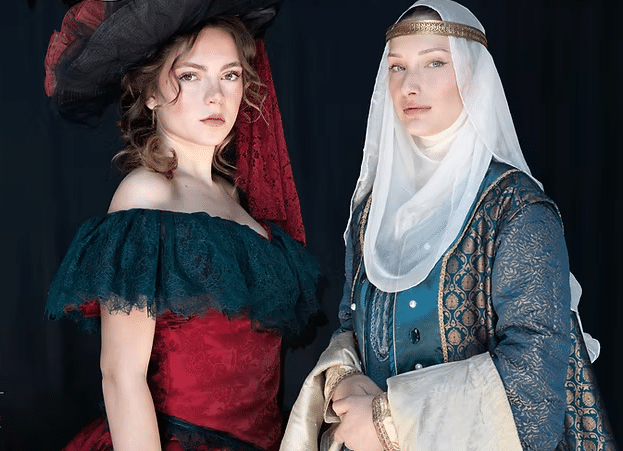
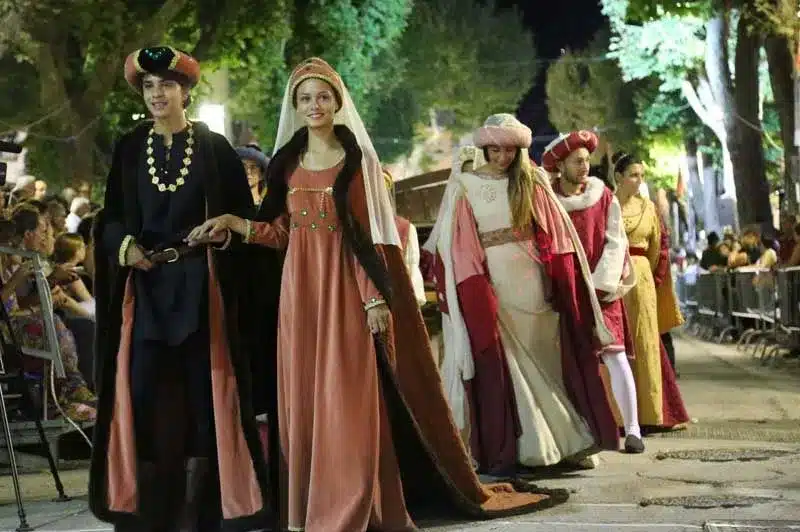
Historical costumes: Residents and performers dress in period clothing representing different social groups and historical periods.
Flag-waving: Traditional flag performances form part of the visual programme surrounding the processions and district celebrations.
Drums and musicians: Historical-style musical groups accompany processions and create the atmosphere around the public events.
Theatrical scenes: Each quarter presents carefully prepared historical scenes, combining acting, costumes and decorated settings.
Historical characters: Nobles, soldiers, artisans, merchants and other figures associated with medieval and Renaissance life can appear in the reenactments.
District performances: The competing quarters use their own performances and historical presentations to demonstrate their preparation and identity.
Points forts historiques et patrimoniaux
The Palio dei Quartieri is closely connected with the historic identity of Nocera Umbra. The festival uses the town’s medieval environment as a backdrop for recreating earlier periods of local history.
Nocera Umbra is an ancient Umbrian settlement whose archaeological and historical heritage includes Roman, medieval and Renaissance influences. The town’s position in the Umbrian Apennines also contributed to its development as an important local centre.
The festival’s two competing quarters represent different parts of the historic town and use historical reconstruction to highlight the architectural and cultural character of Nocera Umbra.
The old streets, churches, towers, squares and historic buildings provide an authentic setting for the reenactment, allowing visitors to combine the Palio with independent sightseeing.
Programme des événements et activités
The final 2027 schedule will be announced by the organisers, but visitors can expect a programme built around the following activities:
- Opening of the historical quarters
- Medieval and Renaissance decorations
- Historical costume appearances
- District presentations
- Historical processions
- Flag-waving performances
- Drumming and traditional music
- Historical theatrical scenes
- Artisan demonstrations
- Traditional games
- Expositions culturelles
- Activités pour enfants
- District food events
- Divertissements du soir
- Historical competitions
- Main Palio events
- Closing celebrations
The precise order and timing of these activities will depend on the official 2027 programme.
Types de billets et options d’entrée
Accès général au festival : Many outdoor activities in the historic centre can be experienced without a general admission ticket.
Main Palio events: Certain principal competitions or organised spectator areas may require admission depending on the programme established for the edition.
Previous-edition pricing: Where paid admission has been used for specific Palio activities, visitors should check the organisers’ current information because 2027 ticket prices have not yet been published.
Food events: Meals and food served by district taverns are normally purchased separately from access to the general festival.
No reliable official 2027 price list has been published, so no unsupported ticket amount is provided.
Visites guidées et expériences culturelles
The Palio itself provides an immersive historical experience because visitors move through decorated streets and encounter historical characters, performances and district activities throughout the town.
Historical quarter experience: Walking through Porta Vecchia and Borgo San Martino allows visitors to see how the competing communities interpret their historical identities.
Costume experience: The large number of costumed participants makes the festival particularly suitable for visitors interested in medieval and Renaissance traditions.
Local heritage: Visitors can combine the Palio with independent visits to Nocera Umbra’s churches, historic buildings, archaeological heritage and museums.
Traditional crafts: Where demonstrations are included in the annual programme, visitors can observe traditional skills and local craftsmanship.
Dedicated guided tours for the 2027 edition should be confirmed directly with the organisers once the programme is released.
Cérémonies et célébrations spéciales
The festival includes ceremonial moments associated with the opening and closing of the Palio and the rivalry between the two quarters.
Opening ceremonies: The competing districts formally present themselves through costumes, symbols and historical performances.
Historical processions: Processions connect different parts of the historic centre and provide a ceremonial introduction to the main events.
Quarter presentations: Porta Vecchia and Borgo San Martino present their historical identities through performances and tableaux.
Main Palio celebration: The principal competition brings the two quarters together before the festival concludes with communal celebrations.
Closing events: The final celebrations traditionally combine performances, community gatherings and recognition of the successful quarter.
Règles du festival
The exact rules can vary according to the individual competition, and the organisers’ official regulations should be consulted for the 2027 edition.
Quarter participation: Competitors represent either Porta Vecchia or Borgo San Martino.
Official competitions: Only activities included in the official Palio programme count toward the competition.
Historical presentation: District performances are expected to follow the themes and requirements established by the organisers.
Fair competition: Participants must follow instructions from officials and event organisers during competitive activities.
Public safety: Visitors should remain behind designated barriers or spectator areas during processions, performances and competitions.
Event instructions: Temporary rules concerning access, photography, movement and spectator areas may be introduced during crowded events.
Comment y arriver
Nocera Umbra is located in the province of Perugia in Umbria, central Italy.
En voiture : Driving is one of the easiest ways to reach Nocera Umbra, particularly for visitors travelling from other Umbrian towns or combining the Palio with a wider regional itinerary.
De Pérouse : Visitors can travel from Perugia toward Nocera Umbra by road, passing through the Umbrian countryside.
D’Assise : Nocera Umbra is also accessible from the Assisi area, making it possible to combine the festival with visits to Assisi and other Umbrian destinations.
Par avion : Perugia San Francesco d’Assisi Airport is the nearest regional airport. Visitors arriving through larger Italian airports can continue by train, bus or rental car.
Transports en commun et stationnement
Train : Nocera Umbra is served by the regional railway network, providing connections toward Foligno and other parts of Umbria and central Italy.
Regional buses: Bus services connect Nocera Umbra with nearby towns and transport hubs, although schedules should be checked carefully during the festival period.
Stationnement : Visitors arriving by car should use designated municipal parking areas outside the busiest historic-centre streets.
Historic centre access: Festival activities can create pedestrian restrictions and temporary traffic changes, particularly around processions and major performances.
Visitors should follow temporary signs and local instructions because parking arrangements can change during the Palio.
Zones d’hébergement
Nocera Umbra: Staying in or around the town provides the easiest access to the historical celebrations and allows visitors to walk between festival locations.
Centre historique : Accommodation close to the old town is convenient for evening activities, performances and food events.
Gualdo Tadino: This nearby Umbrian town provides an alternative base with accommodation and road connections.
Foligno : Foligno offers a larger selection of hotels and transport connections and can be used as a regional base for visiting Nocera Umbra.
Assise : Visitors planning a broader cultural trip can stay in Assisi and travel to Nocera Umbra for the Palio.
Summer accommodation should be reserved in advance, particularly if the festival programme attracts large numbers of visitors.
Cuisine et spécialités traditionnelles
Food is an important social element of the Palio, with the competing quarters contributing to the traditional festival atmosphere through taverns and local dining.
Cuisine ombrienne : Visitors can expect regional dishes based on pasta, legumes, meats, seasonal vegetables and locally produced ingredients.
Truffle: Umbria is particularly associated with truffles, which can appear in local pasta and other regional dishes.
Porchetta: Roast pork prepared in the Umbrian tradition is a popular regional speciality.
Torta al testo: This traditional Umbrian flatbread is commonly served with meats, cheeses and vegetables.
Local cured meats: Salumi and other pork products form an important part of Umbrian food culture.
Wine: Visitors can sample Umbrian wines at local restaurants and festival dining areas.
Food availability and individual tavern menus vary by edition, so the official programme should be checked for the 2027 dining schedule.
Accessibilité
The Palio takes place primarily in the historic centre, where visitors encounter historic streets, squares and buildings.
Some areas of Nocera Umbra’s old town may have uneven paving, slopes, steps or narrow passages that can make independent mobility more difficult.
Historic-centre routes: Visitors with reduced mobility should identify accessible routes before attending the main events.
Crowded areas: Major processions and performances can become very busy, particularly around the principal squares.
Assistance: Visitors who require specific accessibility arrangements should contact the organisers before travelling.
The organisers can provide the most accurate information about temporary access arrangements and spectator areas for the 2027 edition.
Meilleures expériences culturelles
Walk through the historic quarters: Exploring Porta Vecchia and Borgo San Martino provides an opportunity to see the district decorations and historical interpretations.
Watch the historical procession: The procession brings together costumes, musicians, flag-wavers and historical characters in one of the festival’s most atmospheric experiences.
Attend the district performances: The theatrical presentations allow visitors to learn about the history and identity represented by each quarter.
Experience traditional food: Eating at local festival taverns combines regional cuisine with the social atmosphere of the Palio.
Watch the main competition: The principal Palio events bring the two districts together in the festival’s central competitive celebration.
Explore Nocera Umbra: Combining the festival with the town’s historic churches, architecture and cultural attractions provides a broader understanding of the area’s heritage.
Faits marquants de l’année précédente
The previous edition continued the established tradition of bringing Nocera Umbra’s two historic quarters together for a summer celebration based on historical reenactment and community participation.
The programme centred on the competing identities of Porta Vecchia and Borgo San Martino, with costumed participants, historical scenes, processions, music and public entertainment throughout the town.
Historical performances and district activities provided visitors with opportunities to experience medieval and Renaissance-inspired traditions beyond the central competition.
The festival also maintained its strong connection with local food culture, community participation and the historic urban environment of Nocera Umbra.
The 2027 programme may introduce changes to the competition format, participating groups and individual activities, so visitors should use the official organiser announcements for the final details.
Billets officiels
The official organiser for the Palio dei Quartieri can be contacted through the festival organisation for information about 2027 tickets, participation and the complete programme.
Site officiel : https://www.palioquartierinocera.com/
Courriel : ente.paliodeiquartieri@gmail.com
The 2027 ticket information has not yet been fully published. Visitors should use the official website or organiser email for confirmed information about admission to individual competitions, spectator areas and any special events.
Vidéo
Localisation
FAQ
What is the main competitive event held during the Palio dei Quartieri festival?
The festival features the thrilling Palio delle Carrette downhill wooden cart race through the steep historic alleyways. Fearless athletes pilot custom-built wooden vehicles at high speeds while thousands of spectators cheer from the sidelines. The winning neighborhood is awarded the hand-painted palio banner amidst grand community celebrations.
How are the local neighborhoods structured and involved in the celebrations?
The town is divided into two competing historic districts named Borgo and San Martino that drive the festival's spirit. Each quartiere manages its own costume workshops, social taverns, and cart-building teams throughout the year. These districts foster the passionate community rivalry and pageantry that define the celebration.
What can visitors experience during the historic corteo storico procession?
Visitors witness hundreds of local residents marching in meticulously researched, hand-stitched fourteenth-century garments and armor. The parade features noble lords, ladies, musicians playing period instruments, and civic authorities in strict social order. It recreates the aesthetic elegance and political hierarchy of the town's golden age in stunning detail.
What is the significance of blessing the racing carts in local churches?
Prior to the downhill race, each quartiere brings its heavy wooden cart into its historic neighborhood church for a special benediction. This sacred ritual blends deep religious devotion with the competitive safety and success of the team. Drivers also receive personalized prayers from local priests in front of their cheering neighbors.
How do visitors experience traditional Umbrian culinary heritage at the event?
Guests can dine in pop-up historic taverns and food booths serving authentic regional dishes and local wines. Menus feature black truffles, wild boar, handmade pasta, and roasted meats served in communal settings. These culinary gatherings highlight the agricultural bounty and hospitality of the Umbrian hills.

Laisser un commentaire