
-
15 octobre 2026
Date de l'événement :
-
18 octobre 2026
Fin de l'événement :
À quoi s’attendre en 2026
Believe Film Festival returns to Verona from October 15 to 18, 2026, for its ninth edition. It is an Italian short-film festival dedicated specifically to young filmmakers and crews, with eligible authors and principal crew members generally aged between 14 and 24. The festival combines competition screenings with education, networking, professional meetings and special events.
The 2026 edition will feature finalist short films on the big screen, workshops, masterclasses, panels, pitch sessions, school screenings, a red carpet, awards and a gala evening. The festival is designed as a meeting place where young filmmakers can present their work, meet peers and learn from guests and professionals working in cinema.
The festival also continues to develop its wider young-cinema network through BelievePlay, its on-demand platform, and Believe Distribuzione, which helps selected festival films reach other festivals, events and cinema programmes in Italy.
Profitez de votre événement sans stress avec Italy Travelo
Que vous voyagez pour un festival mondialement connu, un concert en direct, une célébration culturelle ou un événement professionnel, Italy Travelo vous aide à simplifier chaque étape de votre voyage. Notre équipe propose une assistance personnalisée aux voyages, vous permettant de vous concentrer sur la création de souvenirs durables.
Dates des festivals
Believe Film Festival 2026 takes place from October 15 to October 18, 2026, in Verona. The ninth edition runs from Thursday through Sunday and includes competition screenings, educational activities, meetings, networking and the final awards programme.
The festival’s official programme is structured around activities for filmmakers, accredited participants, the general public and schools, with different events taking place throughout the four-day programme.
Vous visitez cet événement ? Ne manquez pas ces activités et expériences locales étonnantes pendant votre séjour.
Lieux et lieux de festival
The principal festival venue for the competition is Teatro Ristori, in central Verona. The theatre hosts the main finalist screenings, awards and major festival moments, while the red carpet takes place outside the theatre before the final event.
Other cinema locations used by the festival include Cinema Teatro Kappadue and Cinema Fiume, particularly for educational screenings and selected festival activities. The 2026 school programme confirms the use of Teatro Ristori, Cinema Fiume and Cinema Teatro Kappadue for the school matinée.
The festival’s activities are concentrated around central Verona, allowing participants to move relatively easily between screening venues, accommodation, restaurants and other cultural locations.
Programme complet
The 2026 programme combines competition cinema with education, professional development and social activities.
The main programme areas include:
- Official Competition – Finalist short films created by young filmmakers aged within the festival’s principal 19–24-year author category.
- Esordienti Section – A competition section dedicated to younger filmmakers aged 14–18.
- Believe Extra – An additional competitive programme forming part of the festival’s award structure.
- Out-of-Competition Screenings – Selected short films presented outside the main competitive sections.
- School Screenings – Dedicated screenings followed by discussions between students and young directors.
- Workshops & Masterclasses – Sessions led by jurors, guests and cinema professionals.
- Pitch Sessions – Opportunities for finalist crews to present projects and ideas to experts and fellow participants.
- Panels & Meetings – Discussions focused on filmmaking, professional development and the cinema industry.
- Opening Event – The inauguration of the festival in front of Teatro Ristori, with programme and guest presentations.
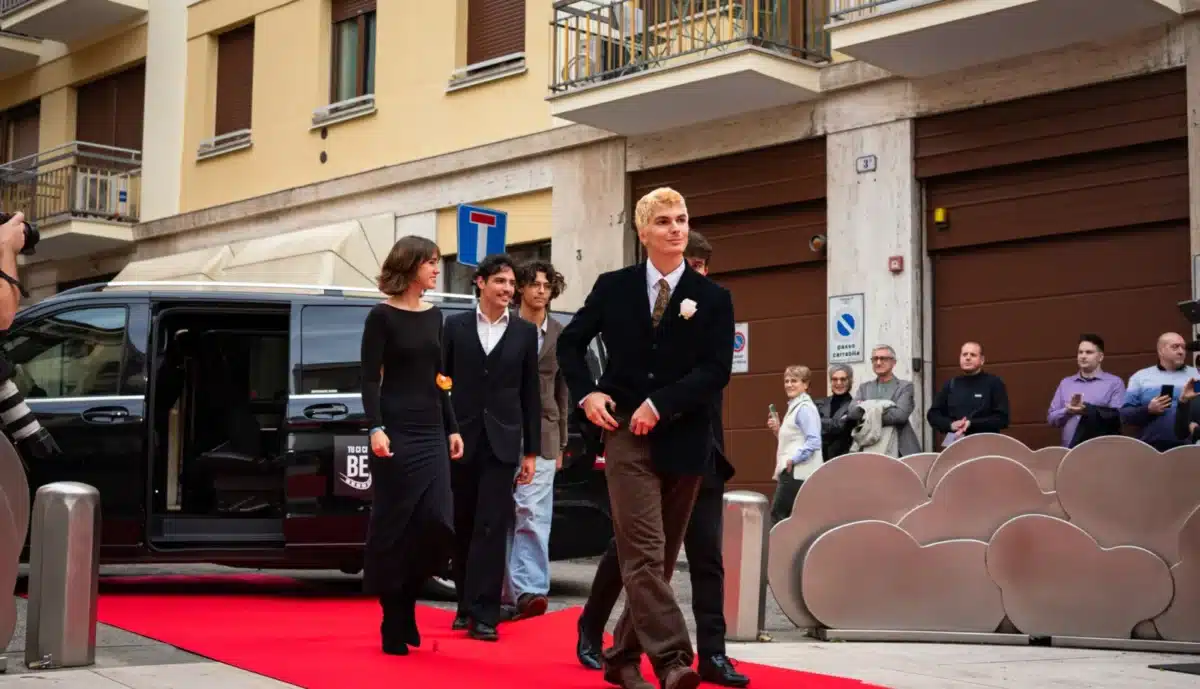
- Red Carpet & Final Evening – Finalist crews walk the red carpet before the closing programme and awards.
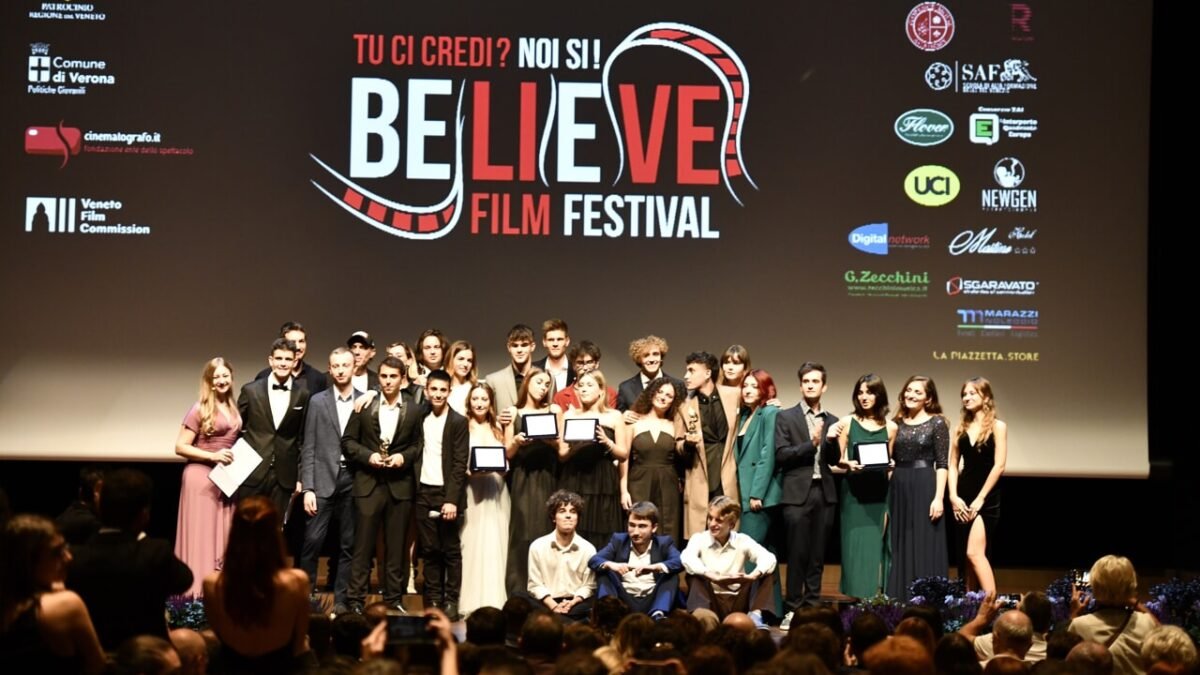
- Gala Evening – A celebration for finalists, guests and staff following the awards.
The festival also provides a dedicated programme for schools, with peer-to-peer discussions designed to encourage students to engage with cinema and contemporary themes.
Films en vedette & premières
The complete 2026 finalist selection has not yet been published in full. The festival’s competition focuses on short films created by young filmmakers and crews, with selected works screened before audiences in Verona.
The 2026 rules require competing films to have been produced after January 1, 2025 and normally to be in Italian. Films made in another language for specific reasons may participate if Italian subtitles are provided. The maximum permitted running time is 15 minutes, including opening and closing credits.
The festival does not currently publish a confirmed 2026 list of world, international or Italian premieres, so premiere status for individual films should be checked when the final programme is released.
A special 2026 project will also reach the festival stage through the Premio Fondazione Cattolica. The winning screenplay, Alle 17:00 by Alessandro Lener, Micol Pecora and Violante Bedin, is being developed into a short film and is scheduled for its national premiere at the 2026 Believe Film Festival.
Réalisateurs, acteurs et invités
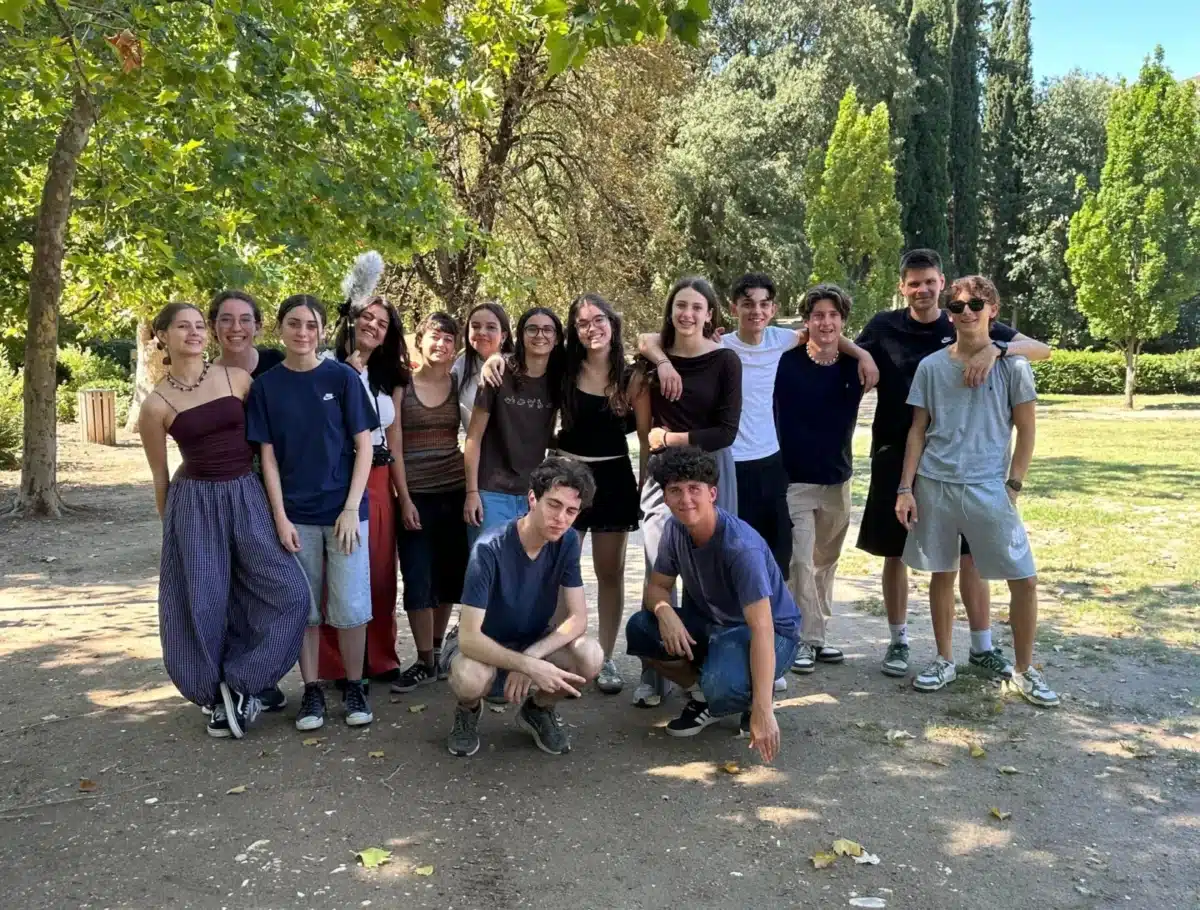
Believe Film Festival brings young directors, actors, crew members, jurors and cinema professionals together in Verona. Finalist filmmakers are expected to participate actively in the festival and engage with audiences, schools and other young filmmakers.
The festival’s current organizational team includes Francesco Da Re as Director, with Davide Mogna and Lorenzo De Rossi in general management. The wider team includes departments covering production, communications, multimedia, stage direction, food and beverage, storytelling, secretariat and tutoring.
The 2026 programme will also feature guests and experts contributing to workshops, masterclasses, panels and professional meetings. Individual guest announcements should be checked against the final festival programme.
Calendrier des projections
The detailed public timetable for the evening competition screenings has not yet been completely published. The festival confirms that finalist shorts will be screened at major Verona venues, particularly Teatro Ristori and Cinema Teatro Kappadue.
The school programme provides a more detailed example of the 2026 schedule. The school matinée on October 16 begins with admission at 8:30, followed by screenings and guided discussions with directors, a short break and the school award presentation at 12:30.
The afternoon out-of-competition school programme at Multisala Rivoli is scheduled to begin at 16:00, followed by screenings and a discussion with young directors, with the event scheduled to conclude around 18:00.
Types de billets et accréditations
The festival’s public ticket and accreditation options for the main 2026 evening screenings are being released through the official participation system. The official participation page currently states that tickets for the Teatro Ristori competition evenings and general accreditations will become available through the festival.
Confirmed 2026 school-related prices include:
- School matinée: approximately $5.85 per student, with teachers and students with disabilities admitted free.
- Student Accreditation: approximately $29.25 per student, available to schools from a minimum of 10 students.
- Individual Experience Accreditation: approximately $42.12 per student.
- Two-Day Verona School Package: approximately $42.12 per student.
- Three-Day Verona School Package: approximately $58.50 per student.
The school packages include festival access and guided city activities, while food, accommodation and travel are not included.
These dollar figures are conversions of the festival’s published amounts at approximately €1 = $1.17.
Industrie et accès professionnel
Industry access is an important part of the Believe Film Festival experience. Accredited participants can attend festival screenings as well as workshops and masterclasses led by jurors, guests and cinema professionals.
Finalist crews can also take part in pitch sessions, giving young filmmakers an opportunity to present projects, exchange ideas and meet experts and other participants.
The festival’s broader professional network extends beyond Verona through Believe Distribuzione, which supports the circulation of selected award-winning shorts at other festivals, events and cinema venues around Italy.
Tapis rouge & événements spéciaux
The red carpet is one of the central public moments of Believe Film Festival. Finalist crews walk in front of Teatro Ristori before the final festival evening, giving the young filmmakers a formal introduction to the audience and creating a celebratory cinema atmosphere.
The festival also includes an opening ceremony in front of Teatro Ristori, where the programme and guests are introduced.
The closing programme includes awards followed by a gala evening for finalists, guests and staff, combining music, food and networking. Shared aperitif-style meals for finalist crews are also organized before evening screenings at restaurants in central Verona.
Règles du festival
The 2026 competition is specifically designed for young filmmakers and crews based in Italy, San Marino or Vatican City.
Key eligibility requirements include:
- Directors, subject and screenplay authors, and original music authors must generally have been born between January 1, 2002 and December 31, 2012.
- Principal technical crew members must generally fall within the same age range.
- The majority of the crew must meet the festival’s age requirement.
- Actors are exempt from the age requirement.
- The film must have been made after January 1, 2025.
- Films should be in Italian, or provide Italian subtitles where another language is used for specific reasons.
- The maximum duration is 15 minutes, including opening and closing credits.
- The film must not be freely available on public streaming or social platforms at the time of submission.
- Films previously presented at other festivals or competitions may still be eligible if all other requirements are met.
Selected finalist crews are required to participate in the festival. At least the director and part of the cast and crew must attend, and competitive participants are expected to take part throughout the festival period.
Comment y arriver
Verona is a major transport hub in northern Italy and can be reached easily by train from cities including Milan, Venice, Bologna and other destinations.
The main railway station is Verona Porta Nuova, from where the historic centre and festival venues can be reached by local bus, taxi or on foot.
Visitors arriving by air can use Verona Villafranca Airport, located southwest of the city. The airport has bus connections toward Verona Porta Nuova, making it practical to continue into the city centre using public transport.
For international visitors, Milan, Venice and Bologna airports also provide alternative arrival points with onward rail connections to Verona.
Transports en commun et stationnement
Verona’s historic centre is compact, and many festival venues can be reached by walking once visitors arrive in the central area.
Local ATV Verona buses connect Verona Porta Nuova with the city centre and surrounding areas. School festival accreditation packages can also include access to Verona’s public transport under the terms published by the festival.
Visitors arriving by car should be aware that much of central Verona is affected by restricted traffic areas. Parking garages and public car parks around the historic centre are generally more practical than attempting to park directly beside festival venues.
Zones d’hébergement
Centre historique is the most convenient choice for festival visitors because many of the principal venues and evening activities are located within or close to central Verona.
Verona Porta Nuova is useful for visitors arriving by train and provides easy access to the city centre by walking or public transport.
Porta Palio and Borgo Trento offer additional accommodation choices within reasonable reach of the central festival area.
Finalist crews are hosted in central Verona hotels arranged through the festival, with the organization noting that selected crews stay in partner accommodation close to the festival locations.
Restauration et restauration
Verona has a strong culinary tradition, with restaurants and cafés throughout the historic centre. Visitors can try local specialities such as risotto all’Amarone, bigoli, pastissada de caval and traditional Veronese desserts.
The festival itself incorporates food into the participant experience. Finalist crews have shared apericena-style meals featuring local Veronese dishes at restaurants in the city centre before evening screenings.
Central Verona provides the greatest concentration of restaurants, pizzerias, cafés, bakeries and bars, making the area around the main festival venues particularly convenient for visitors.
Accessibilité
The festival works across several established cultural and cinema venues, but accessibility facilities can differ between locations.
Visitors requiring step-free access, accessible seating, accessible toilets or other assistance should confirm arrangements with the specific venue before attending.
For general accessibility or participation questions, the festival can be contacted at info@believefilmfestival.it. Students with disabilities are specifically admitted free to the 2026 school matinée according to the published school programme.
Meilleures projections à laquelle assister
Official Competition – The main competitive programme presents finalist shorts created by young filmmakers and provides the central cinematic experience of the festival.
Esordienti Section – This section focuses on filmmakers aged 14–18 and offers an opportunity to discover some of the youngest voices in the festival.
School Screenings – These sessions combine short films with discussions between students and young directors, making them particularly useful for audiences interested in film education.
Out-of-Competition Screenings – The 2026 programme introduces afternoon screenings of selected non-competitive shorts, followed by discussions with young directors.
Final Evening & Awards – The closing programme combines finalist films, awards and the red-carpet experience and is one of the festival’s major public events.
Workshops & Masterclasses – These are particularly relevant for aspiring filmmakers who want practical insight into writing, directing, production, cinematography, editing and other aspects of filmmaking.
Faits marquants de l’année précédente
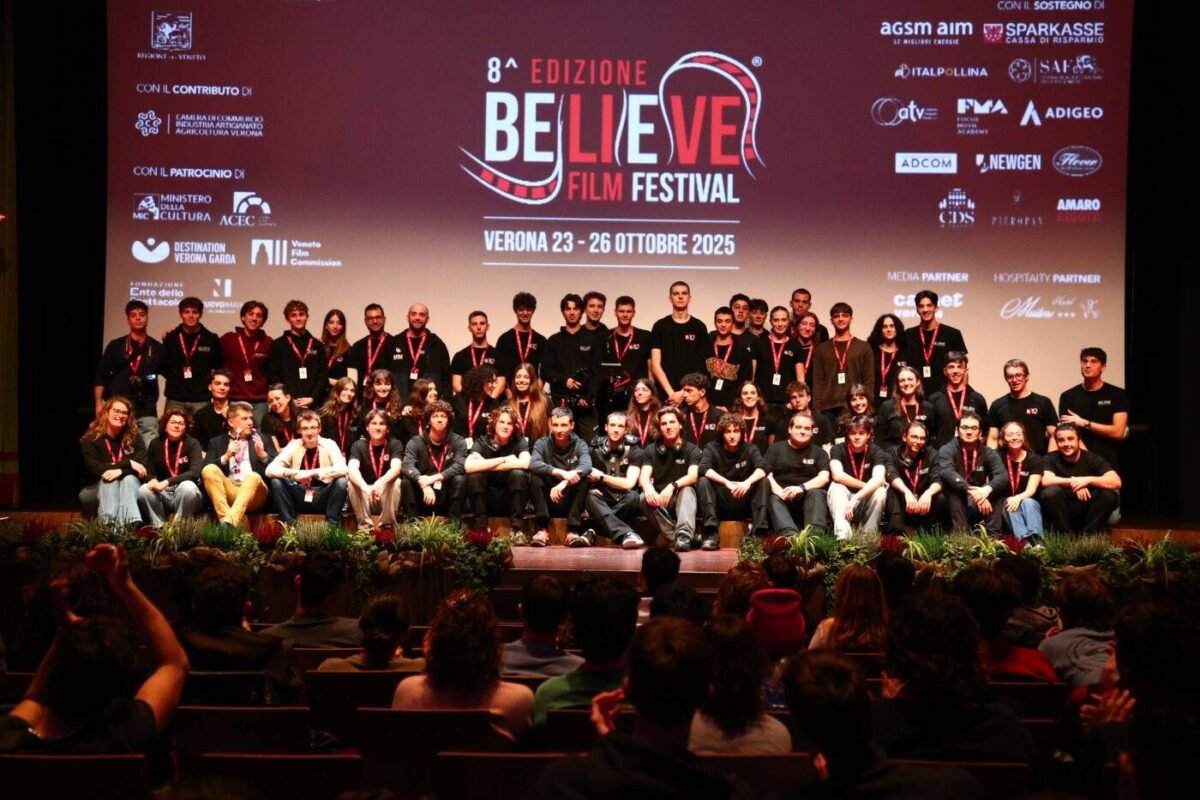
The eighth edition took place in Verona from October 23 to 26, 2025 and presented 20 competing short films across the Official Selection, Esordienti Section and Believe Extra, together with 12 out-of-competition shorts.
The Official Selection included films such as L’Ultima Linea by Federico Veneri, Il Tempo del Fiume by Simone Scardovi, Figli d’Icaro by Vito Mistretta, Diverso d’Amore by Leonardo Bertini, Doso by Michele Gaggiano and Di Notte Non Vale by Rocco Morziello.
The 2025 edition also produced the winning short Doso, directed by Michele Gaggiano. In 2026, Believe Distribuzione brought Doso to community cinemas across Italy through a partnership with ACEC, demonstrating how the festival’s distribution initiative can extend the life of selected films beyond the festival itself.
The festival’s award structure includes recognition for the main competition categories, actors, technical contributions, audience choices and schools, alongside monetary and educational prizes designed to support young filmmakers.
Billets officiels et accréditation
The official festival participation page is the main source for 2026 visitor tickets and accreditation. General tickets for the Teatro Ristori competition evenings and festival accreditation are being made available through the festival’s official channels.
Accreditation provides access to festival activities including screenings, workshops and masterclasses, while the festival also provides specific student accreditation options for schools.
For general festival information and accreditation enquiries, contact info@believefilmfestival.it. The festival’s official office is Believe APS, Via San Mattia 9, 37128 Verona, Italy.
Vidéo
Localisation
FAQ
What are the official dates and location for the 2026 festival edition?
The Believe Film Festival 2026 will run from October 15 to 18, 2026, hosted across historic cultural venues in the romantic city of Verona, Italy. Primary events, masterclasses, and galas take place at the magnificent Teatro Ristori alongside various partner cultural spaces throughout the city center.
Who is eligible to submit short films to the official competition?
The festival is exclusively open to short films created by young authors, directors, and crew members aged between fourteen and twenty-four years old. Submissions can span fiction narrative, documentary, experimental art, and animation formats, provided the core creative team falls within this specified age bracket.
Are subtitles provided for international and foreign-language screenings?
All foreign-language short films selected for the official competitive program are strictly required to feature clear English subtitles for general audience accessibility. This ensures that international visitors, press members, and the multi-national jury panel can fully appreciate the dialogue and narrative nuances.
What educational opportunities are available for attending young creators?
Attendees have access to a rich program of daily masterclasses, technical workshops, and scriptwriting labs led by internationally acclaimed industry professionals. These sessions cover essential topics ranging from field sound recording and directing actors to advanced cinematography and digital post-production workflows.
How can teachers and school groups register for student screening blocks?
Teachers and educational administrators can reserve spots for their classes by submitting requests through the educational portal on the official festival website. Participating student groups receive access to morning screenings, interactive filmmaker debates, and specialized media literacy educational kits.

Laisser un commentaire