
-
2 août 2026
Date de l'événement :
-
22 septembre 2026
Fin de l'événement :
À quoi s’attendre en 2026
Appennino Festival 2026 is a cultural and music festival dedicated to the musical heritage, landscapes and traditions of the Emilia Apennines and the wider area known as the Quattro Province. The festival connects music with historic villages, mountain paths, religious routes, churches, rural landscapes and local communities across the Apennine territory.
The 2026 edition brings together traditional Italian music, ancient repertoire, world music, folk singing, instrumental traditions, dance, poetry and cultural storytelling. Rather than concentrating performances in one conventional festival venue, Appennino Festival turns villages, churches, mountain viewpoints and historic sites into individual performance settings.
The festival is particularly connected with the musical traditions of the Four Provinces area around Piacenza, Pavia, Genoa and Alessandria. Its programme highlights instruments and styles associated with these territories while also placing them in dialogue with Mediterranean, European, Oriental and other musical traditions.
Profitez de votre événement sans stress avec Italy Travelo
Que vous voyagez pour un festival mondialement connu, un concert en direct, une célébration culturelle ou un événement professionnel, Italy Travelo vous aide à simplifier chaque étape de votre voyage. Notre équipe propose une assistance personnalisée aux voyages, vous permettant de vous concentrer sur la création de souvenirs durables.
Dates des événements
Festival dates: 2 August – 22 September 2026
Appennino Festival 2026 unfolds across the summer and early autumn, with individual concerts and cultural events taking place in different towns and natural settings. The official programme currently includes events in locations such as Sella dei Generali, Caminata, Rivergaro, Pillori di Travo and Castelletto di Vernasca.
Because this is a distributed festival, visitors can plan individual trips around particular performances rather than attending at one single festival site.
Vous visitez cet événement ? Ne manquez pas ces activités et expériences locales étonnantes pendant votre séjour.
Lieu et site du festival
Festival area: Appennino Emiliano and the Quattro Province
Main geographic base: Piacenza and the surrounding Apennine communities
Appennino Festival does not have one permanent festival ground. Performances are hosted in historic villages, churches, mountain passes, rural landscapes, public squares, cultural sites and other locations throughout the Apennines.
The 2026 programme includes settings such as:
- Sella dei Generali in Coli
- Piazza del Popolo in Caminata
- Chiesa di Sant’Agata in Rivergaro
- Chiesa di San Cristoforo Martire in Pillori di Travo
- Antica Chiesa di Sant’Andrea in Castelletto di Vernasca
This approach makes the surrounding landscape an important part of the festival experience rather than simply a backdrop to the performances.
Programmation complète
The 2026 programme features musicians, ensembles and cultural projects connected with traditional, ancient, folk and world music.
Traditional and folk performers: The programme includes the traditional choirs Val Curiasca, Mareto and Eco di Valle, with Franco Guglielmetti on accordion and Carlo Gandolfi on piva.
Ensemble Na Fuoia: Andrea Da Cortà, Annachiara Belli and Pina Sabatini present traditional music from the Dolomites and explore historic repertoire alongside living folk traditions.
Trio Cafè Loti: Nando Citarella, Stefano Saletti and Pejman Tadayon perform a programme connecting Mediterranean, Middle Eastern and traditional Italian music.
D’Esperanto Trio: Paolo Simonazzi, Fabio Tricomi and Filippo Chieli combine traditional instruments and historical musical practices with contemporary interpretation.
Christoph Hartmann and KonstKnekt: The programme includes Berliner Philharmoniker oboist Christoph Hartmann together with students from Norway’s KonstKnekt Academy.
Additional artists and projects are announced through the individual festival programme as the season progresses.
Têtes d’affiche et artistes invités
Appennino Festival does not use a conventional commercial headliner model. Instead, individual concerts highlight respected musicians, traditional ensembles and specialist performers.
Christoph Hartmann: The oboist of the Berliner Philharmoniker is featured with students from the KonstKnekt Academy in the festival’s mountain programme.
Trio Cafè Loti: Nando Citarella, Stefano Saletti and Pejman Tadayon create a musical journey connecting Southern Italian, Mediterranean and Oriental traditions.
Ensemble Na Fuoia: The ensemble focuses on musical traditions from the Dolomites, including repertoire associated with dancing, celebrations and social life.
D’Esperanto Trio: The group combines hurdy-gurdy, diatonic accordion, bagpipes, vielle, tambourine, guitar, viola and violin in a programme centred on the relationship between innovation and tradition.
Scènes et zones de spectacle
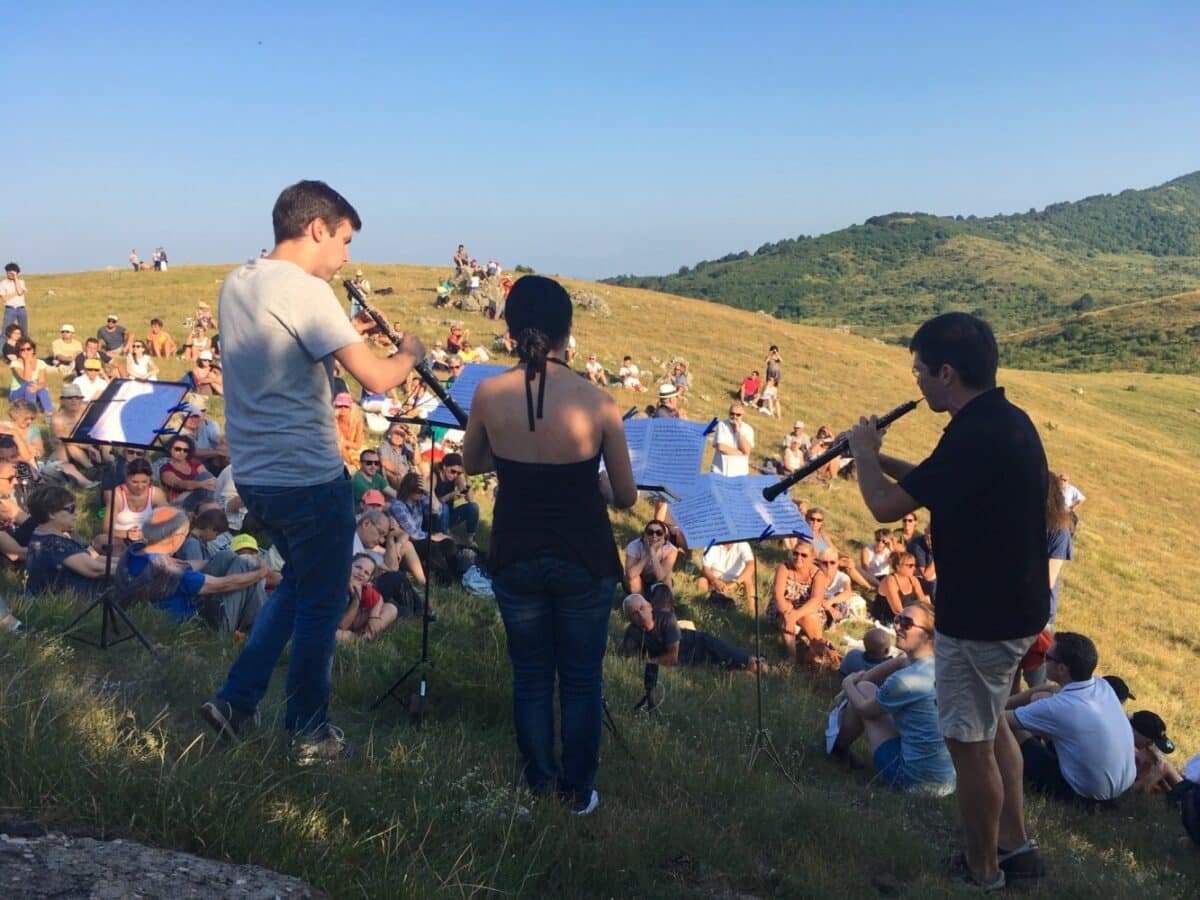
Mountain landscapes: Locations such as Sella dei Generali provide open-air settings where music is presented within the natural landscape of the Apennines.
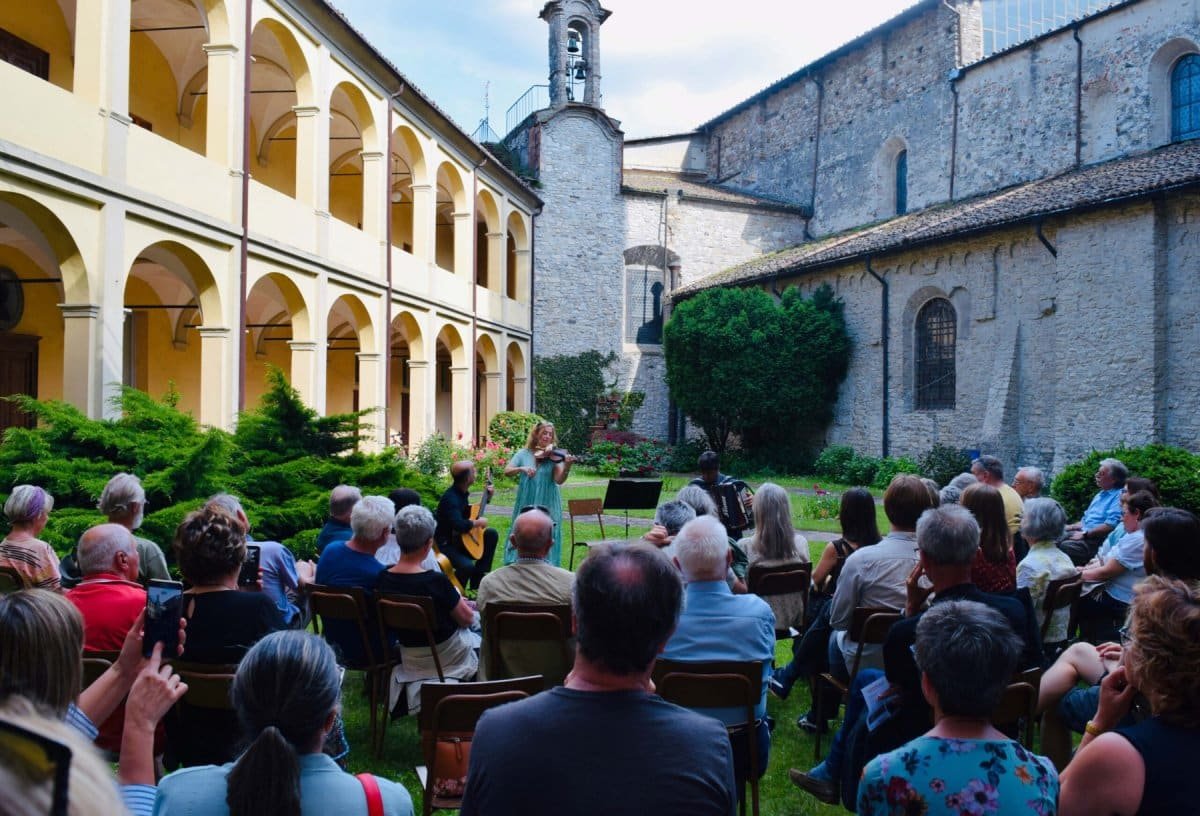
Historic churches: Churches in villages such as Rivergaro and Pillori di Travo provide intimate acoustic settings for classical, ancient and traditional repertoire.
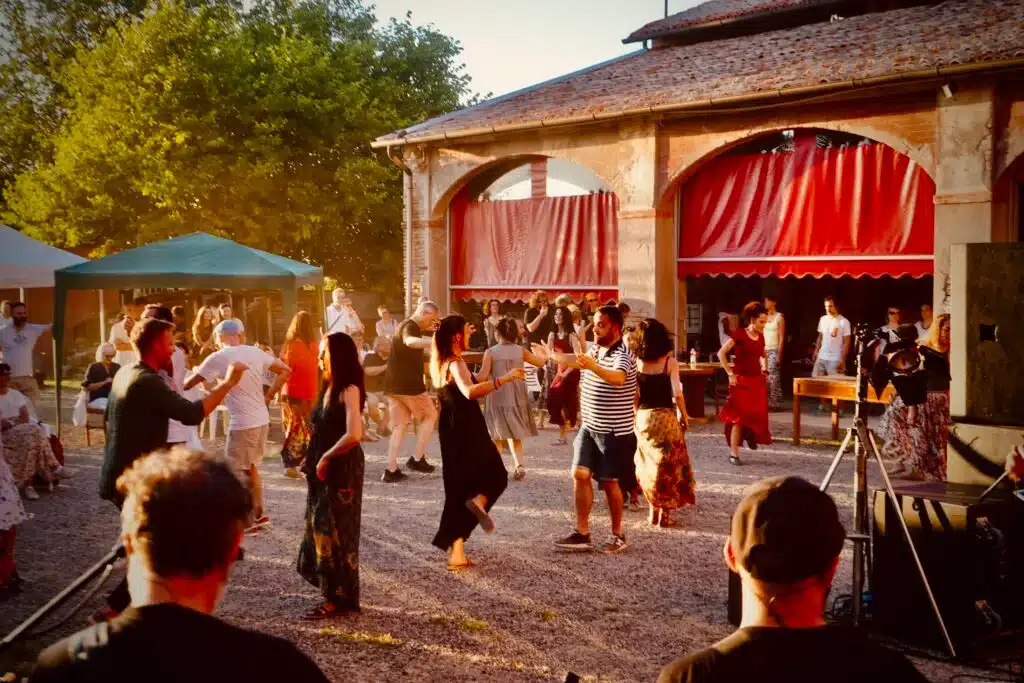
Village squares: Piazza del Popolo in Caminata hosts traditional music in a public village environment.
Historic architecture: The Antica Chiesa di Sant’Andrea at Castelletto di Vernasca provides a historic setting for performances connecting traditional instruments with contemporary interpretation.
The exact performance setting changes from one programme event to another, so visitors should check the individual concert listing carefully.
Programme étape par étape
Appennino Festival does not operate with conventional numbered festival stages. Instead, the programme is organised around individual locations and musical projects.
Sella dei Generali: Traditional choirs and instrumental performers present music connected with the local mountain heritage.
Caminata: Ensemble Na Fuoia presents traditional music from the Dolomites in the programme “Nuove foglie da antiche radici.”
Rivergaro: Trio Cafè Loti presents “Orienti,” followed by the separate “Souvenirs de Paris” project in the festival programme.
Pillori di Travo: Christoph Hartmann appears with KonstKnekt students in “Tramonto in Val Perino.”
Castelletto di Vernasca: D’Esperanto Trio explores traditional bowed and wind instruments in “Bordoni e suoni d’arco tra innovazione e tradizione.”
Temps de set
Set times are determined individually for each concert rather than by a festival-wide timetable.
The official 2026 programme includes performances at different times depending on the location and type of event. Some concerts are designed around sunset or evening settings, while other festival activities can combine music with walks, cultural visits or local experiences.
Visitors should check the individual event page before travelling because each location has its own arrival time and programme arrangements.
Types de billets
Admission standard : The festival does not publish a single universal ticket structure because individual events are organised independently across different municipalities and locations.
Many Appennino Festival concerts are presented as community cultural events, while some associated activities can involve separate arrangements such as meals, tastings, guided walks or local experiences.
The official website should be checked for the individual event before travelling to confirm whether advance booking or a separate contribution is required.
No reliable universal 2026 ticket price is published on the official festival website, so a single dollar price would be misleading.
Options VIP et premium
Appennino Festival does not operate a conventional VIP ticket system.
Its programme is designed around intimate performances in villages, churches, mountain landscapes and cultural sites rather than VIP hospitality areas or premium festival zones.
Some individual events can be combined with experiences such as local meals, tastings, guided walks or other activities. These are separate from conventional VIP admission and should be checked with the relevant local organiser when available. Historical editions have included concerts connected with dinners and tastings.
Règles de l’épreuve
Visitors should follow the rules and instructions provided by the festival organisers, local municipalities and individual venues.
Venue access: Some performances take place in churches, historic buildings or protected rural environments, so visitors should follow local access instructions.
Outdoor events: Mountain and open-air performances can be affected by weather and terrain conditions.
Walking routes: Events connected with hiking or mountain paths may require suitable footwear and preparation for uneven terrain.
Photography: Visitors should respect performers, other audience members and venue rules concerning photography and recording.
Programme changes: Individual performances can be modified or moved when necessary because of weather, logistical issues or other circumstances.
The official festival programme should be checked before travelling for any event-specific instructions.
Comment y arriver
En voiture : Driving is often the most practical way to reach the smaller mountain villages and rural venues used by Appennino Festival. Visitors should enter the exact event location into their navigation system and allow additional time for mountain roads.
From Piacenza: Piacenza provides a useful base for visitors travelling to events across the surrounding Apennine area.
Par train : Piacenza is the principal rail gateway for visitors arriving by train, after which local transport or a rental car may be required for more remote venues.
By bicycle or hiking: Some festival events are deliberately connected with mountain paths and walking routes, making hiking part of the experience for selected programmes.
Because the festival is geographically dispersed, the most convenient transport method depends on the specific event.
Transports en commun et stationnement
Regional transport: Public transport options vary significantly between villages. Visitors should check local bus services for the individual municipality rather than relying on a single festival-wide transport network.
Piacenza: Visitors staying in Piacenza can use the city as a transport base before continuing into the Apennines.
Stationnement : Smaller villages and rural venues generally rely on local public parking areas and roadside spaces designated by municipalities. Visitors should follow local parking restrictions and avoid blocking access roads.
Remote venues: Mountain locations such as Sella dei Generali may have limited parking capacity, making early arrival particularly useful.
The festival’s distributed format means there is no central festival car park.
Zones d’hébergement
Piacenza: The city provides the widest range of hotels and restaurants and works well as a base for visitors attending several events.
Bobbio: Bobbio is a historic Apennine town that can be convenient for visitors exploring the northern Piacenza mountain area.
Val Trebbia: Accommodation around the Val Trebbia is useful for visitors attending events in Rivergaro, Travo and nearby communities.
Alta Val Tidone: Visitors attending events around Caminata can consider accommodation in the surrounding valley and hill towns.
Val Nure: This area is suitable for visitors attending events around Coli, Farini and other mountain communities.
Staying locally can reduce evening driving and allows visitors to experience the villages and landscapes that form part of the festival’s identity.
Nourriture et boissons
Food and local hospitality are closely connected with the Appennino Festival experience. Some events incorporate local dinners, tastings, aperitifs or agricultural products alongside the music.
Historical festival programmes have included wine tastings, dinners connected with concerts, aperitifs and meals featuring products from local producers.
The 2026 programme continues this broader connection between music, landscape and local culture. Visitors should check individual event pages for any meal, tasting or hospitality options associated with a performance.
For general dining, Piacenza and the surrounding Apennine towns provide restaurants, agriturismi, cafés and local food producers.
Accessibilité
Accessibility varies considerably because the festival takes place in many different types of locations, including churches, historic villages, mountain viewpoints, rural areas and walking routes.
Historic venues: Some churches and historic buildings may have steps, narrow entrances or other physical limitations.
Outdoor locations: Mountain and countryside performances can involve uneven ground and longer walking distances.
Walking events: Visitors with mobility requirements should confirm the accessibility of any associated hiking route before booking or attending.
For specific accessibility requirements, visitors should contact the festival organisers or the municipality hosting the individual event before travelling. The official festival contact details are +39 347 689 7081, +39 340 549 2188 and info@cooltour.it.
Meilleurs jours à assister
Because Appennino Festival consists of many separate performances, the best visit depends on the type of experience you want.
For mountain scenery: Choose a performance held at a panoramic or high-altitude location such as Sella dei Generali.
For traditional Italian music: Look for programmes featuring local choirs, piffero, accordion, traditional singing and the musical heritage of the Four Provinces.
For international world music: “Orienti” with Trio Cafè Loti offers a programme connecting Italian, Mediterranean and Oriental traditions.
For classical crossover: The Christoph Hartmann programme connects a major international classical musician with young performers from the KonstKnekt Academy.
For cultural immersion: Choose an event that combines music with a village visit, walk, tasting, dinner or historic location.
Faits marquants de l’année précédente
The previous editions have consistently connected traditional music with the landscapes, history and communities of the Emilia Apennines.
Traditional music: Earlier programmes have featured Enerbia and musicians specialising in the piffero, accordion, hurdy-gurdy, bagpipes, traditional singing and other instruments of the Four Provinces.
International traditions: Past editions have included programmes connecting the Apennines with Irish, Mediterranean, European and other folk traditions.
Historic settings: Previous events have taken place in churches, monasteries, castles, museums, rural courtyards and mountain landscapes, maintaining the festival’s distinctive connection between music and place.
Walking and cultural experiences: Some editions have paired concerts with guided walks, pilgrimage routes, historic visits, tastings and local dinners, reinforcing the festival’s focus on slow cultural tourism.
Billets officiels
Appennino Festival does not operate a single central ticket portal for all performances. Ticketing, reservations and participation arrangements can vary according to the individual event and host location.
Site officiel : https://www.appenninofestival.eu/
Organising office: Cool Tour
Telephone: +39 347 689 7081 / +39 340 549 2188
Courriel : info@cooltour.it
Visitors should check the official event page for the specific concert they want to attend before travelling, particularly for outdoor performances, walking events and programmes involving meals or tastings.
Vidéo
Localisation
FAQ
What is the admission policy and do attendees need to book tickets in advance for concerts?
All festival events are completely free of charge and do not require any advance ticket reservations, digital registration, or purchase. Visitors can simply check the official calendar and arrive directly at the designated historic venue before the performance begins.
How can visitors travel to the remote mountain venues located across the valleys?
Travelers can reach the performance locations by private car using well-marked mountain roads or by utilizing regional bus connections departing from Piacenza. Carpooling with other festival-goers is strongly encouraged due to the winding terrain and limited parking space near historic rural sites.
What should attendees wear and bring when attending outdoor mountain concerts and hikes?
Because many events take place outdoors in historic courtyards, mountain passes, or after guided nature walks, comfortable walking shoes and layered clothing are essential. Bringing water, sun protection, and a light jacket for cooler evening temperatures in the hills is highly recommended.
Are the historic venues and concert sites fully accessible for visitors with limited mobility?
Due to the authentic historical nature of the locations—including ancient churches, stone castles, and mountain meadows—accessibility varies significantly by site. Visitors with specific mobility requirements are advised to contact the organization in advance via email to receive detailed accessibility assessments for individual events.
How can participants get involved with the guided nature walks and outdoor excursions?
Participants interested in joining the Sentieri Sonori hiking excursions can find meeting times and departure points listed directly in the official festival program. Hikers should gather at the designated starting trailhead a few moments before the scheduled departure time accompanied by appropriate footwear and water.

Laisser un commentaire