
À quoi s’attendre en 2027
Medievalis Festival 2027 will bring the historic centre of Pontremoli back to the atmosphere of the Middle Ages, continuing one of the town’s most established annual historical reenactment traditions. The festival is held every August and commemorates the history of Pontremoli and its connection with Emperor Frederick II and the granting of the Free Commune diploma in 1226. The official Medievalis website describes the event as an opportunity to experience Pontremoli as a medieval town, with historic characters, merchants, knights, performers and traditional activities throughout the centre.
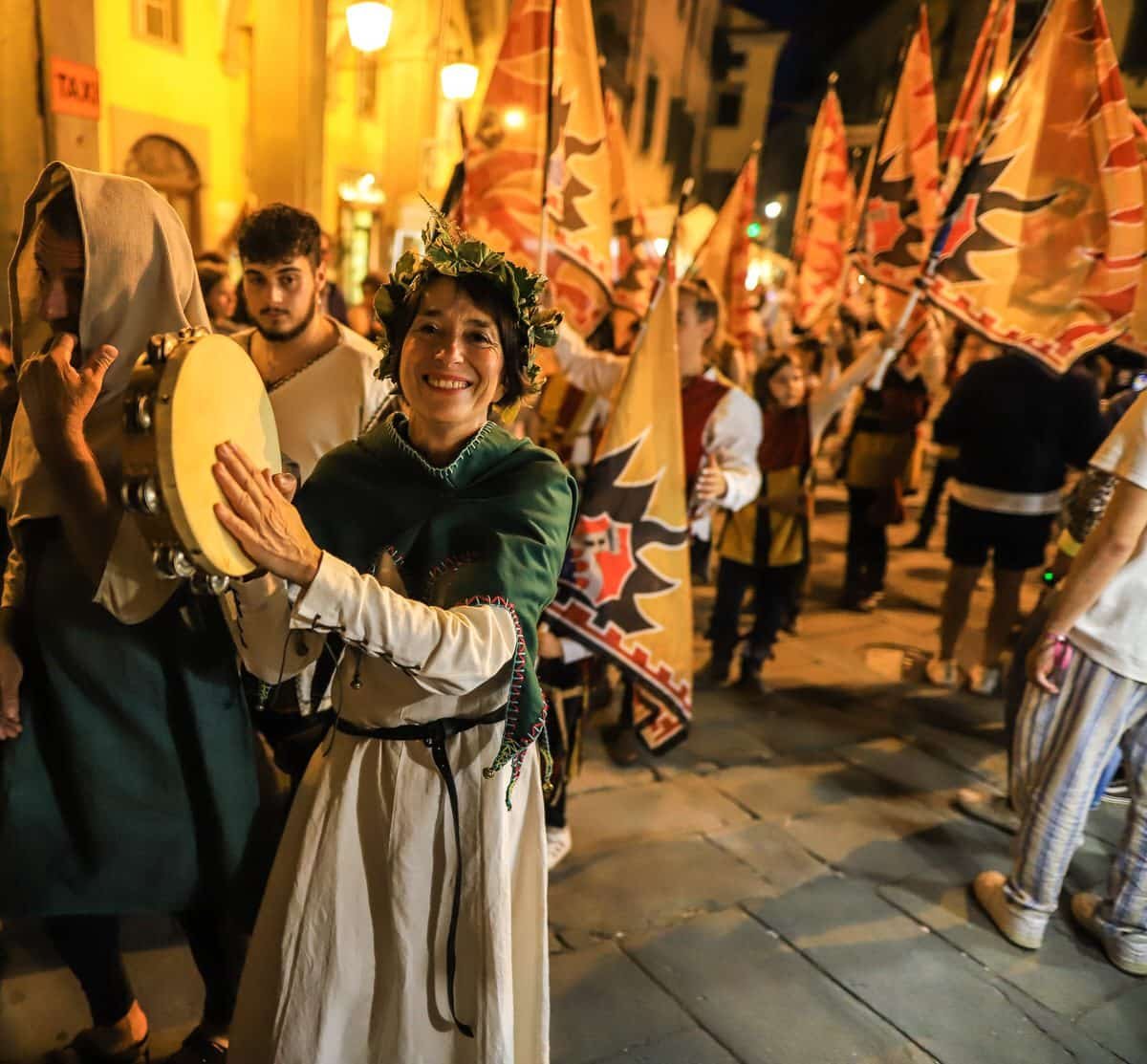
Visitors can expect a combination of historical reenactment, medieval markets, performances, music, demonstrations, food experiences, children’s activities and events connected with the town’s heritage. The historic centre becomes largely pedestrian-focused during the festival, allowing visitors to encounter costumed participants representing different medieval social groups, including clergy, nobility, military figures, courtiers and rural inhabitants.
The 2027 detailed programme and exact dates have not yet been published by the organisers. The confirmed period is August 2027, with the precise schedule to be announced. Based on previous editions, visitors can expect activities to extend across several days and include daytime historical attractions followed by evening performances, entertainment and special events.
Profitez de votre événement sans stress avec Italy Travelo
Que vous voyagez pour un festival mondialement connu, un concert en direct, une célébration culturelle ou un événement professionnel, Italy Travelo vous aide à simplifier chaque étape de votre voyage. Notre équipe propose une assistance personnalisée aux voyages, vous permettant de vous concentrer sur la création de souvenirs durables.
The festival is organised by the Compagnia del Piagnaro, a historical association founded in 2005 that works to promote and reconstruct the historical and cultural memory of Pontremoli and its surrounding area.
Dates des événements
Medievalis Festival 2027 is planned for August 2027 in Pontremoli, Italy. Exact dates are still to be announced by the organisers, so visitors should check the official Medievalis website before arranging travel or accommodation.
Medievalis traditionally takes place over several consecutive days. Recent editions have demonstrated that the festival can occupy much of the historic centre, with different attractions operating throughout the day and evening. The official website confirms the annual August timing but has not yet published the complete 2027 calendar.
For planning purposes, August 2027 should therefore be treated as the confirmed festival month rather than as a final event schedule.
Vous visitez cet événement ? Ne manquez pas ces activités et expériences locales étonnantes pendant votre séjour.
Lieux et lieux de festival
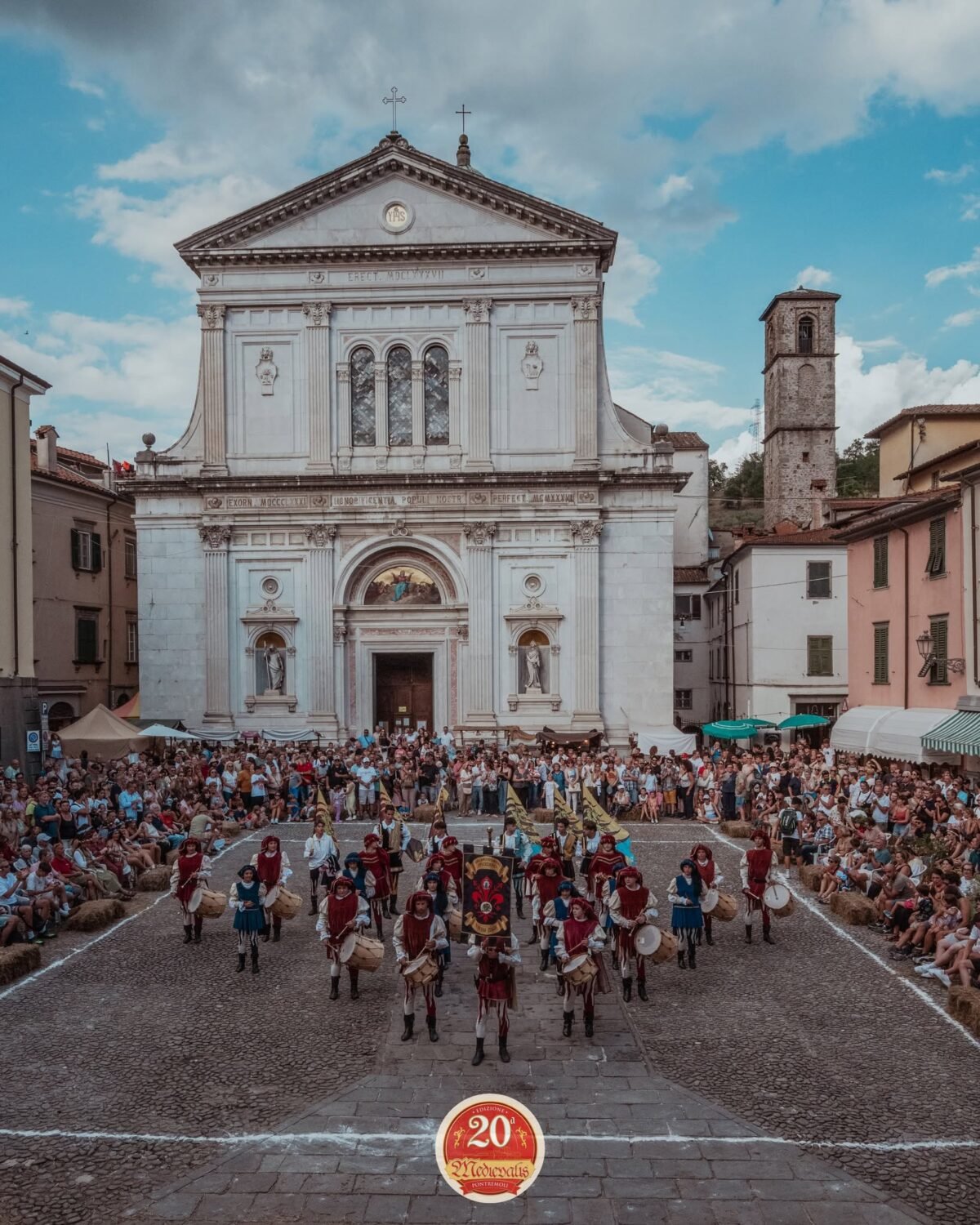
The main setting for Medievalis is the historic centre of Pontremoli, where streets and squares are transformed into a medieval environment. Historic areas provide space for markets, costumed characters, entertainers, musicians, demonstrations and public performances.
Castello del Piagnaro is one of the most important festival locations. The castle provides a particularly strong historical setting for Medievalis activities, including medieval displays, demonstrations, performances and the Medieval Dinner. The castle is also closely connected with the origins and historic identity of Pontremoli.
Other activity areas can include historic streets, public squares, the medieval market area, performance spaces and sections around the castle. Previous programmes have used locations such as Piazza della Repubblica, Platea de Supra, the Teatro della Rosa area, Via Garibaldi and streets leading toward the castle.
The official Medievalis contact address is Piazza della Repubblica 5, 54027 Pontremoli, Italy.
Programme culturel complet
The 2027 programme will be announced by the organisers, but Medievalis traditionally combines historical education with live entertainment and participatory experiences. The festival archive describes activities involving jugglers, flag bearers, local artisans, medieval food, musicians and dancers, alongside light displays and fireworks.
Les éléments typiques du programme incluent :
- Medieval market stalls featuring crafts, goods and historically inspired products
- Historical encampments with armed groups and reenactors
- Medieval musicians and live performances
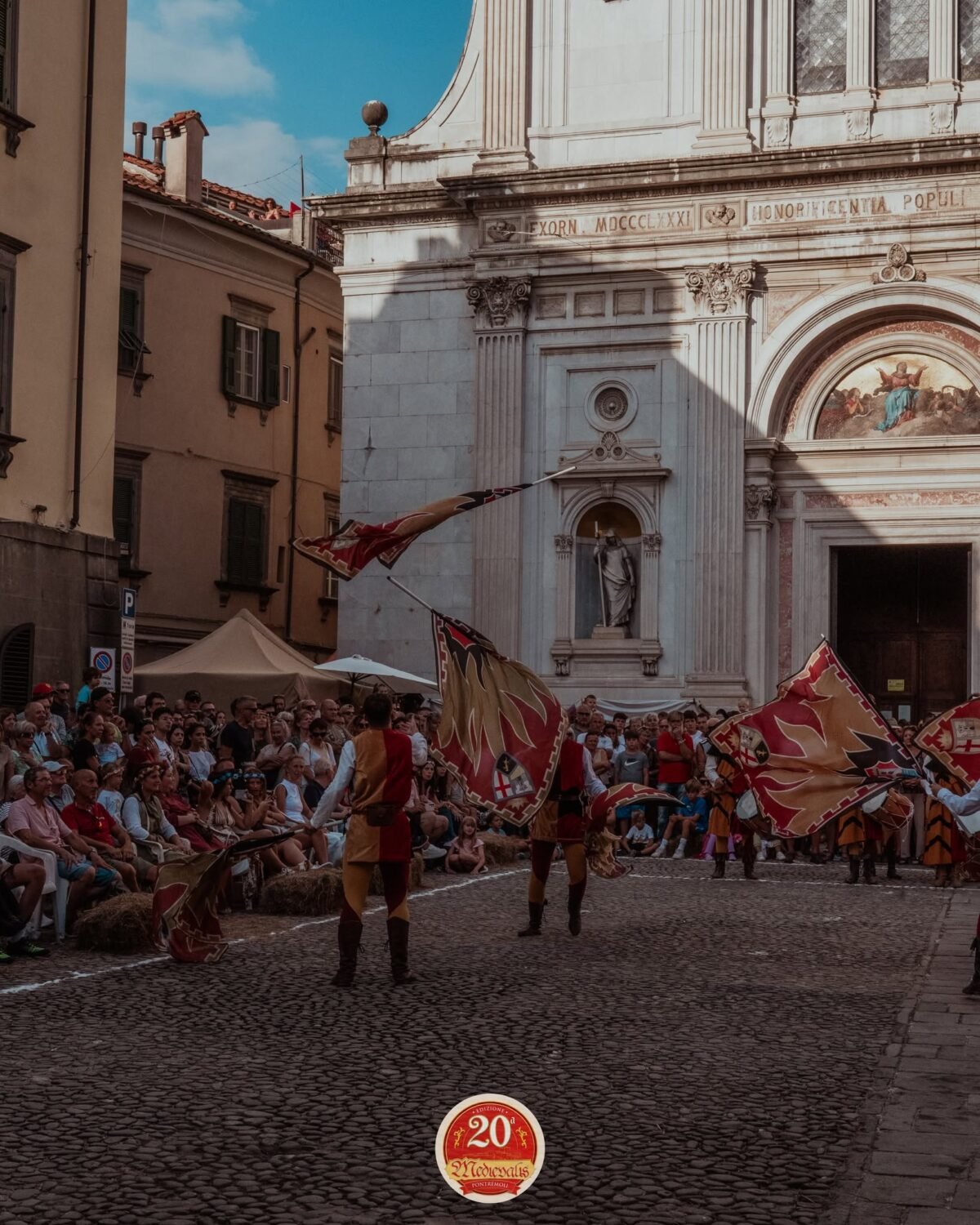
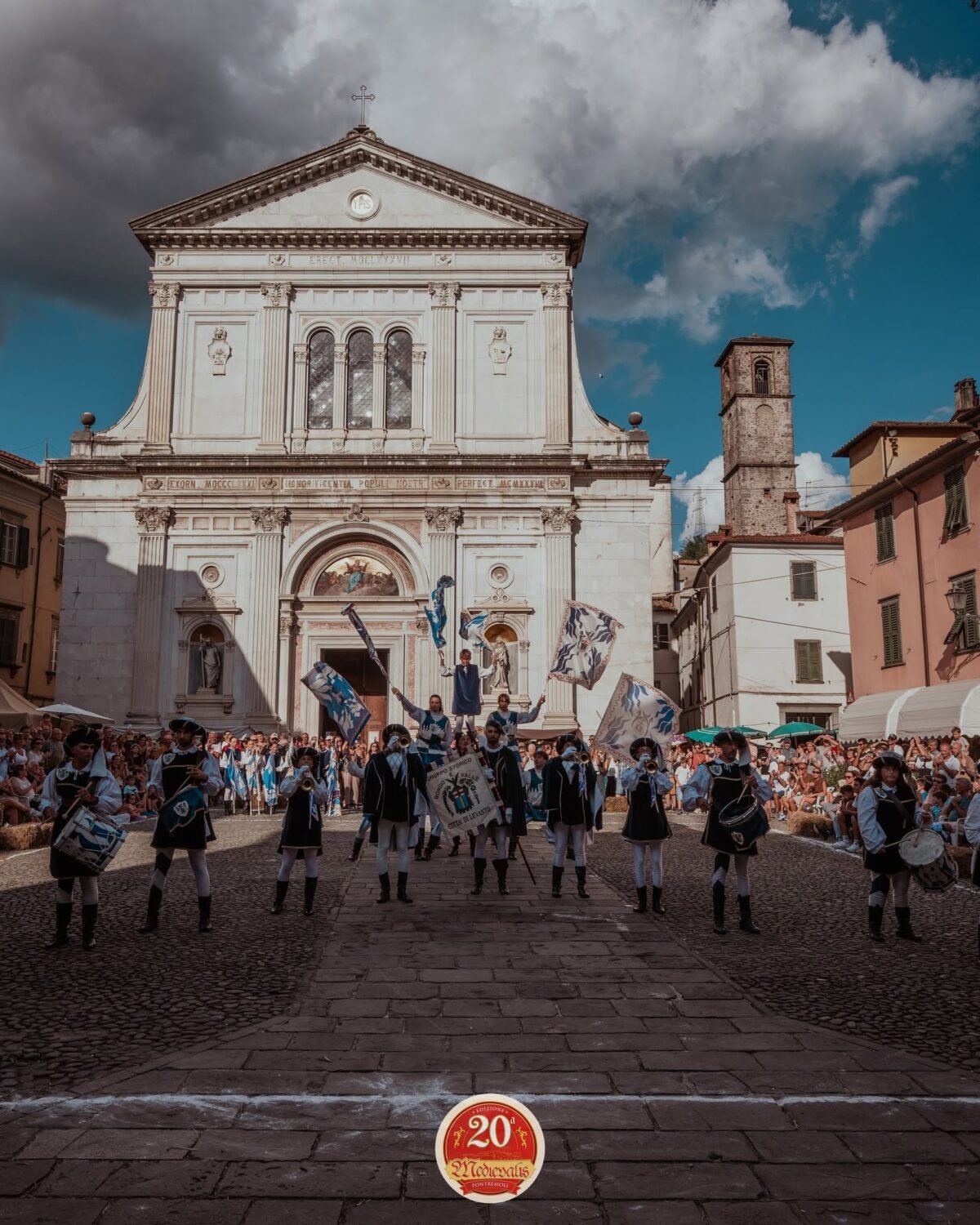
- Flag-throwing and flag-waving demonstrations
- Archery and demonstrations of medieval combat
- Falconry displays featuring birds of prey
- Historical craft and artisan demonstrations
- Medieval-themed entertainment for families and children
- Talks and educational presentations about Pontremoli’s history
- Costumed processions through the historic centre
- Evening shows and theatrical performances
- Medieval food experiences and traditional banquet events
The programme is designed so that visitors can move between different parts of the historic centre rather than remaining in a single exhibition venue. This creates an open-air festival atmosphere in which historical interpretation and entertainment are integrated into the urban environment.
Traditions et performances mises en avant
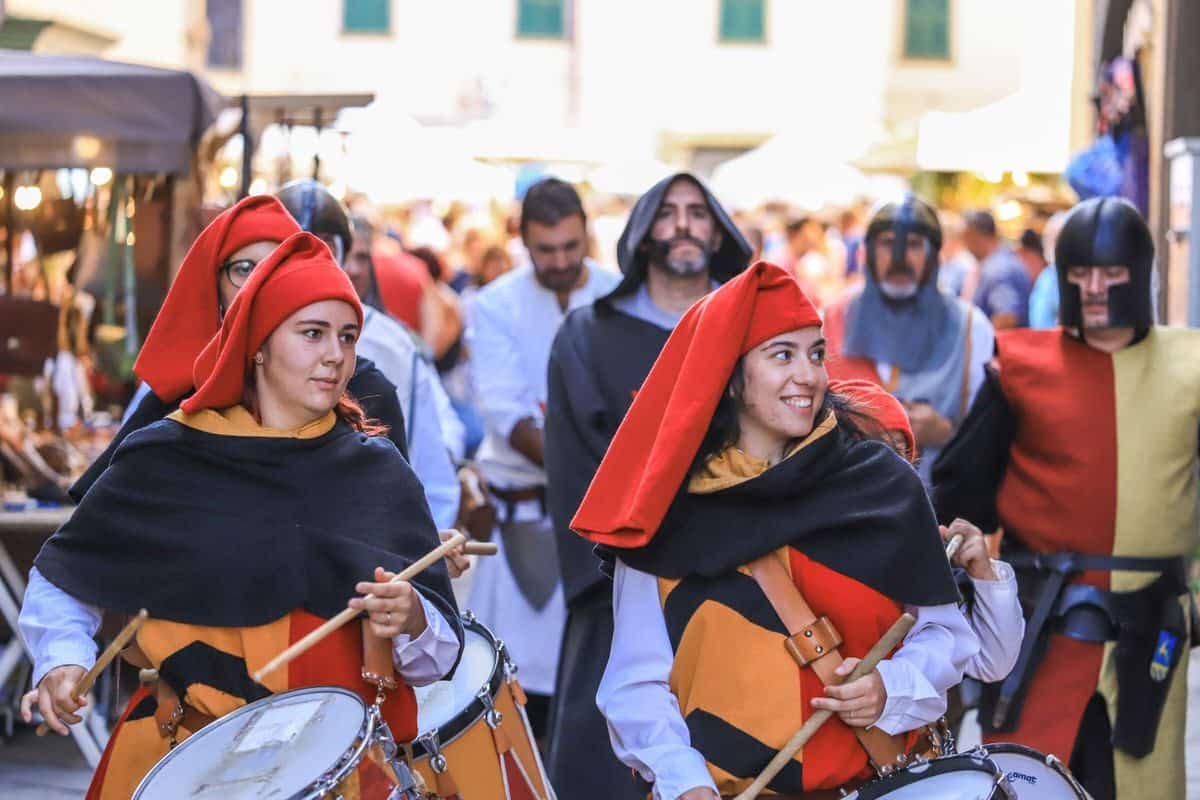
Historical reenactment is at the centre of Medievalis. Costumed participants represent different elements of medieval society, while historical groups recreate aspects of military, religious, aristocratic and everyday life.
Previous programmes have included knights, archers, armed groups, flag bearers, dancers, musicians, jugglers, performers and falconers. The festival archive specifically highlights jugglers, flag bearers, local artisans, medieval musicians and dancers as recurring elements of the event.
Military demonstrations can include medieval weapons, combat techniques and archery. Falconry is another recurring feature, with previous programmes presenting hawks, falcons, owls and other birds of prey.
Music and street entertainment are also important. Medieval-style musicians and performers appear throughout the historic centre, helping create an atmosphere that extends beyond formal stage performances.
Children also have a dedicated role in the festival. The organisers describe activities involving games, creative workshops and friendly competitions led by adult volunteers, allowing younger visitors to participate in the historical setting rather than simply watching performances.
Points forts historiques et patrimoniaux
The historical foundation of Medievalis is connected to Pontremoli’s medieval development and the granting of the Free Commune diploma associated with Emperor Frederick II. Frederick II described Pontremoli as a key gateway for communication between Lombardy and Tuscany, reflecting the town’s strategic position.
Pontremoli’s history also has a strong connection with the Via Francigena, the historic pilgrimage route toward Rome. The town developed at the meeting point of the Verde and Magra rivers and became an important stopping point for travellers. The official Medievalis material traces the settlement’s history back to the medieval period and highlights its connections with religious institutions, knightly orders and historic families.
Castello del Piagnaro is another major heritage feature. The castle has Lombard origins and remains one of the most recognisable historic landmarks associated with Pontremoli.
The Medievalis Palio is also significant. Created by Pontremoli artist Luciano Preti, the bronze sculpture incorporates symbols connected with the town, its defensive towers and walls, the Via Francigena and the historic conflicts between the Guelph and Ghibelline factions.
Programme des événements et activités
The detailed 2027 timetable has not yet been released. Previous editions show that activities are distributed throughout the day, beginning with markets, encampments and family attractions before moving into performances, demonstrations and evening entertainment.
A typical festival day can include:
- Morning opening of the medieval market
- Historical camps and demonstrations
- Family workshops and children’s activities
- Falconry and animal displays
- Historical craft demonstrations
- Educational talks and presentations
- Medieval music and street performances
- Archery and combat demonstrations
- Costumed processions
- Evening theatrical performances
- Castle activities
- Medieval dinner experiences
- Night-time music, fire performances and entertainment
The precise times, performers and locations for 2027 should be checked against the official programme once published. Previous programmes demonstrate that the schedule can contain numerous simultaneous activities, making the official daily programme useful for planning which performances to attend.
Types de billets et options d’entrée
The 2027 ticket structure has not yet been officially announced. Visitors should distinguish between general access to the festival atmosphere in the historic centre and separately organised activities that may require reservation or an additional admission arrangement.
Previous editions provide a useful indication of admission arrangements. For example, the Castle del Piagnaro area was listed with an entrance charge of approximately $2.31, based on the previous edition’s published €2 admission converted at approximately $1.1539 per euro. Children under six were listed as entering free in the previous information published for the event.
The 2027 organiser should be contacted directly for confirmation of any admission changes, reservations, special-event access or children’s entry arrangements.
Visites guidées et expériences culturelles
Medievalis provides opportunities to explore Pontremoli’s historic environment through the festival itself, while the town’s monuments and heritage sites add further cultural experiences.
Visitors can explore Castello del Piagnaro, historic streets and medieval architectural features while encountering reenactors and historical groups. Previous programmes have included educational displays covering medieval rooms, kitchens, knightly orders, crafts and historical occupations.
Families can also participate in guided activities through workshops and games led by adult volunteers. Children can create their own souvenirs while taking part in medieval-themed challenges and activities.
For visitors interested in deeper heritage experiences, the Via Francigena connection provides another way to understand Pontremoli’s importance as a historic route between northern and central Italy.
Cérémonies et célébrations spéciales
Special ceremonies are an important part of Medievalis because the festival is based on a specific historical episode in Pontremoli’s civic history.
Previous programmes have featured historical processions and ceremonial reenactments connected with the arrival of Emperor Frederick II and the recognition of Pontremoli as a Free Commune. One earlier programme included a historical ceremony involving the reading of the confirmation of the town’s ancient privileges, followed by performances featuring musicians, flag bearers, dancers, armed groups, nobles and townspeople.
The Medieval Dinner at Castello del Piagnaro is another special experience. The official Medievalis website describes the dinner as an evening event held at the castle, while previous programmes combined period-inspired dishes with musicians, singers, performers and historical characters.
The exact ceremonial programme for 2027 will be confirmed when the organisers publish the new schedule.
Règles du festival
Visitors should follow the instructions of Medievalis organisers, local authorities, venue staff and historical reenactment groups throughout the event.
The historic centre is transformed for the festival, with previous editions restricting automobile traffic in event areas to allow pedestrians, merchants, carriages and reenactors to move through the streets.
General visitor guidance includes:
- Follow temporary traffic and pedestrian restrictions
- Respect historic buildings, monuments and archaeological features
- Follow staff instructions at crowded performances
- Do not touch weapons, historical equipment or animals without permission
- Keep children supervised around performances and demonstrations
- Follow safety instructions around fire performances
- Respect restricted areas used by performers and historical groups
- Follow reservation requirements for special activities
- Check the official programme for any updated visitor rules
Weather arrangements may also apply to outdoor performances. Previous festival information has indicated that the historical reenactment can continue in poor weather, although individual performances or activities may be changed for safety reasons.
Comment y arriver
Pontremoli is located in northern Tuscany in the Province of Massa-Carrara and is accessible by road and rail.
By car, visitors can reach Pontremoli via the A15 motorway, with the Pontremoli exit providing access to the town. The SS62 della Cisa is another important road connection. Previous visitor information recommends using designated parking areas outside the main historic-centre activity zone.
By train, Pontremoli is served by the Parma–La Spezia railway line. The railway station provides a practical arrival point for visitors who want to avoid driving during the festival.
Because much of Medievalis takes place in the historic centre, visitors arriving by car should expect to park outside the busiest pedestrian areas and continue on foot.
Transports en commun et stationnement
Pontremoli railway station is the principal public transport option for visitors arriving by train. Previous festival information places the station approximately 1.1 kilometres from Castello del Piagnaro, making the castle reachable on foot in around 15 minutes under normal walking conditions.
Parking options mentioned for previous editions include the Parcheggio dei Chiosi and the area around the railway station. A shuttle service has also previously been associated with the former Terni area.
One previously recommended free parking location is Parcheggio Elena Dosi Delfini on Via dei Chiosi. From there, visitors can continue toward the historic centre and cross the medieval Ponte della Cresa.
Parking and temporary traffic arrangements can change during the festival, so visitors should check local signs and organiser information after the 2027 access plan is released.
Zones d’hébergement
The most convenient accommodation area is central Pontremoli, particularly for visitors who want to explore Medievalis on foot. Staying close to the historic centre can reduce the need for driving and make it easier to attend evening performances.
Other options are available in the wider Lunigiana area, including accommodation in surrounding villages and countryside locations. These can suit visitors who want to combine Medievalis with a broader Tuscan or northern Apennine trip.
Visitors planning to attend during August should consider booking accommodation well in advance because the festival attracts tourists, historical reenactment enthusiasts and visitors exploring the wider Lunigiana region.
Hotels, guesthouses, apartments and rural accommodation can provide different experiences, from staying within walking distance of the festival to enjoying a quieter countryside base outside the town.
Cuisine et spécialités traditionnelles
Food is an important part of the Medievalis experience. Previous editions have included medieval-inspired dishes and a dedicated Medieval Dinner at Castello del Piagnaro, where food is combined with historical entertainment, music and performances.
The festival also provides opportunities to discover local specialities from Pontremoli and the wider Lunigiana area. Visitors can explore food stalls and traditional products while walking through the medieval market.
The historical setting makes food part of the cultural experience rather than simply a refreshment option. Period-inspired recipes, traditional ingredients and local products help reinforce the connection between the festival and the everyday life of the past.
Visitors attending a special dinner should check whether advance booking is required because the Medieval Dinner has previously operated as a reservation-based experience.
Accessibilité
Medievalis takes place largely in Pontremoli’s historic centre, which includes old streets, pedestrian routes, historic buildings and areas with uneven surfaces. Visitors with reduced mobility should consider the physical characteristics of the medieval town when planning their visit.
Some attractions are located within or around historic structures, including Castello del Piagnaro. Access conditions can therefore vary from one location to another.
During the festival, vehicle restrictions in the historic centre can affect drop-off and access arrangements. Visitors requiring accessible transportation should contact the organisers in advance to ask about the most suitable access point.
The official Medievalis contact details are available through the organiser, which can provide updated information about access arrangements for the 2027 edition.
Meilleures expériences culturelles
One of the strongest ways to experience Medievalis is to explore the historic centre on foot rather than concentrating on a single performance. The combination of streets, market stalls, costumed characters and historical displays creates an environment where different activities can be discovered throughout the visit.
Castello del Piagnaro should be included in a cultural itinerary because it connects the festival with Pontremoli’s architectural and historical heritage. Previous programmes have used the castle for historical exhibitions, medieval rooms, craft education, falconry, music, combat demonstrations and the Medieval Dinner.
Visitors interested in history should also look for the historical processions and presentations concerning Pontremoli’s relationship with Frederick II and the Free Commune tradition.
Families can focus on children’s workshops and interactive activities, while visitors interested in traditional performance can seek out musicians, dancers, flag bearers, combat demonstrations and evening shows.
The Via Francigena heritage of Pontremoli adds another important dimension. Exploring the town’s historic streets while learning about its position on the pilgrimage route can help place Medievalis within the broader history of travel and communication in medieval Italy.
Faits marquants de l’année précédente
Previous editions have featured a large-scale combination of historical reenactment and public entertainment. The 2025 programme, for example, included a medieval market, historical camps, archers, armed groups, falconry, children’s activities, conferences, medieval music, theatrical performances, combat demonstrations and the Medieval Dinner at Castello del Piagnaro.
The festival archive also highlights jugglers, flag bearers, local artisans, medieval dishes, musicians, dancers, light displays and fireworks as elements of past Medievalis events.
The 2026 edition was promoted by the organisers as the twentieth anniversary of Medievalis, reinforcing the festival’s established position within Pontremoli’s cultural calendar. The official site confirmed the 2026 edition as an August event and described the town as being transformed into a medieval setting with travellers, merchants, carriages, knights and representatives of different medieval social classes.
These previous programmes provide useful guidance for visitors planning for 2027, although individual performers, activities, admission arrangements and schedules may change from one edition to another.
Billets officiels
Official 2027 ticket information has not yet been published. Visitors should use the official Medievalis website and organiser contact details for the latest information about admission, reservations and special activities.
The official website provides information about Medievalis, past events, the historical reenactment, participation and organiser contacts.
Previous editions indicate that some festival areas or special experiences may have separate admission or reservation requirements. In particular, the Castle area has previously used a dedicated entrance charge, while the Medieval Dinner has been presented as a bookable experience.
For reference, the previously published Castle admission was approximately $2.31 per person, based on the previous €2 admission and an exchange rate of $1.1539 per euro. This is historical pricing only and should not be treated as the confirmed 2027 ticket price.
Official website: https://www.medievalis.eu/en-gb
Contact :
+39 392 7098371
+39 366 4465044
amministrazione@medievalis.org
Official organiser address: Piazza della Repubblica, 5, 54027 Pontremoli (MS), Italy.
Vidéo
Localisation
FAQ
What are the primary dates and operational schedule for the Medievalis festival events in Pontremoli?
The festival traditionally takes place over several action-packed days during the month of August within the historic center. Daily programming runs continuously from morning historical encampment openings until late-night fire shows and musical performances. Checking the official festival website prior to arrival provides precise daily timetables for tournament heats and grand parades.
Comment les visiteurs peuvent-ils accéder aux zones d’observation des événements, et les billets d’entrée sont-ils obligatoires pour y entrer ?
Walking through the open public streets, artisan markets, and exterior areas of the historic center is completely free for all visitors. Accessing specific interior tournament arenas, grandstands, and evening theatrical shows requires purchasing an affordable daily entry ticket online or at festival gates. Securing tickets in advance is recommended to guarantee preferred seating for popular events like the Cazzaguerra tournament.
Existe-t-il des activités spécifiques adaptées aux familles et des installations accessibles pour les visiteurs qui assistent avec des enfants ou des besoins de mobilité ?
The festival organizes specialized children's activity zones, interactive crafts, and gentle storytelling sessions designed to safely engage younger visitors. Navigating the steep stone hills, ancient steps, and medieval cobblestones of Pontremoli and the castle requires physical effort, so careful route planning is advised. Multilingual staff at the festival information desks provide accessibility guidance, maps, and logistical support for attendees requiring special assistance.
What public transportation and parking options are recommended for travelers arriving from outside Pontremoli?
Travelers arriving from regional transit hubs can easily utilize frequent trains stopping directly at Pontremoli railway station, located a short walk from the historic center. Because vehicle traffic is strictly banned within the ancient center during festival hours, visitors should utilize designated peripheral parking lots. Clear directional signage and shuttle services guide visitors smoothly from transit areas toward pedestrian pathways leading into the event zones.
How should visitors prepare for the summer weather and crowd conditions during the festival?
August weather in Pontremoli is typically warm and sunny during the day, making lightweight clothing, hats, and sunscreen essential for outdoor exploration. Since exploring the historic stone center and castle ramparts involves extensive walking across uneven terrain, sturdy walking shoes are vital. Carrying a reusable water bottle, staying hydrated, and arriving early to secure spots for major tournaments ensures an enjoyable festival experience.

Laisser un commentaire