
-
septembre 3, 2027
Date de l'événement :
-
septembre 3, 2027
Fin de l'événement :
À quoi s’attendre en 2027
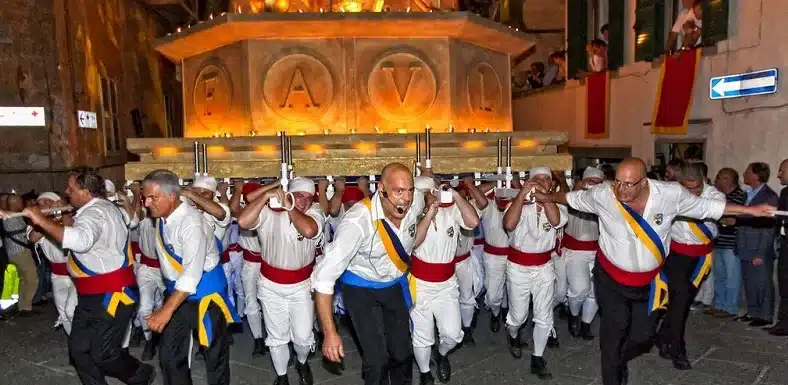
Macchina di Santa Rosa 2027 will transform the historic centre of Viterbo into the setting for one of Italy’s most distinctive religious and cultural celebrations. The central spectacle is the Trasporto della Macchina di Santa Rosa, when a monumental illuminated structure is carried on the shoulders of more than one hundred Facchini di Santa Rosa through the historic streets of the city.
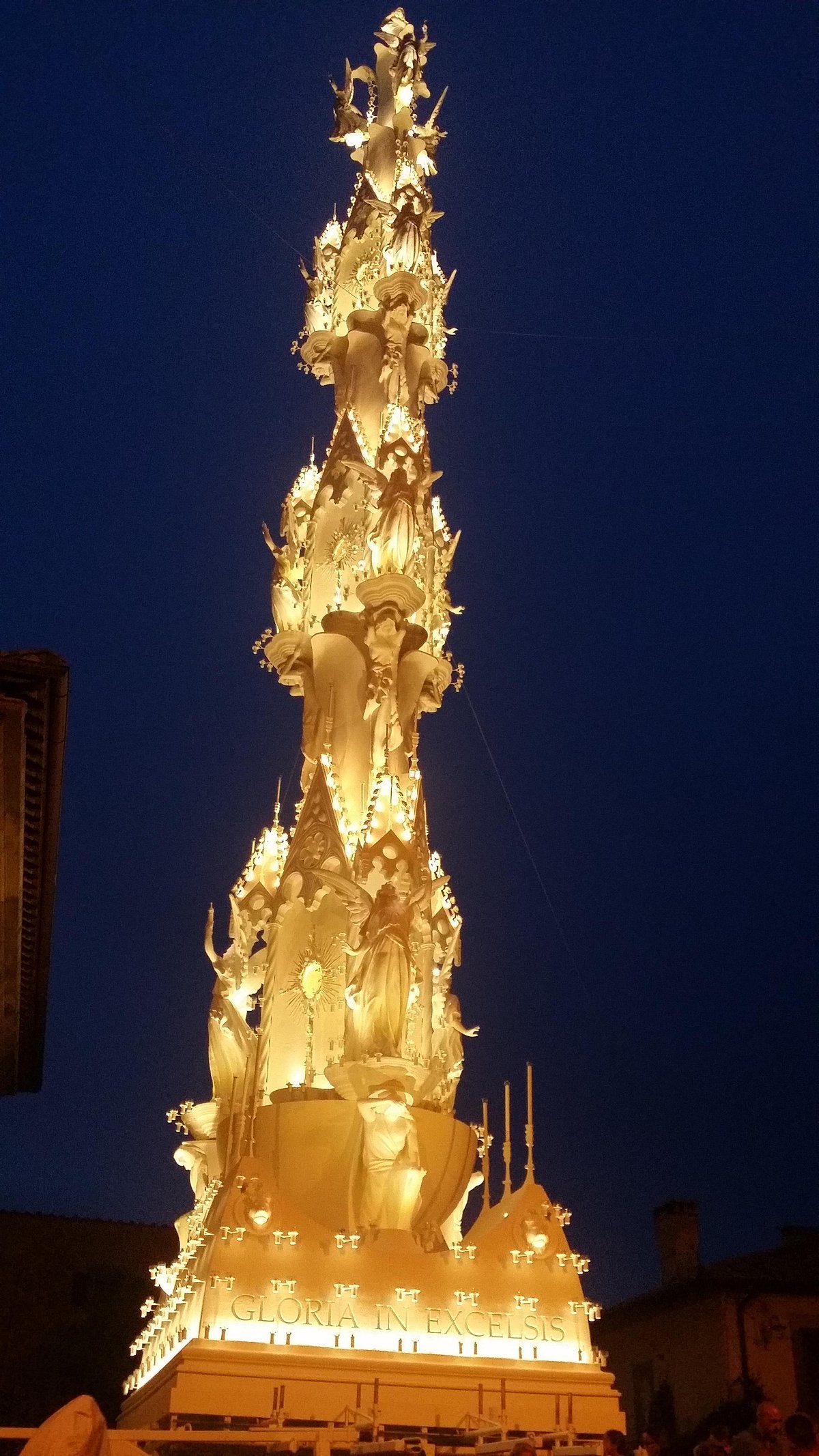
The 2027 celebration will continue the tradition of the current Macchina, “Dies Natalis,” a monumental structure designed by architect Raffaele Ascenzi. The machine is approximately 33 metres high and weighs around five tonnes. Its design uses modern lightweight and resistant materials while retaining traditional visual references associated with the devotion to Santa Rosa.
The evening transport begins at Piazza San Sisto near Porta Romana and follows a route of slightly more than one kilometre toward the Sanctuary of Santa Rosa. Along the route, the Macchina stops at several traditional locations before reaching its final destination.
Profitez de votre événement sans stress avec Italy Travelo
Que vous voyagez pour un festival mondialement connu, un concert en direct, une célébration culturelle ou un événement professionnel, Italy Travelo vous aide à simplifier chaque étape de votre voyage. Notre équipe propose une assistance personnalisée aux voyages, vous permettant de vous concentrer sur la création de souvenirs durables.
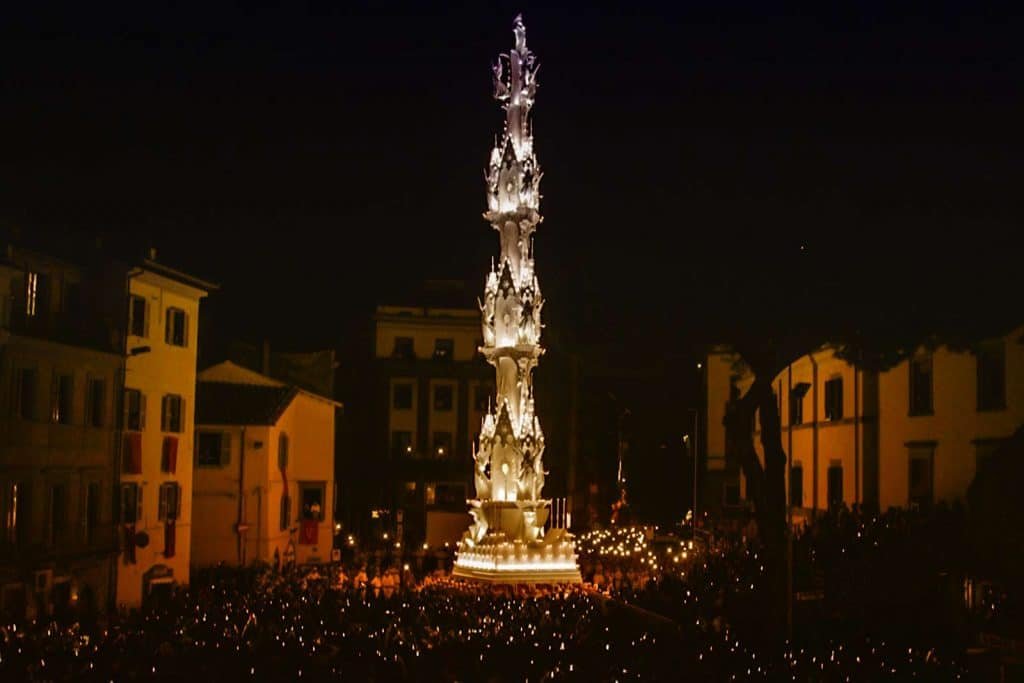
Visitors can expect a combination of religious devotion, spectacular engineering, traditional costumes, music, ceremonial rituals, large crowds and the highly coordinated work of the Facchini. The illuminated tower is particularly impressive after sunset, when its lights and flames make the structure visible above the surrounding historic buildings.
The event is much more than the final procession. The wider Festa di Santa Rosa programme includes religious ceremonies, the Corteo Storico, MiniMacchine, cultural activities, narrated walks, exhibitions, music and community celebrations.
Dates des événements
September 3, 2027
The Trasporto della Macchina di Santa Rosa is traditionally held on September 3 in Viterbo as the principal public celebration associated with the feast of Santa Rosa.
The main transport takes place in the evening, following a day of religious and ceremonial activities. Visitors should plan to arrive well before the procession because the central streets become extremely crowded and access to viewing areas can be controlled.
The wider Santa Rosa celebrations extend beyond the main transport, with religious events, historical activities, MiniMacchine and cultural programmes taking place around the principal celebration.
The detailed 2027 timetable, including the exact times of ceremonies, access arrangements and associated activities, should be confirmed through the official municipal programme when released.
Vous visitez cet événement ? Ne manquez pas ces activités et expériences locales étonnantes pendant votre séjour.
Lieux et lieux de festival
The principal setting is the historic centre of Viterbo. The Macchina begins at Piazza San Sisto near Porta Romana and travels through the city before reaching the Sanctuary of Santa Rosa.
Important locations associated with the transport include:
- Piazza San Sisto: Starting point and assembly area for the Macchina.
- Porta Romana: Historic gateway close to the beginning of the route.
- Piazza Fontana Grande: First major traditional stop.
- Piazza del Plebiscito: Major viewing location directly in front of the municipal buildings.
- Piazza delle Erbe: Traditional stopping point along the route.
- Corso Italia: Important section of the procession route.
- Church of the Suffragio: Located along the central route.
- Church of Sant’Egidio: Area associated with a technical stop.
- Piazza Verdi: Another major viewing and stopping location.
- Teatro dell’Unione: Important cultural venue in the wider Santa Rosa programme.
- Sanctuary of Santa Rosa: Final destination of the Macchina.
The Macchina remains at the Sanctuary after the transport for a period, allowing visitors to see the structure in a different setting from the procession itself.
Programme culturel complet
The Santa Rosa programme combines religious ceremonies, civic traditions, historical pageantry and cultural events.
The wider programme can include:
- Célébrations religieuses : Masses, prayers, blessings and ceremonies dedicated to Santa Rosa.
- Corteo Storico: Historical procession featuring traditional costumes and civic symbols.
- Trasporto della Macchina: The principal shoulder-borne procession.
- MiniMacchine: Smaller processional structures carried by younger participants in different neighbourhoods.
- Facchini ceremonies: Events connected with the Facchini di Santa Rosa and preparation for the transport.
- Illumination events: Public opportunities to see the Macchina illuminated before the main transport.
- Narrated walks: Guided storytelling along the historic transport route.
- Cultural exhibitions: Displays relating to Santa Rosa, Viterbo and the Macchina tradition.
- Musique et divertissement : Concerts, performances and public celebrations.
- Community activities: Neighbourhood events and religious gatherings throughout the city.
The official programme can change from one edition to another, particularly for concerts, exhibitions and supplementary cultural activities. The transport itself remains the central event around which the wider celebrations are organised.
Traditions et performances mises en avant
The most important tradition is the carrying of the Macchina by the Facchini di Santa Rosa. More than one hundred men work together to support and move the enormous structure through the narrow streets of Viterbo.
The Facchini wear their distinctive white clothing with red elements and traditional head coverings. Their role is both physical and ceremonial, and the preparation for the transport is an important part of the community identity surrounding Santa Rosa.
The Corteo Storico adds another dimension to the celebration. Participants wear historical costumes and represent figures and institutions connected with the city’s history and the tradition of Santa Rosa.
The MiniMacchine provide a youth-focused expression of the tradition. Smaller structures are carried through neighbourhoods by younger participants, introducing children and young people to the ceremonial culture surrounding the main Macchina.
Music also plays an important role. Brass instruments, drums, ceremonial sounds and public performances accompany different parts of the festivities.
The illumination of the Macchina is one of the defining visual features. The structure incorporates numerous lights, including traditional flame effects, creating a striking spectacle when it moves through the historic centre at night.
Points forts historiques et patrimoniaux
The devotion to Santa Rosa is deeply connected with the religious and civic identity of Viterbo. Rosa is traditionally remembered as the city’s young patron saint, and the annual celebration brings together religious devotion and public cultural expression.
The Macchina itself represents a long tradition of monumental processional structures. Every generation receives the opportunity to reinterpret the structure while maintaining the basic concept of carrying a monumental tower through the city.
The modern Macchina is normally replaced according to a multi-year cycle following a municipal design competition. The current “Dies Natalis” was created by architect Raffaele Ascenzi and introduces a design inspired by the birth and life of Santa Rosa.
The structure is approximately 33 metres high and around five tonnes in weight. Despite its monumental appearance, contemporary construction techniques allow the structure to be sufficiently light and strong for the Facchini to carry.
The Trasporto has been recognised internationally as part of the UNESCO intangible cultural heritage associated with the Network of the Great Shoulder-Borne Processional Structures of Italy.
This recognition places the Viterbo tradition alongside other Italian shoulder-borne processional traditions and highlights its cultural importance as a living community practice.
Programme des événements et activités
The detailed 2027 schedule will be published by the organisers and municipal authorities closer to the celebration. The established programme generally develops through several stages.
- Preparation period: The Macchina is assembled and prepared at its starting location.
- Visionnement public : The completed structure can be displayed and illuminated before the transport.
- Narrated walks: Visitors can learn about the history and route of the Macchina.
- MiniMacchine: Neighbourhood celebrations introduce younger participants to the tradition.
- Procession historique : The Corteo Storico presents costumes, symbols and civic traditions.
- Religious ceremonies: Masses, blessings and other ceremonies honour Santa Rosa.
- Facchini gathering: The carriers assemble and prepare for the transport.
- Main transport: The illuminated Macchina is carried through the historic centre.
- Traditional stops: The Macchina pauses at established points along the route.
- Final arrival: The structure reaches the Sanctuary of Santa Rosa.
- Post-event celebrations: Religious and community activities continue around the feast.
Visitors should check the official programme before travelling because supplementary concerts, exhibitions, guided walks and neighbourhood activities can vary.
Types de billets et options d’entrée
The main outdoor celebration can be viewed from public areas, but the municipality also creates controlled seating areas along the route. These ticketed locations provide a more structured viewing experience and can be useful for visitors who want a designated place to watch the Macchina.
The latest published ticket structure provides the following previous-edition reference prices, converted into USD:
- Piazza San Sisto grandstand: approximately $46.
- Piazza Fontana Grande chair: approximately $18.
- Piazza del Plebiscito grandstand, Sector A: approximately $52.
- Piazza del Plebiscito grandstand, Sector B: approximately $46.
- Piazza del Plebiscito grandstand, Sector C: approximately $46.
- Piazza del Plebiscito grandstand, Sector D: approximately $41.
- Piazza del Plebiscito chairs, Sector E: approximately $18.
- Piazza Verdi grandstand: approximately $41.
For the latest published edition, standard seats for residents and general online sales were approximately $33 plus a $5 booking fee, while dedicated accessibility seating with an accompanying person was approximately $12 total.
These are previous-edition reference prices and should not be treated as confirmed 2027 prices. The municipality normally announces the new seating plan, categories, purchasing arrangements and prices closer to the event.
Visites guidées et expériences culturelles
A guided exploration of the Macchina route is one of the best ways to understand the event beyond the spectacular final procession. The route passes through important historic areas of Viterbo, allowing visitors to connect the modern celebration with the city’s medieval urban landscape.
The municipality has previously organised narrated walks along the Macchina route. These walks explain stories, traditions, anecdotes and historical details connected with the Trasporto and Viterbo.
Visitors can also explore the historic centre independently before the crowds become intense. Piazza San Sisto, Piazza Fontana Grande, Piazza del Plebiscito, Piazza delle Erbe and Piazza Verdi are particularly relevant to understanding the route.
The Sanctuary of Santa Rosa is another important cultural destination. Visitors interested in the religious dimension of the celebration can combine the Macchina experience with a visit to the sanctuary and other churches in the historic centre.
Museums and historic buildings around Viterbo provide additional context about the city’s medieval and religious heritage.
Cérémonies et célébrations spéciales
Religious ceremonies are central to the Festa di Santa Rosa. The celebration includes prayers, Masses, blessings and processions associated with the saint and her cult.
One of the most significant moments for the Facchini is the episcopal blessing received before undertaking the difficult transport. The ceremony reflects the religious importance attached to the task and the physical responsibility carried by the participants.
The Corteo Storico provides the civic and historical counterpart to the religious programme. Participants in historical costume move through the city before the Macchina transport, creating a ceremonial transition from the daytime celebrations to the main evening spectacle.
The assembly and illumination of the Macchina are also important community moments. Seeing the structure before it is carried allows visitors to appreciate its engineering, decorative elements and scale.
After the transport reaches the Sanctuary of Santa Rosa, the Macchina remains connected with the sanctuary and the religious celebrations surrounding the feast.
Règles du festival
The Macchina transport takes place under strict crowd-control and public-safety arrangements. Spectators must remain in designated areas and follow instructions from municipal authorities, police and event personnel.
Access to the route may be restricted at certain points because the Macchina is exceptionally large and requires considerable space for movement. Visitors should never attempt to enter the procession area or approach the Facchini while the structure is moving.
Ticketed seating areas require the appropriate ticket and, under recent arrangements, tickets have been nominative. Visitors may be required to present identification when entering designated seating areas.
Large bags and objects that could obstruct spectators or create safety problems may be restricted. Visitors should check the final security rules before attending.
Because the event attracts very large crowds, visitors should remain alert to temporary barriers, controlled entrances, pedestrian diversions and emergency instructions.
Comment y arriver
Viterbo is located in Lazio, north of Rome, and can be reached by road and regional rail services.
Visitors travelling from Rome can use regional train connections toward Viterbo, although journey times vary depending on the service and departure station.
By car, Viterbo is connected to the wider Lazio road network. Visitors should avoid planning to drive directly into the historic centre because traffic restrictions and pedestrian controls are expected around the Macchina route.
For international visitors, Rome is the principal major gateway. From Rome, travellers can continue to Viterbo by rail, bus or rental car.
Once in Viterbo, walking is the most practical way to reach many central viewing areas. The historic centre contains narrow streets and pedestrian zones, and large portions of the route may be closed to ordinary traffic during the celebration.
Transports en commun et stationnement
Public transport is particularly useful because road closures and crowd-management measures can make driving close to the historic centre difficult.
Viterbo railway station provides access for visitors arriving by train. Depending on the service used, travellers may arrive at one of the city’s railway stations and continue toward the historic centre on foot or by local transport.
Visitors arriving by car should use designated peripheral or municipal parking areas and continue toward the centre by walking or public transport.
Parking restrictions and temporary traffic changes are normally introduced for the event. The municipality publishes traffic orders and access information closer to the celebration.
Visitors with accessibility requirements should check dedicated transport and parking arrangements because the municipality has previously provided specific services for people using the accessible viewing platforms.
Zones d’hébergement
Staying in Viterbo’s historic centre provides the easiest access to the main Macchina route. Hotels, guesthouses, apartments and small accommodation properties are available around the central districts.
The areas around Piazza del Plebiscito, Piazza Fontana Grande and the historic centre are particularly convenient for visitors who want to experience the procession without relying on transport.
The area around the railway station can be practical for travellers arriving by train or continuing their journey after the event.
Visitors who prefer easier car access can consider accommodation outside the historic centre and travel toward the city using public transport or park-and-walk arrangements.
Because the Macchina attracts many visitors, accommodation can become limited around the celebration. Booking early is advisable, particularly for properties within walking distance of the route.
Cuisine et spécialités traditionnelles
The Santa Rosa celebration provides an opportunity to explore the food traditions of Viterbo and the wider Tuscia area.
Visitors can find traditional Lazio and Tuscia dishes in restaurants, trattorias, cafés and temporary food areas around the city.
Local specialties can include handmade pasta, rustic soups, cured meats, cheeses, seasonal vegetables and dishes based on locally produced ingredients.
The wider Tuscia area is also known for agricultural products including olive oil, wine, hazelnuts and locally grown produce.
During the festivities, visitors can expect cafés, restaurants and food vendors around the historic centre to become particularly busy. Those planning a sit-down meal should consider reserving a table in advance.
Food is an important part of experiencing the celebration because many visitors spend several hours in the city before and after the main transport.
Accessibilité
The municipality has previously provided dedicated viewing platforms for people with disabilities along the Macchina route.
Recent arrangements included accessible platforms at Piazza del Plebiscito, Piazza Verdi and the Porta Romana/San Sisto area. Dedicated spaces have also included places for accompanying persons.
Previous accessibility ticket arrangements provided dedicated places at approximately $12 per person including the accompanying person, although the 2027 system and price have not yet been announced.
The historic centre itself contains older paving, narrow streets, slopes and crowded pedestrian areas. Visitors with mobility requirements should plan their route carefully.
The municipality has also previously arranged dedicated transport assistance for people with disabilities and accompanying persons travelling between designated collection points and accessible viewing platforms.
Meilleures expériences culturelles
The most memorable experience is watching the illuminated Macchina move through the historic centre at night. The enormous scale of the structure becomes particularly striking when it passes close to historic buildings and through the narrow sections of the route.
Seeing the Macchina at its starting point provides a different perspective because visitors can appreciate its engineering, decorations and individual structural elements before it begins moving.
The Corteo Storico is an important experience for visitors interested in history and traditional costume. The procession provides context for the religious celebration and introduces many of the symbols associated with Viterbo.
A narrated walk along the Macchina route is particularly useful for first-time visitors because it explains why specific squares and streets are important.
The MiniMacchine offer another perspective, showing how younger generations participate in preserving the tradition.
Visitors should also make time for the Sanctuary of Santa Rosa and the surrounding historic centre, rather than treating the Macchina transport as an isolated spectacle.
Faits marquants de l’année précédente
The previous edition continued the presentation of “Dies Natalis,” the Macchina designed by Raffaele Ascenzi. The structure was presented as a modern interpretation of the tradition while maintaining strong connections with the history and devotion associated with Santa Rosa.
The programme included the assembly and illumination of the Macchina at Piazza San Sisto, narrated walks along the route, the Corteo Storico, MiniMacchine and the main Trasporto.
The Macchina was carried by approximately one hundred Facchini through the historic centre along a route of slightly more than one kilometre. Traditional stops included Piazza Fontana Grande, Piazza del Plebiscito, Piazza delle Erbe, Corso Italia, the Sant’Egidio area and Piazza Verdi.
The previous programme also included concerts and free public entertainment around the Santa Rosa celebrations, alongside the religious programme and cultural activities.
Ticket arrangements included designated chairs, grandstands and dedicated accessible platforms. The municipality also implemented special purchasing procedures for residents, older visitors, pregnant women and people with disabilities.
Billets officiels
The official ticket arrangements for the 2027 Trasporto should be confirmed through the Comune di Viterbo and the official Macchina di Santa Rosa information channels.
The municipality traditionally provides designated chairs and grandstands at important viewing points along the route. Public viewing from ordinary streets and open areas can also be possible, subject to crowd-control and safety restrictions.
Previous ticket sales have included locations at Piazza San Sisto, Piazza Fontana Grande, Piazza del Plebiscito and Piazza Verdi. Dedicated accessibility platforms have also been provided.
Tickets have previously been nominative, meaning spectators may need identification when entering designated seating areas.
The 2027 ticket prices, seating map, sales dates and purchasing platform should be checked when officially announced. Visitors should avoid relying on unofficial resale listings because the event uses controlled access arrangements.
Official event information is available through the Macchina di Santa Rosa website and the Comune di Viterbo’s dedicated Santa Rosa pages.
Vidéo
Localisation
FAQ
What are the primary dates and operational schedule for the Macchina di Santa Rosa festival events?
The main event takes place on the evening of September third, preceded by historical costume parades, religious triduums, and youth processions. Visitors can explore daily cultural exhibitions and neighborhood food fairs throughout the historic center during the festival week. Checking the official festival website ahead of time provides precise daily timetables for street closures and viewing area openings.
Comment les visiteurs peuvent-ils accéder aux zones d’observation des événements, et les billets d’entrée sont-ils obligatoires pour y entrer ?
General public access to view the street transport from open sidewalks and public areas along the route is completely free of charge. Reserving seats on elevated grandstands and viewing platforms erected in major squares requires purchasing advance tickets through authorized channels. Securing tickets early is essential because high global demand causes grandstand seating to sell out rapidly weeks before September third.
Existe-t-il des activités spécifiques adaptées aux familles et des installations accessibles pour les visiteurs qui assistent avec des enfants ou des besoins de mobilité ?
The festival features family-oriented daytime historical parades, youth processions, and food fairs designed to safely welcome visitors of all ages. The historic center provides designated accessible walking routes and seating ramps, though navigating large nighttime crowds requires careful advance planning. Multilingual tourist information desks offer accessibility guidance, maps, and logistical support for attendees requiring special assistance.
What public transportation and parking options are recommended for travelers arriving from outside Viterbo?
Travelers arriving from regional transit hubs can utilize frequent trains arriving directly at Viterbo railway stations, located a short walk from the historic center. Since private vehicle access is heavily restricted within ancient fortification walls on festival day, visitors should utilize designated peripheral parking lots outside the zone. Clear directional signage guides visitors smoothly from transit hubs toward pedestrian pathways leading into the event zones.
How should visitors prepare for the late summer weather and nighttime crowd conditions during the festival?
Late summer weather in Viterbo is typically warm during the day and pleasantly cool by midnight, making layered clothing and comfortable walking shoes essential. Since exploring the historic center involves navigating stone paving, ancient squares, and massive dense crowds, sturdy footwear ensures a comfortable experience. Carrying a water bottle and arriving early to secure a viewing spot helps visitors safely enjoy the spectacular evening celebration.

Laisser un commentaire