



-
6 juin 2026
Date de l'événement :
-
février 6, 2027
Fin de l'événement :
What to expect in 2026-2027
Cambio Festival 2026–2027 is a long-running music and cultural festival based in the Assisi area of Umbria. The festival combines world music, jazz, contemporary music, classical influences, theatre and electronic sounds with performances in historic buildings and culturally significant locations.
The festival season extends from June 2026 through February 2027, bringing together summer open-air concerts and performances in theatres and indoor venues during the later part of the season.
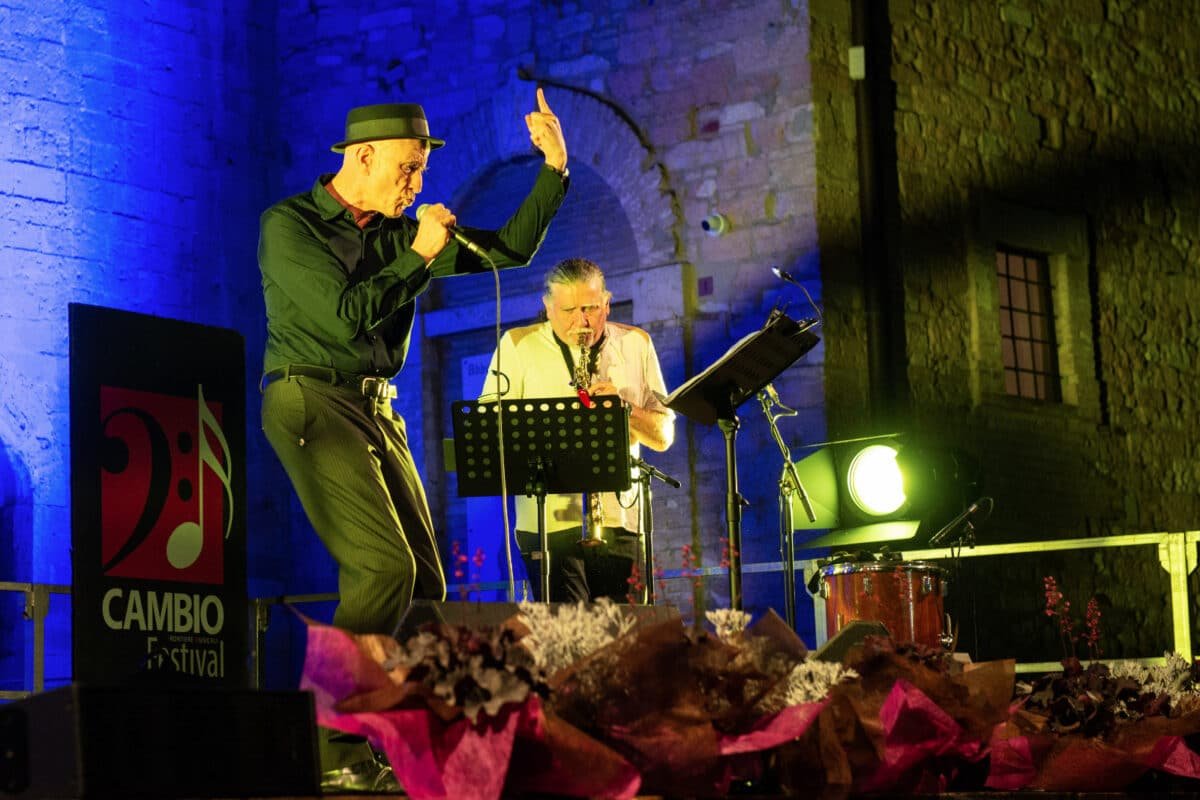
Cambio Festival was founded in 2000 by the Ponte Levatoio cultural association with the aim of connecting music and art with the historic and artistic heritage of the surrounding area. Its main historic home is the Castello dei Figli di Cambio in Palazzo di Assisi, whose medieval architecture provides an atmospheric setting for performances.
Profitez de votre événement sans stress avec Italy Travelo
Que vous voyagez pour un festival mondialement connu, un concert en direct, une célébration culturelle ou un événement professionnel, Italy Travelo vous aide à simplifier chaque étape de votre voyage. Notre équipe propose une assistance personnalisée aux voyages, vous permettant de vous concentrer sur la création de souvenirs durables.
The festival has presented more than 400 artists and more than 200 concerts over its history, including internationally recognised performers such as Manu Katché, Marc Ribot, Dominic Miller, Javier Girotto, Tosca, Serena Brancale, James Senese, Alessandro Quarta and Antonella Ruggiero.
Dates des événements
Période des festivals : June 6, 2026 – February 6, 2027
Cambio Festival does not operate solely as a single summer weekend. Its programme extends across different seasons, with summer concerts in historic outdoor settings and additional performances during the autumn and winter programme.
The supplied 2026–2027 season period covers performances in and around Assisi and Perugia, with the programme adapting to different venues and performance formats.
Individual concerts have their own admission arrangements and start times, so visitors should consult the official programme for the specific performance they plan to attend.
Vous visitez cet événement ? Ne manquez pas ces activités et expériences locales étonnantes pendant votre séjour.
Lieu et site du festival
The historic centre of Cambio Festival is the Castello dei Figli di Cambio in Palazzo di Assisi, at Piazza Figli di Cambio, 06081 Palazzo di Assisi, Assisi, Italy.
The medieval castle is closely connected with the identity of the festival. The fortified settlement developed around the castle and its defensive walls, while the surviving architecture provides a distinctive natural setting for concerts. The Church of the Morte inside the castle also preserves frescoes attributed to Matteo da Gualdo.
The festival has also used a wide range of historic and cultural locations, including:
- Castello dei Figli di Cambio, Palazzo di Assisi
- Villa Fidelia, Spello
- Lavandeto di Castelnuovo di Assisi
- Abbazia di San Pietro
- Castello di Rocca Sant’Angelo
- Castello di Petrata
- Casa Astrid
- Castello di Pissignano – Lizori
- Cannara – Piandarca
- Spello – Torri di Properzio
- Villa del Boccaglione, Bettona
- Teatro Lyrick, Assisi
- Piccolo Teatro degli Instabili, Assisi
- Urban Club, Perugia
The changing locations allow the festival to connect music with castles, abbeys, gardens, theatres, historic villages and other heritage settings.
Programmation complète
The complete 2026–2027 lineup is dependent on the individual programme announcements throughout the season.
The latest published programme has included a broad selection of musicians and performers, demonstrating the festival’s mixture of genres.
Recent and current programme artists have included:
- Alessandro Quarta
- Javier Girotto & Aires Tango
- Federico Gili
- Lisa Manara
- Claudio Vignali
- Stefano Ruiz de Ballesteros
- Amii Stewart
- Matteo Chimenti Sextet
- Antonio Rezza
- TrioRox featuring Gianluca Petrella
- Tangram
- Giuseppe Magagnino
- Solisti Filarmonici Italiani
The festival’s wider artist history also includes Manu Katché, Karl Potter, Flying Pickets, Marc Ribot and the Young Philadelphians, Agricantus, Rocco De Rosa, Michele Ascolese, Ramberto Ciammarughi, Vincenzo Zitello, Aires Tango, Tuck & Patti, Gegè Telesforo, Peppe Servillo, Natalio Mangalavite, Dominic Miller, Remo Anzovino, Tosca, Alessandro Quarta, Simone Cristicchi, Dirotta su Cuba, James Senese and Serena Brancale.
Têtes d’affiche et artistes invités
Alessandro Quarta
Violinist Alessandro Quarta is one of the recurring figures associated with Cambio Festival. His project “I Cinque Elementi” combines solo violin, piano and the Solisti Filarmonici Italiani in a programme built around the symbolic elements of fire, water, earth, air and ether.
Javier Girotto & Aires Tango
Javier Girotto and Aires Tango represent the festival’s long-standing relationship with jazz and Argentine-influenced music. Their “Trenta” project celebrates three decades of the ensemble and combines jazz language with musical influences connected to Girotto’s roots.
Amii Stewart & Alessandro Quarta
The programme has also brought together international vocal performance and Italian instrumental musicians. Amii Stewart and Alessandro Quarta presented a programme combining Stewart’s best-known repertoire with arrangements featuring Quarta’s violin and music influenced by Morricone, blues and Piazzolla.
Matteo Chimenti Sextet
The sextet’s “Seeds of Influence” project brings together trumpet, tenor saxophone, trombone, piano, double bass and drums, focusing on the relationship between composition, improvisation and musical influence.
Scènes et zones de spectacle
Cambio Festival does not use a conventional large-scale festival stage system. Instead, each performance is adapted to its particular historic or cultural location.
Castello dei Figli di Cambio
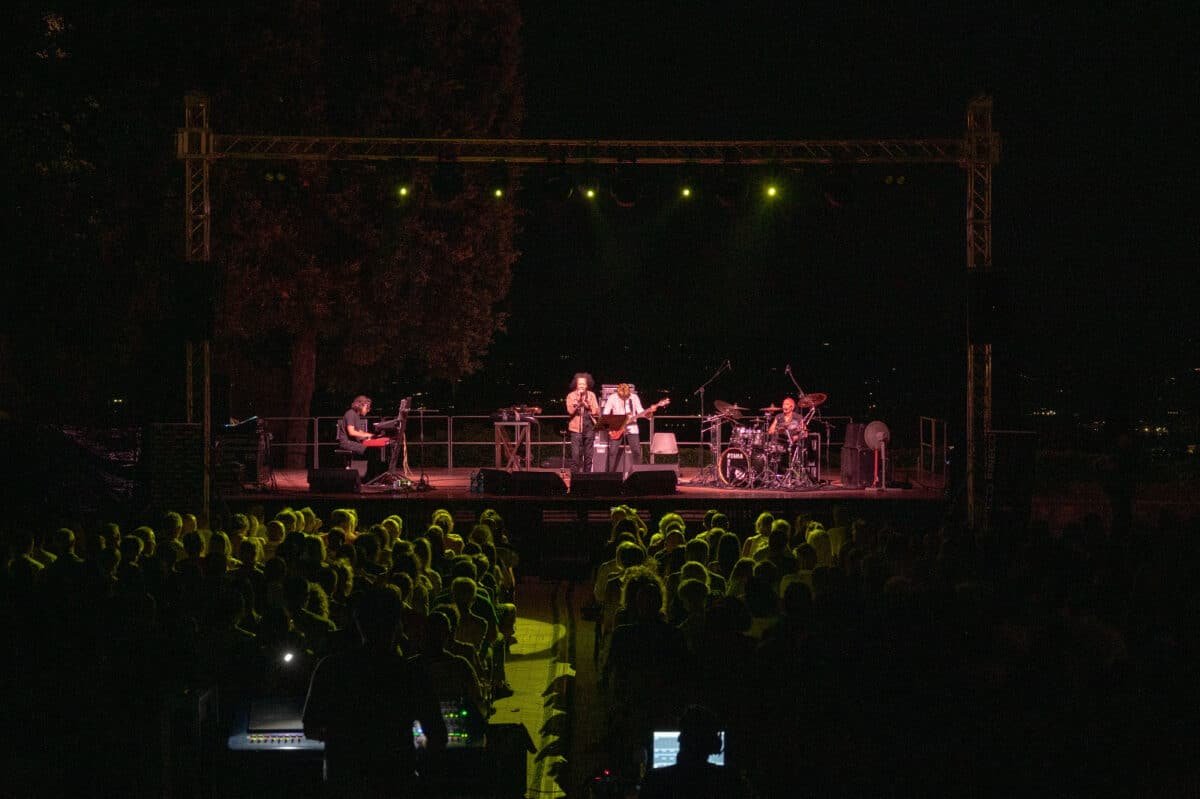
The castle in Palazzo di Assisi is the festival’s signature venue and has hosted summer concerts featuring jazz, world music, contemporary compositions and instrumental performances.
Theatre venues
Indoor performances have been presented at Teatro Lyrick and Piccolo Teatro degli Instabili in Assisi, providing traditional seated environments for larger concerts and theatrical performances.
Historic and outdoor locations
Abbeys, castles, gardens and historic villages have also been used for special concerts, allowing the music programme to become part of the surrounding heritage landscape.
Programme étape par étape
Cambio Festival’s programme is organised by individual concert and venue rather than simultaneous stages.
The latest published programme demonstrates several distinct formats:
- Summer concerts at Castello dei Figli di Cambio
- Jazz and world music performances
- Piano and classical recitals
- Theatre productions
- Indoor concert-hall performances
- DJ sets following selected concerts
- Special projects involving guest artists
- Performances at historic churches and abbeys
For example, the summer programme has combined the main concert with a DJ set afterwards, while other performances have been presented as focused seated concerts.
Temps de set
Individual set times vary by event and venue.
Recent summer concerts at Castello dei Figli di Cambio have generally used evening start times, while theatre performances have also been scheduled during the evening.
Examples from the latest programme include evening performances at the castle and later indoor concerts at Teatro Lyrick and Piccolo Teatro degli Instabili.
Visitors should check the individual event page before attending because the start time, doors, supporting performances and any post-concert DJ set can differ between concerts.
Types de billets
Cambio Festival uses individual event tickets rather than one universal admission pass covering the entire season.
Recent published ticket examples, converted to USD, include:
- Alessandro Quarta – “I Cinque Elementi”: $22.97, with free admission for under-18s
- Federico Gili – “La Lanterna”: $17.23, with free admission for under-18s
- Javier Girotto & Aires Tango – “Trenta”: $17.23, with free admission for under-18s
- Lisa Manara featuring Claudio Vignali: $11.49, with free admission for under-18s
- Stefano Ruiz de Ballesteros: Free admission
- Matteo Chimenti Sextet: $17.23
- Antonio Rezza – “Pitecus”: $22.97
These are reference prices from published editions and individual events rather than confirmed prices for every 2026–2027 performance.
Options VIP et premium
Cambio Festival does not appear to operate a conventional VIP ticket system with separate festival-wide VIP areas.
Instead, the premium experience is primarily associated with the nature of the venues and selected higher-priced concerts.
Visitors can experience performances in historic settings such as the Castello dei Figli di Cambio, where the architectural surroundings form part of the concert experience.
For selected concerts, seating categories can also provide different admission levels. A previous Teatro Lyrick performance by Amii Stewart and Alessandro Quarta offered three seating sectors, with reduced categories also available.
Any premium seating, hospitality or special arrangements should be confirmed through the individual concert’s official booking page.
Règles de l’épreuve
Visitors should follow the admission conditions and venue regulations associated with each individual concert.
Parmi les considérations importantes figurent :
- Present a valid ticket when required.
- Follow staff instructions at historic and theatre venues.
- Respect reserved seating arrangements.
- Follow venue rules regarding photography and recording.
- Keep access routes clear.
- Follow safety instructions during outdoor performances.
- Children and younger visitors should remain supervised.
- Check individual event conditions before attending.
Because Cambio Festival uses many different locations, rules can vary according to whether a performance is held at a castle, theatre, church, abbey or outdoor cultural site.
Comment y arriver
The main festival area is in Palazzo di Assisi, close to Assisi and within the wider Perugia area.
En voiture
Driving is convenient for visitors attending concerts at Palazzo di Assisi and other rural or historic locations around Assisi. The venue address for the main festival location is Piazza Figli di Cambio, 06081 Palazzo di Assisi, Assisi, Italy.
Par train
Assisi railway station provides access to the area, with onward road or local transport connections to Palazzo di Assisi and other festival venues.
Par avion
Perugia San Francesco d’Assisi Airport is the nearest airport for international and domestic visitors. Rome and other central Italian airports provide additional connections.
From Assisi
Visitors staying in Assisi can travel toward Palazzo di Assisi by car or local transport, depending on the individual event.
Transports en commun et stationnement
Public transport availability depends heavily on the venue.
The central Assisi area and railway station have more transport options than the smaller villages and countryside venues used for some Cambio Festival performances.
Visitors travelling by car should check the parking arrangements for the individual event because parking facilities can differ considerably between:
- Castello dei Figli di Cambio
- Teatro Lyrick
- Piccolo Teatro degli Instabili
- Abbey and church venues
- Rural festival locations
For historic-centre performances, visitors may need to park outside restricted areas and continue on foot or by local transport.
Zones d’hébergement
Assise
Assisi is the most practical base for visitors attending several Cambio Festival performances. It offers hotels, guesthouses, religious accommodation, apartments and restaurants within easy reach of the festival’s main area.
Santa Maria degli Angeli
This lower-town area provides additional accommodation and transport connections and is particularly convenient for visitors using the railway station.
Palazzo di Assisi
Staying close to the main castle venue can be convenient for visitors attending several performances at the festival’s historic home.
Spello
Spello provides a historic alternative for visitors combining Cambio Festival with sightseeing in another Umbrian hill town. The festival has also used Villa Fidelia in Spello as a performance location.
Pérouse
Perugia offers a larger selection of hotels and restaurants and can be useful for visitors attending performances spread across the wider Umbrian region.
Nourriture et boissons
Food is not the central focus of Cambio Festival, but visitors can combine performances with Umbrian cuisine in Assisi, Palazzo di Assisi, Spello and the surrounding countryside.
Typical regional specialities include:
- Umbrian cured meats
- Fromages locaux
- Handmade pasta
- Truffle dishes
- Porchetta
- Legumes
- Légumes de saison
- Extra virgin olive oil
- Traditional Umbrian desserts
- Vins locaux
The festival’s historic venues also make it easy to combine a concert with an evening meal in Assisi or one of the nearby villages.
Selected concerts may include post-performance DJ sets, creating an extended evening experience after the main concert.
Accessibilité
Accessibility varies according to the venue.
Modern theatre venues such as Teatro Lyrick can provide a more conventional environment for visitors requiring accessible seating, while historic castles, churches, abbeys and rural sites can involve steps, uneven surfaces or restricted access.
Visitors with specific accessibility requirements should contact Cambio Festival before purchasing tickets so that the organisers can confirm access arrangements for the individual venue.
The festival’s use of heritage buildings means accessibility should be assessed separately for each concert rather than assumed to be identical across the entire programme.
Meilleurs jours à assister
Because Cambio Festival is structured around individual concerts rather than one continuous festival weekend, the best event depends on the visitor’s musical interests.
For jazz and world music
Choose performances featuring artists such as Javier Girotto & Aires Tango or other international jazz and world-music projects.
For classical and instrumental music
Look for concerts featuring Alessandro Quarta, piano soloists, chamber ensembles and instrumental collaborations.
For contemporary music
Projects combining jazz, electronics, improvisation and modern composition reflect the festival’s broader musical identity.
For theatre
Indoor performances at venues such as Piccolo Teatro degli Instabili provide a different experience from the summer castle concerts.
Pour l’atmosphère historique
Choose a performance at Castello dei Figli di Cambio, where the medieval setting is closely connected with the festival’s identity.
Faits marquants de l’année précédente
The latest published programme included several distinctive performances across the festival’s different venues.
At Castello dei Figli di Cambio, Alessandro Quarta presented “I Cinque Elementi” with pianist Giuseppe Magagnino and the Solisti Filarmonici Italiani. The programme explored the symbolic relationship between fire, water, earth, air and ether, followed by a DJ set.
Javier Girotto & Aires Tango presented “Trenta”, a project marking the group’s three decades of musical activity and drawing on jazz and the band’s Argentine influences. Federico Gili’s “La Lanterna” brought together accordion, saxophone, electric guitar, piano, bass and percussion.
The wider programme also included Amii Stewart with Alessandro Quarta at Teatro Lyrick, Antonio Rezza at Piccolo Teatro degli Instabili and the Matteo Chimenti Sextet’s “Seeds of Influence”.
These performances demonstrate the festival’s characteristic combination of internationally recognised artists, emerging musicians, jazz, world music, contemporary projects, theatre and historic Umbrian venues.
Billets officiels
Tickets are sold through the official Cambio Festival booking information and the ticketing platforms linked from individual event pages.
The festival’s published event pages have used TicketItalia for online ticket sales, including summer performances at Castello dei Figli di Cambio and indoor concerts.
Visitors should check the individual concert page for the latest availability, seating information, admission conditions and booking link.
Site officiel : https://cambiofestival.it/
Téléphone : +39 338 566 4911
Courriel : cambiofestival@gmail.com
Vidéo
Localisation
FAQ
What is the primary artistic focus of the festival across its multi-month schedule?
The festival centers heavily on adventurous music programming that expertly blends contemporary jazz, global world music traditions, and refined classical chamber soundscapes within historical spaces. Organizers intentionally seek out boundary-pushing artists who honor roots heritage while experimenting with modern harmonic structures and cross-cultural improvisational formats.
How do the historic venues influence the overall atmosphere of the live concerts?
Each performance site is carefully chosen for its unique architectural beauty and natural acoustic properties, turning medieval castles and rural churches into active sonic participants. Listeners enjoy an intimate atmosphere where ancient stone walls and sacred artwork elevate the emotional resonance of every musical note played.
Are there opportunities for visitors to engage with artists outside of formal concert performances?
Attendees can participate in public masterclasses, open rehearsals, and intellectual panel discussions hosted by visiting international virtuosos throughout the season. These interactive cultural sessions encourage deep dialogue between performers and the audience regarding the evolution of modern folk and classical music.
What steps are taken to ensure the festival remains environmentally and culturally sustainable?
The organization promotes mindful travel practices that protect delicate rural ecosystems while actively directing tourist visibility toward the restoration of lesser-known regional monuments. By working closely with local municipal bodies, the festival supports community-led preservation initiatives that honor the heritage of host mountain villages.
How can attendees travel between the various dispersed performance locations across the region?
Visitors typically utilize personal vehicles or regional transit services to navigate between hilltop castles, mountain stages in Costa di Trex, and urban auditoriums in Perugia. Clear directional signage and tourist coordination points help guide festival-goers smoothly across the picturesque Umbrian landscape from one historic venue to the next.

Laisser un commentaire