



What to expect in 2028
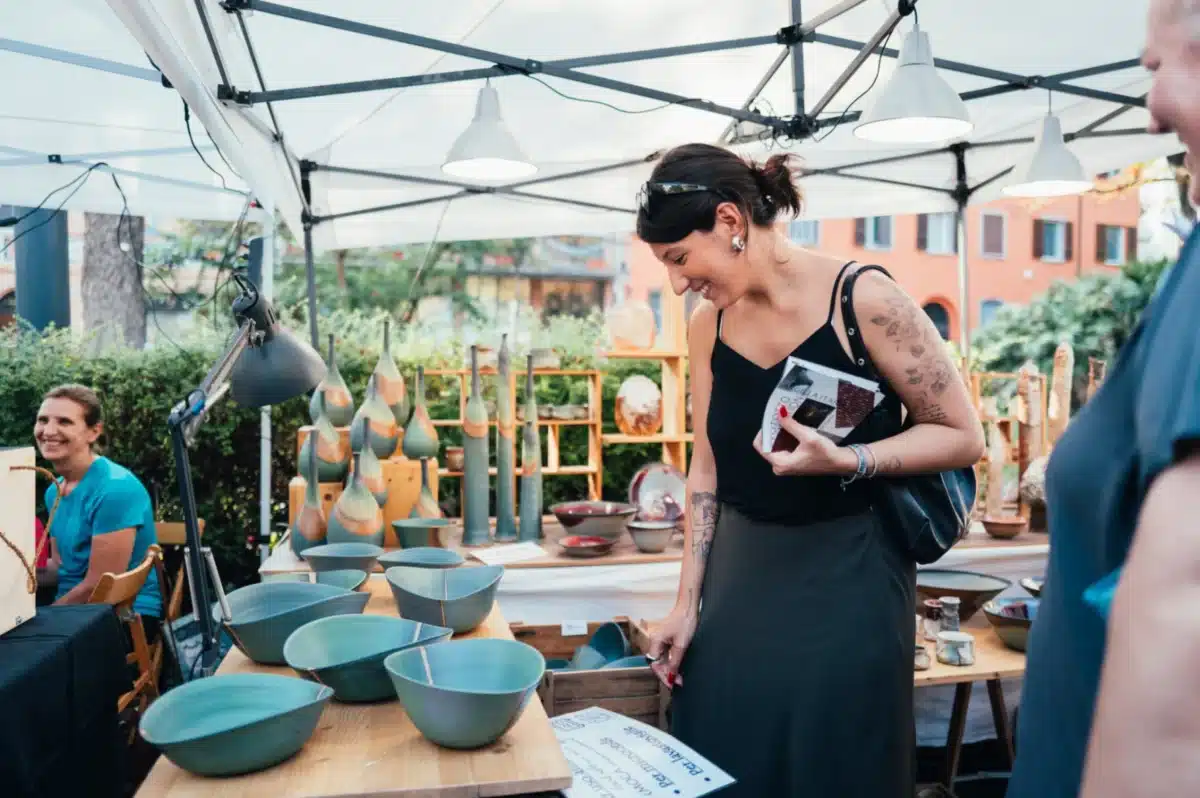
Argillà Italia 2028 is expected to continue the biennial International Ceramics Festival and Market-Fair in Faenza, one of Italy’s historic centres of ceramic production. The festival transforms the historic centre into a large open-air marketplace and cultural exhibition, bringing together ceramic artists, designers, artisans, collectors, manufacturers, museums and visitors from Italy and abroad. The official festival describes Argillà Italia as a long weekend dedicated to ceramics, with more than 200 ceramicists represented in the market-fair in the latest edition.
The event is expected to combine commercial displays with a substantial cultural programme. Visitors can browse handmade ceramics, meet individual artists and studios, discover contemporary ceramic design and attend exhibitions, demonstrations, workshops and special events throughout Faenza.
Argillà Italia is also connected to Faenza’s wider ceramic ecosystem. The city’s museums, galleries, workshops and cultural institutions become part of the festival experience, making the event larger than the main market area.
Profitez de votre événement sans stress avec Italy Travelo
Que vous voyagez pour un festival mondialement connu, un concert en direct, une célébration culturelle ou un événement professionnel, Italy Travelo vous aide à simplifier chaque étape de votre voyage. Notre équipe propose une assistance personnalisée aux voyages, vous permettant de vous concentrer sur la création de souvenirs durables.
A major component of the programme is the opportunity to purchase directly from ceramicists. The festival covers a wide range of ceramic production, including artistic ceramics, sculpture, tableware, home objects, design pieces and decorative works.
The 2028 programme, exhibitors and guest-country details have not yet been announced. These should be confirmed through the official Argillà Italia website as preparations progress.
Dates des événements
Argillà Italia 2028 is planned for September 2028 (Dates TBD).
The specific opening and closing dates have not yet been announced and should not be confused with dates from previous editions.
Argillà Italia is a biennial event traditionally organized around a long weekend in the historic centre of Faenza. The official festival describes the event as taking place every two years and traditionally around the first weekend of September.
Visitors should wait for the official 2028 announcement before arranging accommodation, transportation or advance travel plans.
Vous visitez cet événement ? Ne manquez pas ces activités et expériences locales étonnantes pendant votre séjour.
Lieu et site d’exposition
Argillà Italia is a city-wide ceramics festival rather than an event contained inside a single exhibition building.
The main market-fair occupies streets and public spaces throughout the historic centre of Faenza, with exhibition and event activities extending into museums, galleries, cultural institutions and other venues.
Important locations associated with the festival include:
- Piazza del Popolo
- Piazza della Libertà
- MIC Faenza – International Museum of Ceramics
- Teatro Masini and surrounding exhibition areas
- Museo Carlo Zauli
- Fondazione Guerrino Tramonti
- Palazzo Milzetti
- Municipal and independent galleries
- Workshops and ceramic studios throughout Faenza
The MIC Faenza is particularly important because the International Museum of Ceramics is one of the central cultural institutions connected with the festival. The official organizers also manage exhibitor services from the museum’s premises.
The combination of historic streets, museums and public spaces means visitors can experience the festival while exploring Faenza’s wider architectural and cultural heritage.
Programme complet des expositions
The complete 2028 exhibition programme has not yet been announced.
Based on the festival’s established format, visitors can expect a mixture of official exhibitions, independent or OFF exhibitions, ceramic installations, demonstrations and cultural projects.
The previous programme included exhibitions such as Baltic Connections, Oltre il Fango, Possibility, Prime di Copertina, Poloniato/Polloniato – Una famiglia di ceramisti a Nove, Immersioni, Tecnologia e Madre Terra, I Grossi Spessori di Ivo Sassi, L’arte di Simone Crespi, Ortografie Grammaticali, Interra Project, CERAMICA VIRTUOSA et Ceramic at the Palace.
The exhibition programme can extend well beyond conventional gallery spaces. Previous projects have appeared in museums, palaces, churches, historic buildings, cafés, design institutions and outdoor locations.
This creates a festival route where visitors can combine the market-fair with exhibitions covering traditional ceramics, contemporary art, sculpture, design, technology and experimental practices.
Artistes et designers à la une
The 2028 artist and designer lineup has not yet been announced.
Argillà Italia traditionally brings together established ceramic artists, emerging makers, designers, artisans and international participants. Its programme is designed to show different approaches to contemporary and traditional ceramics rather than concentrating on one artistic style.
Previous editions have included artists such as Ivo Sassi, Simone Crespi, Karin Putsch-Grassi, Alessandro Roma and artists associated with the international guest-country programmes. The wider exhibition programme has also included ceramicists connected with cities and organizations from across Europe and beyond.
The festival’s technical exhibitor network demonstrates the international character of the event, with organizations and companies connected with ceramics represented from countries including Spain, the United Kingdom, Germany, India, South Korea, Bulgaria and France.
The 2028 featured artists should be confirmed once the official exhibition and market-fair programme is released.
Galeries et exposants
Argillà Italia combines individual ceramic exhibitors with technical and institutional exhibitors.
The main market-fair is built around ceramicists who display and sell their own work. The latest official festival information states that more than 200 ceramicists from around the world participate in the market-fair.
The exhibitor programme can include:
- Ceramic artists
- Potters and artisans
- Sculptors
- Ceramic designers
- Contemporary ceramic studios
- Ceramic manufacturers
- Kiln and equipment companies
- Materials and glaze suppliers
- Publishing and specialist media
- Ceramic associations
- Educational organizations
- Cultural institutions
Technical exhibitors have included organizations such as the Spanish Association of Cities of Ceramics, AiCC, Helmut ROHDE, Hobbyland, KWCA, La Meridiana International School of Ceramics, Solargil and ceramic machinery companies.
The exact 2028 exhibitor list will be released after the selection and registration process.
Salles et sections d’exposition
Argillà Italia does not use a conventional single-hall exhibition model.
The principal market-fair is divided into sectors positioned throughout the historic centre. Previous exhibitor information identifies dedicated sectors, including areas around Piazza del Popolo and near the MIC Faenza.
The wider festival can be understood through several main areas:
- Ceramic market-fair
- Technical and institutional exhibitors
- Museum exhibitions
- Official exhibitions
- OFF exhibitions
- Ceramic studios and workshops
- Demonstration areas
- Educational spaces
- Mondial Tornianti competition area
- Outdoor firing and performance areas
This arrangement encourages visitors to move through the city rather than remain inside one exhibition hall.
The 2028 sector map and final exhibitor locations will be published with the official visitor information.
Conférences, ateliers et événements spéciaux
The cultural programme is one of Argillà Italia’s major components.
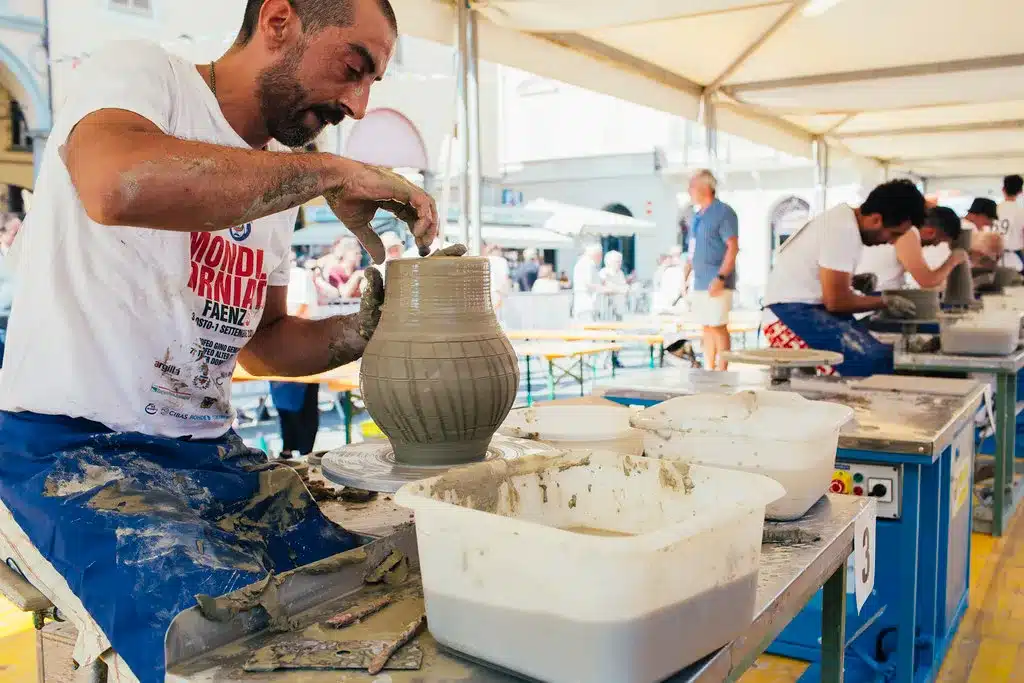
The festival’s official description highlights exhibitions, the Mondial Tornianti world wheel-throwing championship, outdoor ceramic firings, concerts, workshops, lectures and activities for children.
Previous programmes have also included guided museum visits, artist presentations, book launches, discussions, demonstrations and special openings.
Workshops can introduce visitors to practical aspects of ceramics, while demonstrations provide an opportunity to observe techniques that are difficult to understand from finished objects alone.
The Mondial Tornianti event is another major attraction, bringing competitive wheel-throwing into the wider festival programme.
Family activities are also incorporated into the event, making Argillà suitable for visitors who want an educational introduction to ceramics rather than focusing exclusively on collecting or shopping.
Types de billets
The main Argillà Italia market-fair is designed as a public festival spread across the historic centre, and the festival’s promotional information presents the market-fair and its city-wide programme as an open visitor experience.
There is no standard paid general-admission ticket price currently announced for Argillà Italia 2028.
For the 2028 listing, general festival access can therefore be presented as:
- General festival access: $0
- Historic-centre market-fair access: $0
- Public outdoor festival areas: $0
Individual museums, guided tours or special activities can have their own admission policies. Some events in previous editions have been free, while individual museum activities can follow the admission rules of the host institution.
For example, selected Argillà-related programming at Palazzo Milzetti has offered free admission during the festival.
Accès VIP et collectionneurs
Argillà Italia does not operate primarily as a conventional VIP art fair with standard VIP ticket tiers.
Collectors and professional buyers can instead engage directly with ceramic artists, studios, designers and specialist exhibitors throughout the market-fair.
The format allows visitors to examine works in person and communicate directly with makers, which can be particularly useful for collectors interested in contemporary ceramics, functional objects, sculpture or limited-edition pieces.
Professional visitors can also explore the festival’s technical exhibitors, museums and educational organizations.
Any dedicated collector previews, professional programmes or special access arrangements for 2028 will depend on the final programme and should be confirmed through the official organizers.
Règles de l’épreuve
Argillà Italia is a widespread event that brings together public streets, museums, exhibition venues and working market areas.
The official festival asks visitors to follow staff instructions and move carefully around exhibition areas and live performances. It also emphasizes respect for other visitors, exhibitors, residents, artworks and equipment.
Visitors should not touch ceramic works or exhibition installations unless an artist or staff member permits it.
Photography policies can vary between individual museums and exhibitions, so visitors should follow the rules displayed at each venue.
The market-fair can become busy, particularly around popular exhibitors and central streets. Visitors should keep personal belongings secure and allow space for exhibitors and other visitors.
Comment y arriver
Faenza is located in Emilia-Romagna between Bologna and Ravenna and is well connected to the regional transport network.
Visitors arriving by car can reach Faenza using the regional road and motorway network connecting the city with Bologna, Ravenna, Forlì and other parts of Emilia-Romagna.
Faenza railway station is also an important arrival point, making the city accessible for visitors travelling by train.
From the station, the historic centre is reachable using local transport or on foot, depending on the exact destination.
Once inside the festival area, walking is one of the most practical ways to move between market-fair sectors, museums and exhibitions because Argillà is designed around the historic centre.
The official festival also promotes sustainable mobility, including free shuttle connections from major parking areas during the event.
Transports en commun et stationnement
Argillà Italia provides dedicated mobility arrangements because large parts of the historic centre become focused on pedestrian movement during the festival.
The latest official visitor information describes free, environmentally friendly shuttle services connecting major parking areas with the historic centre.
Park-and-ride options have included connections from:
- Pancrazi Square
- Borgo Commercial Centre
- La Filanda Commercial Centre
The shuttle system is intended to reduce the need for visitors to drive directly into the central festival area.
Visitors arriving by train can use Faenza railway station and continue towards the historic centre.
Cycling is another option, and the festival’s visitor information highlights the RideMovi bike-sharing service as a way to move around the city.
Exact 2028 road restrictions, parking locations and shuttle routes should be checked once the official mobility plan is published.
Zones d’hébergement
The historic centre of Faenza is the most convenient accommodation area for visitors who want to spend most of their time at Argillà Italia.
Staying close to the centre allows visitors to reach the market-fair, museums, galleries, restaurants and cultural venues without depending heavily on a car.
Other parts of Faenza can provide quieter accommodation while remaining within easy reach of the historic centre.
Visitors can also consider accommodation in nearby towns across the wider Ravenna and Forlì-Cesena area. These locations can be useful for travellers combining Argillà with wider Emilia-Romagna sightseeing.
Because the festival attracts ceramic professionals, collectors, artists and visitors from different countries, accommodation in central Faenza can become limited during the festival period.
The official festival’s visitor information directs travellers toward local tourism resources for accommodation and travel planning.
Nourriture et rafraîchissements
Food is not the central theme of Argillà Italia, but visitors will find cafés, restaurants, bakeries, bars and other food businesses throughout Faenza’s historic centre.
The city centre provides opportunities to take breaks between market-fair sectors and exhibitions without needing to leave the festival area.
Visitors can combine their ceramics experience with regional Emilia-Romagna cuisine, including pasta dishes, cured meats, cheeses, piadina and local desserts.
Food and drink availability is particularly useful because the festival programme can occupy much of the day, with visitors moving between outdoor displays, museums, workshops and performances.
Specific food stands or temporary refreshment areas for the 2028 edition will depend on the final event plan.
Accessibilité
Argillà Italia is designed as a widespread public event and the organizers explicitly describe the festival as committed to sustainable and accessible mobility.
Much of the main market-fair takes place in the historic centre, where visitors can move between different sections on foot.
However, accessibility can vary between individual historic buildings, museums, temporary exhibition spaces and outdoor areas.
Visitors requiring step-free access should check individual venues before attending, particularly where exhibitions are located inside historic buildings.
The official mobility plan also provides information about transport connections and shuttle services, which can help visitors avoid unnecessary car travel and reach the central festival area more easily.
The final 2028 accessibility information should be checked when the organizers publish the visitor guide.
Expositions incontournables
The 2028 exhibition list has not yet been announced, so specific 2028 exhibitions should not be treated as confirmed.
The festival’s previous exhibition programme provides an indication of the range visitors can expect. It included Baltic Connections, Possibility, Immersioni, Tecnologia e Madre Terra, Interra Project, Ceramic at the Palace, CERAMICA VIRTUOSA and exhibitions dedicated to individual ceramic artists.
The MIC Faenza should remain an important stop for visitors interested in the history and development of ceramics. The museum houses one of the world’s major collections dedicated to ceramic art.
The market-fair itself is also an essential part of the experience because it provides direct access to hundreds of ceramic artists and makers.
Visitors interested in technical ceramics should also explore the specialist exhibitors, while collectors can focus on individual artists and studios.
Faits marquants de l’année précédente
The most recent edition expanded the festival’s international character with Austria as the Guest Country. The official festival presented the event as a three-day celebration featuring more than 200 ceramicists from around the world, together with exhibitions, special events and performances across Faenza.
The programme included the Mondial Tornianti event, exhibitions, guided tours, museum activities and visits to ceramic workshops.
One example was the Goffredo Gaeta Museum and historic art workshop, where visitors could take part in free guided tours exploring the artist’s work and the historic workshop.
The festival also expanded into museums and cultural venues. At Palazzo Milzetti, visitors could see Alessandro Roma’s Presenze, with a related guided tour and special museum access offered during the festival.
The overall format demonstrated how Argillà Italia combines a large ceramics market with exhibitions, competitions, educational activities and cultural programming throughout the city.
Billets officiels
Argillà Italia 2028 does not currently have a published paid general-admission ticket.
The main market-fair and public festival environment are presented as an open city-centre experience, with individual museums and special activities potentially following their own admission arrangements. Previous festival-related museum programmes have included free admission, while some individual guided activities may have separate arrangements.
For 2028, the general festival access reference is therefore $0, subject to the final programme and individual venue policies.
The official website is:
Argillà Italia
Visitors should use the official website for the 2028 exhibitor list, exhibition programme, mobility information, special-event reservations and any ticket requirements.
Vidéo
Localisation
FAQ
What is the primary cultural focus of Argillà Italia in Faenza?
The festival is entirely dedicated to celebrating international ceramic art, heritage, and contemporary design. It brings together master makers, global collectors, and thousands of visitors in the historic capital of majolica. The event serves as the premier European marketplace and cultural hub for the ceramic arts.
Where are the primary exhibitions, markets, and competitions hosted?
Most major activities take place across the historic center of Faenza and the International Museum of Ceramics (MIC). Key locations include open-air market streets, historic palazzos, and dedicated public competition arenas. Visitors can easily navigate between all venues on foot using clearly marked pedestrian pathways and cultural trails.
How can visitors participate in the workshops and specialized museum events?
Attendees can secure spots for specialized masterclasses, hands-on clay labs, and museum tours by booking online or visiting onsite ticketing desks. Certain high-profile workshops require advance registration due to limited participant capacities in studio spaces. Detailed schedules and registration links are published weeks prior to the opening date.
Are there family-friendly activities available for children and parents?
The festival offers a wide variety of engaging programs designed for families, including supervised junior mud play zones and tile painting labs. Younger visitors especially enjoy the live throwing championships, outdoor ceramic displays, and hands-on wheel classes. These inclusive events ensure a safe, entertaining, and educational experience for all age groups.
How can travelers reach the historic town of Faenza during the event?
Travelers can arrive easily via regional train connections on the main Bologna-Ancona railway line directly to Faenza's central station. Dedicated shuttle services and well-organized parking areas are established on the outskirts of the town to accommodate arriving motorists. Clear directional signage guides all incoming visitors toward the main pedestrian celebration zones.

Laisser un commentaire