
-
December 1, 2026
Event date:
-
December 6, 2026
Event end:
What to expect in 2026
The Messina Opera Film Festival returns to Messina from 1–6 December 2026 for its 10th edition and its fourth edition dedicated specifically to the relationship between cinema and opera. The festival combines historic films, contemporary cinema, opera-related documentaries, short films, live music, masterclasses, cultural meetings and special performances. The 2026 edition is dedicated to Giacomo Puccini.
The festival grew out of the original Messina Film Festival, which began in 1995 and continued until 2001 before returning in a new form in 2023. Since its relaunch, the event has concentrated on the dialogue between film and opera, bringing together cinema history and contemporary audiovisual production.
A central feature of the 2026 edition is the combination of two different approaches. One focuses on rediscovering and presenting important films from the past, while the other encourages contemporary creativity through the international short-film competition connected with opera and the world of melodrama.
Enjoy Your Event Stress-Free with Italy Travelo
Whether you're traveling for a world-famous festival, live concert, cultural celebration, or business event, Italy Travelo helps simplify every step of your journey. Our team provides personalized travel assistance, allowing you to focus on creating lasting memories.
The festival’s official material describes the 2026 programme as bringing together rare films from the past and Italian premieres, allowing classic and contemporary cinema to appear alongside the music and dramatic traditions of opera.
The short-film competition is an important part of the festival. Films can come from Italy or abroad and must have a connection with opera through their stories, characters, composers, music, choirs, arias or settings in opera theatres. Films can be documentary, fiction, animation or other cinematic forms provided that they meet the competition requirements.
The 2026 festival is also taking place under a significant organizational transition following the death of artistic director Ninni Panzera in July 2026. The festival has described Panzera as a central figure in its development and as the person who guided its focus on the relationship between cinema and opera.
Festival dates
Messina Opera Film Festival 2026 will take place from 1–6 December 2026 in Messina, Sicily, Italy.
The official competition regulations specify that the festival runs for six days, from Tuesday 1 December through Sunday 6 December 2026.
The December timing places the festival in the cultural calendar of Messina during the beginning of the winter season. Visitors can combine the festival with sightseeing around the historic centre, the Strait of Messina waterfront and the city’s cultural institutions.
The festival’s programme is structured around screenings, competition presentations, cultural meetings and special events, with activities distributed across several venues in central Messina.
Visiting this event? Don’t miss out on these amazing activities and local experiences while you’re here.
Venues & festival locations
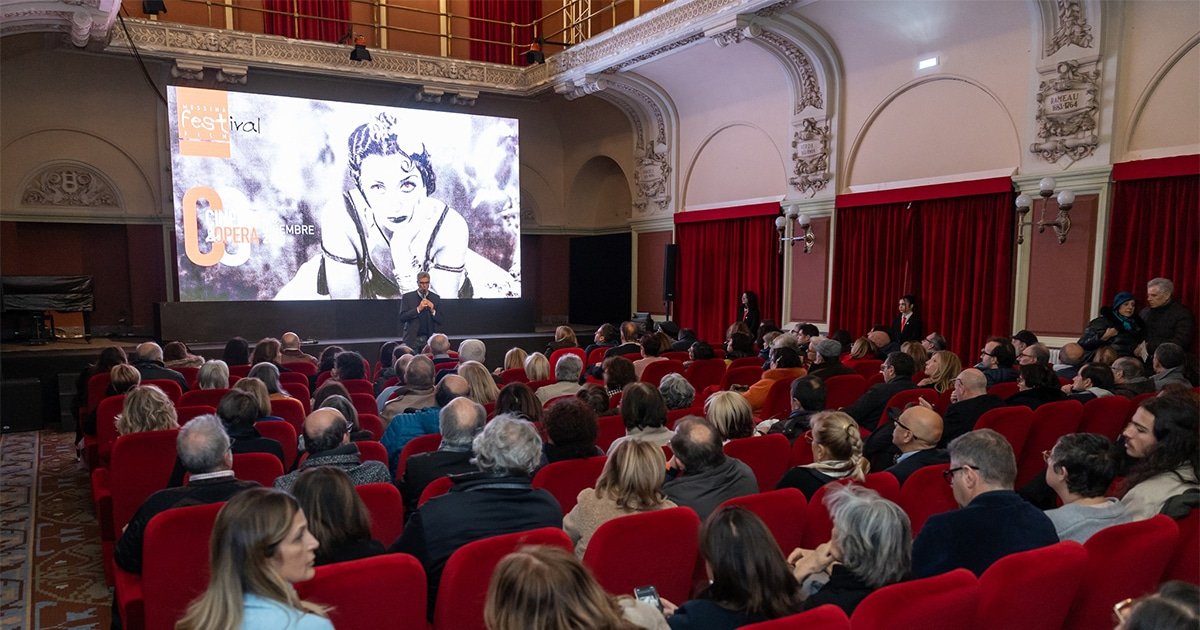
The main festival base is the Sala Laudamo, part of the Teatro Vittorio Emanuele complex in central Messina. Previous editions have used Sala Laudamo extensively for screenings, short-film competition sessions, masterclasses, presentations and meetings.
The Teatro Vittorio Emanuele itself is another important festival location. Previous editions have hosted concerts and larger special events there, including orchestra performances connected with the festival programme.
The Palazzo della Cultura has also been used for festival events, including concerts and film presentations in previous editions.
The festival’s wider history includes other Messina cultural locations. In earlier editions, programmes have also been presented at the Museo Regionale Accascina and university locations, demonstrating the festival’s use of the city’s cultural infrastructure.
The exact 2026 location of every screening and special event should be checked in the official programme as the detailed schedule is published.
Full programme
The 2026 programme is built around cinema and opera, with the official festival describing the edition as a combination of historic films, Italian premieres and contemporary works inspired by opera.
The programme framework includes:
- International short-film competition
- Opera-related feature films
- Historic cinema
- Contemporary opera films
- Documentary films
- Films about composers and performers
- Italian premieres
- Short-film screenings
- Masterclasses
- Cinema and opera discussions
- Musical performances
- Special events
- Award ceremonies
- Projects connecting cinema and opera
The short-film competition accepts Italian and international productions with a maximum duration of 15 minutes, including titles. Eligible films must portray opera or opera characters, use opera music, choirs or arias, or have a story set in an opera theatre. Films in languages other than Italian must have Italian subtitles.
The festival’s programme also traditionally includes films from different periods of cinema history. Previous editions have screened works ranging from silent cinema and classic Italian productions to recent international films.
The 2026 edition is dedicated to Giacomo Puccini, providing an additional focus on one of Italy’s best-known opera composers.
Featured films & premieres
The complete 2026 film-by-film programme is being released through the festival’s official edition pages and programme materials. The festival’s official 2026 page confirms dedicated sections for the programme, films, jury, special events and short-film competition.
The festival’s format makes premieres particularly important because contemporary films can be presented alongside historic opera-related cinema.
The short-film competition is open to international filmmakers and specifically encourages works that explore opera through cinema. The rules allow films that have already appeared at other events, making the competition accessible to works with an existing festival history as well as newer productions.
The 2025 programme demonstrates the type of films audiences can encounter at the festival. It included Dreamecatchr, The Telephone, The Opera. Arias for an Eclipse, Renato Cioni, la voce dell’Elba, The Thieving Magpie, Carmen, Rigoletto and other opera-related films.
Visitors interested in premieres should check the official 2026 film listings because individual premiere status can vary between world, European, Italian and other national presentations.
Directors, actors & guests
Messina Opera Film Festival brings together filmmakers, actors, opera performers, musicians, directors, researchers and other cultural professionals.
Previous editions have welcomed people working across both cinema and opera. The 2025 programme, for example, included Fabio Armiliato, Giulio Scarpati, Barry Purves and other filmmakers and performers.
The festival has also previously presented the Messina Cinema&Opera Award to individuals whose work connects cinema and opera. The 2025 programme included award presentations connected with Fabio Armiliato, Barry Purves and Andrea Andermann.
The 2026 edition’s guest list and jury information should be followed through the official festival website because participants can be announced progressively.
Following the death of artistic director Ninni Panzera in July 2026, the festival’s future programming will also represent a continuation of the artistic direction and cultural approach he established.
Screening schedule
The six-day programme runs from 1–6 December, with screenings and events scheduled at the festival’s participating venues.
The detailed 2026 timetable should be checked through the official programme because the festival uses different venues and individual events can have separate admission arrangements.
Previous schedules show that screenings have commonly taken place in the afternoon and evening. Short-film competition sessions have been programmed alongside feature films, documentaries, classic films, presentations and special events.
Audiences can expect the schedule to move between contemporary films and historic works, allowing a single festival day to include both recent productions and classic cinema connected with opera.
Special attention should be given to the short-film competition sessions because these screenings present multiple works in a single programme and lead toward the competition awards.
Ticket types & accreditation
The official 2026 material does not currently publish a general festival accreditation price. The previous edition included a mixture of free screenings and paid special events.
For example, the 2025 programme explicitly stated that screenings at Sala Laudamo were free of charge, while certain special concerts and theatrical performances were marked as paid admission.
Because the 2026 ticket structure may differ, visitors should check the official programme and individual event information before attending.
The festival’s short-film competition itself is free to enter for filmmakers. The 2026 regulations specify that film submission carries no submission fee.
Where a 2026 admission amount has not been published, the festival’s previous-edition arrangement is the available reference rather than an invented price.
Industry & professional access
The festival has a professional and educational dimension in addition to its public screenings.
Previous programmes have included masterclasses with professionals working in film, television, music and opera. The 2025 programme, for example, included masterclasses with Andrea Andermann and Paolo Vivaldi.
The festival has also hosted presentations of independent film-opera projects, creating a meeting point between filmmakers, producers, musicians and cultural professionals.
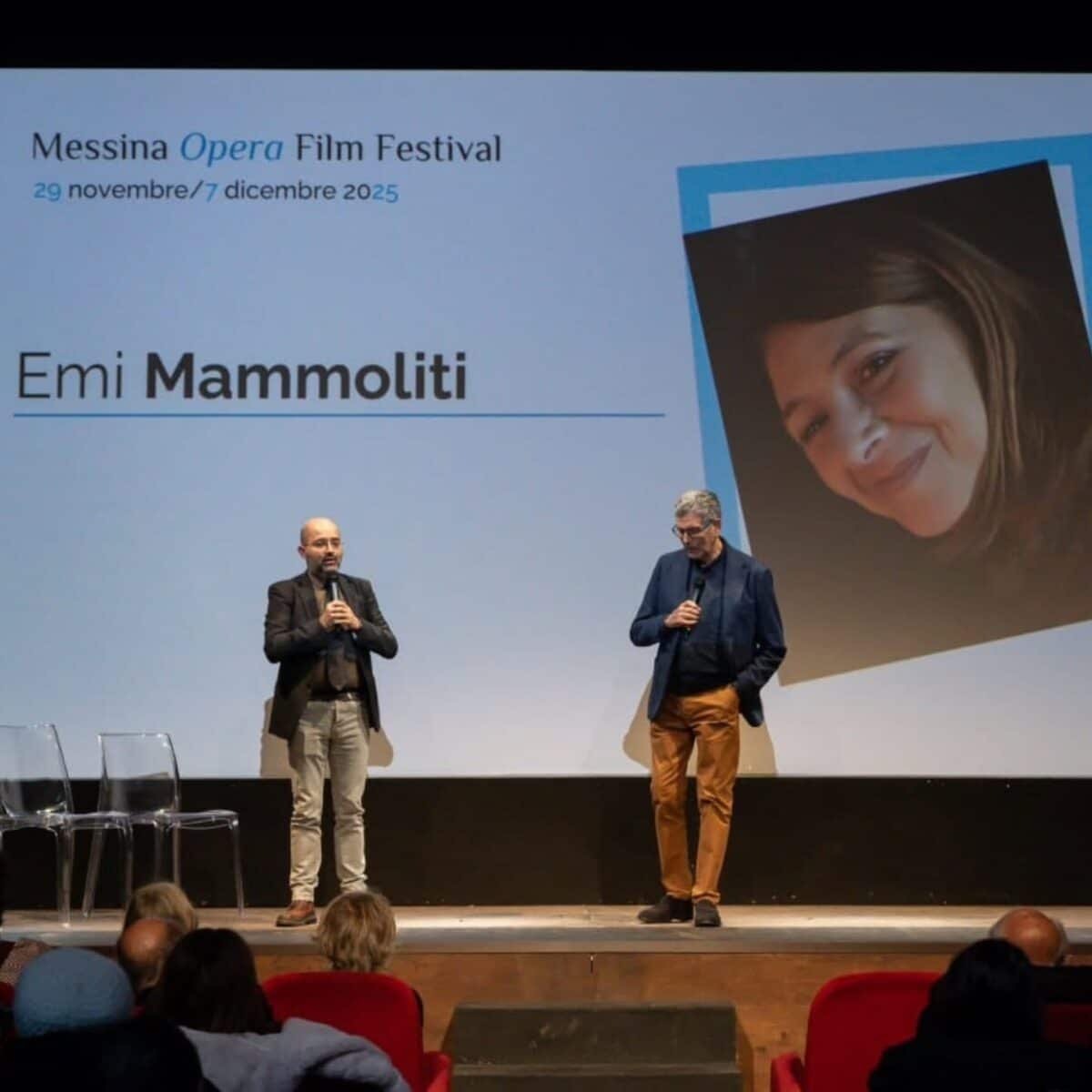
The short-film competition provides another professional opportunity for filmmakers. The 2026 rules establish an international competition judged by a jury of at least three members and award the Emi Mammoliti Award for Best Short Film together with Special Jury and Best Performance awards.
Professionals attending in 2026 should monitor the official festival announcements for masterclasses, project presentations, jury information and accreditation procedures.
Red carpet & special events
Messina Opera Film Festival is not structured primarily as a conventional celebrity red-carpet festival. Its special events focus on the interaction between cinema, opera, music and live performance.
Previous editions have included silent films accompanied by live music, orchestral concerts, theatrical performances, book presentations, masterclasses and award ceremonies.
The 2025 programme included a live musical accompaniment for The Phantom of the Opera, a concert by the Teatro Vittorio Emanuele Orchestra, a theatre performance dedicated to Maria Callas and the presentation of the Messina Cinema&Opera Award.
The 2026 programme is dedicated to Giacomo Puccini, so opera and musical events are expected to remain an important part of the festival’s identity. The precise 2026 special-event calendar should be checked on the official website.
Festival rules
The 2026 short-film competition is governed by official festival regulations.
Films must have a maximum duration of 15 minutes including titles and must have a clear relationship with opera. This can involve opera characters, composers, music, choirs, arias or stories set in an opera theatre.
The competition accepts both Italian and international films. Films in languages other than Italian must include Italian subtitles.
Film selection is made at the discretion of festival management. A jury of at least three members awards the Best Short Film prize, Special Jury Award and Best Performance Award.
The Best Short Film award is the Emi Mammoliti Award, with an official prize fund of €1,000 in the regulations, equivalent to approximately $1,148.10 using a €1 = $1.1481 reference rate.
Visitors attending public events should follow the rules of the individual venue concerning seating, photography, recording, late entry and other audience requirements.
How to get there
Messina is located in northeastern Sicily on the Strait of Messina and is connected to mainland Italy by ferry and rail services.
Visitors arriving from mainland Italy can travel by train to Villa San Giovanni and continue across the Strait by ferry, with rail services connecting onward to Messina.
Messina is also served by nearby airports, particularly Reggio Calabria Airport on the mainland and Catania Fontanarossa Airport in eastern Sicily. Catania is generally the larger air gateway for visitors arriving from other Italian and European cities.
The city centre and principal festival venues can be reached using local public transportation or on foot depending on the accommodation location.
Visitors should check their individual flight, train and ferry connections before travelling because crossing the Strait involves additional scheduling considerations.
Public transport & parking
Public transportation is a practical way to reach the festival venues in central Messina.
The festival has previously emphasized sustainable mobility and stated that its locations are accessible on foot, by bicycle or by public transportation. The organizers have also provided transport information and schedules to encourage visitors to avoid unnecessary car use.
For festival guests, selected hotels have previously been located in the city centre close to screening venues, reducing the need for additional transport. The festival has also used hybrid vehicles for guest transportation.
Visitors arriving by car should check current municipal parking restrictions and availability around the Teatro Vittorio Emanuele and central Messina before travelling.
Accommodation areas
Central Messina is the most convenient area for visitors attending several festival events because the principal cultural venues are located within or close to the historic centre.
Accommodation near the Teatro Vittorio Emanuele and Sala Laudamo can reduce travel time between screenings and evening performances.
The area around Piazza Duomo and the central streets is another practical base, with restaurants, cafés, shops and public transport connections nearby.
The festival’s sustainability information confirms that its selected guest hotels have previously been located in the city centre near screening venues.
Visitors staying for the full six days can also consider accommodation close to Messina Centrale railway station, particularly if they plan to make day trips or use rail and ferry connections during their stay.
Food & dining
Messina offers Sicilian cuisine alongside cafés, bakeries, restaurants and casual food options throughout the city centre.
Visitors attending afternoon screenings can find traditional Sicilian snacks and quick meals before evening programmes. Messina is particularly associated with seafood, pasta, arancini, granita, cannoli and other Sicilian specialities.
The central area around the Teatro Vittorio Emanuele and Piazza Duomo provides convenient dining choices between festival events.
For visitors following a full festival day, it is useful to plan meals around screening times because some programmes can extend into the evening.
Messina’s location on the Strait also makes local seafood an important part of the city’s culinary identity, while traditional Sicilian pastries and granita provide lighter options during daytime breaks.
Accessibility
Accessibility arrangements can vary between the individual festival venues, particularly because the programme uses theatres, cultural buildings and other public spaces.
Visitors with mobility or other access requirements should contact the festival before attending to confirm entrance arrangements, seating, toilets and assistance at the specific venue.
The festival’s sustainability information states that its locations are accessible on foot, by bicycle or through public transportation.
The Teatro Vittorio Emanuele and Sala Laudamo should be checked directly for specific accessibility arrangements for individual events, especially when attending performances rather than standard film screenings.
Best screenings to attend
The short-film competition is an important choice for visitors interested in contemporary filmmaking and the connection between opera and cinema. It provides an opportunity to see several short works within a single programme and follow the competition toward its awards.
Classic opera films are another major part of the festival. The event regularly presents historic productions and films that reinterpret famous operas, composers and characters.
Visitors interested in film history should also look for restored or historically significant works, while audiences interested in contemporary cinema can focus on recent documentaries, features and Italian premieres.
Special events can offer a different festival experience. Previous editions have paired silent cinema with live musical accompaniment, combining film projection with musicians performing in the venue.
Masterclasses and project presentations are particularly relevant to filmmakers, students and professionals who want to explore how cinema and opera can work together as creative forms.
Previous year’s highlights
The previous edition ran from 29 November to 7 December 2025 and featured a wide programme connecting cinema, opera and live performance.
The programme included The Phantom of the Opera with live musical accompaniment by the ParlaPiano Ensemble, Carmen Story, Aida, Rigoletto, The Thieving Magpie, The Opera. Arias for an Eclipse and several contemporary documentaries.
The short-film competition featured international and Italian works, including Italian, European and world premieres. The 2025 selection included films such as Dreamecatchr, The Quarantine Redemption, Trill, Zobeide, A Fish & A Bird, Odi.0, The Brief Journey of Little Homer and Echoes of Her.
The programme also featured a tribute to The Scottish Opera of Glasgow, masterclasses, presentations of independent film-opera projects and the presentation of the Messina Cinema&Opera Award.
The festival’s earlier editions have similarly combined film screenings with concerts and theatrical events, maintaining its focus on the meeting point between opera and cinema.
Official tickets & accreditation
The official Messina Opera Film Festival website is the main source for the 2026 programme, film selection, jury, special events and ticket information. The 2026 edition is scheduled for 1–6 December in Messina.
A general 2026 festival accreditation price has not been published in the currently available official material. Previous editions used a mixture of free film screenings and paid special events, so visitors should check the individual 2026 programme entry before attending.
The 2026 short-film competition has no submission fee for filmmakers. The competition’s official Best Short Film award is the Emi Mammoliti Award, with a prize fund of approximately $1,148.10.
For public attendance, the festival’s website should be checked for any reservation requirements, paid concerts, theatre performances or special-event ticketing once the complete 2026 schedule is published.
Official website: https://www.messinaoperafilmfestival.it/
Telephone: +39 378 4078144
Email: info@messinaoperafilmfestival.it
Festival dates: 1–6 December 2026
Video
Location
FAQ
What is the main cultural focus of the Messina Opera Film Festival?
The festival is entirely dedicated to exploring the creative relationship between cinema and lyric opera traditions. It features competitive short films, rare archival screenings, and live musical performances that celebrate melodrama. This unique event bridges classical performance arts with modern visual storytelling techniques.
Where are the festival events and screenings hosted?
Events take place across historical cultural spaces and theaters located throughout Messina, Italy. The majestic Teatro Vittorio Emanuele serves as the primary venue for major galas and screenings. Various satellite spaces also host academic panels, exhibitions, and community outreach programs.
How can independent filmmakers submit their short films?
Directors can submit their short films through official festival partner platforms like Festhome before the final deadlines. Eligible works must run under fifteen minutes and feature operatic themes, music, or theatrical settings. Submissions are reviewed by the artistic direction team for official competition consideration.
Are there educational programs available for students and young people?
The festival offers dedicated student outreach initiatives, discounted accreditation passes, and a specialized Youth Jury program. University students participate in rigorous film analysis workshops before voting for an independent award. These programs aim to cultivate media literacy and passion for classical arts among youth.
How can attendees participate in the public and outdoor events?
Many public screenings, open-air piazza projections, and community debates are hosted throughout the city for everyone to enjoy. Visitors can check the official festival program online to find free daily events and venues. These accessible sessions are designed to engage the local community and general visitors alike.

Leave a Reply